
Four Students Broke Into Westminster Abbey to Steal a Stone
At Christmas 1950, four Glasgow University students - Ian Hamilton, Gavin Vernon, Kay Matheson and Alan Stuart - took the Stone of Destiny from under the Coronation Chair in Westminster Abbey. It broke in two on the floor. A policeman chatted to two of them in their car without spotting the piece hidden inside. The stone turned up at Arbroath Abbey in April 1951, and none of them was ever prosecuted.

In this dossier (9 chapters) ▾
Historical Dossier: The Theft of the Stone of Destiny Location: Westminster Abbey, London, and Arbroath Abbey, Scotland | Year: 1950–1952 | Key Figures: Ian Hamilton, Gavin Vernon, Kay Matheson, Alan Stuart, Robert Gray
A Block of Sandstone and a Grievance
For more than six centuries, a rough block of sandstone sat beneath the seat of the Coronation Chair in Westminster Abbey. In 1296, King Edward I of England had carried it south from Scotland as a trophy of conquest. Scots remembered it as the Stone of Destiny, the seat on which their kings had been crowned, and its absence had become a quiet national grievance long before anyone thought of taking it back.
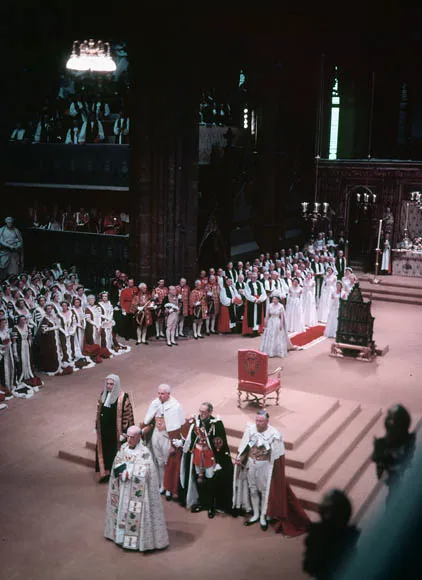
By 1950 the idea of Scottish home rule had almost no political traction. The Scottish National Party won only about 0.4 percent of the Scottish vote that year. That is the setting in which a Glasgow University law student named Ian Hamilton decided that politics had failed and that a gesture might succeed where it had not. He took his idea to a fellow student, Gavin Vernon, who recruited two more: Kay Matheson and Alan Stuart. All four belonged to the Scottish Covenant Association, a movement campaigning for a Scottish parliament. The operation also had a financial backer in Robert Gray, a Glasgow businessman and city councillor.
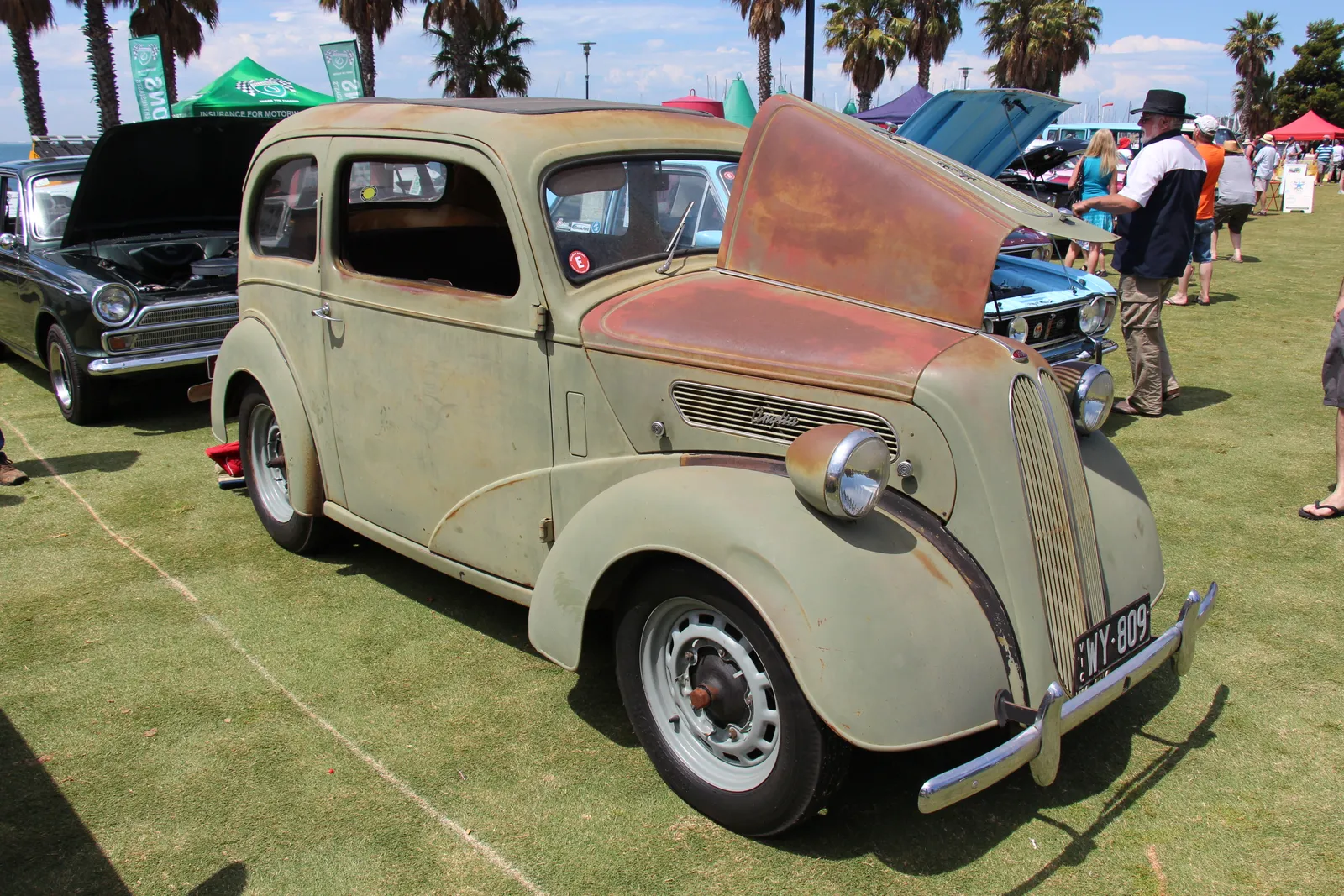
The plan sounds like a student prank, and in some ways it was one. Nobody involved had burgled a building, nobody had a plan for a heavy object, and the object itself was far heavier than any of them expected. What they did have was nerve, two Ford Anglia cars, and the belief that the Christmas holiday would leave the Abbey thinly watched.
The Drive South
In early December 1950, the four set out from Glasgow in two Ford Anglias for London, a journey of roughly eighteen hours on the roads of the time. They met at a Lyons Corner House in London to settle their approach, and their first attempt came close to ending the whole plan before it began.
Hamilton hid inside Westminster Abbey, concealed beneath a trolley, so that he could stay behind when the doors were shut for the night. A nightwatchman found him after closing. Hamilton talked his way out, was released without charge, and the Abbey’s guards had no reason to think they had just met the man planning to carry off its most famous seat.
Vernon and Stuart then returned to study the building, watching how the nightwatchmen moved and when. That reconnaissance mattered more than the nerve did. When they came back in the early hours of Christmas Eve, they knew where the guards would not be.
Christmas Eve in the Abbey
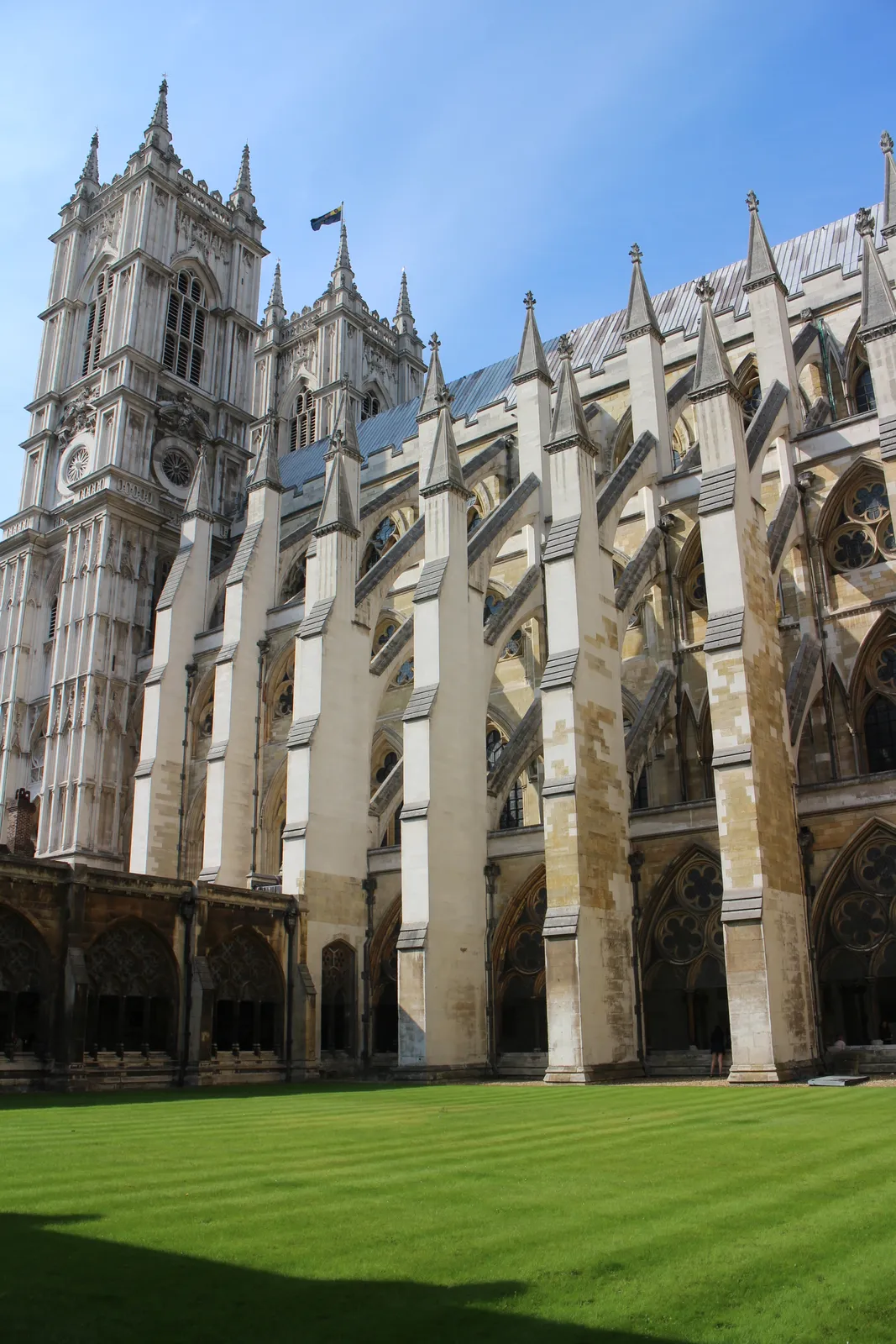
Before dawn on 24 December, Hamilton, Vernon and Stuart entered through a works yard and made their way through Poet’s Corner to the chapel of King Edward the Confessor, where the Coronation Chair stands. They had to get past a barrier protecting it, and then they faced the real problem: the Stone, which sits in a recess beneath the chair’s seat, is a heavy block of sandstone, far heavier than any of them had planned for.
They pulled it free, and it fell. The Stone of Destiny crashed to the floor and broke cleanly into two pieces. For a moment the raid had turned from a daring act into an act of vandalism against one of the most protected objects in the kingdom.
They improvised. Using Hamilton’s coat as a sling, the men dragged the larger piece down the steps of the high altar. Hamilton carried the smaller piece out to the waiting car.
Then came the moment that has made the story famous. Hamilton put the smaller piece in the car’s boot and took his seat. Kay Matheson was in the car, and a policeman, lit by a gas lamp, walked toward them at about five in the morning. Matheson and Hamilton fell into a lovers’ clinch. The constable stopped to talk. He joked with them, shared a cigarette, and went on his way without ever suspecting that a broken piece of Scotland’s coronation stone was a few feet from his hand.
The Hunt for a Stone
Hamilton drove away, then returned for the larger piece, which he managed to load alone. The car’s springs sagged under the weight. When he found his companions walking toward him, the group split to lower the risk. Vernon, afraid the alarm had already gone up, made his own way toward Rugby. Hamilton and Stuart drove into Kent and buried the larger piece in a field. Matheson left the car carrying the smaller piece with an acquaintance in the Midlands and took a train north.
The reaction to the loss was immediate. Once the Stone was found to be missing, the authorities took the extraordinary step of closing the Scottish border for the first time in about four hundred years. For a Scottish nationalist movement that had struggled for attention, the border closure was an unintended gift: the authorities had treated a student prank as a matter of state.
Meanwhile, the pieces moved north. About two weeks later, Hamilton and his helpers recovered both pieces and brought them to Glasgow, where the businessman and councillor Robert Gray, the same man who had helped fund the raid, repaired the fracture. Gray set a brass rod, with a paper message sealed inside, into the repaired Stone. Its contents have never been made public.
Arbroath Abbey
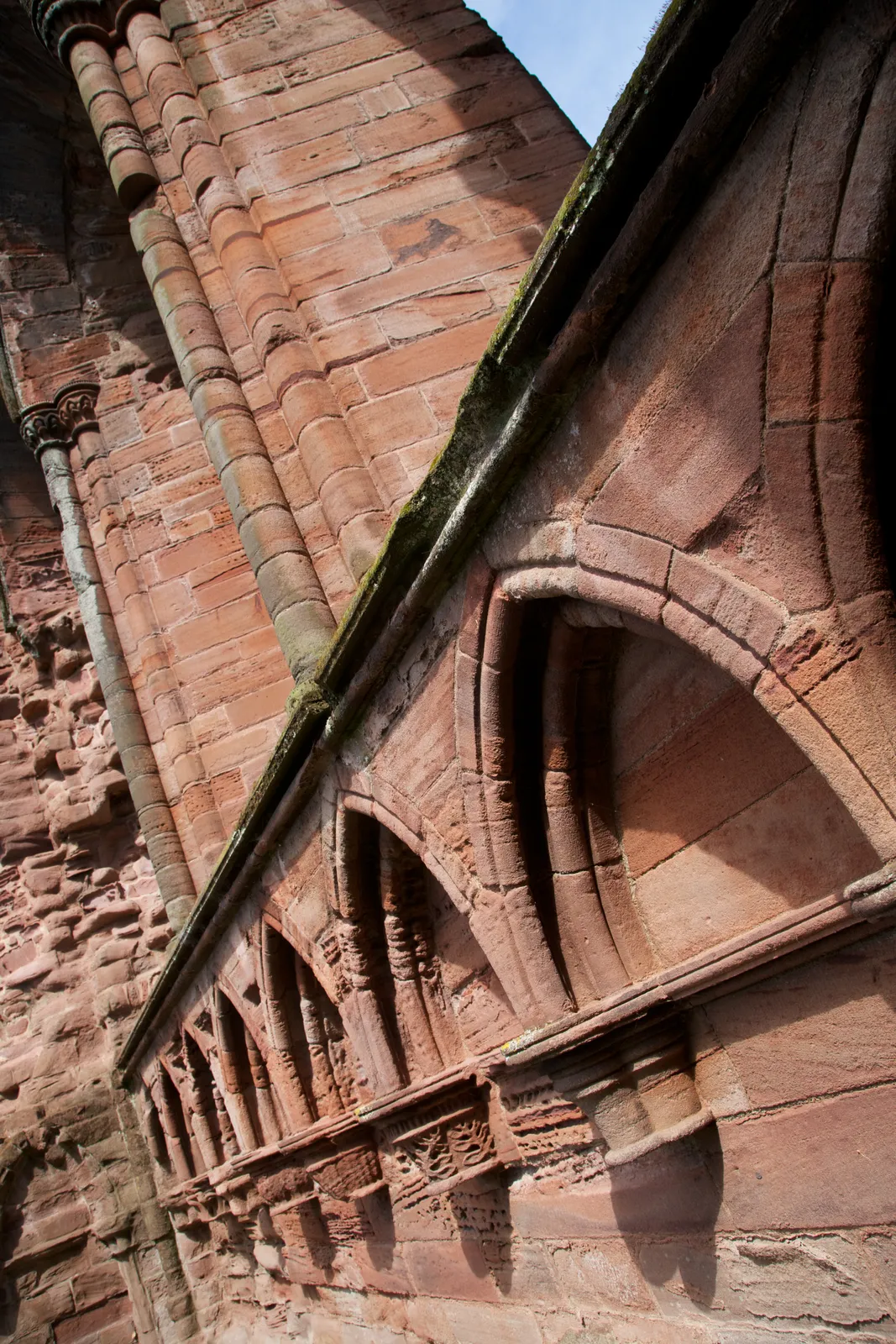
In April 1951, police received a tip and found the Stone on the High Altar of Arbroath Abbey. The choice of place was deliberate. The Declaration of Arbroath of 1320, the famous letter in which Scotland’s nobles asserted the nation’s independence, is associated with this abbey, so the ruined building was a deliberate symbol of Scottish nationhood.
The Stone was returned to Westminster Abbey in February 1952. Scottish police interviewed all four students. Three admitted their part, and Hamilton did not. Yet nobody was ever prosecuted. Speaking in Parliament, the Attorney General, Sir Hartley Shawcross, called the act “vulgar acts of vandalism,” but said that the public interest did not require a prosecution. The likely reasoning is plain enough: a trial would have turned four students into national figures and the Stone into a courtroom exhibit, and prosecution would have made the episode a political flashpoint.
What the Theft Changed
The heist did not bring Scotland a parliament. What it did was make nationalism and devolution a subject people talked about in public, at a moment when they were almost absent from Westminster politics, and it reopened a debate about the Union of 1707 that has never closed. Hamilton went on to a career as a lawyer and told the story for the rest of his life. Looking back in a 2008 interview with The Telegraph, he described the moment of taking the Stone in terms the paper used as its headline: “I felt I was holding Scotland’s soul.” The Stone itself came back to Scotland officially in 1996 and was kept at Edinburgh Castle until 2024; it is now on display at Perth Museum.
The story also endures because of what it is. It is not a tale of weapons or violence. It is a story of four young people, a coat used as a sling, a broken stone, and a policeman who stopped to share a joke at five in the morning.
What the Record Shows
9 sourced claims in this story, resting on 10 sources. Numbers link to the bibliography below.
- At Christmas 1950, four students broke into Westminster Abbey in London and took the Stone of Destiny, Scotland’s ancient coronation stone - sources: 1, 5, 10
- King Edward I of England (Edward the First) took the Stone from Scotland to London in 1296 - sources: 3, 4, 10
- As the students pulled the stone out from under the seat of the Coronation Chair, it crashed to the floor and broke in two - sources: 4, 10
- Outside Westminster Abbey, a policeman saw a couple in an embrace in their car and chatted to them, unaware that a piece of the stone was concealed in the car - sources: 1, 9, 10
- The students hid the large piece of the stone in a field in Kent and made their way back to Scotland - sources: 1, 4, 7, 10
- In Glasgow, a stonemason repaired the two pieces of the stone - sources: 1, 8, 9, 10
- The students left the stone at the ruined abbey of Arbroath, in Scotland - sources: 1, 4, 6
- The stone was left at Arbroath Abbey and collected in April 1951 - sources: 2, 7
- The four students who took the stone were never prosecuted - sources: 1, 8, 7
Archival Evidence & Picture Credits
Every image on this page was checked against its Wikimedia Commons file page.
- The Stone sat under the Coronation Chair for English and British coronations; this is the 1953 coronation of Elizabeth II, held after the Stone was recovered (Wikimedia Commons) - Wikimedia Commons file page
- A Ford Anglia saloon of 1950, the model of car the students drove south from Glasgow and used to carry the Stone (Wikimedia Commons) - Wikimedia Commons file page
- Westminster Abbey, from which the Stone was taken in the early hours of 24 December 1950 (Wikimedia Commons) - Wikimedia Commons file page
- Arbroath Abbey, where the Stone was left in April 1951 and found on the High Altar (Wikimedia Commons) - Wikimedia Commons file page


Verified Archival Sources & Bibliography
Every claim in this account has been fact-checked against primary archives and scholarly repositories:
- University of Glasgow Avenue: The daring capture of the Stone of Destiny (primary)
- University of Glasgow Story: Alan Stuart biography (primary)
- Edinburgh Castle (Historic Scotland): Stone of Destiny (primary)
- The Telegraph: Gavin Vernon obituary (2004) (news)
- The Telegraph: Ian Hamilton on Stone of Destiny (2008) (news)
- CBC As It Happens: Ian Hamilton and the Stone of Destiny (news)
- KentOnline: How the coronation stone ended up hidden in a Kent field (news)
- Glasgow Police Museum: The Stone of Destiny - 1950 (primary)
- The Scottish Banner: The Christmas theft of the Stone of Destiny (news)
- Wikipedia: 1950 removal of the Stone of Scone (reference)
Echoes of History Uncut. "Four Students Broke Into Westminster Abbey to Steal a Stone." Echoes of History Uncut. Last modified September 22, 2026. https://echoesofhistoryuncut.com/articles/stone-of-scone-heist-1950/.

An independent history publication using AI-assisted research, drafting and production. Consult each article’s citations and limitations; source inclusion does not establish independent verification of every claim.
▶
Watch the Complete Archival Documentary on YouTube
Subscribe to Echoes of History Uncut on YouTube for full widescreen 16:9 documentaries, primary archival footage, and declassified deep dives.