
By Crew Accounts, a Nuclear Launch Needed All 3 Officers to Agree. He Said No.
On October 27, 1962, at the peak of the Cuban Missile Crisis, the Soviet submarine B-59 was trapped underwater under depth-charge barrage by the US Navy. With carbon dioxide rising and communications severed, two senior officers authorized the launch of a 10-kiloton nuclear torpedo. Brigade Chief of Staff Vasili Arkhipov cast the lone dissenting vote, according to crew testimony, averting a nuclear launch.

In this dossier (10 chapters) ▾
Historical Dossier: Vasily Arkhipov and Submarine B-59 Location: The Atlantic Ocean near Cuba | Year: 27 October 1962 | Key Figures: Vasily Arkhipov, Captain Valentin Savitsky, Ivan Maslennikov
A Man Who Had Already Seen a Reactor Fail
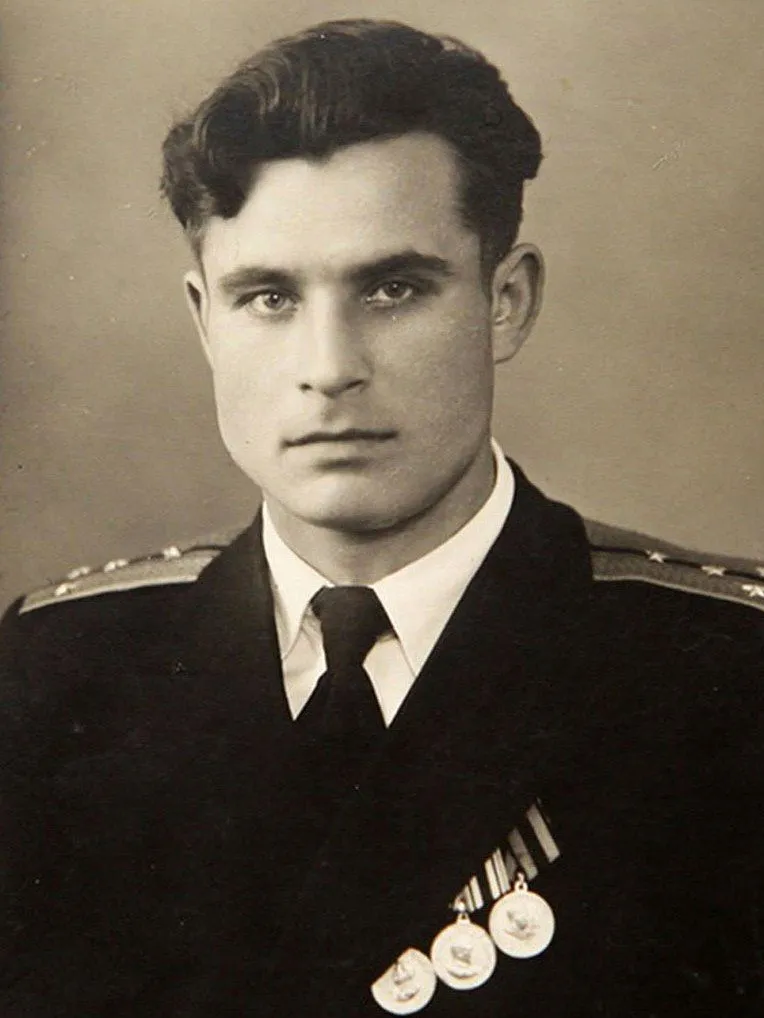
Vasily Aleksandrovich Arkhipov was born on 30 January 1926 near Moscow and trained at the Pacific Higher Naval School in Vladivostok. In July 1961 he became deputy commander of K-19, a Soviet ballistic missile submarine of the Hotel class.
During an exercise southeast of Greenland, K-19 suffered a catastrophic failure of its reactor coolant system. Seven engineers improvised a secondary cooling system by hand, which prevented a meltdown but exposed the whole crew to lethal radiation. All seven engineers and their officer died within weeks, and fifteen more crew members died within two years. Arkhipov was among those exposed, and he gained a reputation for courage and cool judgement from the episode.
October 1962
By October 1962 the Cuban Missile Crisis had brought the world to the brink. The United States had imposed a naval blockade around Cuba. Soviet submarines were in the Atlantic, some of them armed with nuclear weapons.
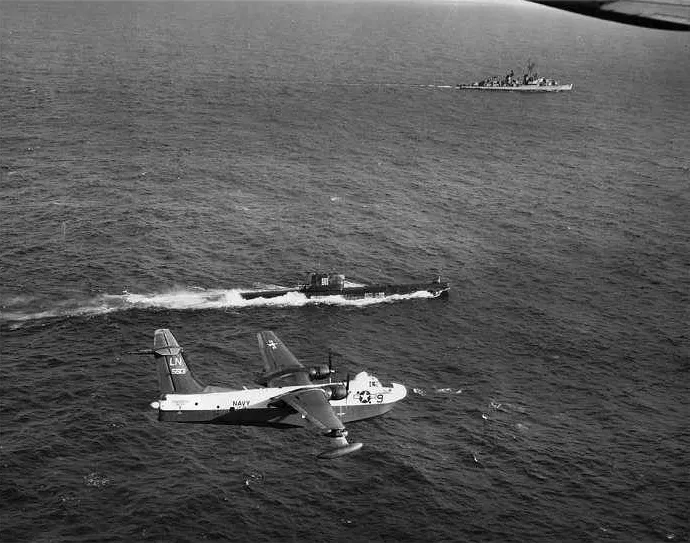
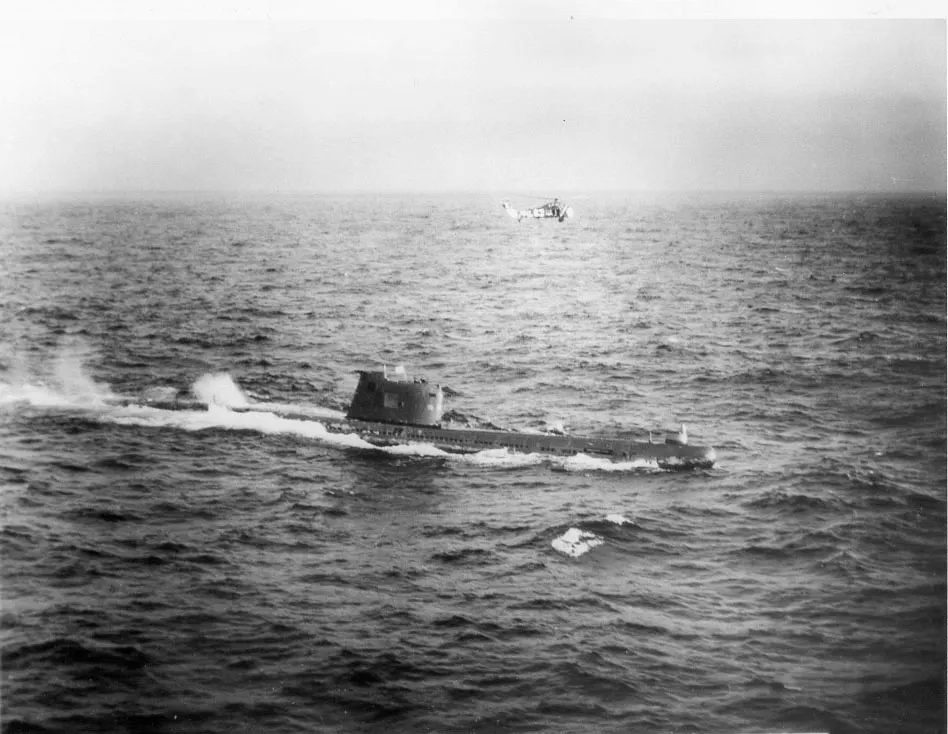
On 27 October, eleven US Navy destroyers and the aircraft carrier USS Randolph located the Soviet Foxtrot-class submarine B-59 near Cuba. The Americans dropped signalling depth charges, small charges meant to force a submarine to surface and identify itself.
Inside B-59
Inside the submarine conditions were awful. The boat had been out of contact with Moscow for days, and radio signals were hard to receive at depth. The batteries were almost drained and the air conditioning had failed, so the heat and the carbon dioxide were growing. The crew did not know whether war had begun.
B-59 carried a nuclear torpedo, a T-5 with a 10-kiloton warhead. Captain Valentin Grigoryevich Savitsky wanted to launch it. The political officer, Ivan Maslennikov, supported him.
Three Signatures
Soviet practice normally required the consent of the captain and the political officer to fire a nuclear weapon. But Arkhipov was aboard B-59 as chief of staff of the flotilla, and in this boat the launch needed three signatures. The captain and the political officer were willing. Arkhipov alone said no.
His standing from the K-19 disaster, and his authority as flotilla chief of staff, gave him influence. He persuaded Savitsky to surface and wait for orders from Moscow. B-59 came up among the American warships, nearly out of battery power.
Afterwards
When the crew returned to the Soviet Union they were reprimanded. One admiral is said to have told them: “It would have been better if you’d gone down with your ship.” Arkhipov went on to become a rear admiral in 1975 and a vice admiral in 1981. He retired in 1988 and headed the Kirov Naval Academy. He died on 19 August 1998, aged 72, of kidney cancer that is thought to have been linked to the radiation of 1961.
In 2002, Thomas S. Blanton, the director of the National Security Archive at George Washington University, called Arkhipov “the man who saved the world.” In 2017 his family received the first Future of Life Award on his behalf, for “exceptional measures… to safeguard the collective future of humanity.”
A Note of Caution
The story rests largely on oral testimony, including the account of other officers who were aboard B-59, and some historians have asked how far it can be relied upon. In 2024 the historian Sergey Radchenko pointed out that documents released by the Russian Ministry of Defense in 2022 make no mention of the Arkhipov incident. The core of the story, that B-59 was hunted by American ships, was low on air and power and carried a nuclear torpedo, is well established. The detail of who said what in the control room is a matter of testimony.
Why It Matters
Whatever the exact words in B-59’s control room, the episode shows how close the crisis came to a disaster that nobody wanted, and how much depended on the rules of one submarine and the judgement of a few men under great strain.
What the Record Shows
8 sourced claims in this story, resting on 5 primary and historical records. Numbers link to the bibliography below.
- Soviet submarine B-59 carried a 10-kiloton nuclear-tipped torpedo during the 1962 Cuban Missile Crisis - sources: 1, 3
- Severe cabin heat and failing air filtration raised internal temperatures above 50°C and carbon dioxide to toxic levels - sources: 1, 2
- The US Navy dropped low-yield signaling practice depth charges to force the submarine to surface - sources: 1, 4
- Captain Savitsky and Political Officer Maslennikov both agreed to prepare and fire the nuclear torpedo - sources: 1, 4
- Flotilla Chief of Staff Vasili Arkhipov held veto power and refused to authorize the launch - sources: 1, 4
- Arkhipov had previously survived the K-19 nuclear submarine reactor disaster in 1961 - sources: 2, 3
- B-59 surfaced peacefully, avoiding a direct confrontation with the USS Randolph carrier group - sources: 1, 4
- The incident remained classified in Russia and largely unknown in the West until the Havana 40th anniversary conference in 2002 - sources: 1, 4
Archival Evidence & Picture Credits
Every image on this page was checked against its Wikimedia Commons file page.
- Vasily Arkhipov, Soviet naval officer (Wikimedia Commons) - Wikimedia Commons file page
- A US destroyer and a patrol aircraft escorting a Soviet submarine, B-36, during the Cuban Missile Crisis in October 1962 (Wikimedia Commons) - Wikimedia Commons file page
- The Soviet Foxtrot-class submarine B-59 on the surface in the Atlantic (Wikimedia Commons) - Wikimedia Commons file page


Verified Archival Sources & Bibliography
Every claim in this account has been fact-checked against primary archives and scholarly repositories:
- National Security Archive (George Washington University): The Submarines of October - U.S. and Soviet Naval Encounters During the Cuban Missile Crisis (primary)
- Internet Archive: The Cuban Missile Crisis (Aleksandr Fursenko & Timothy Naftali) (book)
- Wikipedia: Vasily Arkhipov (reference)
- The Guardian: Vasili Arkhipov - The Soviet Submarine Officer Who Averted Nuclear War (investigative reporting)
- U.S. Naval History and Heritage Command: The Cuban Missile Crisis and the Naval Quarantine (primary)
Echoes of History Uncut. "By Crew Accounts, a Nuclear Launch Needed All 3 Officers to Agree. He Said No.." Echoes of History Uncut. Last modified September 15, 2026. https://echoesofhistoryuncut.com/articles/vasili-arkhipov/.

An independent history publication using AI-assisted research, drafting and production. Consult each article’s citations and limitations; source inclusion does not establish independent verification of every claim.
▶
Watch the Complete Archival Documentary on YouTube
Subscribe to Echoes of History Uncut on YouTube for full widescreen 16:9 documentaries, primary archival footage, and declassified deep dives.