
Rasputin's Murder: The Poison Legend vs. the Autopsy
On a frigid December night in 1916 Petrograd, a cabal of Russian monarchists led by Prince Felix Yusupov lured the Siberian mystic Grigori Rasputin into the basement of the Moika Palace. Offered pastries said to be laced with cyanide, shot multiple times, clubbed, and dumped through a hole in the ice-bound Malaya Nevka River, the 'Mad Monk' became the centerpiece of one of history's most mythologized assassinations.

In this dossier (10 chapters) ▾
Historical Dossier: The Murder of Grigori Rasputin Location: Petrograd (St Petersburg), Russian Empire | Year: 1869–1917 | Key Figures: Grigori Rasputin, Tsar Nicholas II, Empress Alexandra, Prince Felix Yusupov, Grand Duke Dmitri Pavlovich, Vladimir Purishkevich
The Peasant From Pokrovskoye
Grigori Yefimovich Rasputin was born on 21 January 1869 in Pokrovskoye, a small village in Siberia. His father was a peasant farmer and government courier. His parents lost seven other children in infancy. According to the historian Douglas Smith, Rasputin’s early life is “a black hole about which we know almost nothing.”
In 1897, at 28, he had a religious transformation. The reasons are unclear: some sources speak of a vision of the Virgin Mary, others of a flight from punishment for alleged horse theft. He went on pilgrimages, above all to the St Nicholas Monastery at Verkhoturye, where he met an elder, or starets, named Makary. He returned to Pokrovskoye a vegetarian and a teetotaller, and he began to gather a circle of followers. Rumours said he belonged to the Khlysty, a religious sect, but the historian Joseph Fuhrmann notes that “repeated investigations failed to establish that Rasputin was ever a member of the sect.”
The Man of God at Court
By 1904 and 1905 he had a reputation in Kazan as a wise starets, and letters of introduction took him to the church leaders of St Petersburg. On 1 November 1905, at Peterhof Palace, he met Tsar Nicholas II. The tsar wrote in his diary that he and the Empress had “made the acquaintance of a man of God, Grigory, from Tobolsk province.”
The reason he stayed was the heir. Tsesarevich Alexei, the only son of Nicholas and Alexandra, had haemophilia. In 1912, after a carriage accident near Spała, the boy developed a severe haemorrhage and seemed to be dying. The Empress had a telegram sent to Rasputin in Siberia, and he replied: “God has seen your tears and heard your prayers. Do not grieve. The Little One will not die. Do not allow the doctors to bother him too much.” The bleeding stopped the next day. The physician S. P. Fedorov later admitted that “the recovery was wholly inexplicable from a medical point of view.”
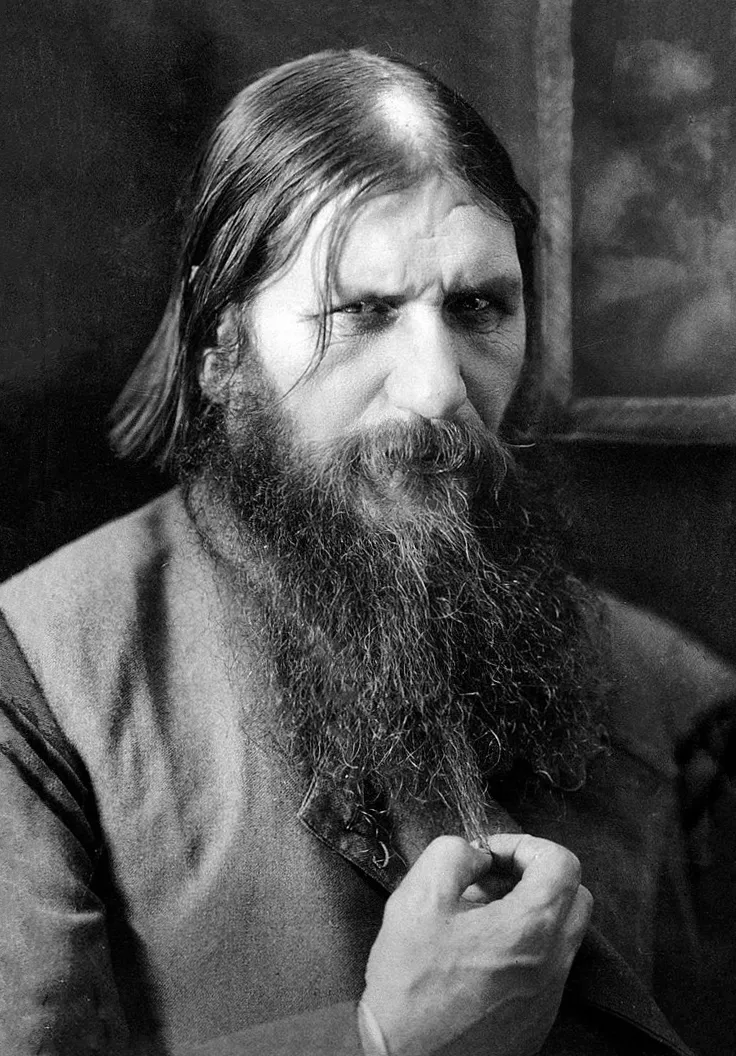
Historians offer several explanations, including rest, hypnosis, and the theory of the tutor Pierre Gilliard that Rasputin had stopped the doctors from giving the boy aspirin, which thins the blood. Whatever the cause, Alexandra became convinced that Rasputin was essential to her son’s survival.
Scandal and War
Rasputin’s access to the palace brought him powerful enemies. Outside the court, he was reported to indulge in drunken revels and affairs. In 1909 a follower, Khioniya Berlatskaya, accused him of rape. The contacts with the imperial children were, according to historians, “by all accounts completely innocent,” but rumours spread that he had seduced the Empress and her daughters, and obscene cartoons circulated.
On 12 July 1914 a peasant woman, Khioniya Guseva, stabbed him outside his house in Pokrovskoye. He survived. Guseva said she acted alone, believing him a “false prophet and even an Antichrist.” The police and Rasputin himself suspected Iliodor, a defrocked priest who had once supported him, but Guseva was found not responsible by reason of insanity.
When Nicholas went to command the army in 1915, Rasputin’s influence peaked. He and Alexandra dominated affairs at home while the war went badly, and both were increasingly hated. In November 1916 the Duma member Vladimir Purishkevich declared that the tsar’s ministers had “been turned into marionettes, marionettes whose threads have been taken firmly in hand by Rasputin and the Empress Alexandra Fyodorovna.”
The Plot
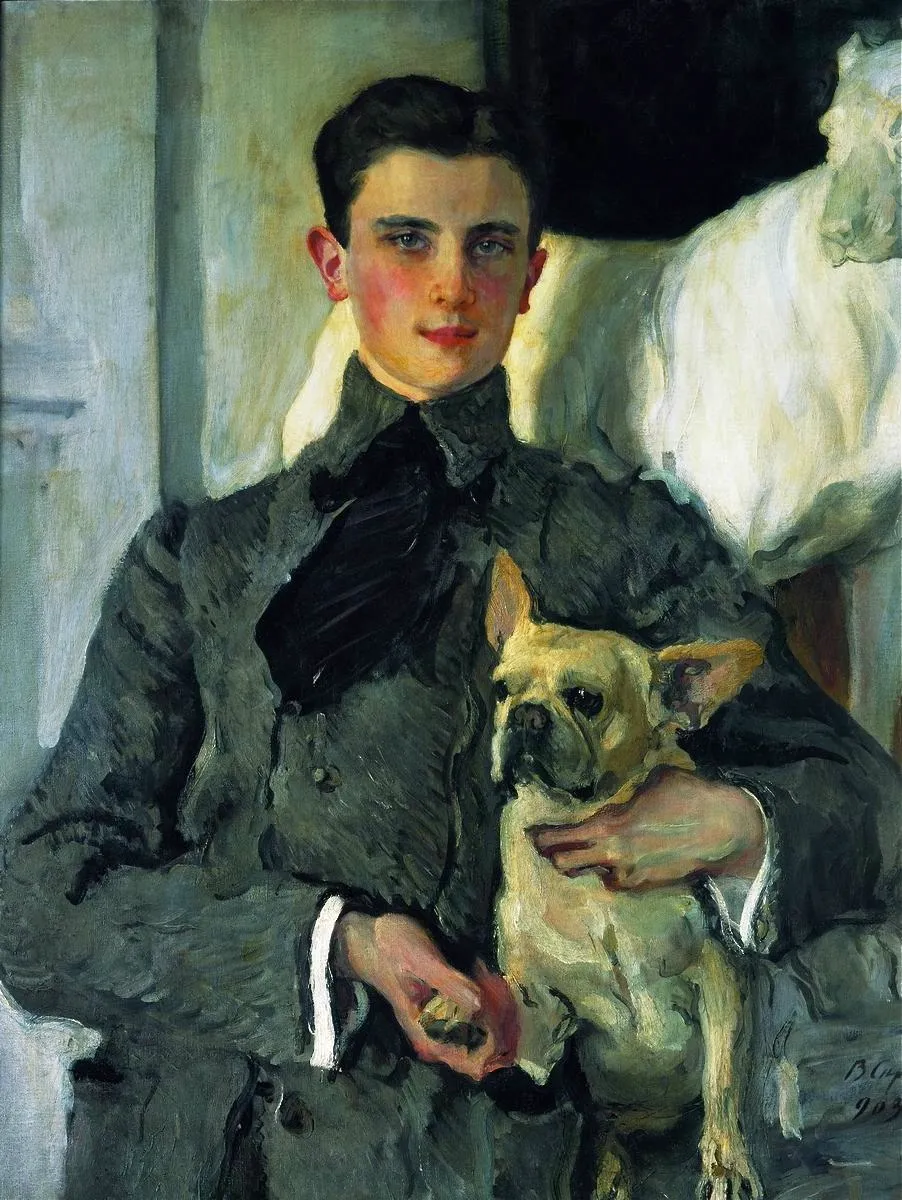
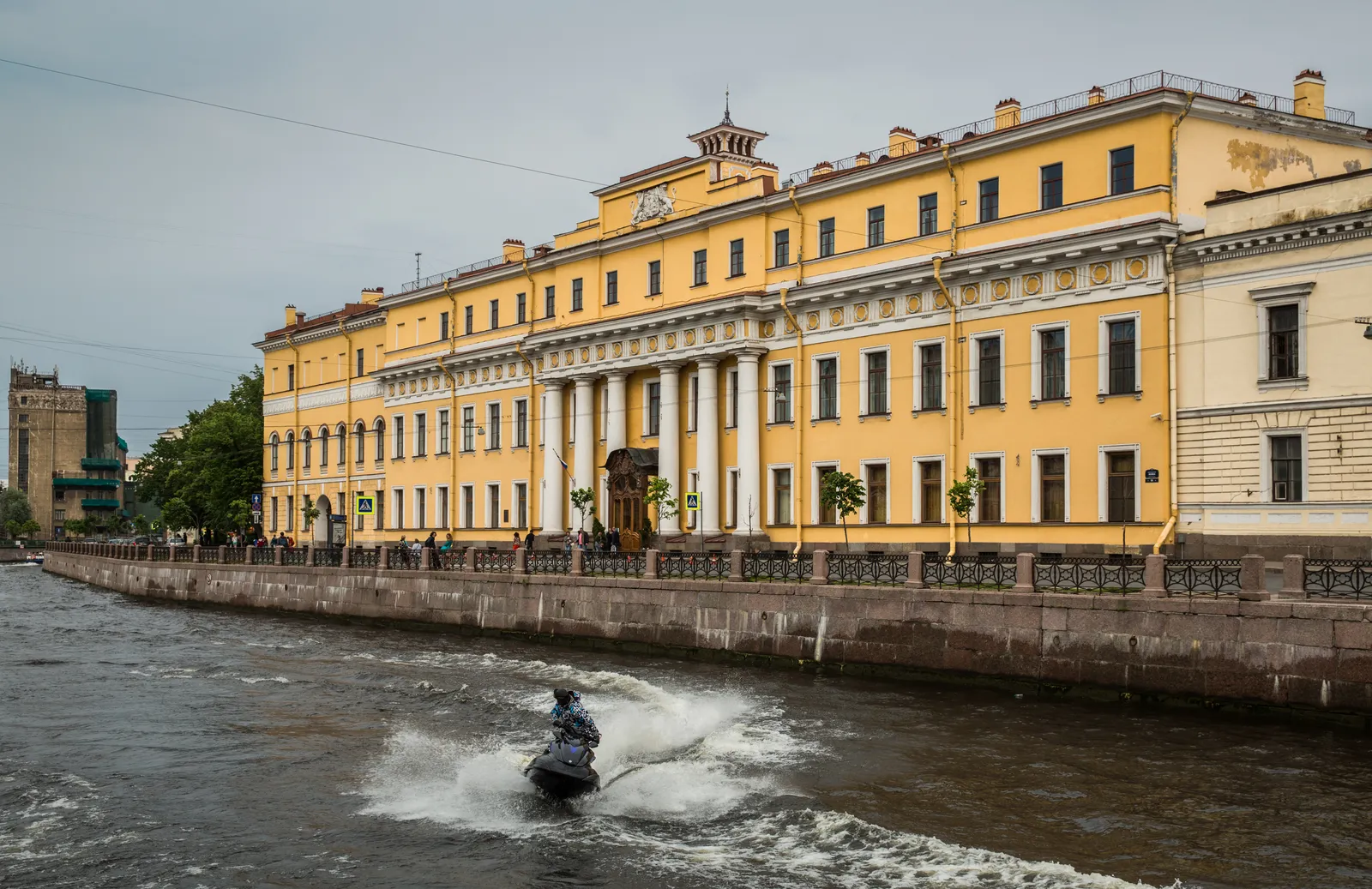
A group of conservative nobles decided that Rasputin was threatening the monarchy itself. They were led by Purishkevich, Grand Duke Dmitri Pavlovich and Prince Felix Yusupov, who was about 29. They planned to lure him to the Yusupov family’s Moika Palace.
The Night of 16–17 December 1916
The best-known account comes from Yusupov’s own memoirs, and historians treat key parts of it as doubtful. In his version, Rasputin arrived shortly after midnight and was led to the basement, where he was offered cakes and tea laced with cyanide. He ate them and was unharmed. He drank three glasses of poisoned Madeira, again without effect. At about 2:30 a.m. Yusupov went upstairs, took a revolver from the Grand Duke, came back and shot Rasputin in the chest, after telling him to “better look at the crucifix and say a prayer.”
In Yusupov’s story, the conspirators then drove to Rasputin’s apartment to create an alibi, and when Yusupov came back he found Rasputin alive and attacking him. Rasputin chased him into the courtyard, where Purishkevich shot him. The body was wrapped and thrown from a bridge into the Little Nevka.
What the Evidence Says
The historian Carolyn Harris, writing on the hundredth anniversary, observes that “the actual circumstances were less dramatic than Yusupov’s account.” Rasputin’s daughter recorded that her father “abstained from sweet food and would not have eaten the supposedly poisoned cakes.”
The best evidence is the autopsy, carried out by the city surgeon Dmitri Kosorotov after the body was found on 1 January 1917. He found no evidence of poison. He recorded three gunshot wounds, one of them at close range to the forehead, a slice wound and injuries after death. He found no water in the lungs, which contradicts the claim that Rasputin was thrown into the river alive and drowned. The one bullet recovered was too deformed to trace. The popular legend of the man who could not be poisoned, shot and drowned is, on this evidence, a legend.
After the Death
Rasputin was buried on 2 January 1917 in a small church that his friend Anna Vyrubova had built at Tsarskoye Selo. In March 1917, after the tsar’s abdication, Alexander Kerensky ordered the body to be exhumed and cremated, so that the grave would not become “a rallying point for supporters of the old regime.”
His daughter Maria left Russia for France and then the United States, where she worked as a dancer and a circus lion tamer. Historians note that Rasputin’s “scandalous and sinister reputation helped discredit the Tsarist government,” and that the Romanov dynasty collapsed within months of his death.
What the Record Shows
8 sourced claims in this story, resting on 4 primary and historical records. Numbers link to the bibliography below.
- Grigori Rasputin exercised deep political influence over Tsarina Alexandra due to his ability to treat the Tsarevich’s hemophilia - sources: 4
- Prince Felix Yusupov, Grand Duke Dmitri Pavlovich, and Vladimir Purishkevich conspired to assassinate Rasputin in December 1916 - sources: 2
- The assassination occurred in the basement and courtyard of the Moika Palace in Petrograd - sources: 2, 4
- Conspirators attempted to poison Rasputin with cyanide before shooting him multiple times - sources: 2, 3
- Rasputin attempted to escape across the snowy courtyard before being shot in the back and forehead by Purishkevich - sources: 2, 3
- The body was dumped into an ice hole in the Malaya Nevka River from the Petrovsky Bridge - sources: 2, 4
- Professor Dmitry Kosorotov’s autopsy established that the fatal headshot caused immediate death prior to immersion - sources: 5
- The murder failed to save the monarchy, which collapsed under the February Revolution ten weeks later - sources: 2
Archival Evidence & Picture Credits
Every image on this page was checked against its Wikimedia Commons file page.
- Grigori Rasputin, seated, in Petrograd in 1916 (Wikimedia Commons) - Wikimedia Commons file page
- Prince Felix Yusupov, one of the conspirators (Wikimedia Commons) - Wikimedia Commons file page
- The Moika Palace in Saint Petersburg, where the murder took place (Wikimedia Commons) - Wikimedia Commons file page


Verified Archival Sources & Bibliography
Every claim in this account has been fact-checked against primary archives and scholarly repositories:
- Internet Archive: Rasputin - Faith, Power, and the Twilight of the Romanovs (Douglas Smith) (book)
- Internet Archive: Lost Splendor - The Memoirs of Prince Felix Youssoupoff (primary memoir)
- Wikipedia: Grigori Rasputin (reference)
- The Slavonic and East European Review: The Autopsy of Grigori Rasputin and the Forensic Evidence (academic)
Echoes of History Uncut. "Rasputin's Murder: The Poison Legend vs. the Autopsy." Echoes of History Uncut. Last modified September 14, 2026. https://echoesofhistoryuncut.com/articles/rasputin/.

An independent history publication using AI-assisted research, drafting and production. Consult each article’s citations and limitations; source inclusion does not establish independent verification of every claim.
▶
Watch the Complete Archival Documentary on YouTube
Subscribe to Echoes of History Uncut on YouTube for full widescreen 16:9 documentaries, primary archival footage, and declassified deep dives.