
Two Nations Nearly Went to War Over One Pig.
In June 1859, on San Juan Island, American settler Lyman Cutlar shot a Hudson's Bay Company pig that was rooting in his garden. Within weeks, 461 Americans with 14 cannons faced British warships - until a British admiral refused to start a war over "a squabble about a pig." The two nations shared the island until 1872. The only casualty was the pig.

In this dossier (9 chapters) ▾
Historical Dossier: The Pig War Location: San Juan Island, Washington Territory (Haro Strait) | Year: 1846–1872 | Key Figures: Lyman Cutlar, Charles Griffin, Captain George Pickett, General William Harney, Governor James Douglas, Rear Admiral Robert Baynes, General Winfield Scott
A Treaty With Two Channels
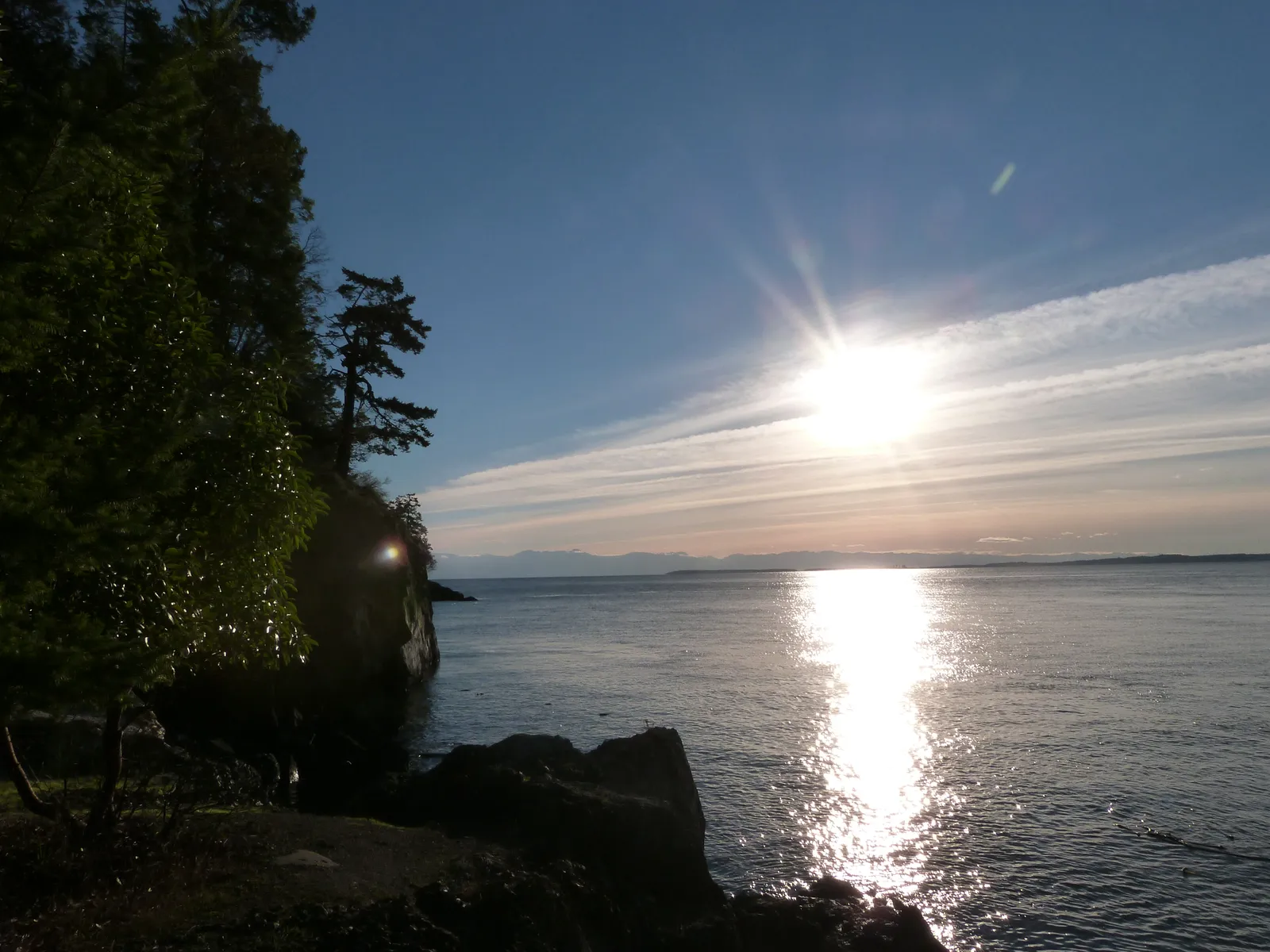
The trouble began with a sentence. The Oregon Treaty, signed on 15 June 1846, divided the Oregon Country between the United States and Britain along the 49th parallel, then “to the middle of the channel which separates the continent from off-shore Vancouver Island.” That sounded precise. In fact there were two channels that fit: Haro Strait, to the west of the San Juan Islands, which the Americans favoured, and Rosario Strait, to the east, which the British preferred. Whoever’s channel won would get the islands in between.
When a joint Boundary Commission began work in 1856, the disagreement was immediate. The British commissioner, James Charles Prevost, held that only Rosario Strait met all of the treaty’s tests, being navigable, southerly and separating the continent from Vancouver Island. His American counterpart, Archibald Campbell, replied that Haro Strait was “the wider and more direct passage.” The commissioners met aboard HMS Satellite from 27 June 1857, and got nowhere. When Prevost proposed a compromise through San Juan Channel in December, Campbell turned it down. The islands stayed in dispute.
A Farm, a Garden and a Pig
By 1859 about 25 to 29 American settlers lived on San Juan Island under the Donation Land Claim Act. They shared it with the Hudson’s Bay Company, which ran the Belle Vue Sheep Farm there. The two groups lived side by side, uneasily.
On 15 June 1859, exactly thirteen years after the treaty, an American farmer named Lyman Cutlar found a pig rooting in his garden and eating his tubers. It was not the first time. Cutlar shot it.
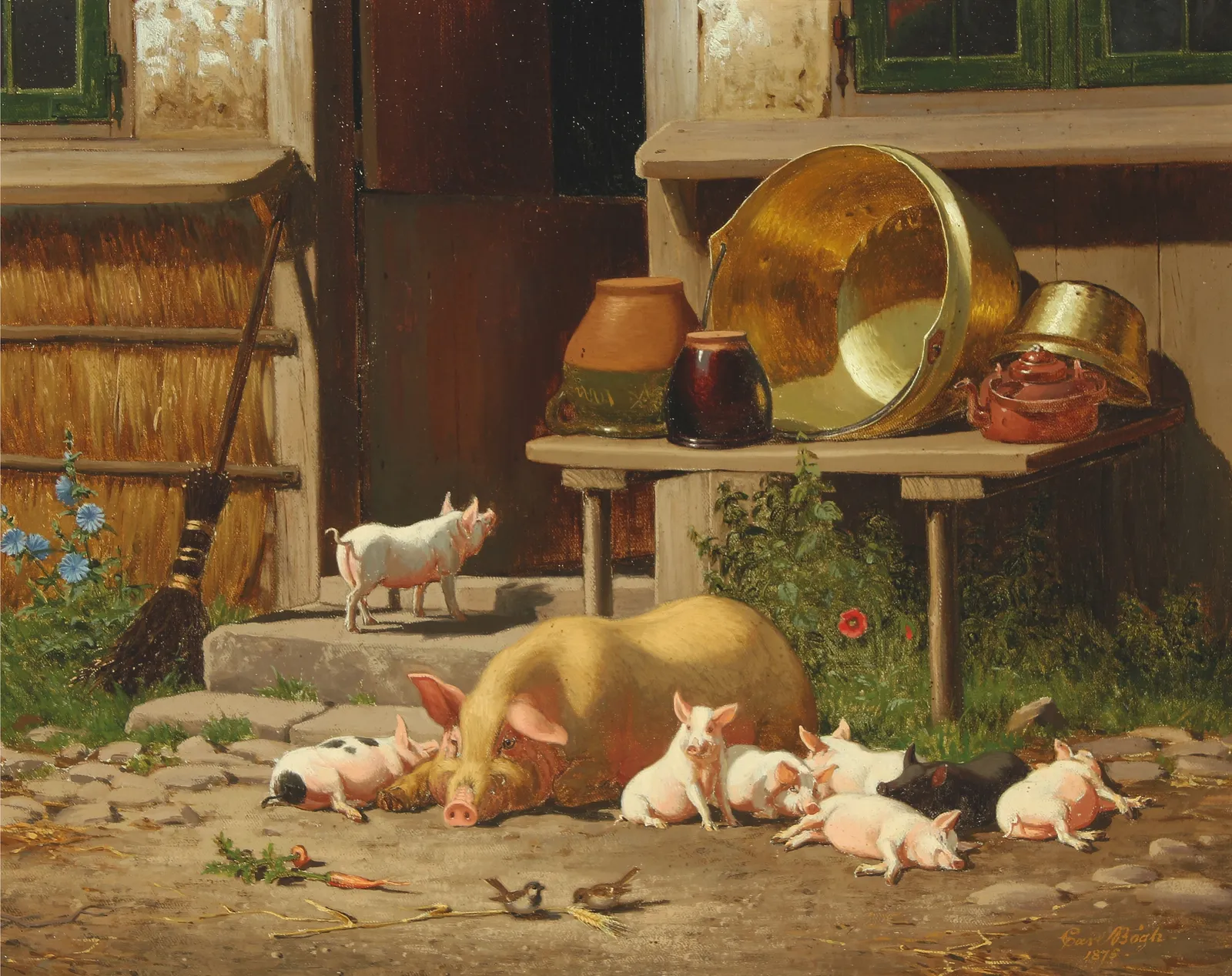
The pig belonged to Charles Griffin, an Irishman employed to manage the sheep farm. Griffin asked for $100. Cutlar offered $10, saying the animal had been trespassing. When British officials threatened to arrest Cutlar, the American settlers asked for military protection.
Pickett Lands
Brigadier General William S. Harney sent Captain George Pickett to the island with 66 soldiers of the 9th Infantry Regiment aboard the USS Massachusetts. Pickett is reported to have said that he would “make a Bunker Hill of it.” His men first took a position near the farm, then moved to higher ground, where a redoubt was built under Second Lieutenant Henry Martyn Robert, who would later write Robert’s Rules of Order.
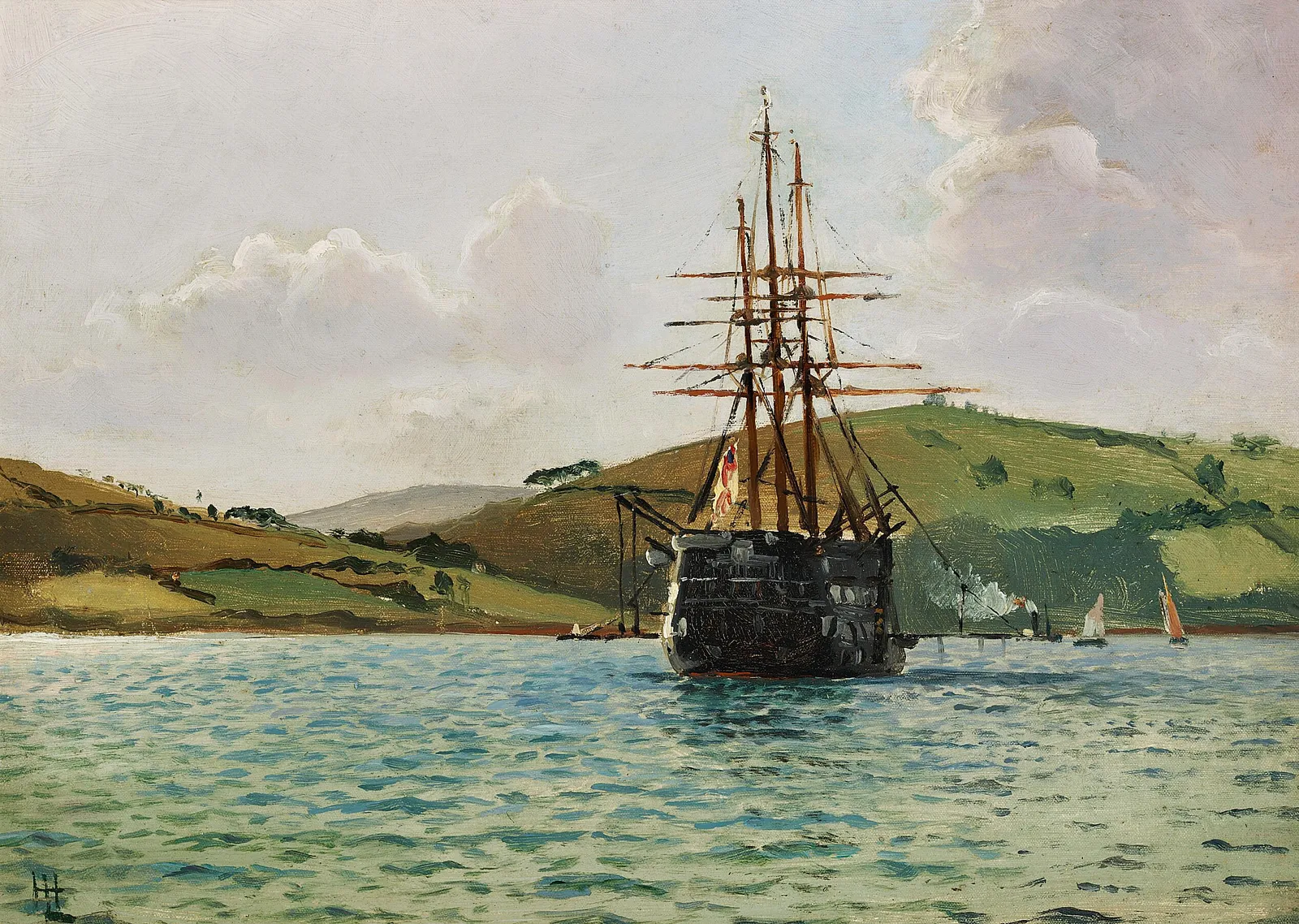
The British responded with warships. Captain Geoffrey Hornby brought three, and Governor James Douglas of the Colony of Vancouver Island told him to remove the Americans but to avoid fighting. By 10 August, the American force had grown to 461 men and 14 cannons. Facing them were five British warships carrying 70 guns and 2,140 men.
The Admiral Who Refused
Hornby waited for his superior, Rear Admiral Robert L. Baynes, who commanded the Royal Navy in the Pacific. When Baynes arrived and saw what was at stake, he refused to attack. He was not going to start, he said, “a war between two great nations over a squabble about a pig.”
News of the standoff alarmed London and Washington. In the autumn of 1859, President James Buchanan sent General-in-Chief Winfield Scott to negotiate with Governor Douglas. They agreed on a joint military occupation, with no more than 100 men on each side, until a diplomatic solution could be found.
Twelve Quiet Years
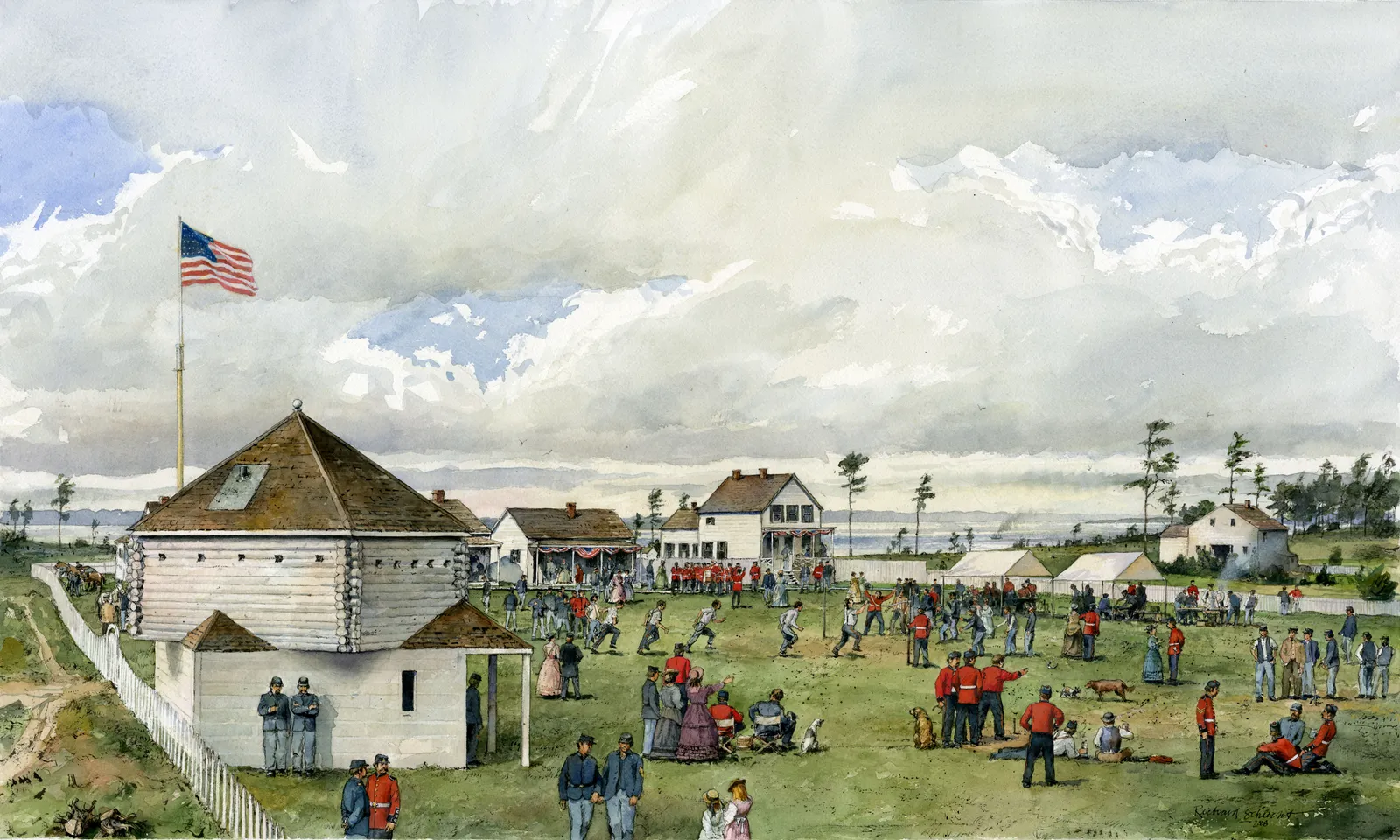
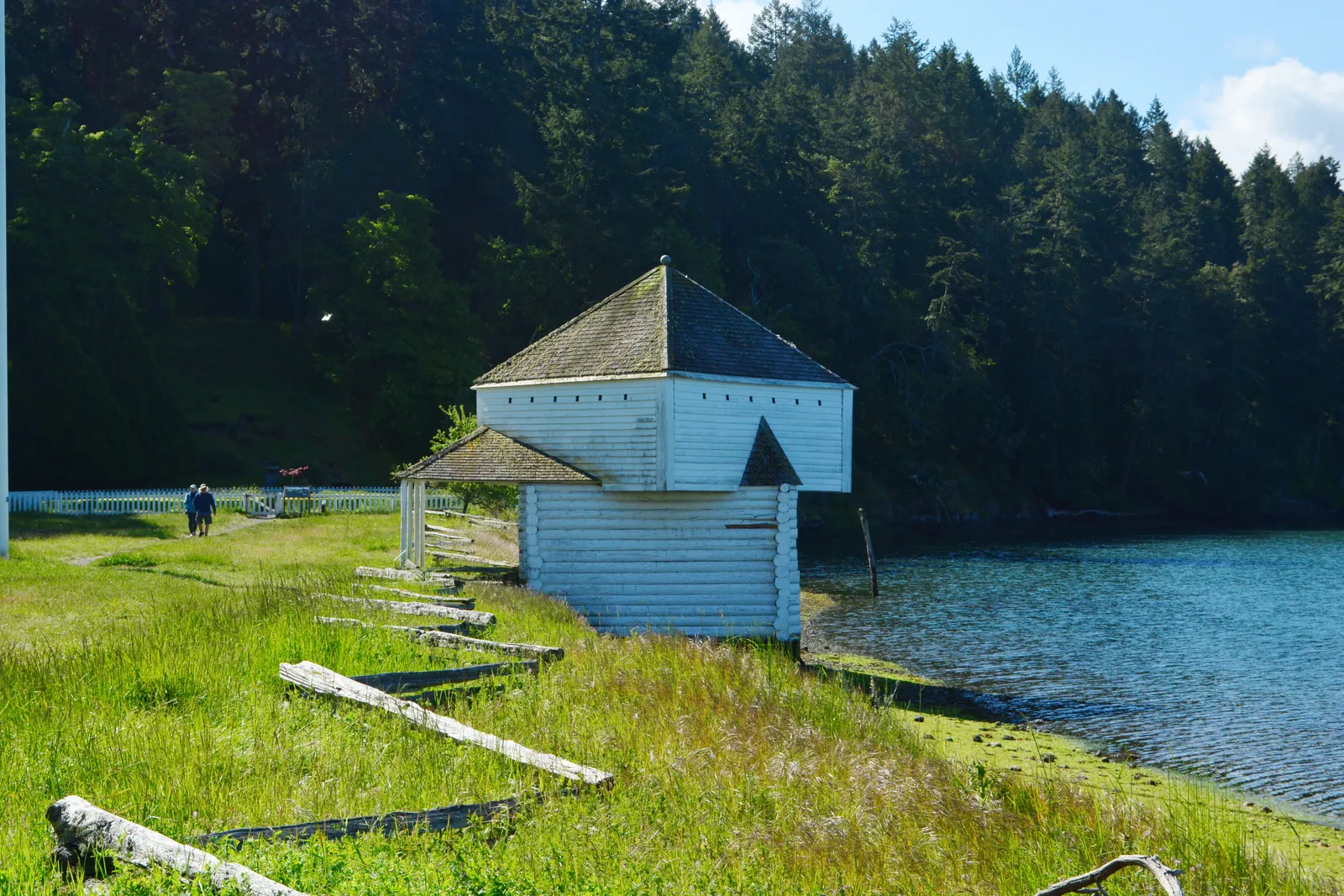
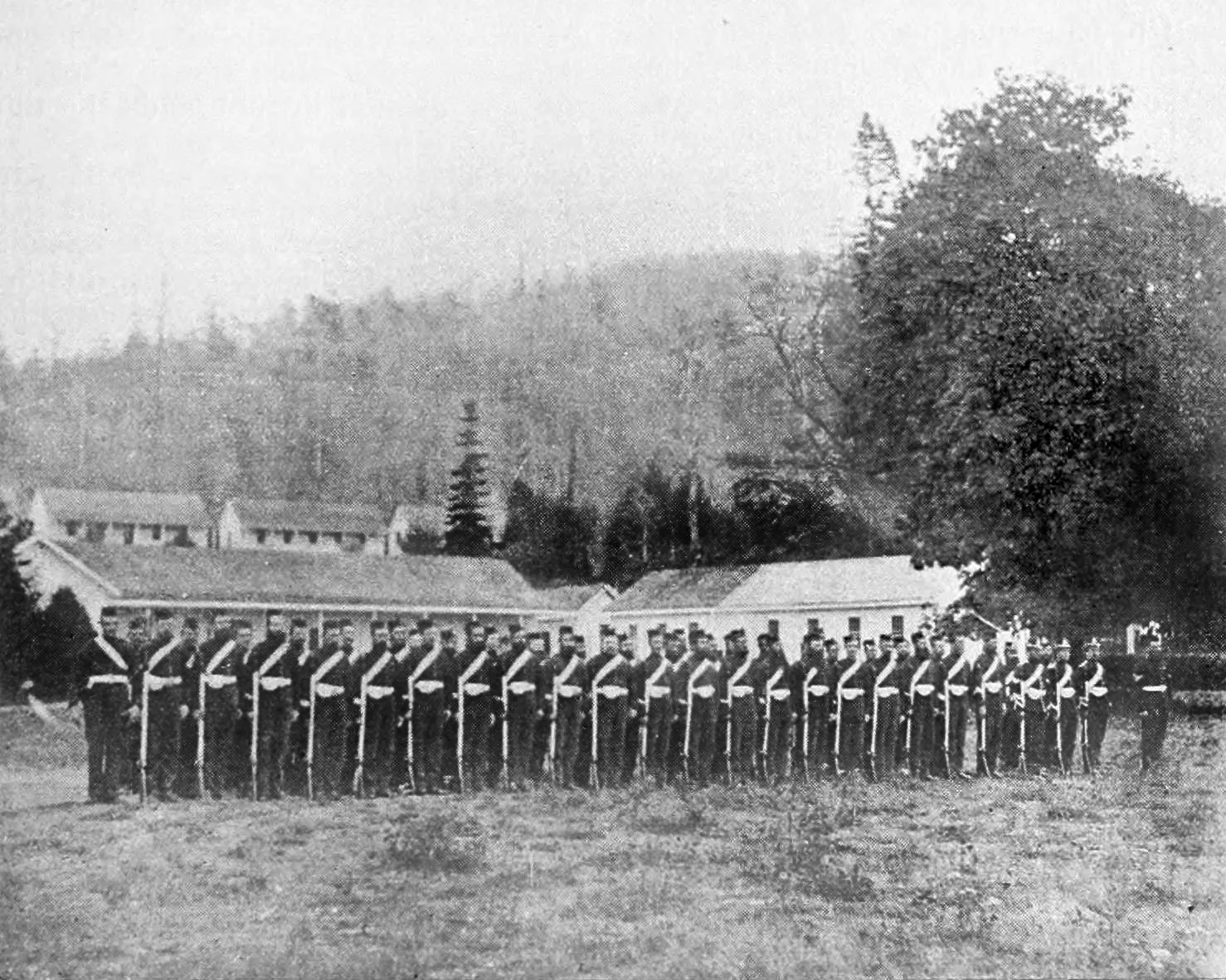
For twelve years the two garrisons shared the island. The British camp sat on the north end, near good supplies, and the American camp on the southern high meadow. The soldiers, by most accounts, got along well. They celebrated one another’s national holidays and competed in athletic contests.
The dispute was ended by arbitration. Under the 1871 Treaty of Washington, the German Emperor Wilhelm I was asked to decide. On 21 October 1872 his commission ruled in favour of the American position, placing the boundary in Haro Strait. The British Royal Marines left on 25 November 1872, and the last Americans in 1874.
Why It Is Remembered
The Pig War is remembered for what did not happen. Two powers with the best navies and armies in the world, over an ambiguous clause and a dead pig, stood close to war, and then climbed down. The pig remains the only casualty.
What the Record Shows
12 sourced claims in this story, resting on 10 sources. Numbers link to the bibliography below.
- On June 15, 1859, Lyman Cutlar shot a pig, and the shooting ignited a dispute between the United States and Britain over the San Juan Islands - sources: 4, 1, 10
- On June 15, 1859, on San Juan Island, Lyman Cutlar, an American settler, shot a pig that was rooting in his garden - sources: 1, 3, 7, 8
- Lyman Cutlar shot a pig belonging to the British Hudson’s Bay Company - sources: 4, 7, 1
- The United States and Britain disputed ownership of the San Juan Islands - sources: 4, 1, 5
- British authorities threatened to arrest Lyman Cutlar - sources: 1, 2, 4
- When British authorities threatened to arrest Cutlar, American settlers sought military protection from the United States Army - sources: 1, 3, 5
- Captain George Pickett’s infantry company landed on San Juan Island on July 27, 1859 - sources: 1, 5
- By August 1859, 461 Americans with 14 cannons faced British warships at San Juan Island - sources: 1, 4, 10
- British Rear Admiral Robert Lambert Baynes said he would not involve two great nations in a war over a squabble about a pig - sources: 1, 3, 7
- There were no human casualties in the Pig War - sources: 1, 3, 4, 9
- The joint military occupation of San Juan Island lasted until 1872, when the islands became part of the United States - sources: 1, 6, 10
- The only casualty of the Pig War was the pig - sources: 1, 3, 4, 9
Archival Evidence & Picture Credits
Every image on this page was checked against its Wikimedia Commons file page.
- Haro Strait at Lime Kiln Point on San Juan Island (Wikimedia Commons) - Wikimedia Commons file page
- A sow with her piglets, painted by Carl Bøgh in 1875, illustrating the kind of animal at the centre of the dispute (Wikimedia Commons) - Wikimedia Commons file page
- The American camp on San Juan Island on 4 July 1867 (Wikimedia Commons) - Wikimedia Commons file page
- A British ship of the line, painted by Holger Lübbers, representing the Royal Navy forces that confronted the Americans (Wikimedia Commons) - Wikimedia Commons file page
- The blockhouse at the British camp on San Juan Island (Wikimedia Commons) - Wikimedia Commons file page
- British troops evacuating San Juan Island in 1872 (Wikimedia Commons) - Wikimedia Commons file page


Verified Archival Sources & Bibliography
Every claim in this account has been fact-checked against primary archives and scholarly repositories:
- U.S. National Park Service, San Juan Island National Historical Park: The Pig War (primary)
- U.S. National Park Service: Lyman Cutlar Homestead (primary)
- Wikipedia: Pig War (1859) (reference)
- HistoryLink.org: Lyman Cutlar touches off Pig War (Essay 5037) (reference)
- HistoryLink.org: San Juan Island Pig War, Part 1 (Essay 5724) (reference)
- The Seattle Times: San Juan Island’s 1859 Pig War (news)
- Historic UK: The Pig War of 1859 (news)
- Salish Current: The Pig War - they were committed to keeping the peace (2024) (news)
- BC Studies (University of British Columbia): From Imbroglio to Pig War: The San Juan Island Dispute, 1853-71 (book)
- HistoryNet (American History magazine): The San Juan Islands’ Pig War (news)
Echoes of History Uncut. "Two Nations Nearly Went to War Over One Pig.." Echoes of History Uncut. Last modified September 22, 2026. https://echoesofhistoryuncut.com/articles/pig-war-san-juan-1859/.

An independent history publication using AI-assisted research, drafting and production. Consult each article’s citations and limitations; source inclusion does not establish independent verification of every claim.
▶
Watch the Complete Archival Documentary on YouTube
Subscribe to Echoes of History Uncut on YouTube for full widescreen 16:9 documentaries, primary archival footage, and declassified deep dives.