
A Single Switch Stopped a Nuclear Blast on US Soil
In January 1961, a Strategic Air Command B-52 Stratofortress suffered structural failure over Goldsboro, North Carolina, jettisoning two 3.8-megaton Mark 39 thermonuclear warheads. Three of four arming mechanisms engaged on descent; only a single low-voltage arm-safe toggle switch prevented an accidental nuclear catastrophe on the American homeland.

In this dossier (9 chapters) ▾
Historical Dossier: The 1961 Goldsboro B-52 Crash Location: Near Faro, Wayne County, North Carolina, USA | Year: 24 January 1961 | Key Figures: Major Walter Scott Tulloch, Parker F. Jones, Robert S. McNamara
Bombers in the Air, Day and Night
During the Cold War the Strategic Air Command kept nuclear-armed bombers in the air around the clock, so that a Soviet first strike could never catch the force on the ground. The programme was known as “Cover All” airborne alert, and its B-52s flew continuous patrols, including routes over the Canadian Arctic. They carried live thermonuclear weapons, and they flew over American towns and farmland on the way.
On 24 January 1961, one of these aircraft, a Boeing B-52G carrying two 3.8-megaton Mark 39 thermonuclear bombs, ran into trouble over eastern North Carolina.
A Leak at 10,000 Feet
During an aerial refuelling rendezvous, the crew of the tanker saw that the B-52’s right wing was leaking fuel. The bomber was told to hold while it burned off fuel, but the leak got worse. In three minutes it lost 37,000 pounds. As the aircraft came down toward Seymour Johnson Air Force Base, the pilots lost control at 10,000 feet.
Major Walter Scott Tulloch ordered the crew to bail out at 9,000 feet. Five of them landed safely, one died on landing and two died in the crash. The bomber broke up in the air, and witnesses reported two red flashes, which suggested explosions of fuel. The wreckage came down on farmland about 12 miles north of Goldsboro, near Faro.
The Bombs
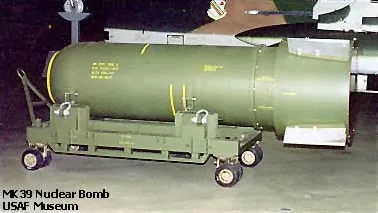
Both Mark 39 bombs went through the early stages of their firing sequences when they separated from the aircraft, even though they were designed to prevent exactly that. The key safeguard was a part called the MC-772 Arm/Safe switch, which needed a 28-volt electrical signal to move from “safe” to “armed.”
The first bomb deployed its parachute after its arming rods were pulled. Its Arm/Safe switch stayed in the “Safe” position, and the weapon did not fully arm. The engineer Parker F. Jones, who reviewed the accident, later concluded: “one simple, dynamo-technology, low voltage switch stood between the United States and a major catastrophe.”
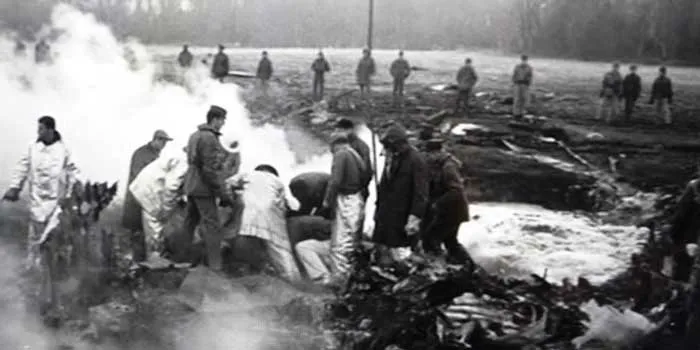
The second bomb hit the ground at high speed without its parachute opening. Its switch had physically rotated to “Arm,” but the impact had broken the electrical connection, so the weapon could not fire. The thermonuclear secondary of this bomb sank about 180 feet into the mud and was never recovered, in spite of a large excavation.
What Changed
After the accident, all Mark 39 Mod 2 bombs that had not received a safety modification known as Alt 197 were taken out of service. The change replaced the weak MC-772 switch with a different model, the MC-1288, which prevented the low-voltage charging of the bomb’s thermal batteries while it was in the “Safe” position.
The incident also affected policy. Secretary of Defense Robert S. McNamara later cited Goldsboro when he argued against giving NATO commanders authority over nuclear weapons, saying that “the possibility of an accidental nuclear explosion still existed.”
The Easement
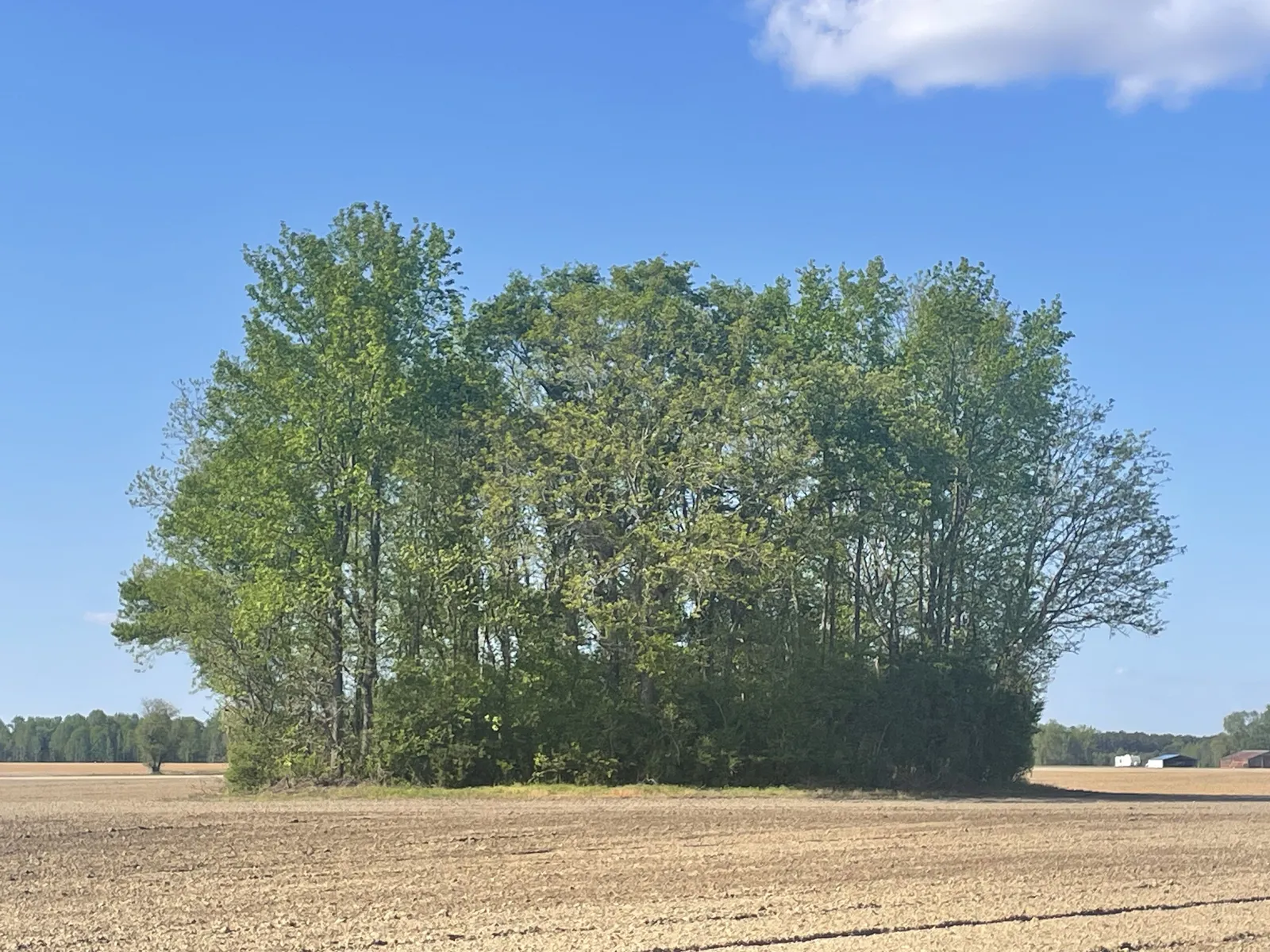
The land has been under a permanent easement ever since, covering a radius of 200 feet and restricting digging below five feet. Underneath it lies the part of the second bomb that no one could reach.
How Close Was It?
The phrase “one switch” is a fair summary of the first bomb, and it is the part that has made Goldsboro famous. It should be read with care. The second bomb, whose switch had moved to “Arm” but whose circuit had been broken, was also saved by luck in the form of the crash damage. Neither weapon was designed to go off in an accident. Both came closer than they should have, and the Air Force and the Sandia laboratory learned from that.
Goldsboro is one of many “Broken Arrow” incidents of the early nuclear age, and it is among the best documented. It shows that safety in a nuclear arsenal depended on engineering details, a single switch among them, that most of the public never saw.
What the Record Shows
8 sourced claims in this story, resting on 6 primary and historical records. Numbers link to the bibliography below.
- A B-52G Stratofortress suffered fuel loss and broke apart over Goldsboro, North Carolina on January 24, 1961 - sources: 1, 4
- The bomber carried two Mark 39 thermonuclear bombs, each with an explosive yield of up to 3.8 megatons - sources: 1, 2
- On the first weapon, three of four safety arming mechanisms activated sequentially on descent - sources: 1, 3
- Only a single low-voltage arm-safe toggle switch prevented the first bomb from detonating - sources: 1, 3
- Sandia National Laboratories supervisor Parker F. Jones concluded the weapon lacked adequate safety for airborne alert - sources: 1, 3
- The second bomb entered the ground at 700 mph, burying its secondary stage deep into marshy soil - sources: 2, 5
- The secondary thermonuclear core of the second bomb was never recovered due to severe groundwater flooding - sources: 2, 5
- The Department of Defense purchased a permanent underground easement over the Faro burial site - sources: 4, 5
Archival Evidence & Picture Credits
Every image on this page was checked against its Wikimedia Commons file page.
- A Mark 39 thermonuclear weapon casing, the type carried by the bomber (Wikimedia Commons) - Wikimedia Commons file page
- The military excavation of the Goldsboro crash site in 1961 (Wikimedia Commons) - Wikimedia Commons file page
- The farmland easement in Wayne County where parts of the bomb remain buried (Wikimedia Commons) - Wikimedia Commons file page


Verified Archival Sources & Bibliography
Every claim in this account has been fact-checked against primary archives and scholarly repositories:
- The Guardian: US Nearly Detonated Atomic Bomb over North Carolina – Secret Document (Ed Pilkington) (investigative reporting)
- Internet Archive: Command and Control - Nuclear Weapons, the Damascus Incident, and the Illusion of Safety (Eric Schlosser) (book)
- National Security Archive (George Washington University): The 1961 Goldsboro Broken Arrow Incident Documents (primary)
- Wikipedia: 1961 Goldsboro B-52 crash (reference)
- North Carolina Department of Natural and Cultural Resources: Nuclear Mishap in Goldsboro (primary)
- Defense Nuclear Agency: Broken Arrow Accident Report Database (primary)
Echoes of History Uncut. "A Single Switch Stopped a Nuclear Blast on US Soil." Echoes of History Uncut. Last modified September 15, 2026. https://echoesofhistoryuncut.com/articles/goldsboro-nuclear-bomb/.

An independent history publication using AI-assisted research, drafting and production. Consult each article’s citations and limitations; source inclusion does not establish independent verification of every claim.
▶
Watch the Complete Archival Documentary on YouTube
Subscribe to Echoes of History Uncut on YouTube for full widescreen 16:9 documentaries, primary archival footage, and declassified deep dives.