
A King Built a Giant Warship. It Sank in 20 Minutes
On August 10, 1628, Sweden launched the Vasa, a colossal 64-gun royal galleon constructed to spearhead the Thirty Years' War. Coerced by King Gustavus Adolphus into carrying an excessive battery of heavy 24-pounder bronze cannons on two enclosed decks, the top-heavy warship heeled under a light summer breeze just twenty minutes into its maiden voyage, flooding through open gun ports and sinking in Stockholm harbor.

In this dossier (10 chapters) ▾
Historical Dossier: The Sinking of the Vasa Location: Stockholm harbour, Sweden | Year: 1625–1628 (raised 1961) | Key Figures: King Gustavus Adolphus, Henrik Hybertsson, Hein Jacobsson, Captain Söfring Hansson, Vice Admiral Klas Fleming, Anders Franzén
A King’s Flagship
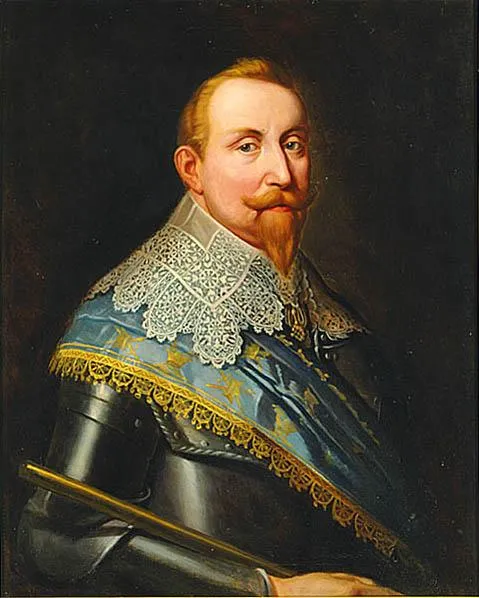
On 16 January 1625, King Gustavus Adolphus of Sweden commissioned a new warship. Henrik Hybertsson, a Dutch-born shipwright, and a businessman named Arendt de Groote signed a contract to build four vessels for the navy, and the largest would be the Vasa, named for the royal house. Sweden was at war with Poland-Lithuania and was about to enter the Thirty Years’ War in Germany, and the king wanted a navy that would let him dominate the Baltic.
The ship was built at the navy yard in Stockholm. Hybertsson laid the keel in late February or early March 1626. Before the ship was finished, he fell ill, and a shipwright named Henrik “Hein” Jacobsson took over the supervision. The Vasa was launched in March 1627, and the fitting out continued afterwards.
The Most Heavily Armed Ship in the World
The armament was extraordinary. The Vasa carried 64 guns: 48 24-pounders, eight 3-pounders, two 1-pounders and six howitzers. The bronze cannons were cast at the state foundry in Stockholm. They were arranged on two full gun decks, which was a novelty, and the broadside weight came to 588 pounds of shot, which may have made her the most powerful warship of her day.
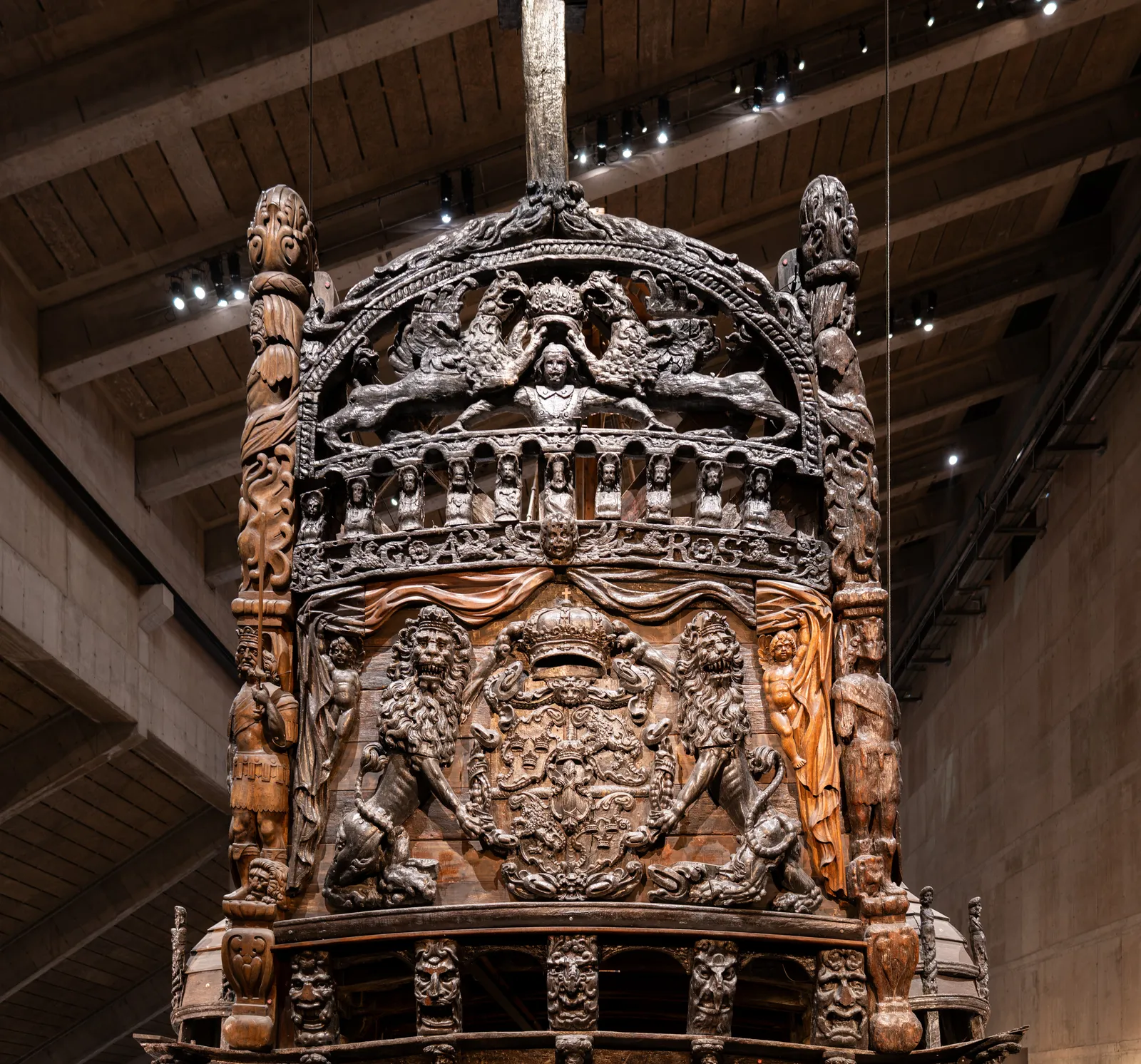
She was also lavishly decorated, with baroque carvings and sculptures meant to show the glory of the king. All of that weight sat high on a narrow hull.
A Warning Ignored
In the summer of 1628, before the ship sailed, Captain Söfring Hansson arranged a stability test for Vice Admiral Klas Fleming. “Thirty men ran back and forth across the upper deck to start the ship rolling, but the admiral stopped the test after they had made only three trips, as he feared the ship would capsize.” Fleming did not make a formal objection, and nobody postponed the voyage.
The trouble was one that the shipbuilders understood only in part. The Vasa had very little initial stability. Her centre of gravity was too high, because of excess headroom, over-sized deck beams and heavy upper works, and she lacked enough ballast and “belly” below. Her builders had also worked with two different measuring systems, Swedish feet and Amsterdam feet, which made the port side heavier than the starboard. Contemporaries could see something was wrong; what they lacked was the mathematics to prove it.
10 August 1628
The Vasa set out from the royal castle on the afternoon of Sunday 10 August 1628. The day was calm, with only a light breeze from the southwest. She carried about 150 people, crew and guests (her 300 soldiers were to board later at Älvsnabben), with four sails set, and the crowds on shore had come to watch.
As she came under the lee of the bluffs of Södermalm, a gust of wind filled her sails and she heeled suddenly to port. The crew let go the sheets and she righted herself. Then at Tegelviken a stronger gust pushed her over again, and this time the open lower gunports went under the water. Water rushed in on to the lower gundeck.
The ship sank quickly, to a depth of 32 metres, only 120 metres from the shore. About 30 people are reported to have died, in spite of the nearby boats that came to help.
The Inquiry That Found No One
The Swedish Privy Council opened an investigation on 5 September 1628. It was a fruitless one. Crewmen and contractors split into two camps and each blamed the other. The prosecutor put the question bluntly to Hein Jacobsson: “Why did you build the ship so narrow, so badly and without enough bottom that it capsized?” Jacobsson answered that he had followed Hybertsson’s specifications, which the king had approved. He had in fact widened the ship by 43 centimetres after taking over, but construction was too far along to widen her any further. When Arendt de Groote was asked why the ship had sunk, his answer was: “Only God knows.”
No one was punished or found guilty of negligence, and the blame effectively fell on the dead Henrik Hybertsson.
Lost, Then Found
The wreck was not forgotten at first. In 1663 Albrecht von Treileben and Andreas Peckell used a simple diving bell and teams of Swedish and Finnish divers to recover more than 50 of the guns. The hull stayed on the bottom.
After that it lay unseen for centuries. Then, in 1956, an amateur archaeologist, Anders Franzén, who had spent years researching where the ship might lie, used a homemade coring probe to locate a large wooden object near the mouth of the dock at Beckholmen. It was the Vasa.
Raising her was a huge operation. Divers spent two years digging six tunnels beneath the hull for steel cable slings, using high-pressure water jets and a dredge, in total darkness. More than 1,300 dives were made without any serious accident. On 24 April 1961, the Vasa broke the surface in front of press from around the world, television cameras, 400 invited guests on barges and boats, and thousands of spectators on the shore.
The Ship in the Museum
The ship first stood in a temporary building, the Wasavarvet, from 1961 until December 1988. She then moved into the purpose-built Vasa Museum, which opened to the public in 1990. Conservators have preserved the wood, treating it with polyethylene glycol. By early 2025 the museum had received over 45 million visitors.
The Vasa is remembered as a failure, but it is also the best-preserved seventeenth-century warship in the world. The ship that was meant to command the Baltic ended up as a time capsule of the age of Gustavus Adolphus.
What the Record Shows
8 sourced claims in this story, resting on 5 primary and naval archaeological records. Numbers link to the bibliography below.
- King Gustavus Adolphus commissioned the 64-gun warship Vasa to expand Swedish naval hegemony in 1625 - sources: 1, 4
- Construction was altered under royal pressure to accommodate two tiers of heavy 24-pounder bronze guns - sources: 1, 2
- A dockside stability lurch test demonstrated extreme instability before launch but was ignored - sources: 2, 4
- The ship sank 1,300 meters into its maiden voyage in Stockholm harbor on August 10, 1628 - sources: 1
- Water poured through the open lower gunports after a gentle breeze caused the ship to list - sources: 2, 4
- The royal court of inquiry acquitted the builders because the king personally dictated the specifications - sources: 1, 5
- Baltic Sea brackish water protected the oak structure from shipworm decay for over three centuries - sources: 5
- Marine archaeologist Anders Franzén located the intact wreck in 1956, leading to its salvage in 1961 - sources: 2, 5
Archival Evidence & Picture Credits
Every image on this page was checked against its Wikimedia Commons file page.
- Gustavus Adolphus, the king who commissioned the ship (Wikimedia Commons) - Wikimedia Commons file page
- The ornate stern of the Vasa, on display in the Vasa Museum in Stockholm (Wikimedia Commons) - Wikimedia Commons file page
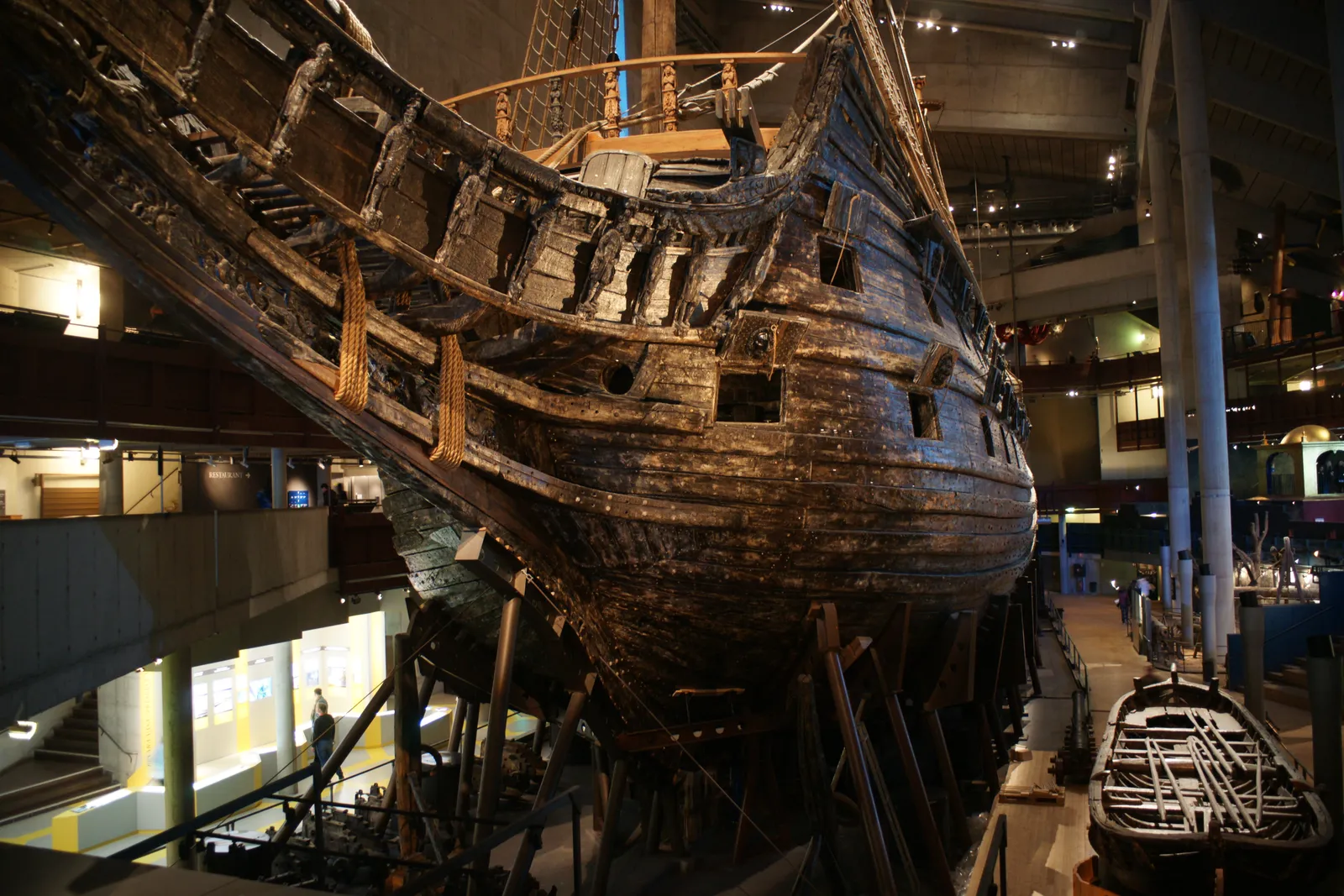
- The bow of the preserved Vasa in the Vasa Museum in Stockholm (Wikimedia Commons) - Wikimedia Commons file page


Verified Archival Sources & Bibliography
Every claim in this account has been fact-checked against primary archives and scholarly repositories:
- International Journal of Nautical Archaeology: The Vasa - Archaeological and Engineering Investigations (Fred Hocker) (academic)
- Internet Archive: The Vasa - A Swedish Warship (Carl Olof Cederlund & Fred Hocker) (book)
- Wikipedia: Vasa (ship) (reference)
- Vasa Museum (Stockholm): Official Curatorial Archives and Inquest Transcripts (primary)
- Swedish National Maritime Museums: Riksarkivet State Inquest Papers of September 1628 (primary)
Echoes of History Uncut. "A King Built a Giant Warship. It Sank in 20 Minutes." Echoes of History Uncut. Last modified September 18, 2026. https://echoesofhistoryuncut.com/articles/vasa-warship-sinking-1628/.

An independent history publication using AI-assisted research, drafting and production. Consult each article’s citations and limitations; source inclusion does not establish independent verification of every claim.
▶
Watch the Complete Archival Documentary on YouTube
Subscribe to Echoes of History Uncut on YouTube for full widescreen 16:9 documentaries, primary archival footage, and declassified deep dives.