
Scientists Tormented Orphans for an Experiment
In 1939, speech pathologist Wendell Johnson and graduate student Mary Tudor conducted a secret psychological experiment on 22 orphans in Davenport, Iowa, deliberately berating healthy children to induce stutters—an unethical trial concealed for six decades known as the Monster Study.

In this dossier (8 chapters) ▾
- 01 The Diagnosogenic Theory of Stuttering
- 02 The Subjects of Davenport: The Soldiers’ Orphans’ Home
- 03 The Psychological Conditioning Sessions
- 04 “The Monster Study”: Fear of the Post-War Mirror
- 05 The Investigative Unmasking and the 2007 Settlement
- 06 What the Record Shows
- 07 Archival Evidence & Picture Credits
- 08 Verified Archival Sources & Bibliography
Historical Dossier: The 1939 Iowa Monster Study & The Ethics of Behavioral Conditioning Location: Iowa Soldiers’ Orphans’ Home, Davenport, Iowa | Date: January – May 1939 | Key Figures: Dr. Wendell Johnson, Mary Tudor, 22 Iowa Orphans
The Diagnosogenic Theory of Stuttering
In the late 1930s, Dr. Wendell Johnson was one of the most prominent speech pathologists in the United States, operating out of the prestigious University of Iowa psychological laboratories. Johnson, who had battled a severe and debilitating stutter throughout his own youth, possessed an obsessive intellectual drive to unlock the clinical etiology of the speech disorder.
Prevailing medical doctrine at the time posited that stuttering was an organic, congenital defect—a neurophysiological flaw rooted in brain hemisphere dominance or inherited motor coordination. Johnson, however, formulated a radically different hypothesis: the diagnosogenic theory. He argued that stuttering was entirely an acquired, conditioned behavioral response caused by the outside environment. According to Johnson:
“Stuttering begins not in the speaker’s mouth, but in the listener’s ear.”
Johnson believed that all young children experience normal, transient disfluencies—hesitations, repeated syllables, and pauses—as they acquire language. If hyper-anxious parents or teachers misdiagnosed these ordinary hesitations as an abnormality and criticized the child, the child would become obsessively self-conscious, develop intense speech anxiety, freeze up in anticipation of speaking, and thereby develop a chronic, pathological stutter.
To scientifically prove his theory, Johnson needed an empirical trial. He needed to prove that intense negative conditioning and relentless verbal criticism could induce a severe, permanent stutter in a perfectly healthy, fluent child.
The Subjects of Davenport: The Soldiers’ Orphans’ Home
Knowing that middle-class parents would never consent to having their fluent children subjected to psychological torment, Johnson turned to an institution where the wards had neither parents nor advocates: the Iowa Soldiers’ Orphans’ Home in Davenport, Iowa.
Originally founded in 1863 to care for children left destitute by the American Civil War, the state-run orphanage housed hundreds of vulnerable children during the depth of the Great Depression. Johnson assigned the field execution of the research to his twenty-two-year-old graduate student, Mary Tudor Jacobs, as the core subject of her master’s thesis.
In January 1939, Tudor selected twenty-two orphan children, ranging in age from five to fifteen years old. None were informed that they were part of an experiment. They were simply told that they were receiving advanced speech therapy.
Tudor divided the twenty-two children into four distinct experimental cohorts:
- Group IA (Stutterers / Positive Therapy): Five children with existing stutters who were given lavish encouragement and told their speech was rapidly improving.
- Group IB (Stutterers / Negative Therapy): Five children with existing stutters who were told their condition was disgraceful and worsening.
- Group IIA (Normal Speakers / Negative Conditioning): Six completely fluent, healthy children who were subjected to intense psychological browbeating and falsely told they were developing severe stutters.
- Group IIB (Normal Speakers / Positive Conditioning): Six fluent children who served as control subjects, receiving praise for their clarity and articulation.
The core tragedy of the experiment unfolded within Group IIA—the six perfectly healthy orphan children: Mary Korlaske, Claretta McMullen, Dorothy Thompson, and three younger boys.

The Psychological Conditioning Sessions
Every few weeks between January and late May 1939, Mary Tudor drove forty-five miles across Iowa from Iowa City to Davenport. She pulled each child into a private room, sat them in a chair, and delivered a script crafted under Johnson’s direction.
For the normal, fluent children in Group IIA, Tudor applied relentless psychological conditioning:
“The staff have come to the conclusion that there are many defects in all your speech. You are beginning to stutter. You must stop yourself immediately. Don’t speak unless you can say each word right. You see how your classmate stutters, don’t you? Well, you are doing the exact same thing.”
Tudor enlisted the orphanage’s matrons, teachers, and cottage directors in the deception. Schoolteachers were instructed to interrupt the targeted children whenever they hesitated, point out their supposed flaws, and order them to think before they spoke.
The psychological impact on the young orphans was immediate and devastating:
- Behavioral Withdrawal: By the third visit, the children began snapping into silence. Nine-year-old Mary Korlaske refused to speak during class, burying her face in her arms or holding her hands over her eyes whenever called upon.
- Motor Agitation: When forced to speak, the fluent children began displaying classic stutterer secondary behaviors: tapping their feet, clenching their fists, snapping their fingers, and gasping for breath.
- Severe Anxiety & Self-Deprecation: Children who had once been cheerful and expressive became withdrawn and convinced they were defective. Asked why she would no longer play with her best friend, twelve-year-old orphan Claretta McMullen told Tudor that she stayed away because she did not want anyone to hear her speak.

“The Monster Study”: Fear of the Post-War Mirror
By May 1939, Tudor recognized that the damage inflicted on the children was profound and escalating. In her final thesis evaluation, she noted that all six fluent children in the negative conditioning group had suffered pronounced speech deterioration, decreased school grades, and crippling self-consciousness.
Alarmed by her own conscience, Tudor returned to the Davenport orphanage three times after the formal experiment concluded to attempt restorative counseling. She told the children that their speech was actually fine. But the psychological conditioning had already scarred them; the children did not believe her, assuming she was merely being kind to defective outcasts.
When Wendell Johnson discussed the experiment with fellow faculty members at the University of Iowa, his peers reacted with horror. One colleague noted that testing such harmful conditioning on defenseless orphans who had no guardians was monstrous. From that private conversation, the trial gained its chilling moniker: “The Monster Study.”
In the late 1940s, as the Nuremberg Trials revealed the horrific medical atrocities committed by Nazi doctors in European concentration camps, Johnson realized that publishing his Davenport research would destroy his academic standing and permanently taint the University of Iowa. Johnson buried Mary Tudor’s thesis in the university library vaults, omitting any mention of the negative conditioning orphan experiments from his public books and scientific publications.
The children, meanwhile, grew to adulthood carrying lifelong shame, speech hesitations, and social isolation, never knowing that their anguish had been artificially manufactured for a university experiment.
The Investigative Unmasking and the 2007 Settlement
For over sixty years, the Monster Study remained a buried secret known only to an elite circle of speech researchers. It was not until June 2001 that investigative reporter Jim Dyer of the San Jose Mercury News published an explosive, multi-part expose after uncovering Mary Tudor’s 1939 thesis in the University of Iowa archives.
Dyer tracked down the surviving orphans, then in their seventies and eighties. For the first time in their lives, the victims learned the truth: they had never possessed a congenital speech defect; they had been deliberate guinea pigs in an unauthorized state experiment.
“It just ruined my life. I couldn’t speak in class, I couldn’t talk to boys, I couldn’t do anything because I was constantly told I couldn’t talk.” — Mary Korlaske, survivor of Group IIA
In 2003, surviving victims and the estates of deceased subjects filed a civil lawsuit against the State of Iowa and the University of Iowa for intentional infliction of emotional distress, medical malpractice, and violation of their constitutional rights.
On August 17, 2007, the State of Iowa agreed to pay $925,000 to settle the lawsuit with the six surviving orphan victims and their estates. The University of Iowa issued a formal, unreserved public apology, acknowledging that the 1939 research had violated basic human ethics and caused irreparable harm.
The Wendell Johnson Speech and Hearing Center still stands at the University of Iowa, but the Monster Study remains one of history’s most stark reminders of what happens when scientific curiosity divorces itself from human empathy and ethical restraint.
What the Record Shows
8 sourced claims in this story, resting on 4 primary and journalistic investigations. Numbers link to the bibliography below.
- Wendell Johnson formulated the diagnosogenic theory asserting stuttering is conditioned by listener reaction - sources: 1, 2
- Mary Tudor conducted the master’s research on 22 orphans at the Iowa Soldiers’ Orphans’ Home in Davenport in 1939 - sources: 1, 3
- Six normal fluent children were subjected to negative conditioning and told they were developing severe stutters - sources: 1, 2
- The children in the negative conditioning group developed severe speech anxieties, silence, and secondary motor ticks - sources: 1, 4
- Tudor attempted restorative therapy after the trial, but the psychological harm persisted - sources: 1, 2
- The study was kept secret and unpublished due to fear of comparison with Nazi medical experiments - sources: 1, 4
- Jim Dyer uncovered the trial in 2001 in an investigative series for the San Jose Mercury News - sources: 1, 2
- In August 2007, the State of Iowa settled with the surviving victims for $925,000 alongside a formal apology - sources: 1, 3
Archival Evidence & Picture Credits
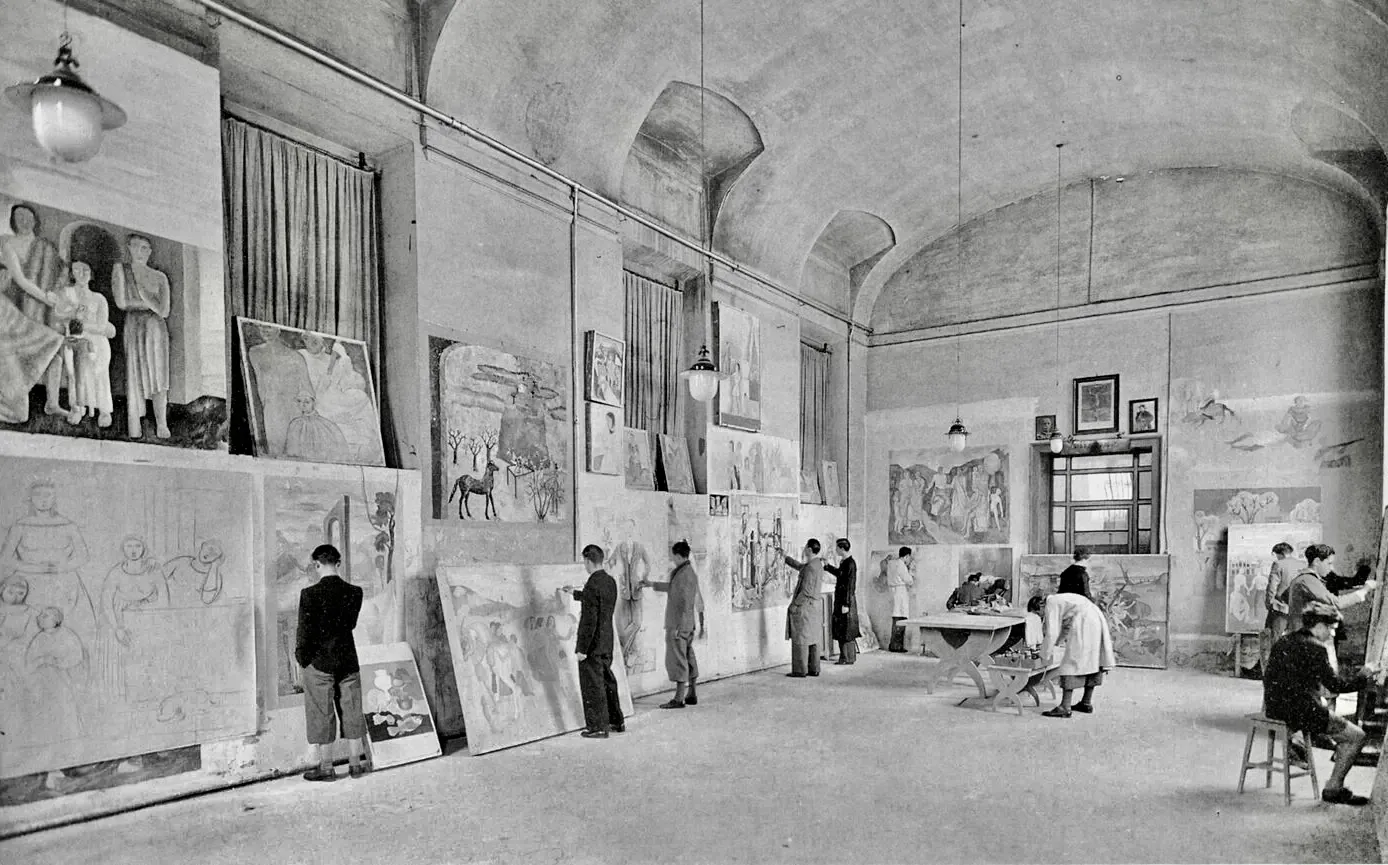
- Scene 1: 1930s classroom setting - Unknown author, Public domain (source)
- Scene 2: Institutional classroom at University of Iowa era - Unknown author, Public domain (source)
- Scene 3: The Old Capitol at the University of Iowa - Wikimedia Commons, CC BY 2.0 (source)
- Scene 4: Cottages at the Iowa Soldiers’ Orphans’ Home - Wikimedia Commons, CC BY-SA 3.0 (source)


Verified Archival Sources & Bibliography
Every claim in this account has been fact-checked against investigative journalism and academic histories:
- Wikipedia: Monster Study (reference)
- The New York Times: The Stuttering Doctor’s ‘Monstrous’ Experiment (Gretchen Reynolds) (investigative history)
- Associated Press: Iowa Settles ‘Monster Study’ Lawsuit for $925,000 (primary legal reporting)
- The Guardian: The Monster Study (Alok Jha) (scholarly historical review)
Echoes of History Uncut. "Scientists Tormented Orphans for an Experiment." Echoes of History Uncut. Last modified September 15, 2026. https://echoesofhistoryuncut.com/articles/the-monster-study/.

An independent history publication using AI-assisted research, drafting and production. Consult each article’s citations and limitations; source inclusion does not establish independent verification of every claim.
▶
Watch the Complete Archival Documentary on YouTube
Subscribe to Echoes of History Uncut on YouTube for full widescreen 16:9 documentaries, primary archival footage, and declassified deep dives.