
A Prison Built So No Two Inmates Could Meet
Completed by the British Raj in 1906 on Port Blair in the remote Andaman Islands, the Cellular Jail was an architectural panopticon containing 696 individual solitary confinement cells. Built to crush the spirit of Indian political dissidents through absolute isolation and torturous labor, the fortress became known as 'Kala Pani' (Black Waters).

In this dossier (11 chapters) ▾
- 01 An Island Prison
- 02 Designed for Isolation
- 03 Who Was Held
- 04 Conditions and the 1933 Hunger Strike
- 05 Before the Cellular Jail: Kala Pani
- 06 Work
- 07 Closure, Occupation and Memorial
- 08 Why It Matters
- 09 What the Record Shows
- 10 Archival Evidence & Picture Credits
- 11 Verified Archival Sources & Bibliography
Historical Dossier: The Cellular Jail Location: Port Blair, Andaman Islands, India | Year: 1896–1979 | Key Figures: Vinayak Damodar Savarkar, Batukeshwar Dutt, Yogendra Shukla, Fazl-e-Haq Khairabadi, Mahavir Singh, Subhas Chandra Bose
An Island Prison
After the Indian Rebellion of 1857, the British began using the remote Andaman Islands as a penal settlement, a place to which they transported convicted rebels. By the end of the nineteenth century, as the movement for Indian independence grew, colonial officials concluded that the existing system was not working. The Home Secretary, Charles James Lyall, and an Indian Medical Service surgeon, A. S. Lethbridge, argued for something more secure. Their recommendation led to the Cellular Jail, described by one scholar as “a place of exclusion and isolation within a more broadly constituted remote penal space.”
Designed for Isolation
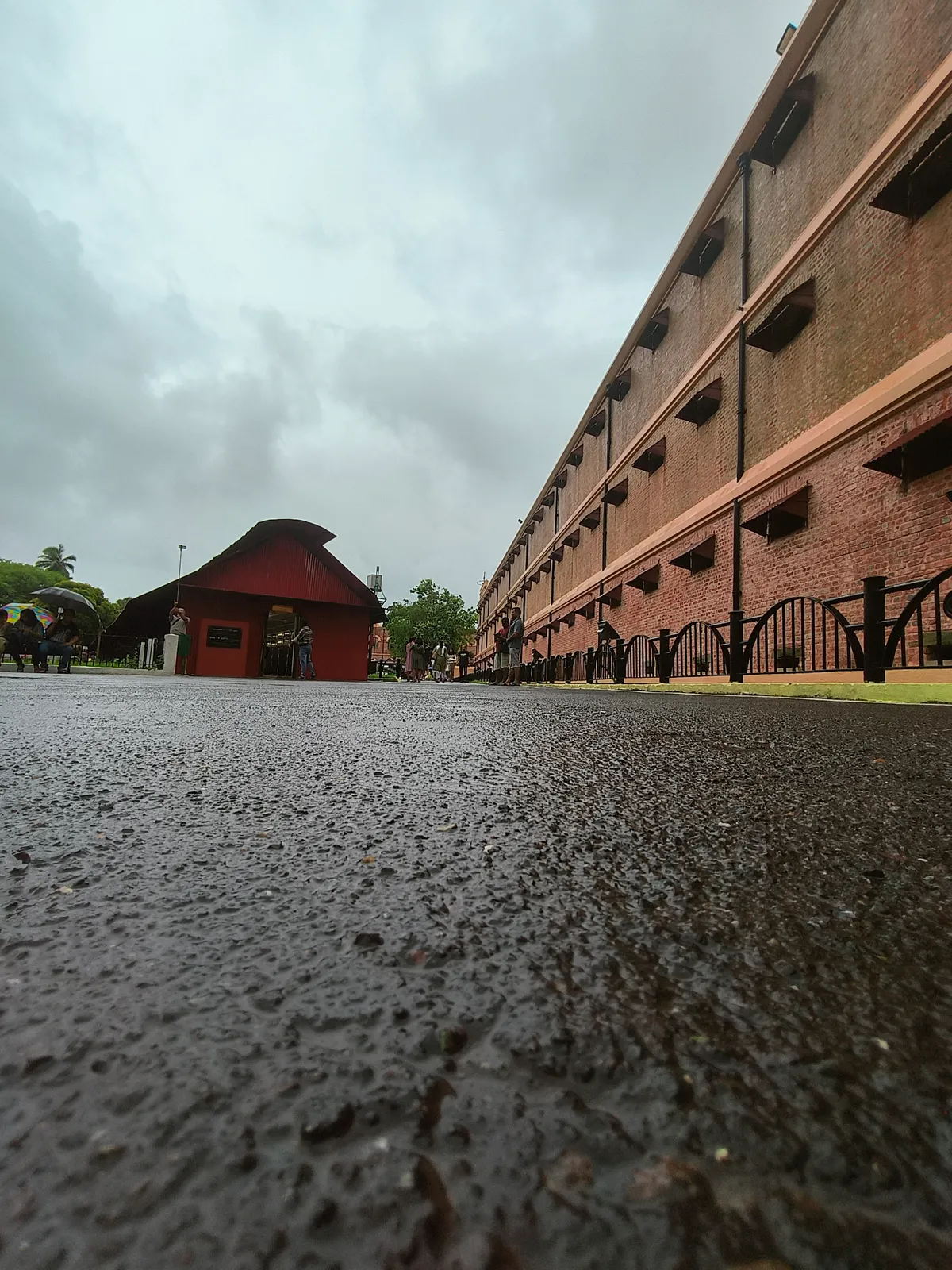
The jail was built between 1896 and 1906 at a cost of ₹517,352. It was made of puce-coloured brick and used the panopticon plan: seven wings radiated from a central watchtower like the spokes of a wheel, so that guards could see along each wing. It contained 696 individual cells, each 4.5 by 2.7 metres, with a ventilation opening set 3 metres high.
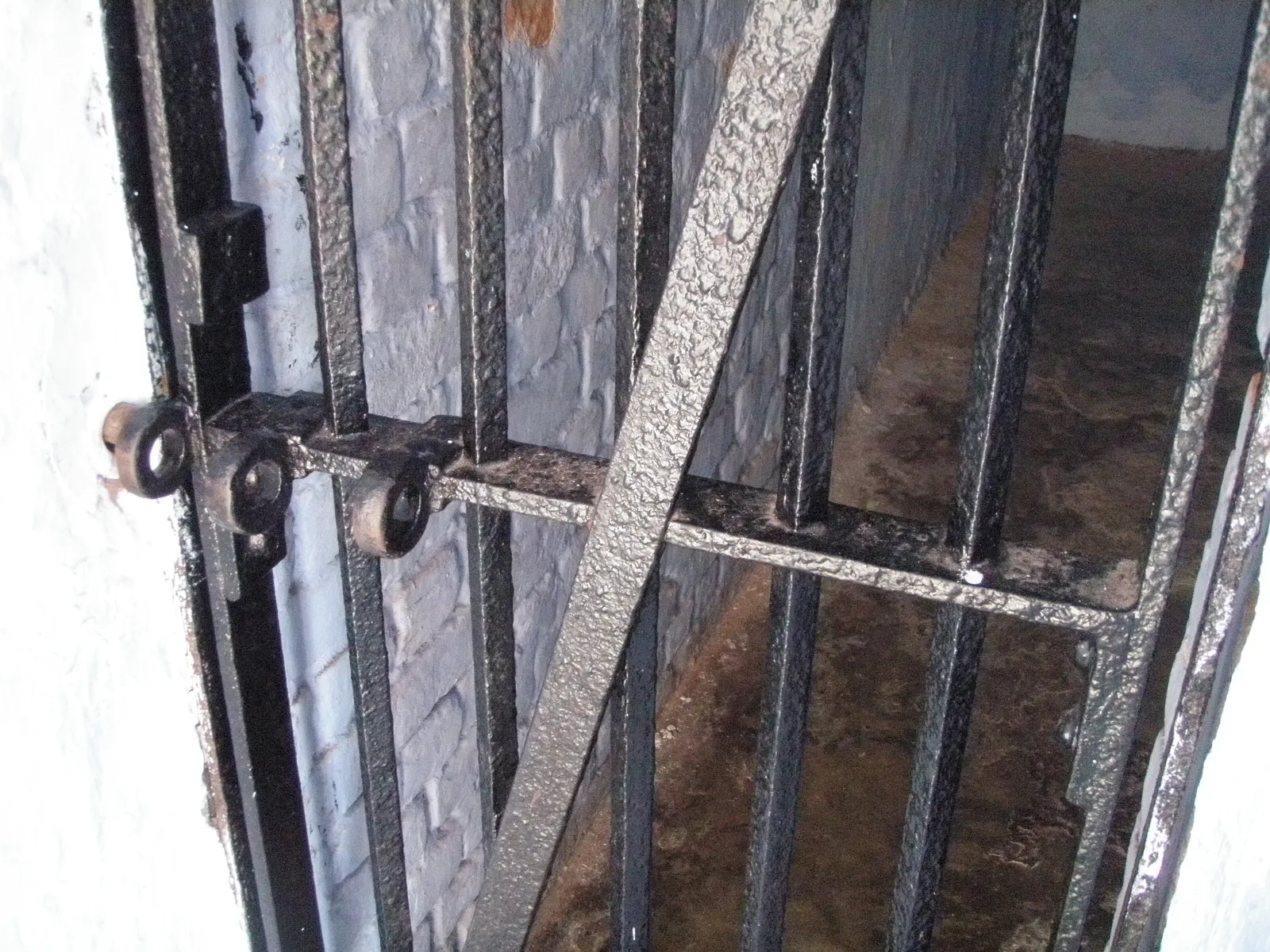
The design served a purpose beyond surveillance. The wings were arranged so that “the face of a cell in a spoke saw the back of cells in another spoke.” No prisoner could see or speak to another, and the jail was meant to break the solidarity of political prisoners.
Who Was Held
Records show that 795 freedom fighters were held at the Cellular Jail, of whom 608 came from Bengal. The prisoners included Vinayak Damodar Savarkar, Batukeshwar Dutt, Yogendra Shukla and Fazl-e-Haq Khairabadi. Most of them were kept in solitary confinement, which was the point of the building.
Conditions and the 1933 Hunger Strike
Conditions were brutal. According to The Guardian, prisoners endured “torture, medical tests, forced labour and for many, death.” In 1933, 33 prisoners went on hunger strike to protest their treatment. Three of them died after being force-fed: Mahavir Singh, who was linked with Bhagat Singh’s circle, Mohan Kishore Namadas and Mohit Moitra.
The authorities’ own directions show how they handled strikers: “no concessions to be given to the prisoners who must be kept alive. Manual methods of restraint are best, then mechanical when the patient resists.”
The jail also saw attempts to get out. Two prisoners, Mehtab and Choitun, escaped in 1872, before the cellular jail was built, and made their way to the Strangers’ Home for Asiatics in London, but they were recaptured after photographs were circulated.
Before the Cellular Jail: Kala Pani
The Andaman Islands had been a penal colony long before the Cellular Jail. After the Rebellion of 1857 the British set up a convict settlement at Port Blair. Two hundred rebels arrived under the jailer David Barry and Major James Pattison Walker, an Indian Medical Service doctor, and in April 1868 another 733 prisoners were shipped from Karachi.
The voyage was a punishment in itself. The kala pani, the “black water,” carried a deep cultural meaning: crossing the sea meant losing caste, and prisoners who returned could be shunned by their communities. That stigma made transportation to the islands especially feared in Indian society.
In 1872 the settlement saw the assassination of the Viceroy of India, the 6th Earl of Mayo, who was murdered during an inspection visit in February by a convict serving a life sentence, Sher Ali Afridi, a former Punjab Mounted Police officer, who wanted revenge for a sentence he thought excessive. He was hanged on 11 March 1872.
By the end of the nineteenth century, officials had concluded that the arrangements were counterproductive. Charles James Lyall, home secretary from August 1889, and the surgeon A. S. Lethbridge investigated the Port Blair settlement. They found that criminals actually preferred being sent to the islands to being held in mainland jails. That finding led to the construction of the Cellular Jail.
Work
Prisoners did hard labour. In the oil mills each prisoner had to produce about 30 pounds of coconut oil a day, and others made rope or worked on construction. Hunger strikes broke out in May 1933, when 33 prisoners protested against their treatment, and the three who died after force-feeding were Mahavir Singh, Mohan Kishore Namadas and Mohit Moitra. Mahatma Gandhi and Rabindranath Tagore campaigned for the prison to be closed. The government decided to send political prisoners home in 1937 and 1938, and the jail was empty by 1939. V. D. Savarkar had been released in 1921 after serving his sentence.
Closure, Occupation and Memorial
After campaigns led by figures such as Gandhi and Tagore, the jail was vacated in 1937 and 1938. During the Japanese occupation of the Andamans, from 1942 to 1945, Subhas Chandra Bose symbolically raised the Indian flag on 30 December 1943. After the war the jail was partly dismantled, and two wings were demolished in the 1950s to make room for the Govind Ballabh Pant Hospital. Only three of the seven wings are still standing.
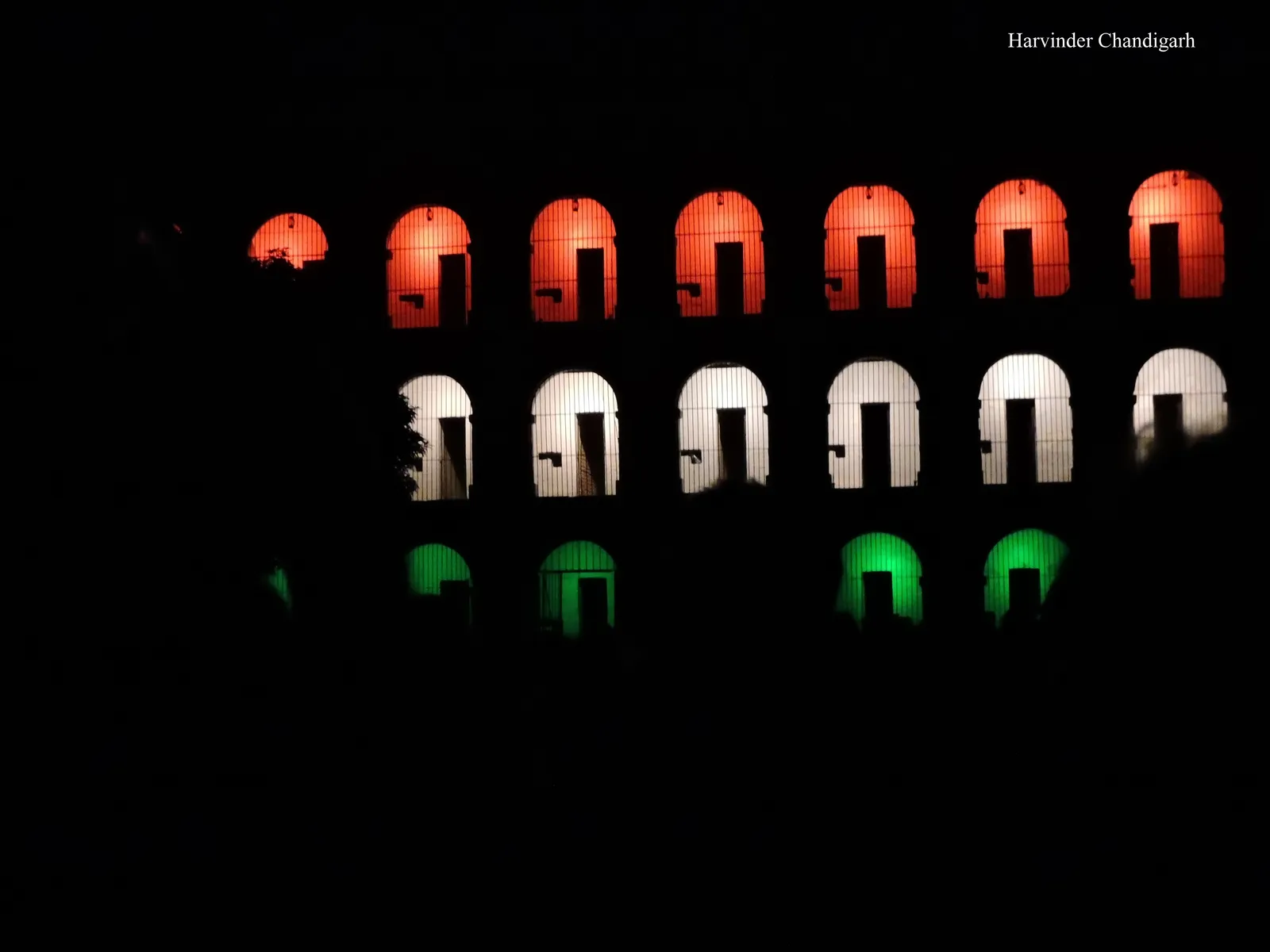
On 11 February 1979 Prime Minister Morarji Desai declared the jail a National Memorial. Every evening a sound and light show, in English and Hindi, tells the story of the men who were held there.
Why It Matters
The Cellular Jail was intended to isolate individuals, and it did the opposite for the memory of the independence movement. Its design, with each cell facing away from the next, became in time a symbol of how far the colonial state would go to stop prisoners from speaking to one another. It is now one of the best-known memorials to the sacrifices of India’s freedom fighters.
What the Record Shows
8 sourced claims in this story, resting on 4 primary and historical records. Numbers link to the bibliography below.
- The British completed the Cellular Jail at Port Blair in 1906 with 696 individual solitary cells - sources: 4
- The spoke-and-hub panopticon design prevented any visual contact between cell doors - sources: 2
- Inmates were subjected to hard labor extracting oil at hand-turned mills under threat of flogging - sources: 2
- In May 1933, political prisoners staged a 45-day mass hunger strike against abusive treatment - sources: 2, 3
- Three revolutionaries died from forced feeding when liquid entered their lungs: Mahavir Singh, Mohan Kishore Namadas, and Mohit Moitra - sources: 3, 4
- Nationwide protests in India led by Gandhi and Tagore forced the repatriation of political prisoners in 1937–1938 - sources: 4
- The Japanese Imperial Army occupied the Andaman Islands from 1942 to 1945, using the prison for Allied captives - sources: 5
- The remaining wings and central tower were declared an Indian National Memorial in 1979 - sources: 3, 5
Archival Evidence & Picture Credits
Every image on this page was checked against its Wikimedia Commons file page.
- The Cellular Jail at Port Blair, with its central tower (Wikimedia Commons) - Wikimedia Commons file page
- A heavy iron door and barred entrance in a corridor of the Cellular Jail (Wikimedia Commons) - Wikimedia Commons file page
- The Cellular Jail National Memorial at night, with the central tower lit (Wikimedia Commons) - Wikimedia Commons file page


Verified Archival Sources & Bibliography
Every claim in this account has been fact-checked against primary archives and scholarly repositories:
- Internet Archive: Echoes from the Andamans (V. D. Savarkar) (primary memoir)
- Andaman and Nicobar Administration: Official History of the Cellular Jail National Memorial (primary)
- Wikipedia: Cellular Jail (reference)
- Archaeological Survey of India (ASI): Protected Monuments of the Andaman and Nicobar Islands (primary)
Echoes of History Uncut. "A Prison Built So No Two Inmates Could Meet." Echoes of History Uncut. Last modified September 16, 2026. https://echoesofhistoryuncut.com/articles/cellular-jail-andaman/.

An independent history publication using AI-assisted research, drafting and production. Consult each article’s citations and limitations; source inclusion does not establish independent verification of every claim.
▶
Watch the Complete Archival Documentary on YouTube
Subscribe to Echoes of History Uncut on YouTube for full widescreen 16:9 documentaries, primary archival footage, and declassified deep dives.