
Six Cars Raced From New York to Paris in 1908. It Took 169 Days.
On February 12, 1908, six primitive automobiles lined up before an ecstatic crowd of 250,000 people in Times Square to start an epic 22,000-mile race around the world to Paris. Driving through trackless wilderness, winter blizzards, axle-deep Siberian quagmires, and rough terrain across North America, Asia, and Europe, only three cars finished. After 169 grueling days, American mechanic George Schuster piloted the 1907 Thomas Flyer down the boulevards of Paris to claim an astonishing victory.

In this dossier (10 chapters) ▾
Historical Dossier: The 1908 New York to Paris Race Location: From New York across the United States, Japan and Siberia to Paris | Year: 12 February–30 July 1908 | Key Figures: George Schuster, Montague Roberts, the crews of the Protos, Züst and Thomas Flyer
A Race Around the World
On 12 February 1908, at 11:15 in the morning, a gunshot started six cars from Times Square, New York. Their destination was Paris. The route would take them across the United States, over the Pacific to Japan, and then across Siberia and Europe. It was a 169-day race, and it is still the longest motorsport event ever held.
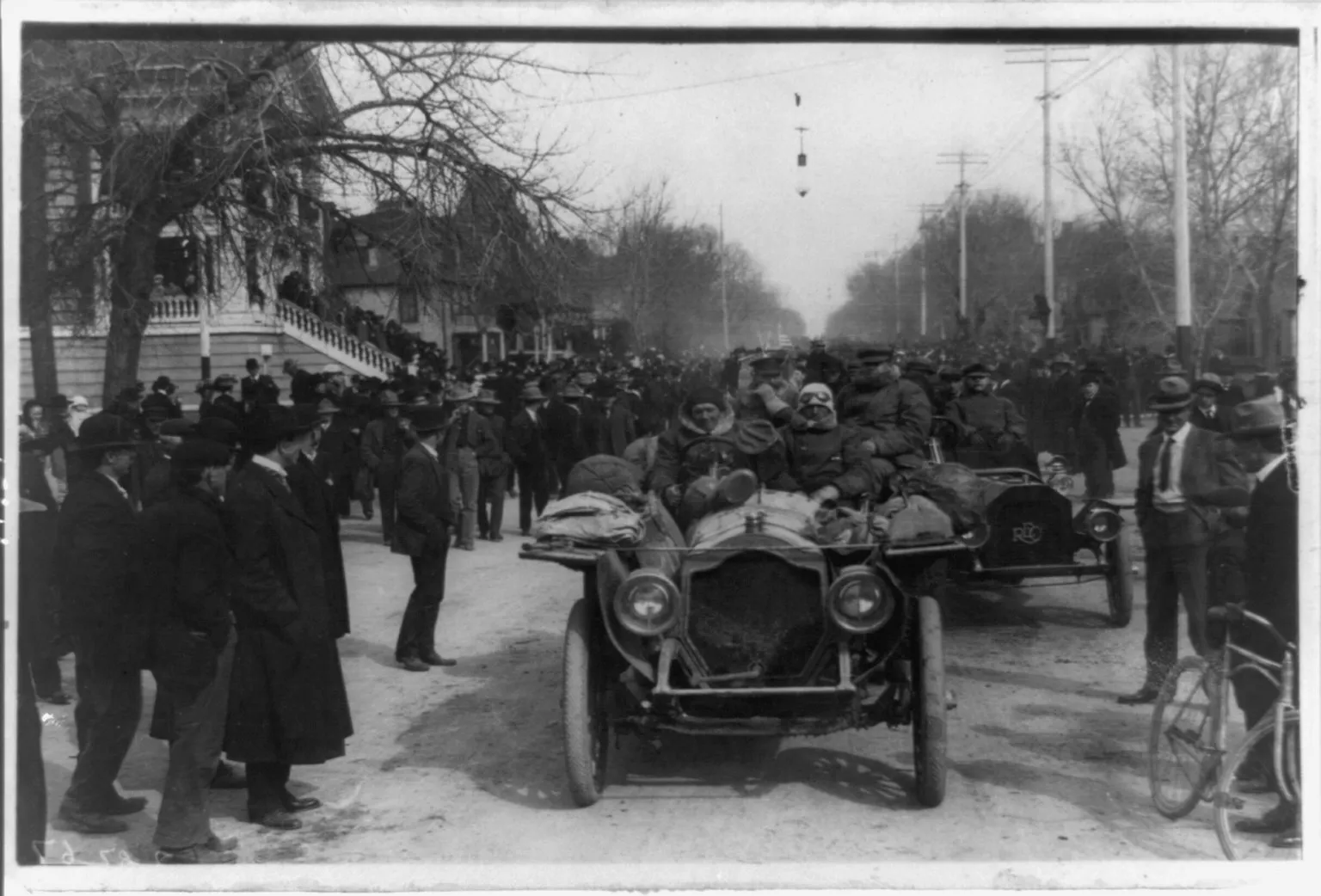
Six cars represented four nations. France sent three: a De Dion-Bouton, a Motobloc and a Sizaire-Naudin. Germany entered a Protos, Italy a Züst, and the United States a Thomas Flyer.
Across America in Winter
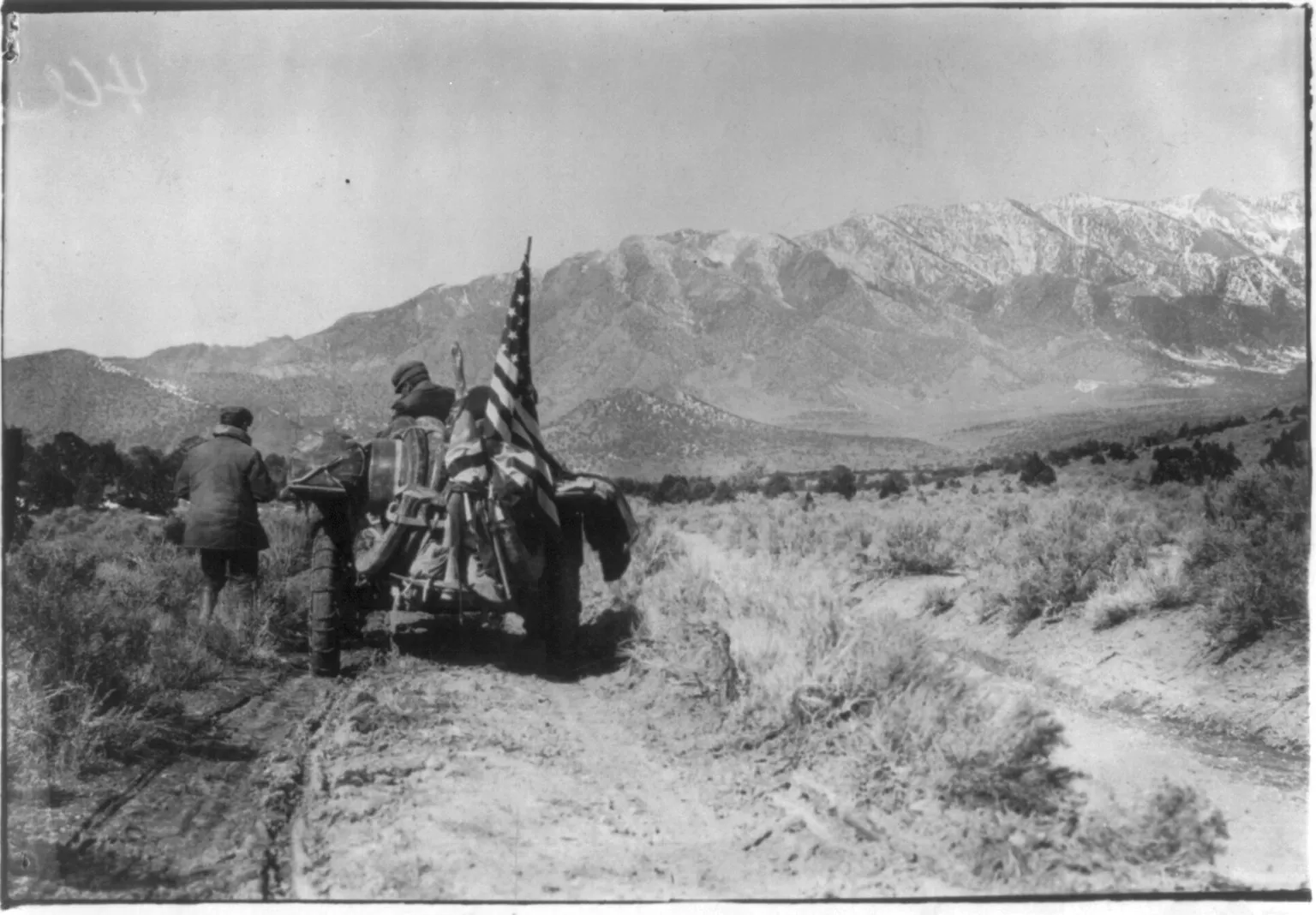
The race began in winter, and the Americans took the lead. The Thomas Flyer reached San Francisco in 41 days, 8 hours and 15 minutes, over roads that were often no more than tracks, in snow and mud.
The Route Changes
The planned route through Alaska proved impossible, because of snow and ice. The organisers sent the cars across the Pacific by steamer to Japan, and from there by ship to Vladivostok. Only three cars, the Protos, the Züst and the Thomas Flyer, went on past Vladivostok.
Siberia
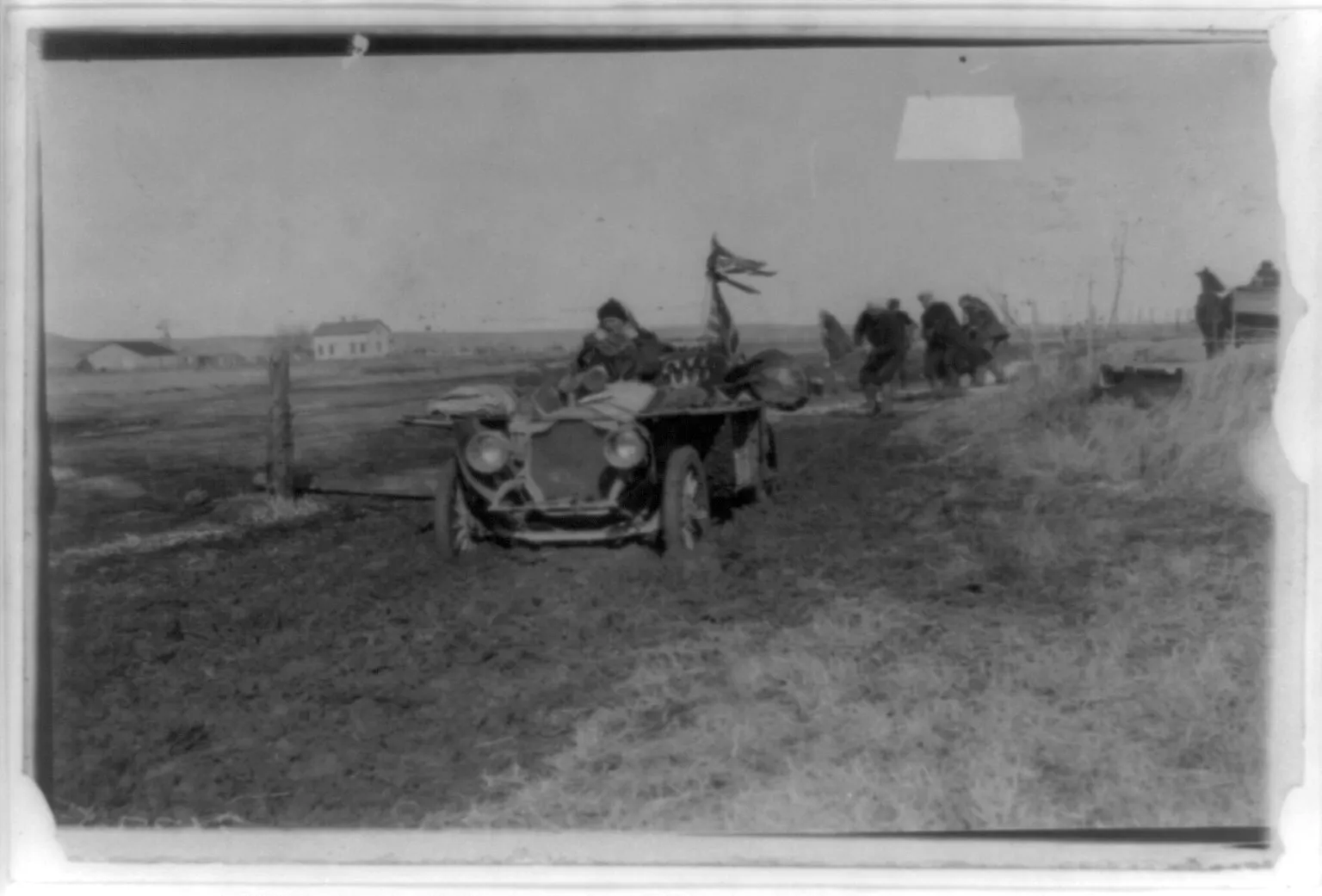
The spring thaw turned the Siberian plains to mud. “Forward movement was often measured in feet rather than miles per hour.” Crews dug, pushed and hauled their cars out of axle-deep mud, again and again,.
As the roads improved towards Europe, the Thomas Flyer made up time.
Paris
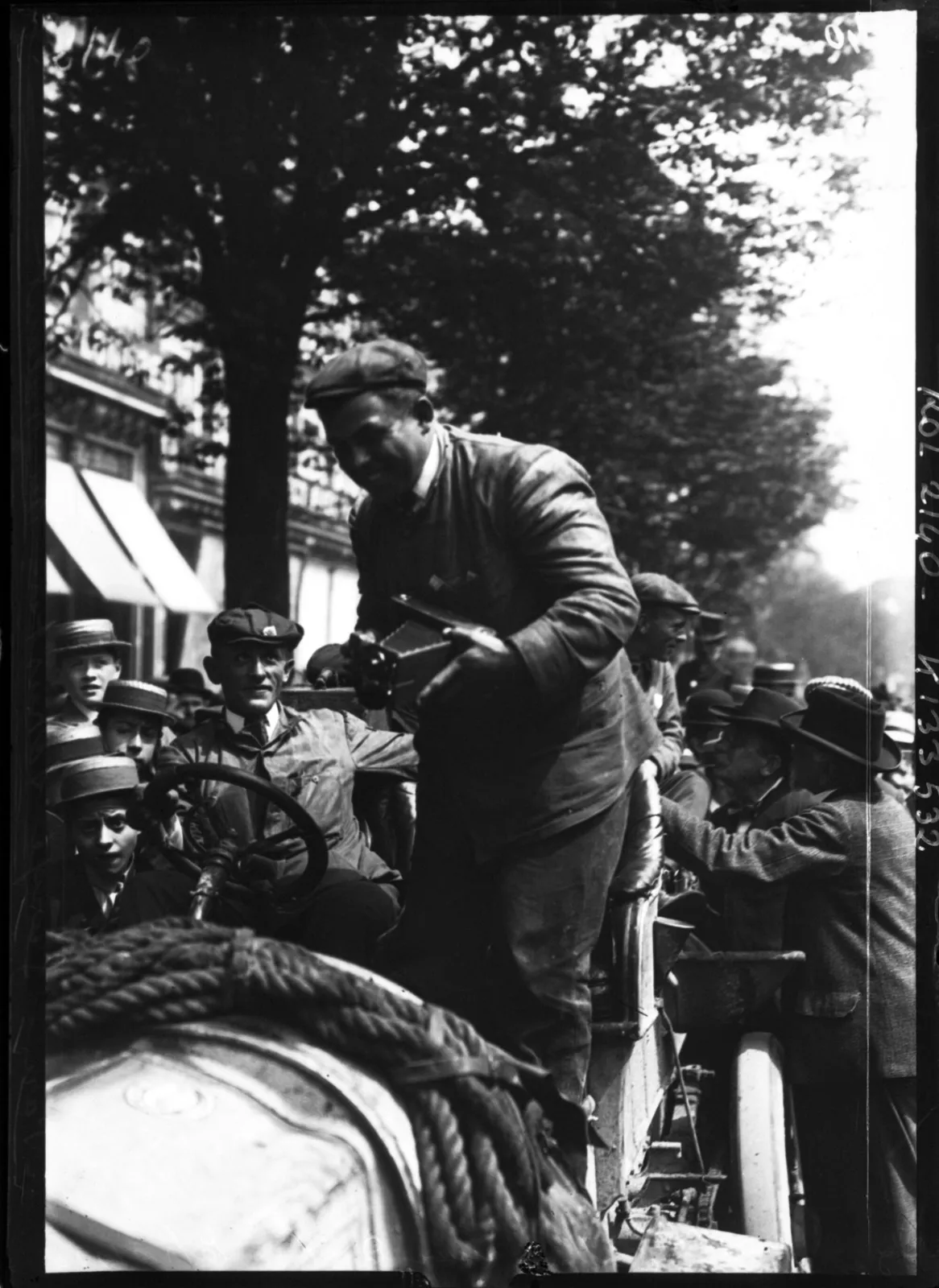
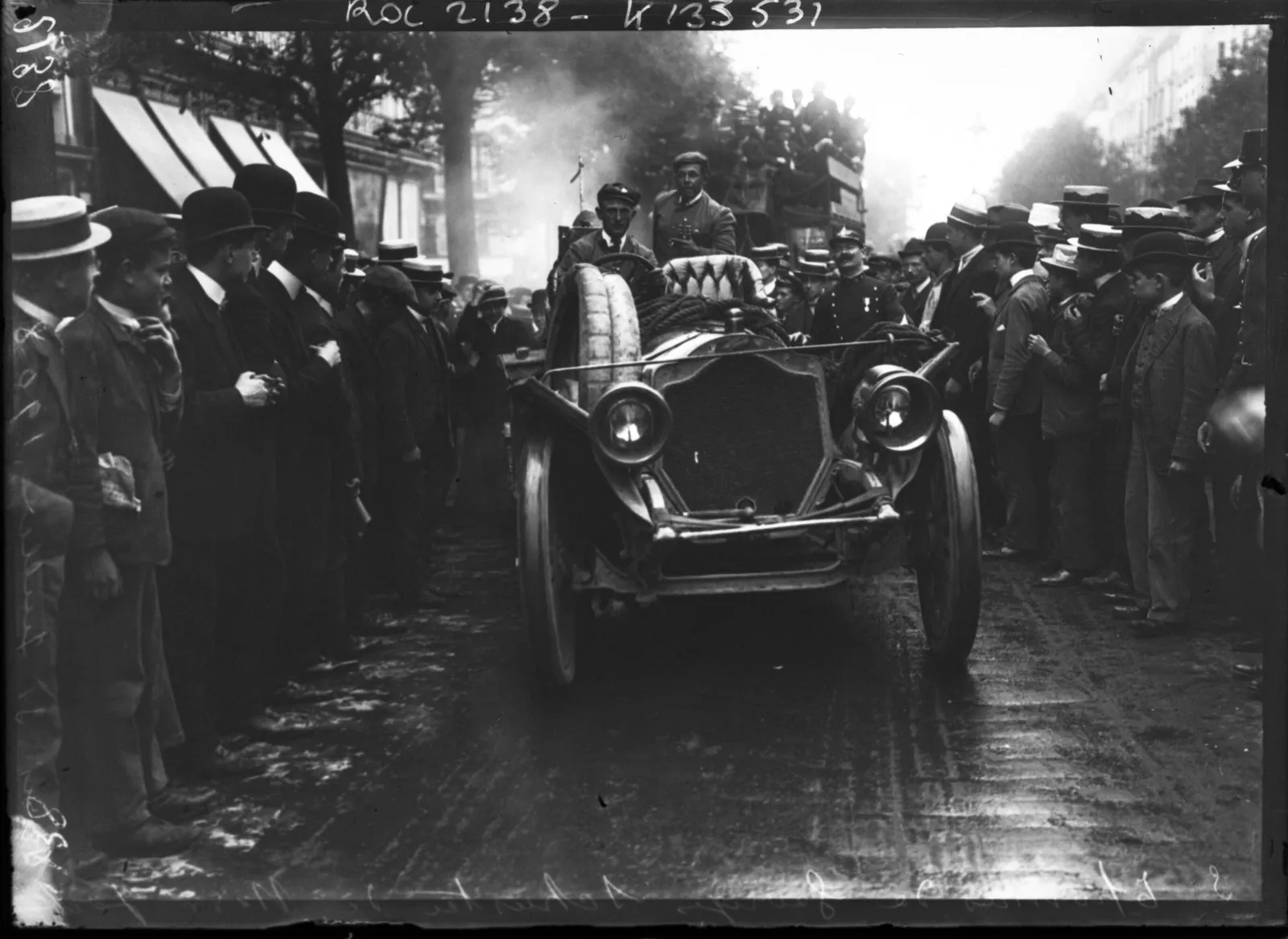
The Thomas Flyer, driven by George Schuster, reached Paris on 30 July 1908, after covering approximately 16,700 kilometres. But the German Protos had arrived four days earlier. The Germans were penalised 30 days in total, because they had not gone through Japan and had shipped the Protos part of the way by rail. That gave the race to Schuster, who remains the only American to travel the whole distance from New York to Paris.
The winning margin was 26 days, and it is still the largest winning margin in any motorsport event. The Italians finished third in September 1908.
What It Showed
Together with the Peking to Paris race of the year before, the New York to Paris race helped to establish the reliability of the automobile as a dependable means of transport. At a time when the car was still thought of as a rich man’s toy, six crews had taken it across continents.
Remembered
The winning Thomas Flyer is now on display at the National Automobile Museum in Reno, Nevada. George Schuster was inducted into the Automotive Hall of Fame on 12 October 2010. In 2011 a modern re-enactment, World Race 2011, set out from Times Square on 14 April, and four vehicles reached the Eiffel Tower on 21 July 2011, among them one with a great-grandson of George Schuster.
What the Record Shows
10 sourced claims in this story, resting on 10 sources. Numbers link to the bibliography below.
- Six cars entered the race from New York to Paris - sources: 2, 3, 7
- The automobile race from New York to Paris started in Times Square on February 12, 1908 - sources: 2, 1
- The route passed through areas with very few paved roads - sources: 6, 1
- The cars had to travel through winter snow and snow banks - sources: 3, 6
- The American team drove a Thomas Flyer - sources: 5, 10, 9
- The American team arrived first on the Pacific coast - sources: 6, 1
- The race went to Vladivostok by ship to begin crossing the continents of Asia and Europe - sources: 3, 1
- George Schuster drove the Thomas Flyer into Paris on July 30 to win the race - sources: 8, 6, 1
- The Thomas Flyer won the race after 169 days - sources: 4, 10
- Only three of the six cars completed the course: the American, German, and Italian teams - sources: 3, 2, 1
Archival Evidence & Picture Credits
Every image on this page was checked against its Wikimedia Commons file page.
- The crowd and racers at the start of the New York to Paris automobile race, 1908 (Library of Congress / Wikimedia Commons) - Wikimedia Commons file page
- A car in the New York to Paris race, with tire chains and an American flag, on a rough road in the mountains (Library of Congress / Wikimedia Commons) - Wikimedia Commons file page
- Five men pulling a car out of the mud during the New York to Paris race (Library of Congress / Wikimedia Commons) - Wikimedia Commons file page
- George Schuster at the wheel of the Thomas Flyer arriving in Paris, July 1908 (Bibliothèque nationale de France / Wikimedia Commons) - Wikimedia Commons file page
- The Thomas Flyer driven by George Schuster, from New York to Paris, July 1908 (Bibliothèque nationale de France / Wikimedia Commons) - Wikimedia Commons file page


Verified Archival Sources & Bibliography
Every claim in this account has been fact-checked against primary archives and scholarly repositories:
- Wikipedia: 1908 New York to Paris Race (reference)
- Montgomery County Department of History & Archives: Great Auto Race (primary)
- University of Houston: The Engines of Our Ingenuity No. 1271: The Longest Race (book)
- Penn State University: Automotive trailblazer’s great-grandson to retrace ‘Great Race’ (primary)
- Alfred State College: Alum retracing great-grandfather’s historic journey (primary)
- Smithsonian Magazine: Paris or Bust: The Great New York-to-Paris Auto Race of 1908 (news)
- The Washington Times (February 13, 1908): New York to Paris Automobile Race (primary)
- The Washington Times (August 9, 1908): The Thomas Car and George Schuster (primary)
- Tonopah Daily Bonanza (March 21, 1908): George Schuster and the Thomas Car (primary)
- The Henry Ford: Thomas Flyer in Germany, New York to Paris Race, 1908 (primary)
Echoes of History Uncut. "Six Cars Raced From New York to Paris in 1908. It Took 169 Days.." Echoes of History Uncut. Last modified September 24, 2026. https://echoesofhistoryuncut.com/articles/new-york-to-paris-1908/.

An independent history publication using AI-assisted research, drafting and production. Consult each article’s citations and limitations; source inclusion does not establish independent verification of every claim.
▶
Watch the Complete Archival Documentary on YouTube
Subscribe to Echoes of History Uncut on YouTube for full widescreen 16:9 documentaries, primary archival footage, and declassified deep dives.