
Over a Thousand Outlaws Lived by Their Own Rules on One Island. Guess Who?
Between 1713 and 1718, an egalitarian brotherhood of over a thousand outlaws known as the Flying Gang seized New Providence island in the Bahamas. Defying European empires, legendary figures including Blackbeard, Benjamin Hornigold, and Charles Vane established their own democratic 'Republic of Pirates'—electing captains and dividing plundered galleon treasures until Governor Woodes Rogers arrived with royal pardons and the Royal Navy.
In this dossier (8 chapters) ▾
- 01 The Abandoned Haven of New Providence
- 02 The Rise of the “Flying Gang”
- 03 The “Republic of Pirates”: A Radical Democracy
- 04 The Empire Strikes Back: Woodes Rogers and the King’s Pardon
- 05 The Fall of the Republic
- 06 What the Record Shows
- 07 Archival Evidence & Picture Credits
- 08 Verified Archival Sources & Bibliography
Historical Dossier: The Flying Gang & The Pirate Republic of Nassau Location: Nassau, New Providence Island, Bahamas | Era: 1713–1718 | Key Figures: Benjamin Hornigold, Edward Thatch (“Blackbeard”), Charles Vane, Thomas Barrow, Governor Woodes Rogers
The Abandoned Haven of New Providence
In the summer of 1713, the signing of the Treaty of Utrecht brought an abrupt end to the War of the Spanish Succession (known in the Americas as Queen Anne’s War). Across the Caribbean, thousands of British, French, and colonial privateers who had spent a decade legally raiding Spanish and French shipping with royal commissions suddenly found themselves unemployed, destitute, and abandoned by their governments.
Merchant shipping captains promptly slashed crew wages and subjected sailors to tyrannical shipboard discipline, including brutal floggings and starvation rations. Unwilling to return to maritime servitude, hundreds of experienced mariners turned rogue.
They needed a sanctuary—and they found the ideal fortress on the island of New Providence in the Bahamas.
Situated directly alongside the Florida Straits and the Windward Passage, New Providence sat astride the primary trade arteries through which Spanish silver fleets and British sugar galleons returned to Europe. Nassau’s harbor was sheltered by a long offshore barrier island (Hog Island, now Paradise Island), featuring a shallow harbor entrance that could easily float small, nimble pirate sloops of shallow draft, but ran heavy 60-gun Royal Navy frigates aground on hidden sandbars.
Spain and France had sacked Nassau four times during the war, burning the town and scattering the British colonial administration. By 1714, the British governor had fled, Fort Nassau was an unmanned, crumbling ruin overgrown with weeds, and the crown had effectively abandoned the archipelago.
The Rise of the “Flying Gang”
Around 1713, former English privateer Captain Benjamin Hornigold arrived in Nassau aboard a simple periauger (a large sailing dugout canoe). Operating with a handful of desperate men, Hornigold began ambushing Spanish coastal sloops off Cuba and Hispaniola.
As word of Hornigold’s lucrative captures spread through Caribbean taverns, disaffected mariners, runaway African and Indigenous slaves, indentured servants, and mutineers flocked to Nassau. Within two years, more than a thousand outlaws had congregated on New Providence, forming a loose, cooperative confederation that colonial authorities referred to with dread as “The Flying Gang.”
Among their ranks were men who would become the most notorious figures in maritime folklore:
- Edward Thatch (Blackbeard): Hornigold’s brilliant second-in-command, who weaponized psychological terror, weaving burning slow-match hemp into his massive braided beard during boarding actions to appear as a demon from hell.
- Charles Vane: A ruthless, unyielding tactician who rejected all authority and took savage delight in defying Royal Navy warships.
- “Calico Jack” Rackham: A charismatic quartermaster whose crew included the two most famous female outlaws in history: Anne Bonny and Mary Read.
- Samuel Bellamy (“Black Sam”): A self-styled “Robin Hood of the Seas” who captured the colossal slave ship Whydah Gally and denounced kingly tyranny in famous dockside speeches.
The “Republic of Pirates”: A Radical Democracy
While popular fiction depicts pirate havens as lawless cesspools of pure anarchy, historical archives reveal that Nassau operated as a functional, shockingly progressive radical democracy—what historian Colin Woodard termed the Republic of Pirates.
In an era when European absolute monarchs claimed divine right and ruled by the whip, the Flying Gang established a society based on social egalitarianism and direct democracy:
- Elected Captaincy: A pirate captain held absolute authority only during the heat of battle. In normal cruising, every major decision—where to sail, which prizes to attack, and whether to grant quarter—was decided by a majority vote of the entire crew.
- The Quartermaster Check: To prevent tyranny, crews elected an independent quartermaster who held equal power to the captain, oversaw discipline, arbitrated disputes, and distributed food and supplies equally. A tyrannical or cowardly captain could be deposed (“broken”) by a single democratic vote at any time.
- Equitable Prize Division: Captured gold, silver, fabrics, and alcohol were divided with rigorous fairness. While a Royal Navy captain took three-eighths of all prize money while ordinary seamen received mere pennies, a pirate captain received only 1.5 to 2 shares, the master and quartermaster 1.25 shares, and ordinary deckhands 1 full share each.
- Early Disability Compensation: Pirate articles (chasse-partie) established the Western world’s first worker compensation systems, paying fixed indemnity bonuses out of the common treasury for lost eyes, arms, or legs.
- Racial Integration: Up to a third of Nassau’s pirates were freed black mariners and escaped slaves who voted alongside white crewmates and received equal shares of prize money.
In 1716, an outlaw named Thomas Barrow openly declared himself the Governor of Providence, announcing that he would turn New Providence into a second Madagascar and inviting outlaws from every sea to join their sovereign brotherhood.
The Empire Strikes Back: Woodes Rogers and the King’s Pardon
By 1717, the Flying Gang’s brazen raids had paralyzed transatlantic commerce. Merchant lobbies in London and Bristol petitioned King George I, warning that trade across the West Indies was facing complete extinction.
The Crown devised a calculated two-pronged strategy: an iron fist wrapped in a velvet glove.
On September 5, 1717, King George issued the Proclamation for Suppressing of Pirates (the “King’s Pardon”), granting full, unconditional royal immunity for all acts of piracy committed before January 1718, on the sole condition that the outlaws surrendered to an authorized magistrate.
To enforce the proclamation, the British government appointed Captain Woodes Rogers as the new Royal Governor of the Bahamas. Rogers was no powdered bureaucrat; he was a hardened, legendary privateer captain who had circumnavigated the globe, captured a Manila treasure galleon off California, and rescued castaway Alexander Selkirk (the real-life inspiration for Robinson Crusoe).
In late July 1718, Rogers sailed into Nassau harbor aboard the armed flagship Delicia, flanked by two Royal Navy warships—HMS Rose and HMS Milford.
The pirate brotherhood shattered into two bitter factions:
- The Pragmatists: Led by Benjamin Hornigold, hundreds of weary pirates decided that taking the pardon and keeping their amassed silver was their best chance at survival.
- The Die-Hards: Led by Charles Vane, hardliners vowed to fight to the death. As Rogers’ fleet approached Nassau’s narrow entrance, Vane set fire to a captured French ship packed with gunpowder and shot, creating a roaring fireship that drifted straight into the British squadron, forcing Rogers’ warships to cut their cables and flee while Vane escaped out the harbor’s eastern passage.
The Fall of the Republic
Once ashore, Woodes Rogers moved ruthlessly to dismantle the Pirate Republic. He rebuilt Fort Nassau’s ramparts, mounted naval cannon, and adopted the motto that still defines the Bahamas: “Expulsis Piratis – Restituta Commercia” (“Pirates Expelled – Commerce Restored”).
In a masterstroke of psychological warfare, Rogers commissioned pardoned pirate captains—chief among them Benjamin Hornigold—to hunt down their former comrades. Hornigold proved to be a relentless pirate hunter, capturing ten of Vane’s confederates and hauling them back in irons.
In December 1718, outside the walls of Fort Nassau, Rogers erected a massive gallows. Eight unrepentant pirate captains and crewmen were hanged before a silent crowd of over a hundred pardoned pirates.
Within two years, the Golden Age of Piracy was extinguished:
- Blackbeard was cornered and killed in hand-to-hand combat at Ocracoke Inlet in November 1718 by Lieutenant Robert Maynard.
- Charles Vane was shipwrecked in the Bay of Honduras, captured, and hanged in chains at Gallows Point, Jamaica, in 1721.
- Calico Jack Rackham was captured and executed in 1720, while Anne Bonny famously told him before the gallows: “If you had fought like a man, you need not have been hang’d like a dog.”
The short-lived Republic of Pirates was crushed, but its five-year experiment in outlaw democracy proved that even under the shadows of empire, ordinary men and women would risk the gallows to build an order where every voice had an equal share of the prize.
What the Record Shows
8 sourced claims in this story, resting on 10 archival records and academic histories. Numbers link to the bibliography below.
- Over 1,000 pirates based themselves at Nassau on New Providence between 1713 and 1718 - sources: 2, 5
- The pirate confederation was known to British authorities as the Flying Gang - sources: 5
- Nassau operated under democratic ship’s articles where crews elected captains and shared captured cargo equitably - sources: 4, 5
- In 1716, pirate Thomas Barrow declared himself Governor of Providence - sources: 4, 6
- King George I issued the 1717 Proclamation for Suppressing of Pirates offering royal pardons
- Governor Woodes Rogers arrived at Nassau in July 1718 with Royal Navy warships to enforce the pardon and re-establish British rule - sources: 3
- Charles Vane launched an incendiary fireship to escape Rogers’ blockade, while Hornigold accepted the pardon - sources: 5
- Rogers commissioned former pirates to hunt down holdouts and executed eight pirate leaders at Nassau in December 1718 - sources: 5
Archival Evidence & Picture Credits
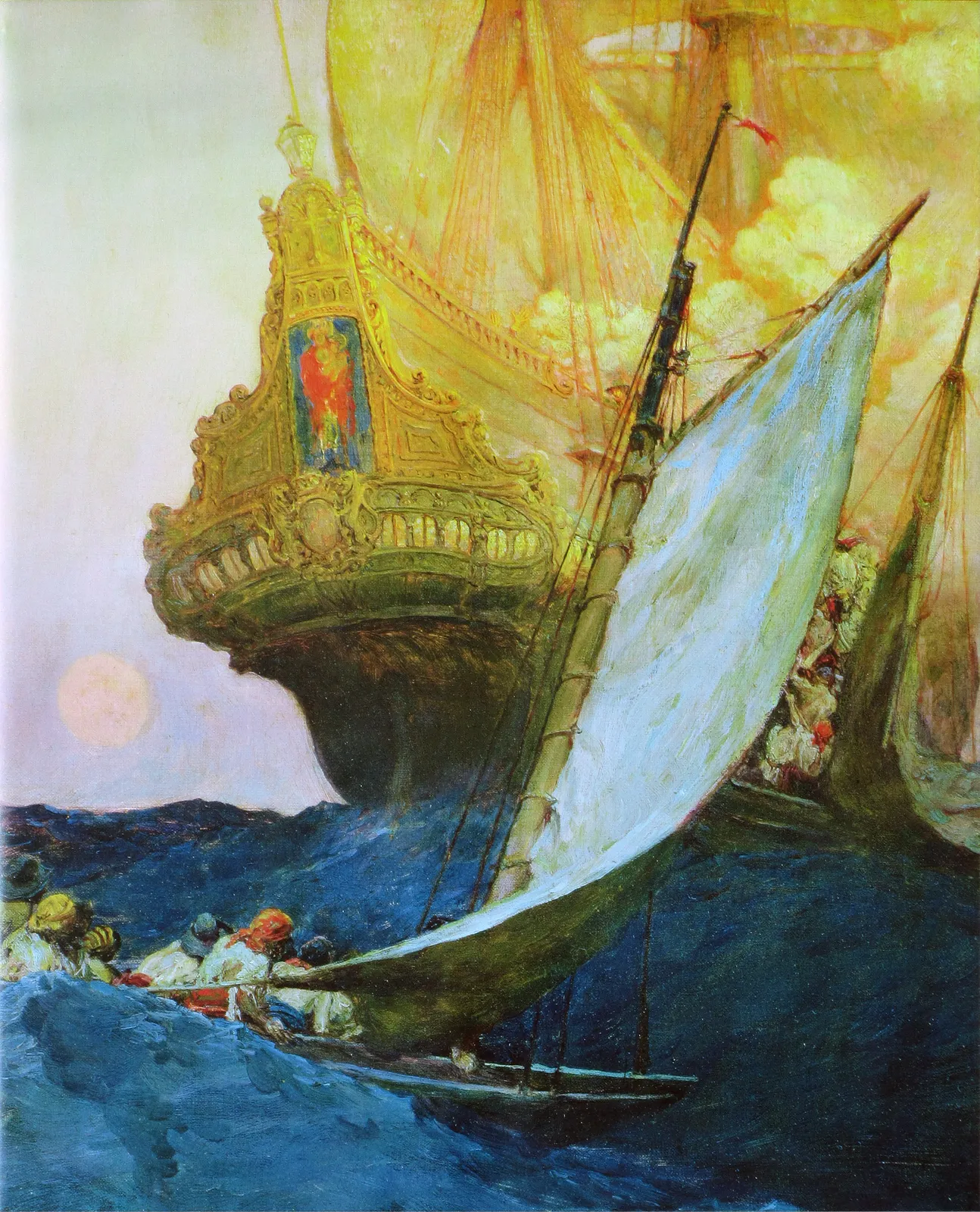
- Scene 1: Attack on a Galleon - Howard Pyle, Delaware Art Museum, Public domain (source)
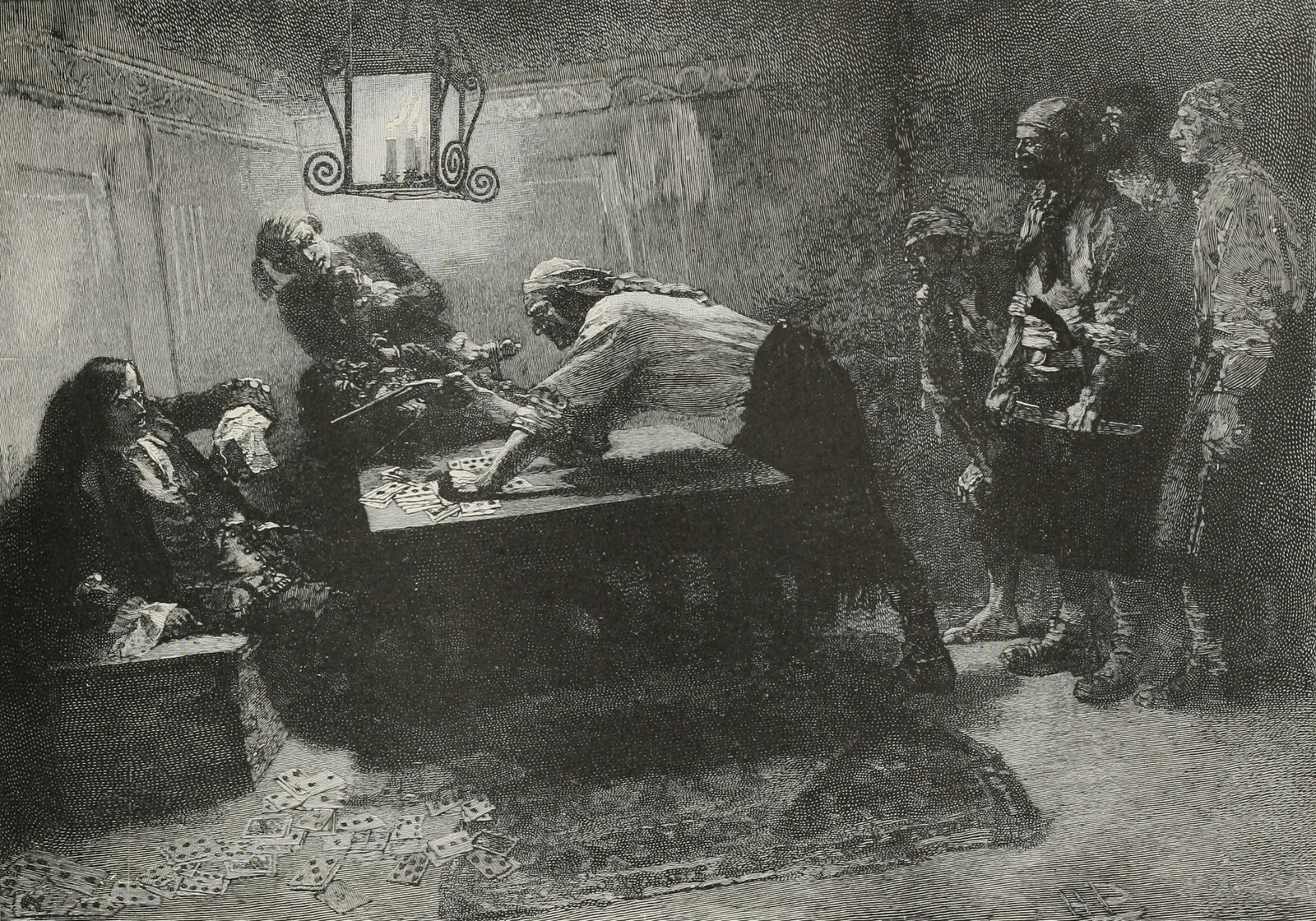
- Scene 2: Capture of the Galleon - Howard Pyle, Public domain (source)
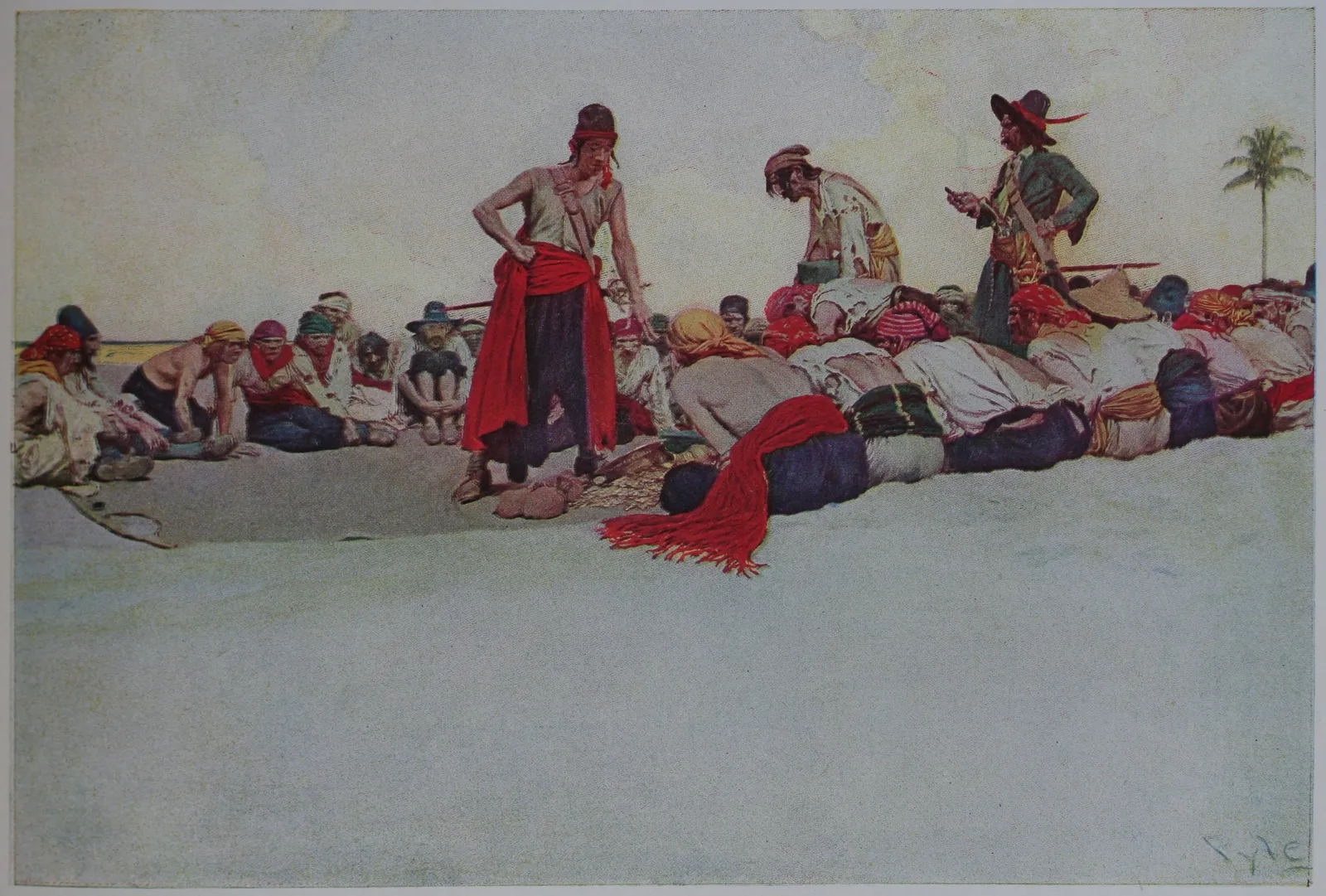
- Scene 3: Pirates Dividing the Spoils - Howard Pyle, Delaware Art Museum, Public domain (source)
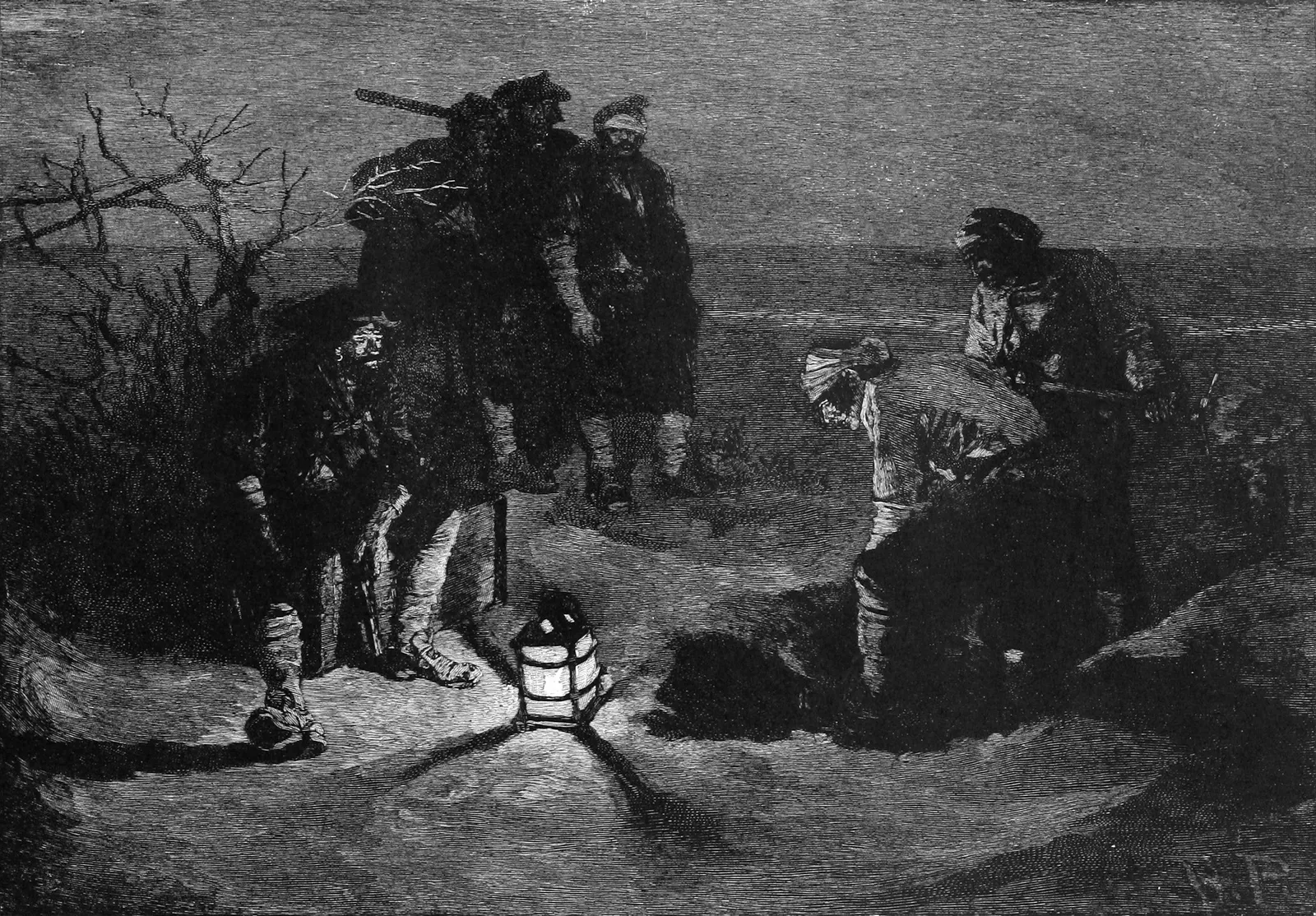
- Scene 4: Blackbeard Buries His Treasure - Historic engraving, Library of Congress, Public domain (source)


Verified Archival Sources & Bibliography
Every claim in this account has been fact-checked against primary colonial state papers and scholarly histories:
- National Geographic: Nassau was the pirate capital of the Caribbean (historical review)
- HISTORY: 6 Famous Pirate Strongholds (historical review)
- Calendar of State Papers Colonial, America and West Indies, Vol. 29 (July 1716): Deposition of John Vickers on pirates at New Providence (primary colonial record)
- Colin Woodard, The Republic of Pirates: Being the True and Surprising Story of the Caribbean Pirates and the Man Who Brought Them Down (Google Books) (peer-reviewed monograph)
- Colin Woodard, The Republic of Pirates (Google Books second edition scan) (scholarly monograph)
- Bijan Kazerooni, The Suppression of Pirates and the Political Culture of Robert Walpole’s Britain (Chapman University, Voces Novae) (peer-reviewed history)
- Smithsonian Magazine: Shipwrecks Discovered Near the Bahamas Tantalize Researchers With Ties to Real Pirates (archaeological report)
Historical Connection Graph
Rasputin's Murder: The Poison Legend vs. the Autopsy
AJ. "Over a Thousand Outlaws Lived by Their Own Rules on One Island. Guess Who?." Echoes of History Uncut. Last modified October 1, 2026. https://echoesofhistoryuncut.com/articles/flying-gang-nassau-pirate-republic/.

An independent digital history publication and documentary studio reconstructing historical turning points through primary archives, official inquiries, and scholarly citations. Every factual claim in this dossier is cross-referenced to the numbered bibliography above.