
A Battleship Came for the Rebels. Their Cannon Was Fake.
In November 1904, Rio de Janeiro erupted into a ferocious week-long insurrection known as the Revolta da Vacina after public health director Oswaldo Cruz made smallpox vaccination mandatory under penalty of law. Barricades were erected, streetcars overturned, and a battleship sent into Guanabara Bay—only for troops to discover the rebels' last fortress was fortified with stovepipe cannons and wooden dynamite.

In this dossier (10 chapters) ▾
- 01 The “Tomb of the Foreigner”
- 02 The “Bota-Abaixo” and the Spark of Resentment
- 03 The Ultimatums of Law No. 1,261
- 04 The Capital Explodes: Barricades of Saúde
- 05 The Cadet Mutiny and the Battleship Deodoro
- 06 The Storming of the Fake Fortress
- 07 The Price of Resistance: Repression and Plague
- 08 What the Record Shows
- 09 Archival Evidence & Picture Credits
- 10 Verified Archival Sources & Bibliography
Historical Dossier: The Vaccine Revolt (Revolta da Vacina) & Urban Cleansing in Rio Location: Rio de Janeiro, Brazil | Date: November 10–18, 1904 | Key Figures: Dr. Oswaldo Cruz, Mayor Pereira Passos, President Francisco de Paula Rodrigues Alves, Horácio José da Silva (“Prata Preta”)
The “Tomb of the Foreigner”
At the dawn of the twentieth century, Rio de Janeiro—the glittering capital of the young Republic of Brazil—was known internationally by a morbid epithet: “The Tomb of the Foreigner.”
Crammed between steep tropical mountains and Guanabara Bay, the city was plagued by devastating, recurring epidemics of yellow fever, bubonic plague, and smallpox. European passenger liners routinely bypassed Rio’s harbor, quarantine flags fluttered from merchant masts, and foreign diplomats fled into the mountain retreat of Petrópolis to escape infection. Between 1890 and 1904 alone, infectious diseases claimed over 50,000 lives in the capital.
For the newly elected president, Francisco de Paula Rodrigues Alves, sanitizing Rio was not merely a humanitarian objective; it was a matter of national survival, credit, and prestige. Brazil’s coffee boom demanded foreign capital and millions of European immigrant laborers, but European newspapers warned that arriving in Rio was a virtual death sentence.
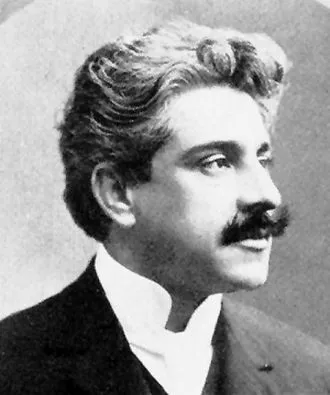
In 1903, President Rodrigues Alves appointed two uncompromising modernizers to remake the capital: Francisco Pereira Passos as Mayor, and a brilliant, 31-year-old bacteriologist trained at the Pasteur Institute in Paris, Dr. Oswaldo Cruz, as Director-General of Public Health.
The “Bota-Abaixo” and the Spark of Resentment
Mayor Pereira Passos set out to transform Rio into a tropical Paris. Under the aggressive municipal policy known popularly as the Bota-Abaixo (“Tear-It-Down”), army engineers and wrecking crews smashed straight boulevards through the historic colonial downtown.
Over 600 multi-family tenement houses (cortiços) were condemned and demolished without compensation or rehousing. Tens of thousands of the city’s poorest residents—freed Afro-Brazilian slaves, dockworkers, and poor immigrants—were violently evicted. With nowhere else to go, they dragged salvage timber up the barren granite hillsides, founding Rio’s earliest hillside favelas.
Simultaneously, Dr. Oswaldo Cruz launched an authoritarian war against disease:
- Yellow Fever Brigades: Armed sanitary brigades (mata-mosquitos) forcibly entered homes, tearing down screens, spraying sulfur, and pouring petroleum into water cisterns.
- Bubonic Plague Bounties: Cruz hired dedicated “rat-catchers” and paid citizens a bounty per dead rodent, sparking a bizarre scandal where opportunistic residents began breeding rats in basements to sell to the city government.
While yellow fever cases plummeted, the working-class population felt besieged in their own homes. The tipping point arrived in June 1904, when Cruz presented the federal legislature with a radical new bill: mandatory universal vaccination against smallpox.
The Ultimatums of Law No. 1,261
On October 31, 1904, Congress enacted Law No. 1,261. Ten days later, on November 9, the authoritarian sanitary enforcement regulations were leaked and published in the morning edition of A Notícia.
The terms were draconian:
- Every Brazilian citizen over six months of age was legally obligated to be vaccinated against smallpox.
- Authorized health brigades, accompanied by armed police, were granted legal power to forcibly enter any private residence without a judicial warrant to inoculate residents.
- Total Civil Disenfranchisement: Anyone unable to produce a valid vaccination certificate was barred from public employment, industrial factory jobs, enrolling children in schools, checking into hotels, traveling by train or ship, and even contracting a legal marriage.
To the conservative, deeply religious, and patriarchal working class, the law crossed an intolerable moral line. In 1904, smallpox vaccine was harvested directly from calf lymph. Rumors exploded that the vaccine turned humans into bovines, transmitted syphilis, and was a deliberate plot by the white ruling elite to exterminate the poor.
Crucially, the prospect of male sanitary agents entering private family bedchambers and ordering wives and daughters to bare their arms and shoulders was perceived as an unbearable assault on family honor.
The Capital Explodes: Barricades of Saúde
On November 10, mass rallies organized by the newly formed Liga Contra a Vacinação Obrigatória (League Against Mandatory Vaccination) devolved into open warfare.
Within forty-eight hours, downtown Rio was in flames:
- Mobs attacked the police, shattered hundreds of municipal gas streetlamps, plunged whole neighborhoods into pitch blackness, and cut telegraph wires.
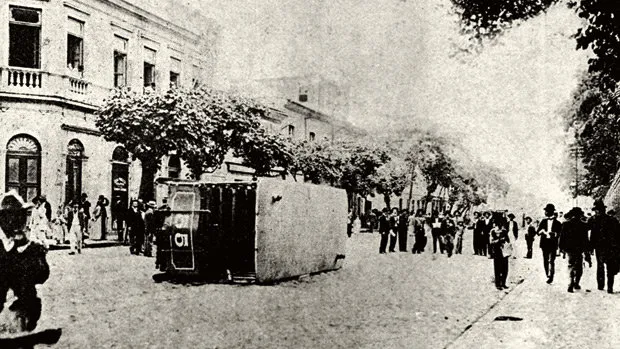
- In a single evening, rioters derailed and torched twenty-two streetcars, using the smoldering iron frames to construct towering defensive barricades.
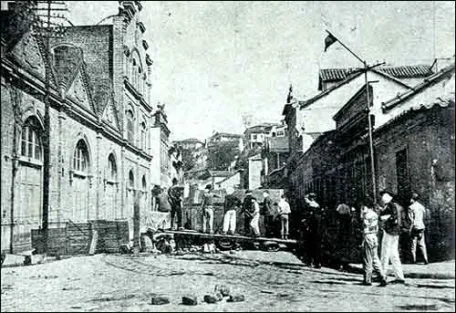
- In the gritty working-class dockside district of Saúde, longshoremen, stevedores, and capoeira martial artists fortified the narrow cobbled streets under the command of Horácio José da Silva, a legendary Afro-Brazilian stevedore known on the waterfront as “Prata Preta” (“Black Silver”).
Prata Preta’s rebels declared Saúde an independent, liberated zone. When police battalions attempted to charge the barricades, they were repelled by hail of cobblestones, broken glass, roofing tiles, and sniper fire.
The rioters spread terrifying rumors that Saúde had stockpiled military hardware: secret underground dynamite magazines, repeating Mauser rifles, and artillery cannons ready to shell government palaces.
The Cadet Mutiny and the Battleship Deodoro
While the streets burned, opportunistic military and political factions moved to exploit the chaos. On the night of November 14, Florianist and positivist officers, with Senator Lauro Sodré among the plotters, persuaded three hundred army cadets from the Praia Vermelha Military School to launch a military coup against President Rodrigues Alves.
Under General Lauro Sodré, the rebel cadets marched through the blacked-out streets toward the presidential palace. But in the darkness, the cadets stumbled into a loyalist cavalry regiment. A blind firefight erupted in the dark streets, and both sides scattered in confusion without realizing how few troops the other possessed. The coup collapsed within hours.
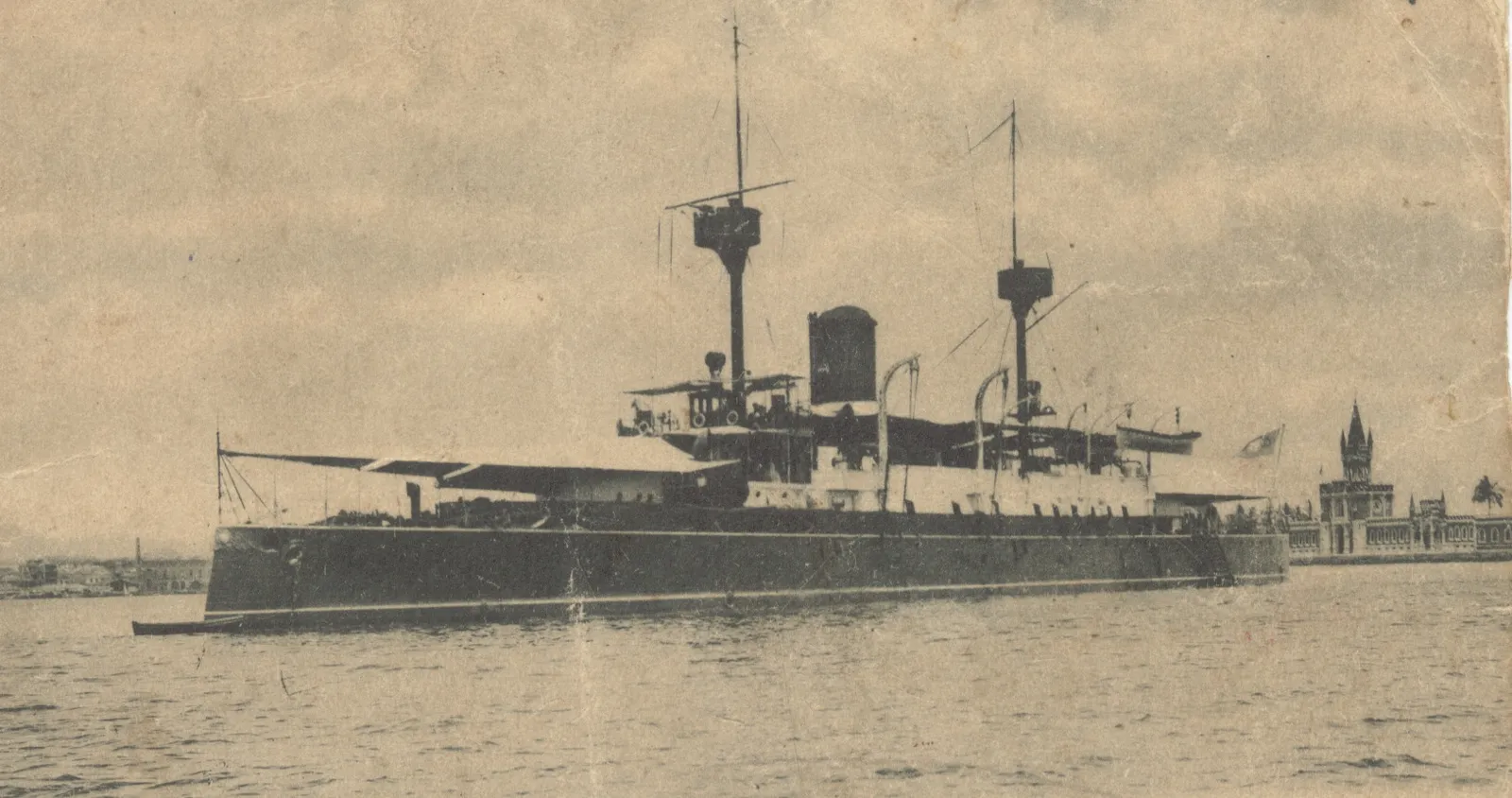
Determined to crush the rebellion once and for all, President Rodrigues Alves declared a state of siege on November 16. The government ordered the coastal defense battleship Marshal Deodoro and armored cruisers into Guanabara Bay, training their heavy naval guns directly onto the insurgent waterfront district of Saúde.
The Storming of the Fake Fortress
On the morning of November 16, combined battalions of federal infantry, mounted cavalry, and naval marines launched a coordinated assault against the Saúde barricades. Soldiers advanced cautiously behind fixed bayonets, braced for devastating artillery barrages and dynamite landmines.
Instead, they encountered an anticlimax that stunned the military commanders.
The trenches behind the main barricades were completely deserted. The defenders had slipped away into the alleys or surrendered. When army engineers cautiously approached the feared rebel artillery battery, they burst into disbelief:
- The “cannons” were nothing more than discarded iron street gaslamp pipes and rusted drainage tubes mounted onto wooden wagon wheels.
- The crates of “dynamite” that had terrified city hall were blocks of scrap wood wrapped in gleaming silver chocolate foil and cigarette paper.
The formidable insurrection had bluffed the Brazilian military and an entire naval fleet using scavenged theater props and empty street junk.
The Price of Resistance: Repression and Plague
The state’s retribution, however, was deadly serious. Federal troops conducted house-to-house sweeps throughout the port districts. An estimated 30 citizens were killed, 110 wounded, and 945 people arrested.
Without trial, hundreds of arrested rioters, capoeira fighters, and destitute dockworkers—including the rebel leader Prata Preta—were packed into the holds of cargo ships and deported to the remote, disease-ridden penal colonies of the Amazonian territory of Acre, from which many never returned.
Recognizing the fragility of public order, the federal government repealed the mandatory enforcement clauses of the vaccine law on November 16, making immunization strictly voluntary. Oswaldo Cruz was pilloried in satirical cartoons, and the public celebrated the suspension of the mandate as a triumph for personal freedom.
The triumph was tragically short-lived.
In the winter of 1908, a massive smallpox epidemic swept through the unprotected, unimmunized slums of Rio de Janeiro. Over 9,000 citizens perished in a single season. Chastened and terrified by the mounting death toll, the very residents who had built barricades and torched streetcars four years earlier rushed voluntarily to Oswaldo Cruz’s clinics, lining up around the block to roll up their sleeves.
Vaccination rose sharply in the years that followed, although smallpox lingered in Rio for decades; Brazil’s last cases were recorded in 1971. Dr. Oswaldo Cruz was hailed as a national hero, and the research institute he founded remains one of the world’s most distinguished public health foundations.
Yet the Vaccine Revolt of 1904 endures as a cautionary historical monument: proof that even the most righteous scientific interventions will trigger violent resistance if governments disregard the dignity, autonomy, and living conditions of the people they seek to protect.
What the Record Shows
8 sourced claims in this story, resting on 4 primary and historical records. Numbers link to the bibliography below.
- Dr. Oswaldo Cruz was appointed Director-General of Public Health in 1903 to sanitize Rio de Janeiro - sources: 1, 2
- In October 1904, Brazil enacted Law 1,261 making smallpox vaccination mandatory under severe civil penalties - sources: 1, 3
- The urban poor resisted sanitary invasions after massive evictions under Mayor Pereira Passos - sources: 1, 4
- Rioters torched 22 streetcars, destroyed gas streetlamps, and erected barricades across the port district of Saude - sources: 1, 4
- The battleship Marshal Deodoro was positioned in Guanabara Bay to suppress the insurrection - sources: 1, 3
- Upon storming the Saude barricades, military forces discovered the rebel cannon was an iron pipe and the dynamite was silver-wrapped wood - sources: 1, 4
- 945 individuals were arrested, and hundreds were deported to penal colonies in Acre - sources: 1, 3
- The mandatory vaccination law was suspended, but an unimmunized smallpox outbreak killed over 9,000 citizens in 1908 - sources: 1, 2
Archival Evidence & Picture Credits
- Scene 1: Dr. Oswaldo Cruz in 1903 - Fundação Oswaldo Cruz, Public domain (source)
- Scene 2: Streetcar overturned during 1904 riots - Arquivo Nacional do Brasil, Public domain (source)
- Scene 3: Battleship Marshal Deodoro in 1904 - Marinha do Brasil, Public domain (source)
- Scene 4: Federal troops storming barricades of Saúde - Revista da Semana, Public domain (source)


Verified Archival Sources & Bibliography
Every claim in this account has been fact-checked against primary archival documents and scholarly historical reviews:
- Wikipedia: Vaccine Revolt (Revolta da Vacina) (reference)
- Fundação Oswaldo Cruz (Fiocruz): A História da Revolta da Vacina (primary archival institutional record)
- História, Ciências, Saúde-Manguinhos: A Revolta da Vacina de 1904 (SciELO) (peer-reviewed medical history)
- Jeffrey D. Needell, The Revolta Contra Vacina of 1904: The Revolt Against Modernization in Belle Époque Rio de Janeiro (Hispanic American Historical Review) (scholarly monograph)
Echoes of History Uncut. "A Battleship Came for the Rebels. Their Cannon Was Fake.." Echoes of History Uncut. Last modified September 17, 2026. https://echoesofhistoryuncut.com/articles/rio-vaccine-revolt-1904/.

An independent history publication using AI-assisted research, drafting and production. Consult each article’s citations and limitations; source inclusion does not establish independent verification of every claim.
▶
Watch the Complete Archival Documentary on YouTube
Subscribe to Echoes of History Uncut on YouTube for full widescreen 16:9 documentaries, primary archival footage, and declassified deep dives.