
They Rammed an Explosive-Packed Warship Into a Nazi Dock. Fewer Than Half Came Home.
In March 1942, British commandos executed Operation Chariot: packing the obsolete destroyer HMS Campbeltown with four tons of hidden high explosives, disguising her as a German warship, and ramming her directly into the Normandie dry dock gates at Saint-Nazaire, France. The mission had a single vital objective: destroy the only Atlantic dock capable of repairing Hitler's monstrous battleship Tirpitz. Hours after the commandos fought their way out, concealed chemical time-delay fuses detonated, obliterating the dock gates alongside dozens of inspecting German officers and crippling Nazi Atlantic strategy for the remainder of World War II.

In this dossier (10 chapters) ▾
- 01 The Shadow of the Beast: The Tirpitz Threat
- 02 The Trojan Horse: HMS Campbeltown
- 03 The Gauntlet of the Loire
- 04 The Ramming at 1:34 AM
- 05 The Last Stand of the Commandos
- 06 The Noon Thunder: The Trojan Trap Closes
- 07 The Strategic Triumph: “The Greatest Raid of All”
- 08 What the Record Shows
- 09 Archival Evidence & Picture Credits
- 10 Verified Archival Sources & Bibliography
Historical Dossier: Operation Chariot & The Raid on Saint-Nazaire Location: Saint-Nazaire, Loire-Atlantique, Occupied France | Date: March 28, 1942 | Key Figures: Cmdr. Robert Ryder VC, Lt. Col. Charles Newman VC, Lt. Cmdr. Stephen Beattie VC
The Shadow of the Beast: The Tirpitz Threat
In the dark winter of 1941–1942, Great Britain’s Atlantic lifeline was under catastrophic pressure. German U-boat wolf packs were sinking hundreds of thousands of tons of Allied merchant shipping every month. Yet the British Admiralty lived in terror of an even more devastating nightmare: the Kriegsmarine’s 52,000-ton super-battleship Tirpitz.
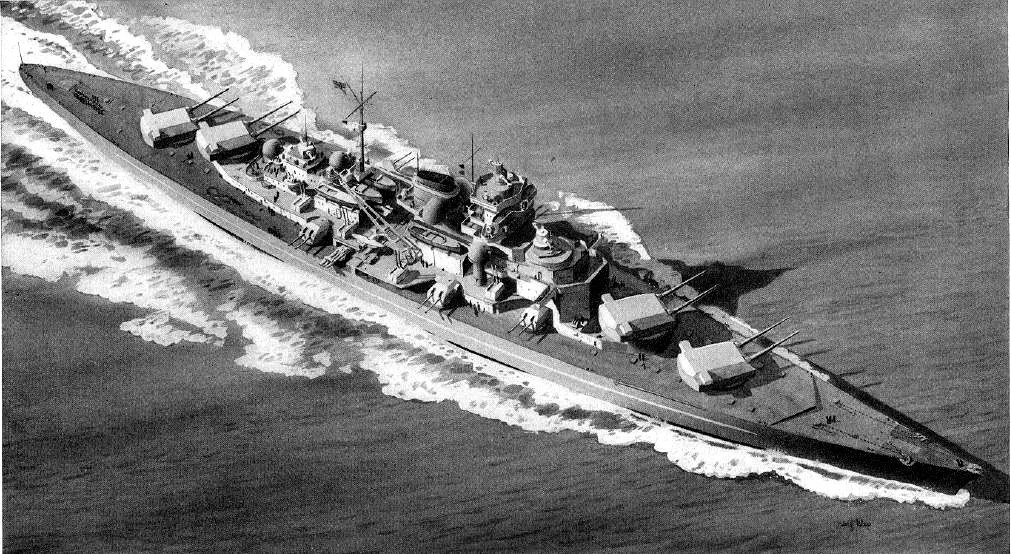
The sister ship to the sunken Bismarck, Tirpitz was the largest and most lethal battleship ever built by a European navy. Armed with eight 15-inch guns and thick Krupp cemented steel armor, if Tirpitz broke out from her Norwegian fjords into the open Atlantic shipping lanes, she could annihilate entire convoys and starve Britain into surrender.
There was only one strategic obstacle preventing the German Naval High Command from unleashing Tirpitz into the Atlantic: logistics. If Tirpitz took battle damage during a breakout, there was only one dry dock along the entire German-occupied Atlantic seaboard large enough to accommodate her immense 820-foot hull: the Louis Joubert Lock (known as the Forme Écluse) in the heavily fortified French port of Saint-Nazaire, at the mouth of the Loire River.
Constructed in the 1930s to dock the legendary French transatlantic ocean liner Normandie, the dry dock was an engineering marvel: 1,148 feet long, 164 feet wide, and sealed by two colossal hollow steel caisson gates weighing thousands of tons each.
British Prime Minister Winston Churchill and the Chief of Combined Operations, Lord Louis Mountbatten, reached an audacious conclusion: if they could destroy the Normandie dock at Saint-Nazaire, Tirpitz would never dare enter the Atlantic.
The Trojan Horse: HMS Campbeltown
Aerial bombing had repeatedly failed to penetrate the dock’s reinforced concrete caissons, and torpedo attacks were blocked by massive underwater anti-torpedo nets. Combined Operations planners devised an operation of breathtaking audacity, code-named Operation Chariot: they would convert an obsolete warship into a giant battering ram, pack her bow with tons of high explosives, ram her directly into the outer dry dock gate, and detonate her with concealed delay fuses.
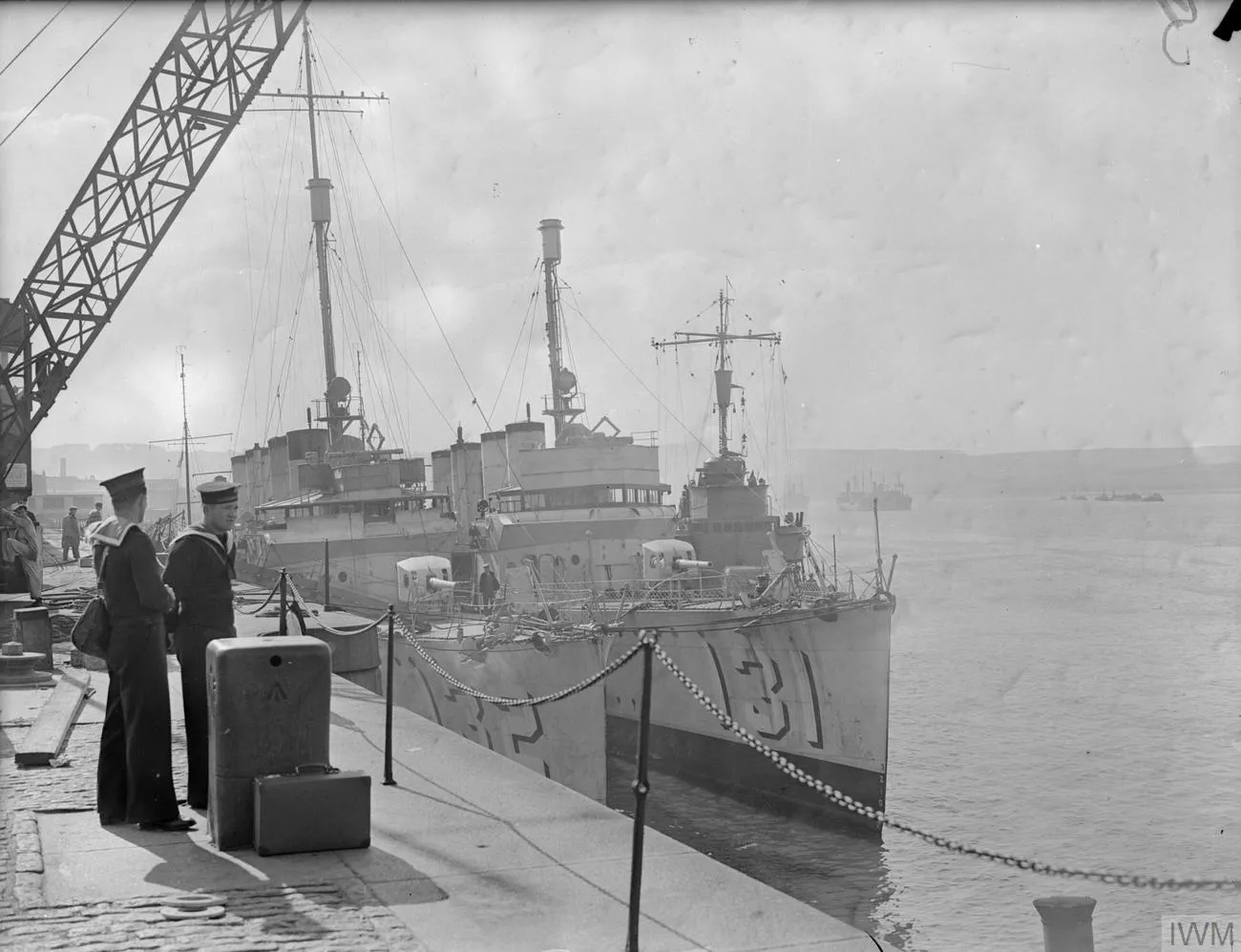
The vessel chosen for this suicide mission was HMS Campbeltown, an obsolete 1919 American flush-deck destroyer (formerly USS Buchanan) transferred to Britain under the Destroyers-for-Bases agreement.
At Devonport dockyard, naval engineers stripped Campbeltown of all non-essential equipment:
- Her three rear funnels were cut down at a rake, and the forward two funnels were replaced with mock German-style cowls to mimic a German Raubvogel-class torpedo boat.
- Armor plating was welded along the bridge and wheelhouse to protect the helmsmen against heavy coastal machine gun fire.
- In the ship’s forecastle, directly behind the reinforced steel bow, engineers bolted twenty-four Mark VII depth charges packed with 4.5 tons of Amatol high explosive, encased in solid concrete.
- Three sets of chemical “pencil” time-delay fuses were embedded into the explosives, set to detonate approximately eight hours after impact.
Aboard Campbeltown and an accompanying flotilla of sixteen fragile wooden motor launches (Fairmile B) were 611 men: Royal Navy sailors commanded by Commander Robert Ryder and 265 elite soldiers of No. 2 Commando under Lieutenant-Colonel Charles Newman.
The Gauntlet of the Loire
On the moonlit night of March 27–28, 1942, the British strike force entered the treacherous, heavily mined shallows of the Loire estuary. Flying the German Kriegsmarine ensign, Campbeltown slipped past initial outer patrol boats.
At 1:22 AM, when coastal radar stations spotted the flotilla barely two miles from the dock, German coastal searchlights bathed the convoy in blinding white light. A German signal station flashed an urgent challenge: “Identify yourself!”
A bilingual British naval officer on Campbeltown’s bridge, using captured German signal books, blinked back: “Wait. Am being fired upon by friendly forces. S.M.S. Sperrbrecher proceeding to harbor.”
The clever ruse bought five precious minutes. But as Campbeltown neared the harbor basin, German batteries realized the deception. Coastal artillery, 20mm flak cannons, and heavy machine guns opened fire from both banks of the Loire, transforming the estuary into a roaring cauldron of tracer fire and exploding shells.
Campbeltown hauled down the German ensign, hoisted the Royal Navy White Ensign, and surged forward at nineteen knots, steam pouring from severed pipes and wounded men falling across her decks.
The Ramming at 1:34 AM
Through blinding smoke and a blizzard of shrapnel, Lieutenant-Commander Stephen Beattie steered Campbeltown with iron precision. She plowed through the heavy steel anti-torpedo netting guarding the dock entrance.
At precisely 1:34 AM—just four minutes behind schedule—Campbeltown struck the massive outer caisson gate of the Normandie dock at twenty knots.
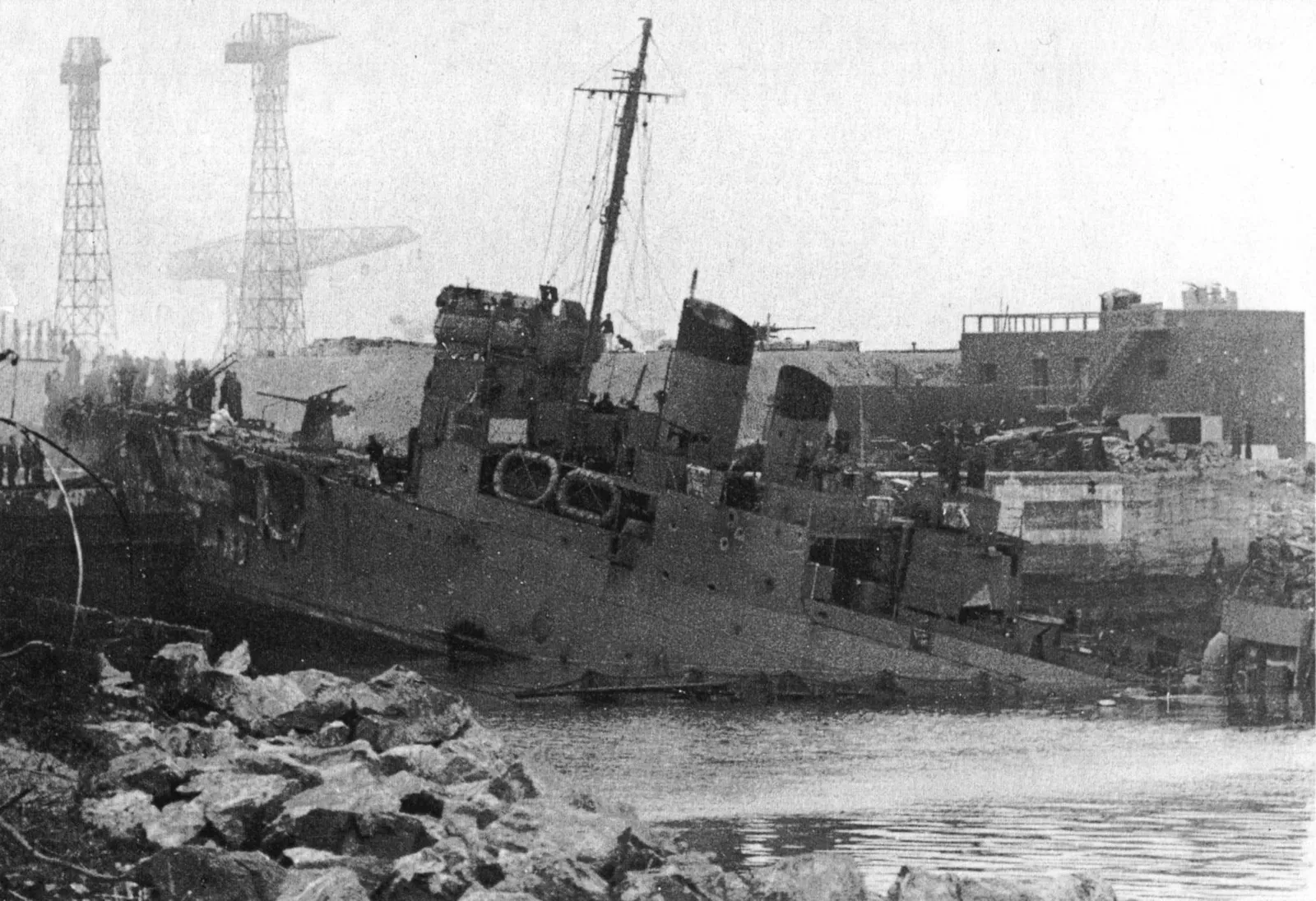
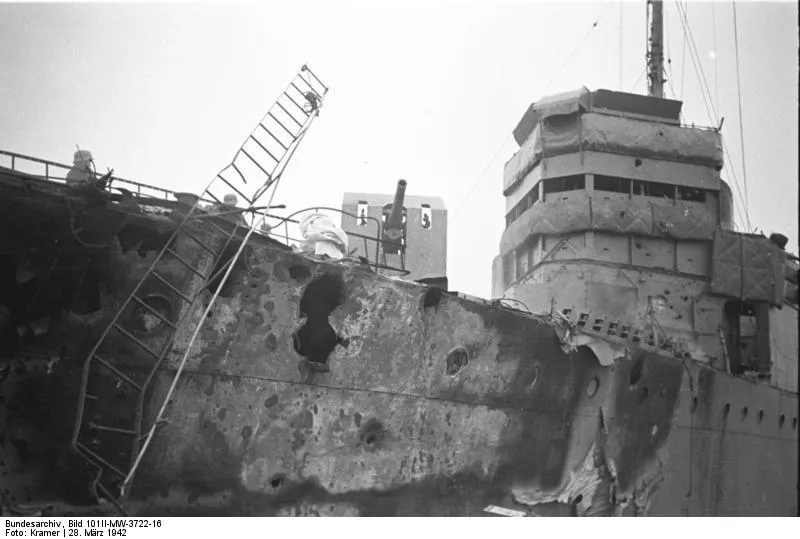
The collision was deafening: thirty-three feet of the destroyer’s reinforced bow crumpled inward like an accordion, riding up over the lip and wedging itself immovably thirty feet deep into the steel gate structure.
Immediately, the surviving crew executed scuttling charges, flooding Campbeltown’s stern compartments so that she settled firmly onto the concrete sill.
Simultaneously, commando assault teams leapt from her decks onto the quays with submachine guns and sledgehammers. Divided into specialized demolition squads, the commandos charged through the shipyard under heavy machine gun fire, blowing up the colossal water-pumping stations, winding gear, and electric transformers that operated the basin.
The Last Stand of the Commandos
While the demolition squads succeeded in destroying every assigned machinery target, disaster struck the evacuation flotilla. Out on the river, German artillery fire set the wooden motor launches ablaze one after another; twelve of the sixteen launches were blown apart or burned to the water line.
Seeing that sea evacuation was impossible, Colonel Newman rallied the surviving commandos ashore:
“Our boats are gone. We’re going to fight our way through the town and head into the open country toward Spain. Don’t surrender while you have a bullet left.”
Armed only with pistols, Bren guns, and knives, the commandos fought a vicious house-to-house running battle through the streets of Saint-Nazaire against thousands of German troops. When their ammunition ran out at dawn, Newman and over two hundred commandos were forced to surrender. Only five men successfully evaded capture and walked all the way across occupied France and Spain to Gibraltar.
The Noon Thunder: The Trojan Trap Closes
At dawn on March 28, German military commanders believed the crisis was over. The British raiders were either dead or captured.
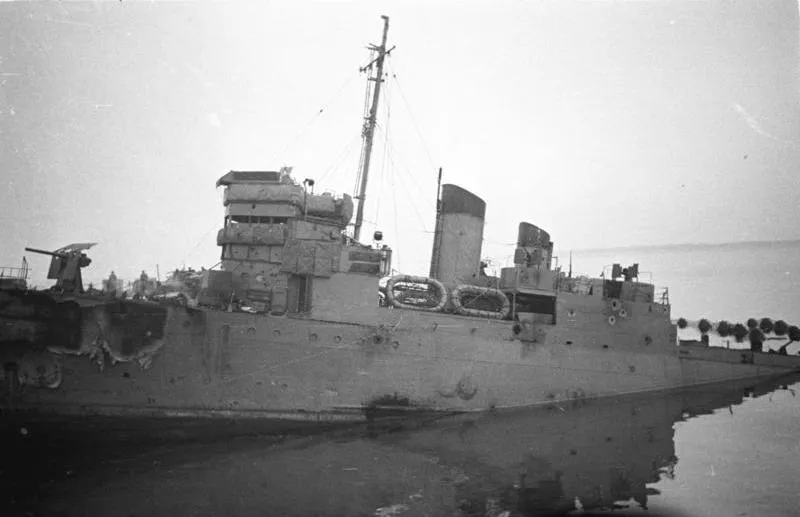
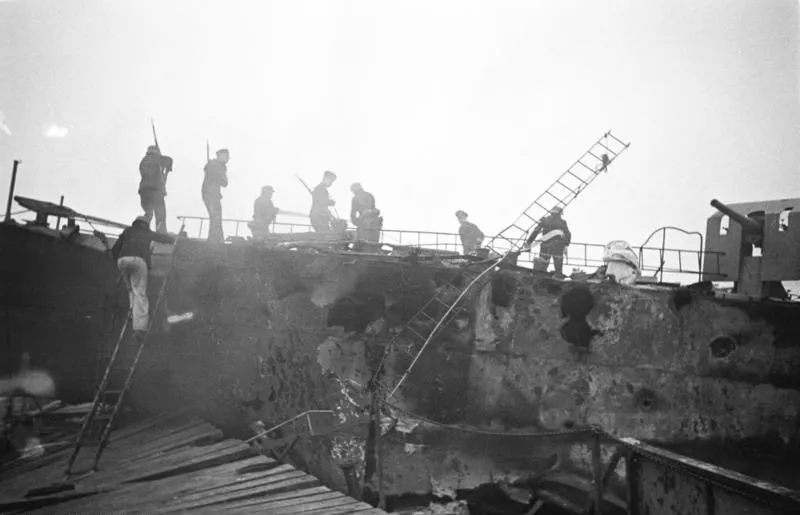
Hundreds of senior German naval officers, intelligence specialists, dockyard engineers, and armed sentries gathered on the quay to gawk at the crumpled destroyer wedged into the caisson gate. German officers boarded Campbeltown’s shattered decks to search for codebooks and inspect the structural damage.
Nearby, German interrogators were questioning the captured Captain Stephen Beattie:
“Your operation was reckless and foolish,” a German intelligence officer smugly informed Beattie. “A small ship like this cannot possibly do lasting damage to a massive steel gate.”
Beattie reportedly smiled, glanced at his pocket watch, and replied:
“We’re not quite as foolish as you think.”
At 12:00 PM sharp—hours after the battle had ended—the four and a half tons of Amatol buried in Campbeltown’s concrete-encased bow detonated with apocalyptic fury.
The blast vaporized the front half of the destroyer, killing about 360 German officers, soldiers, and French civilians instantly. The colossal steel caisson gate was blown completely off its tracks, allowing millions of gallons of sea water to rush into the dry dock in a roaring tidal wave that dragged Campbeltown’s shattered stern into the mud basin.
The Strategic Triumph: “The Greatest Raid of All”
The strategic dividend of Operation Chariot was decisive:
- The Saint-Nazaire Normandie dry dock was knocked completely out of action for the remainder of World War II. It was not repaired or restored until 1948, two years after Germany’s surrender.
- Deprived of any safe repair facility on the Atlantic coast, the German Naval Staff never dared dispatch Tirpitz into the Atlantic shipping lanes. She remained pinned in Norwegian fjords until British Lancaster bombers sank her with Tallboy earthquake bombs in November 1944.
- Out of 611 British participants, 169 were killed and 215 captured.
- In recognition of extraordinary heroism, five Victoria Crosses—Britain’s highest military decoration for valor—were awarded for the operation, alongside eighty-four other military decorations.
Operation Chariot earned its permanent place in naval history as “The Greatest Raid of All”: an operation where raw tactical courage, mechanical ingenuity, and an old warship altered the course of a world war in a single afternoon.
What the Record Shows
8 sourced claims in this story, resting on 4 primary and naval historical records. Numbers link to the bibliography below.
- The Saint-Nazaire dry dock (Louis Joubert Lock) was the only Atlantic facility capable of repairing the battleship Tirpitz - sources: 3
- British planners packed the obsolete destroyer HMS Campbeltown with four tons of Amatol high explosives - sources: 2
- Disguised with German naval flags, Campbeltown rammed the outer caisson gate at 1:34 AM on March 28, 1942 - sources: 4
- Commandos disembarked into the dockyard, demolishing pumping machinery, winding gear, and outer dock installations - sources: 2, 4
- German officers and engineers boarded the wedged destroyer the following morning to inspect the damage - sources: 2
- Concealed pencil-type time-delay fuses detonated at noon, completely destroying the gate and killing dozens of German personnel - sources: 4
- The dry dock was knocked out of action for the remainder of World War II and not restored until 1948 - sources: 2, 3
- Five Victoria Crosses were awarded to participants in the operation, often termed “The Greatest Raid of All” - sources: 3, 4
Archival Evidence & Picture Credits
- Scene 1: HMS Campbeltown before conversion - Imperial War Museums, Public domain (source)
- Scene 2: German battleship Tirpitz - German Federal Archives, Public domain (source)
- Scene 3: Campbeltown wedged in the caisson gate - German Federal Archives, Public domain (source)
- Scene 4: German sentries examining Campbeltown - German Federal Archives, Public domain (source)
- Scene 5: German officers inspecting the bow at 11:30 AM - German Federal Archives, Public domain (source)
- Scene 6: Obliterated Normandie dock gate after detonation - German Federal Archives, Public domain (source)


Verified Archival Sources & Bibliography
Every claim in this account has been fact-checked against primary naval archives and scholarly military history:
- C. E. Lucas Phillips, The Greatest Raid of All (Heinemann / Internet Archive) (definitive operational history)
- Wikipedia: Operation Chariot (The St. Nazaire Raid) (reference)
- Imperial War Museums (IWM): The St Nazaire Raid (Operation Chariot Official Collection) (primary institutional archive)
- The National Archives (UK): Admiralty & Combined Operations Headquarters Records DEFE 2/87 (primary manuscript war diaries)
Echoes of History Uncut. "They Rammed an Explosive-Packed Warship Into a Nazi Dock. Fewer Than Half Came Home.." Echoes of History Uncut. Last modified September 19, 2026. https://echoesofhistoryuncut.com/articles/operation-chariot-st-nazaire/.

An independent history publication using AI-assisted research, drafting and production. Consult each article’s citations and limitations; source inclusion does not establish independent verification of every claim.
▶
Watch the Complete Archival Documentary on YouTube
Subscribe to Echoes of History Uncut on YouTube for full widescreen 16:9 documentaries, primary archival footage, and declassified deep dives.