
A City's Greatest Minds Let Lice Drink Their Blood to Survive the Nazis
In Nazi-occupied Lwów, Polish biologist Rudolf Weigl invented the first viable vaccine against epidemic typhus by cultivating Rickettsia bacteria inside body lice fed on human blood. Exploiting the German military's desperate need for vaccine doses, Weigl employed thousands of Polish university professors, underground resistance fighters, and persecuted Jews as 'louse-feeders,' shielding them from Gestapo death squads.

In this dossier (9 chapters) ▾
Historical Dossier: Rudolf Weigl and the Lwów Louse Feeders Location: Lwów (now Lviv, Ukraine) | Year: 1941–1944 | Key Figures: Rudolf Weigl, Zofia Weigl, the institute’s feeders and breeders
A Parasitologist and a Plague
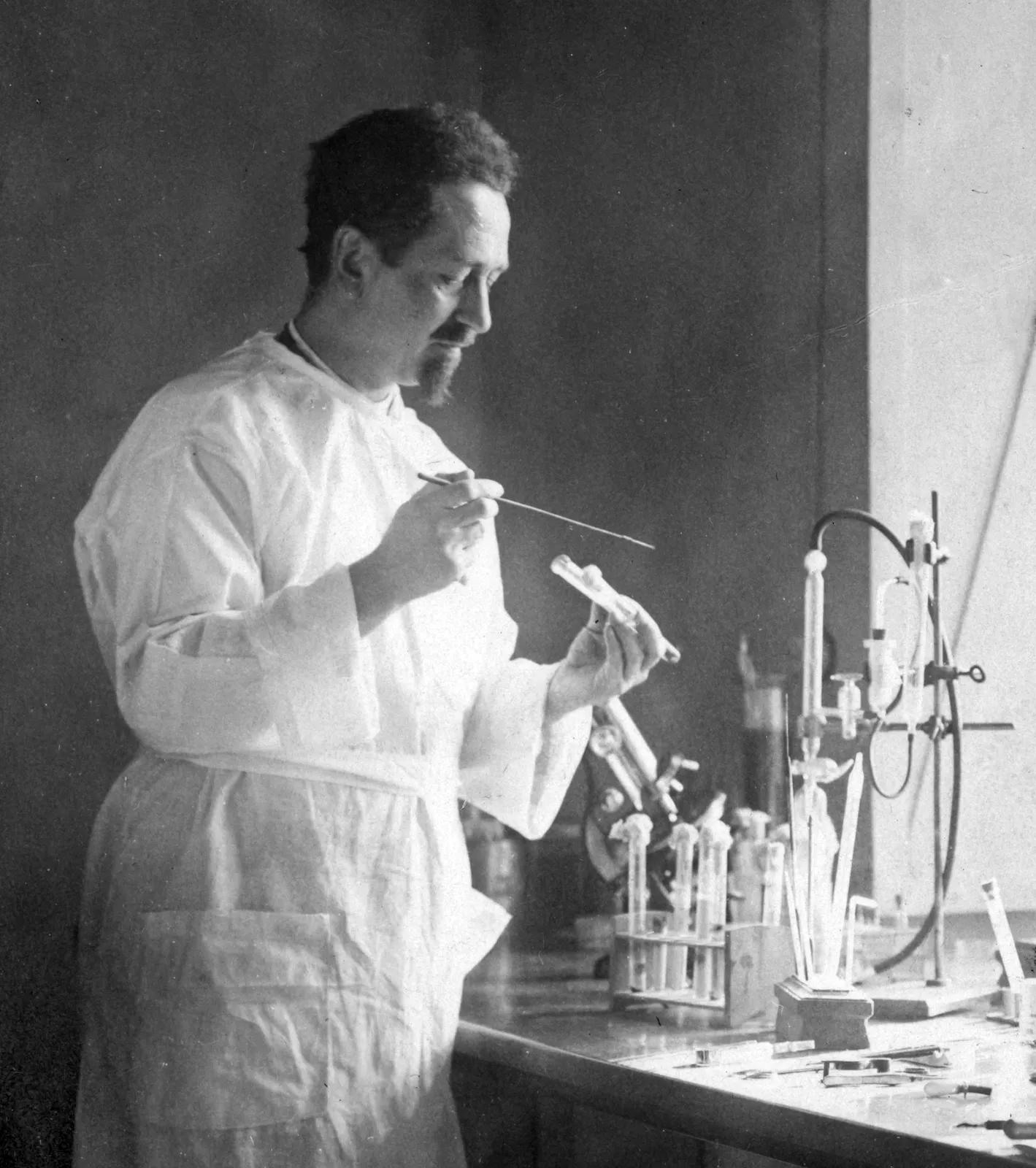
Rudolf Stefan Jan Weigl was born on 2 September 1883 in Prerau, in Austria-Hungary, to Austro-Moravian parents. His father died in a bicycle accident when he was a child, and his mother remarried a Polish teacher, Józef Trojnar. The family moved to Jasło and later to Lwów. Although he was a native German speaker, Weigl adopted the Polish language and culture, and he graduated from the biology department of Lwów University in 1907, going on to earn doctorates in zoology, comparative anatomy and histology.
The First World War set the course of his career. Drafted into the Austro-Hungarian medical service, he ran the Laboratory for the Study of Spotted Typhus at a military hospital in Przemyśl from 1918 to 1920. Epidemic typhus, a disease carried by body lice, killed soldiers and civilians in vast numbers on the Eastern Front. A French scientist, Charles Nicolle, had shown in 1909 that lice transmit it. What nobody had yet done was make a vaccine that worked.
The Vaccine That Needed Lice
The bacterium that causes typhus, Rickettsia prowazekii, cannot be grown on ordinary laboratory media. Weigl’s solution was to grow it in the bodies of lice. His method had four stages: raise healthy lice for about 12 days, infect them with typhus, keep them alive for 5 more days, and then extract their intestines and grind them into a paste from which the vaccine was made.
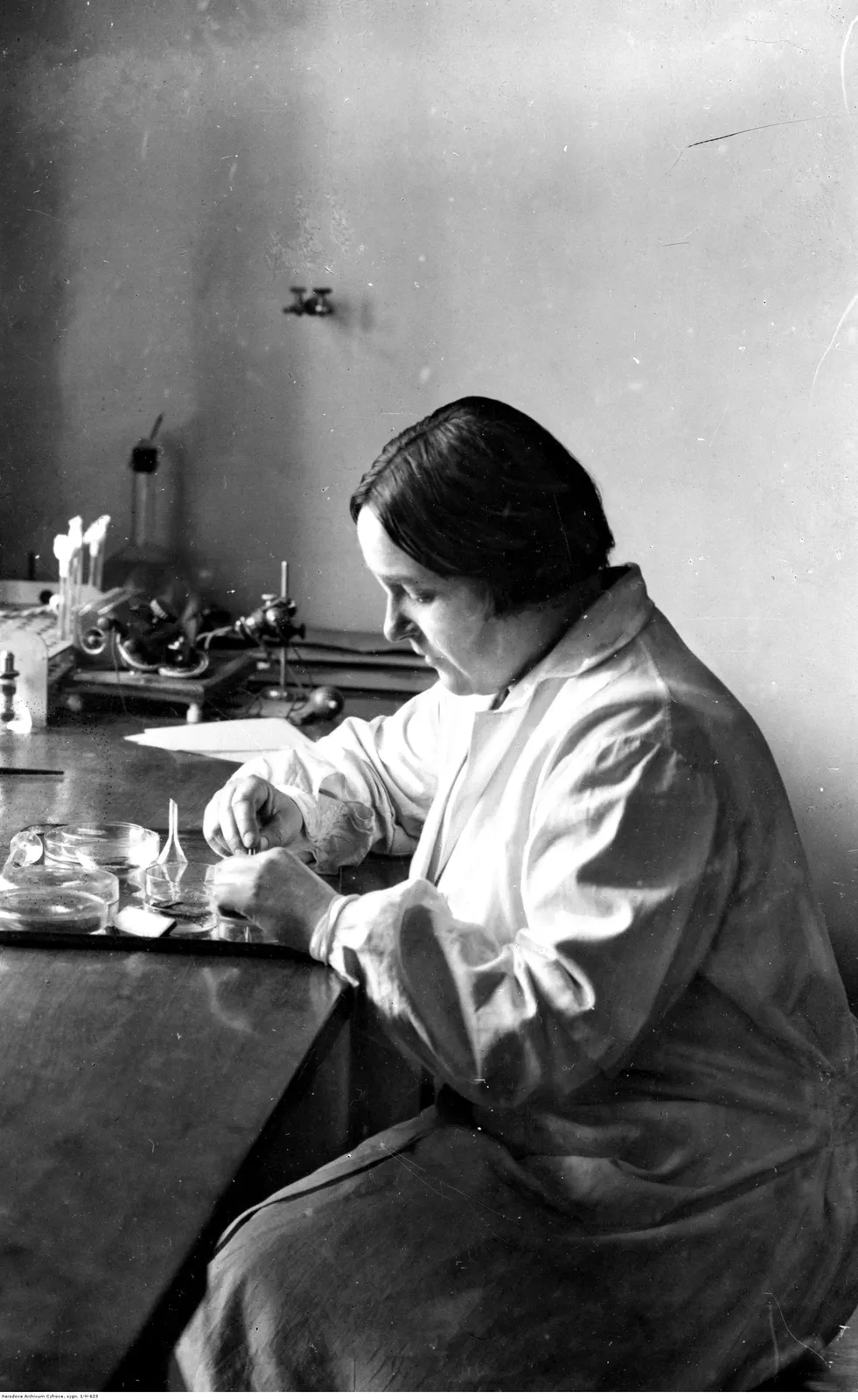
It was dangerous and unpleasant work, and it needed people. The lice had to be fed, and the feeders were human. Weigl and his wife Zofia were among the first, letting infected insects feed on their legs through fine screens. Weigl caught typhus himself and survived.
The vaccine did not give complete immunity, but it substantially reduced the severity of the disease. It made Weigl’s Institute for Typhus and Virus Research in Lwów one of the most important laboratories in Europe.
Occupation
After the German invasion of Poland in 1939 and the Soviet occupation of Lwów, the Germans took the city in July 1941. The institute was now a valuable asset for an army fighting on the Eastern Front, where typhus was a constant threat, and the occupiers demanded that Weigl produce vaccine for them.
Weigl saw what the institute could be. He is reported to have employed and protected roughly 2,000 Polish intellectuals, Jews and members of the Polish underground. Jewish workers mainly helped grow the lice, and in return they received food, protection and doses of the vaccine once it was ready. Employees held special passes from the German authorities that gave them a measure of protection against roundups and forced-labour deportations, which were otherwise a daily danger for a person in occupied Lwów.
The best-known feeders included the mathematician Stefan Banach, one of the founders of modern functional analysis, and the poet Zbigniew Herbert.
The Work of a Feeder
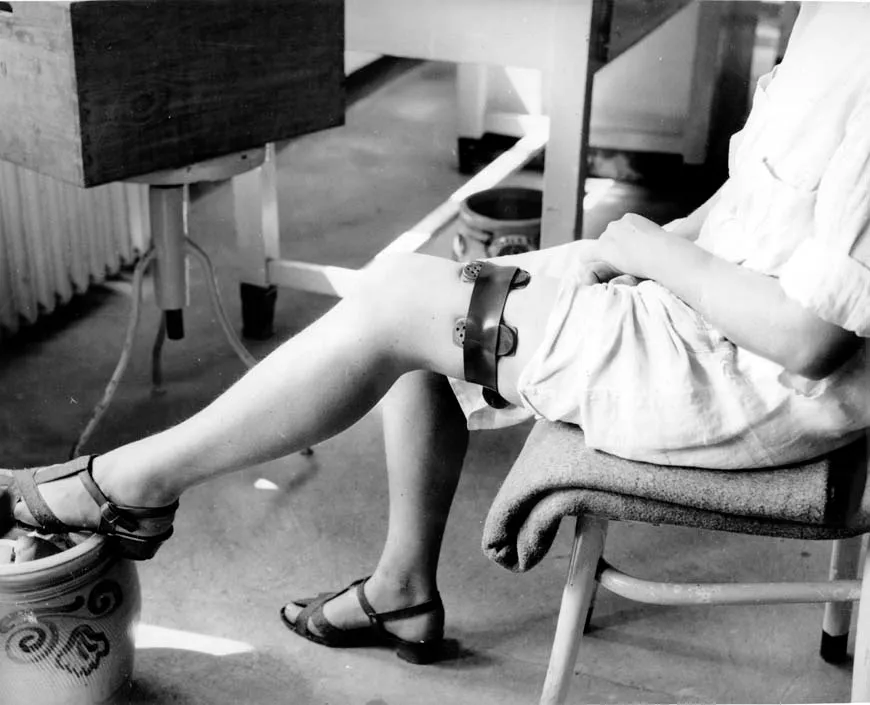
The job was a grim one. A feeder strapped a small cage covered with fine wire mesh to the leg, and the lice inside fed on the feeder’s blood through the mesh for a set period each day. The bites itched and left the skin sore. For the feeders, though, it was a job worth having.
The vaccine itself also saved lives beyond the walls of the institute. Weigl’s vaccines are said to have reached the ghettos of Lwów and Warsaw, concentration camps and even Gestapo prisons. Historical accounts estimate that he saved around 5,000 lives by employing people at the institute.
After the War
When the war was over, Weigl moved to Kraków, where he chaired General Microbiology at the Jagiellonian University, and later held the biology chair at the University of Poznań. He retired in 1951. He had been nominated for the Nobel Prize in every year from 1930 to 1934 and from 1936 to 1939, and he never won. He died on 11 August 1957 in Zakopane, aged 73, and was buried at the Rakowicki Cemetery in Kraków.
In 2003 Weigl was recognised after his death as Righteous Among the Nations by Yad Vashem, which honours non-Jews who risked their lives to save Jews. Google marked what would have been his 138th birthday with a Doodle on 2 September 2021.
A Qualified Rescue
Weigl’s story is sometimes told as one of simple heroism, and there is a good deal of it. It is also true that he worked for the German army, because the institute’s survival depended on it, and that the vaccine he made protected German soldiers as well as the people hiding in his laboratory. What he did was to use a role that could have been purely collaboration to shelter thousands of people from deportation and death. It is a reminder that rescue under occupation was often carried out inside compromised situations, with small tools: a pass, a job, a cage of lice.
What the Record Shows
8 sourced claims in this story, resting on 5 primary and historical records. Numbers link to the bibliography below.
- Dr. Rudolf Weigl developed the first viable vaccine against epidemic typhus by cultivating bacteria in body lice - sources: 1, 4
- In Nazi-occupied Lwów, Weigl secured military production status to shield Polish intellectuals from execution - sources: 1, 2
- Feeders strapped wire-mesh wooden boxes containing hundreds of lice to their legs for 45 minutes daily - sources: 1, 2
- Weigl employed over 2,000 Polish scholars, Jews, and underground fighters, providing official Wehrmacht identity papers - sources: 1, 3
- Renowned mathematician Stefan Banach and poet Zbigniew Herbert were sheltered as louse-feeders - sources: 2, 4
- Vaccine doses were covertly smuggled into the Lwów and Warsaw Ghettos, saving thousands of Jewish lives - sources: 2, 3
- Weigl repeatedly refused to sign the Nazi Volksliste despite direct threats from Governor-General Hans Frank - sources: 1, 4
- Yad Vashem honored Rudolf Weigl posthumously as Righteous Among the Nations in 2003 - sources: 3, 4
Archival Evidence & Picture Credits
Every image on this page was checked against its Wikimedia Commons file page.
- Professor Rudolf Weigl, the Polish parasitologist who developed an effective typhus vaccine (Wikimedia Commons) - Wikimedia Commons file page
- Zofia Weigl in the laboratory, one of the earliest louse feeders (Wikimedia Commons) - Wikimedia Commons file page
- An archival photograph of an experiment with typhus lice, from the National Museum of Health and Medicine (Wikimedia Commons) - Wikimedia Commons file page


Verified Archival Sources & Bibliography
Every claim in this account has been fact-checked against primary archives and scholarly repositories:
- Clinical Infectious Diseases: Rudolf Weigl and the First Typhus Vaccine (Wincewicz et al.) (academic)
- Internet Archive: The Fantastic Laboratory of Dr. Weigl - How Two Microbiologists Fought Typhus and Sabotaged the Nazis (Arthur Allen) (book)
- Yad Vashem (World Holocaust Remembrance Center): Rudolf Weigl - Righteous Among the Nations (primary)
- Wikipedia: Rudolf Weigl (reference)
- Polish Academy of Sciences: Institute of Immunology and Experimental Therapy Historical Archives (primary)
Echoes of History Uncut. "A City's Greatest Minds Let Lice Drink Their Blood to Survive the Nazis." Echoes of History Uncut. Last modified September 18, 2026. https://echoesofhistoryuncut.com/articles/weigl-louse-feeders/.

An independent history publication using AI-assisted research, drafting and production. Consult each article’s citations and limitations; source inclusion does not establish independent verification of every claim.
▶
Watch the Complete Archival Documentary on YouTube
Subscribe to Echoes of History Uncut on YouTube for full widescreen 16:9 documentaries, primary archival footage, and declassified deep dives.