
The Samurai Who Met the Pope: The Keicho Embassy Across Two Oceans
In this dossier (8 chapters) ▾
Historical Dossier: The Keicho Embassy & The Trans-Oceanic Mission of Hasekura Tsunenaga Route: Tsukinoura (Sendai) → Acapulco → Mexico City → Veracruz → Sanlúcar de Barrameda → Madrid → Rome Years: 1613–1620 | Key Figures: Hasekura Tsunenaga (Felipe Francisco), Date Masamune, Luis Sotelo, Pope Paul V, King Philip III of Spain
The Black Ships of Date Masamune
On October 28, 1613, an imposing European-style galleon armed with sixteen cannons slipped through the shallow reefs of Tsukinoura Bay in northeastern Japan. Named the San Juan Bautista by the Franciscan friars who supervised her construction, the five-hundred-ton vessel was built entirely of native Japanese cedar, fir, and oak by eight hundred master shipwrights, ironworkers, and carpenters under the direct orders of Date Masamune, the formidable “One-Eyed Dragon” of Sendai. While Tokugawa Ieyasu had unified central Japan after the Battle of Sekigahara in 1600, Date Masamune maintained an autonomous domain in northern Mutsu Province, nurturing bold commercial and spiritual ambitions that looked far beyond the archipelago’s shores.
Masamune envisioned a permanent, direct trans-Pacific trade route connecting his domain to Nueva España (colonial Mexico), circumventing the Portuguese monopoly in Nagasaki and the Dutch merchants operating under sovereign permits at Hirado. To lead this unprecedented trans-oceanic venture, Masamune selected one of his most trusted mid-ranking samurai retainers: forty-two-year-old Hasekura Rokuemon Tsunenaga. Accompanied by the zealous Spanish Franciscan friar Luis Sotelo, an envoy of 180 Japanese samurai, merchants, oarsmen, and servants, and several Spanish sailors shipwrecked during earlier storms along the Japanese coast, Hasekura was entrusted with official letters stamped in vermilion by Date Masamune addressed directly to King Philip III of Spain and His Holiness Pope Paul V in Rome.

The embassy departed at a moment of extreme geopolitical fragility. Even as Hasekura weighed anchor, the Tokugawa Shogunate in Edo was preparing comprehensive national edicts expelling Christian missionaries and proscribing the Catholic faith across the central provinces. Masamune chose to ignore these mounting domestic storm clouds, betting that a lucrative trade treaty with the Spanish Crown and papal recognition of a separate northern Japanese bishopric would consolidate Sendai’s regional supremacy against the Shogun’s centralizing hegemony.
Crossing the Northern Pacific
The voyage of the San Juan Bautista across the northern Pacific tested the limits of 17th-century navigational endurance. For nearly three months, the Japanese-built galleon endured violent winter gales, freezing drizzle, and heavy swell across the uncharted open waters of the northern shipping corridor, relying on the celestial calculations of Spanish pilot Sebastián Vizcaíno. Scurvy claimed several crew members before lookout watches sighted the jagged cliffs of Alta California. On January 25, 1614, after ninety perilous days at sea without making intermediate landfall, the battered ship limped into the fortified harbour of Acapulco.

The arrival of a full Japanese diplomatic contingent astonished colonial authorities. Dressed in ceremonial silk kimono, wearing the traditional daisho (paired katana and wakizashi swords) at their sashes, and wearing their hair in oiled topknots, Hasekura’s samurai marched into Acapulco under a barrage of salute guns. Contemporary Mexican diarist Chimalpahin recorded their progress as the Japanese caravan mounted mules and horses to make the grueling ascent over the Sierra Madre Occidental to Mexico City. In the viceregal capital, Viceroy Diego Fernández de Córdoba received the embassy with full aristocratic honours at the Palacio Virreinal.
In Mexico City, several Japanese converts chose to receive formal baptism at the Church of San Francisco. However, diplomatic friction soon surfaced. While Viceroy Córdoba hosted lavish banquets, colonial merchants grew intensely alarmed at the prospect of Japanese merchants trading directly with New Spain without paying royal customs duties. Leaving behind a faction of his merchants in Mexico to negotiate silver trade terms, Hasekura pushed eastward across the plateau to Veracruz, boarding the Spanish treasure fleet commanded by Don Antonio de Oquendo to cross the Atlantic Ocean.
An Audience in Madrid
On October 5, 1614, one full year after departing Sendai, Hasekura’s party made landfall at Sanlúcar de Barrameda at the mouth of the Guadalquivir River in Andalusia. Escorted upriver to Coria del Río and Seville, the samurai caused an absolute sensation. Crowds packed the tiled balconies and riverbanks to gawk at the Japanese diplomats, whose exquisite manners, quiet discipline, and exotic weaponry captivated southern Spain. The municipal council of Seville presented Hasekura with golden goblets and formal civic honours before the embassy departed northward across the scorched plains of Castile toward the royal court at Madrid.
On January 30, 1615, King Philip III granted Hasekura a formal royal audience at the Alcázar of Madrid. Clad in richly embroidered silk robes, Hasekura knelt before the Spanish monarch and presented Date Masamune’s letter, inscribed on heavy gold-leaf paper:
“To His Royal Majesty the King of Spain… We desire to open a perpetual highway across the vast ocean between our realms, exchanging the silver and products of our lands for the faith and craft of your kingdom.”

To demonstrate his absolute spiritual sincerity, Hasekura agreed to undergo Christian baptism. On February 17, 1615, in the Royal Convent of the Descalzas Reales in Madrid, the samurai was christened Felipe Francisco Hasekura, with the King’s chief minister, the powerful Duke of Lerma, standing as his godfather. Yet behind the dazzling liturgical pageantry, Spanish diplomats stalled. Reports had already reached the Council of the Indies via Jesuit dispatches from Macau warning that Tokugawa Ieyasu had issued his violent edict expelling all Catholic priests from Japan. Unwilling to antagonize the central Shogun or jeopardize established Manila galleon trade, Philip III politely deferred any binding commercial treaty, advising Hasekura to travel onward to the Holy See in Rome to seek the Pope’s apostolic blessing.
The Samurai in the Eternal City
Traveling by galley through the western Mediterranean, Hasekura arrived at the port of Civitavecchia in October 1615. On November 3, the Keicho Embassy entered Rome in a magnificent triumphal procession orchestrated by the Papal Curia. Escorted by the Swiss Guard, Roman cavalry in gleaming steel cuirasses, and prelates in crimson vestments, Hasekura rode through the crowded streets to the Quirinal Palace, where Pope Paul V sat enthroned in the Great Consistory.
The encounter between the Japanese samurai and the Bishop of Rome represented one of the most astonishing cultural convergences of the early modern era. Father Luis Sotelo delivered a florid Latin oration praising Date Masamune as the Christian champion of East Asia, while Hasekura presented Masamune’s letter alongside exquisite gifts: folding screens painted with scenes of Sendai, lacquered boxes, and master-crafted Japanese swords.

Pope Paul V praised the samurai’s piety, granted formal indulgences, and commissioned the foremost Italian court painters—including Agostino Tassi and Giovanni Lanfranco—to paint a monumental fresco frieze inside the Quirinal Palace depicting the Japanese diplomats in their traditional garb. On November 23, the Roman Senate gathered at the Campidoglio to bestow upon Hasekura the highest civic honour available in the Christian world: an illuminated parchment conferring honorary Roman Nobility and Roman Citizenship (Civis Romanus).

Yet for all the ceremonial splendour, Hasekura’s core mission failed. The Papacy had no military divisions or commercial ships to enforce trade; Paul V could offer prayers and blessings, but commercial treaties remained entirely at the mercy of the Spanish Crown.
The Return to an Iron Gate
When Hasekura returned to Madrid in the spring of 1616, King Philip III delivered a devastating refusal. The Spanish Crown categorically rejected Masamune’s request for open bilateral trade, citing the escalating persecution of Christians under the Tokugawa Shogunate. Empty-handed, disillusioned, and heavily indebted from years of European diplomatic expenses, Hasekura began the agonizing trek home.
The embassy retraced its route across the Atlantic, paused in Mexico, sailed across the Pacific to Manila in the Spanish Philippines, and finally re-entered Tsukinoura Bay in August 1620—nearly seven years after they had set sail. The Japan Hasekura returned to was unrecognizable. Tokugawa Ieyasu had passed away, and his ruthless son, Shogun Tokugawa Hidetada, had transformed the anti-Christian campaign into a terrifying reign of state terror. Suspected Christians were subjected to water torture, hung upside down over sulfur pits, or burned alive at the stake.
Date Masamune, fighting to preserve his family’s clan domain from confiscation by Edo, had completely abandoned his foreign ambitions. To prove his loyalty to the Shogunate, Masamune issued orders banning Christianity across Sendai, forcing former converts to recant under pain of death. Friar Luis Sotelo, who smuggled himself back into Japan disguised as a merchant in 1622, was promptly arrested and burned at the stake in Omura.

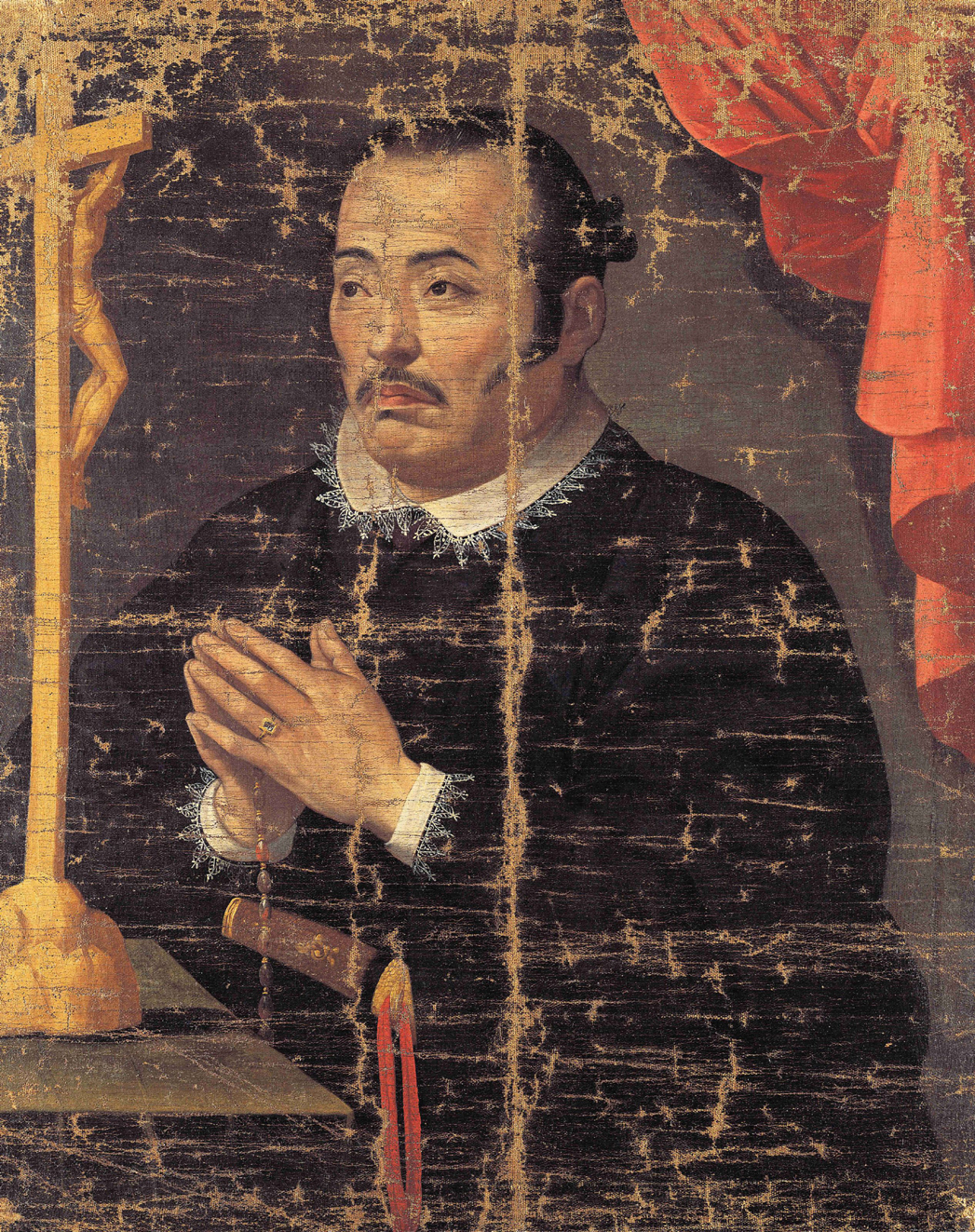
Hasekura Tsunenaga survived by withdrawing completely from public life. Stripped of his diplomatic status, he retired to his rural estate in northern Sendai, dying quietly in August 1622 at the age of fifty-one. Two days after his death, his son was executed for sheltering Christian priests, and the Hasekura family lineage was extinguished. The magnificent gifts, the Pope’s letters, and the Roman citizenship parchment were sealed inside iron chests and buried deep within clan storehouses, hidden away for two hundred and fifty years under the isolation of Sakoku. Only in 1873, when the modernizing Meiji government sought to demonstrate Japan’s historic ties to the West, were the dusty relics recovered from Sendai, revealing the extraordinary story of the samurai who had once carried swords into the heart of the Vatican.
What the Record Shows
- The Keicho Embassy set sail in October 1613 aboard a Japanese-built galleon 1. Historical records from the Sendai Domain confirm the San Juan Bautista was constructed by Japanese master craftsmen supervised by Spanish shipwrights.
- Hasekura Tsunenaga crossed Mexico overland before crossing the Atlantic 2. The caravan was recorded by indigenous Nahua historian Chimalpahin in Mexico City in 1614.
- Hasekura received Christian baptism in Madrid with the King’s chief minister as godfather 3. Official Spanish royal records verify his baptismal name was Felipe Francisco Hasekura.
- Pope Paul V received the samurai embassy in audience at the Quirinal Palace in November 1615 4. A contemporary fresco depicting Hasekura still adorns the Sala dei Corazzieri in Rome.
- The Roman Senate conferred honorary Roman citizenship upon Hasekura 5. The original illuminated Latin parchment survived hidden in Sendai and is preserved today as a National Treasure of Japan.
- The embassy returned in 1620 to a completely closed, persecuting Shogunate 6. Hasekura died in 1622, and the embassy’s historical documents were suppressed until the Meiji restoration.
Archival Evidence & Picture Credits
- Galleria Borghese Archival Oil Portrait (1615):
https://upload.wikimedia.org/wikipedia/commons/b/b4/Hasekura_in_Rome.JPG- Master portrait of Hasekura Tsunenaga in Rome by Archita Ricci, Galleria Borghese, Rome (Public domain). - Galleon San Juan Bautista Depiction (1613):
https://upload.wikimedia.org/wikipedia/commons/c/ca/San_Juan_Batista.jpg- Contemporary Japanese record and depiction of the 500-ton galleon constructed in Sendai (Public domain). - Acapulco Keicho Embassy Landfall Monument:
https://upload.wikimedia.org/wikipedia/commons/9/9f/Hasekura_Tsunenaga_%2C_Acapulco%2C_Guerrero._Mexico_%286186964896%29.jpg- Bronze monument to Hasekura Tsunenaga overlooking Acapulco Bay, Mexico, by Eduardo Francisco Vazquez Murillo (CC BY-SA 2.0). - Official Keicho Embassy Letter to Spain (1615):
https://upload.wikimedia.org/wikipedia/commons/c/c3/Historic_Letter_from_the_Japanese_Embassy_to_Spain.JPG- Vermilion-sealed letter delivered by Hasekura to King Philip III, Archivo General de Indias, Seville (Public domain). - Quirinal Palace Fresco (1616):
https://upload.wikimedia.org/wikipedia/commons/8/80/Japanese_Embassy_Fresco_Quirinal_Palace.png- Wall fresco by Agostino Tassi and Giovanni Lanfranco, Quirinal Palace, Rome (Public domain). - Roman Citizenship Diploma (1615):
https://upload.wikimedia.org/wikipedia/commons/c/c1/HasekuraRomanCitizenship.jpg- Illuminated Latin parchment granting Roman citizenship, Sendai City Museum National Treasure Collection (Public domain). - Vatican Audience Print (1615):
https://upload.wikimedia.org/wikipedia/commons/3/30/Hasekura_Tsunenaga_and_Luis_Sotelo_kneeling_Paulus_V_1615.png- Contemporary 1615 engraving of Hasekura and Luis Sotelo kneeling before Pope Paul V in Rome (Public domain). - Sendai City Museum National Treasure Portrait (17th c.):
https://upload.wikimedia.org/wikipedia/commons/9/91/HasekuraPrayer.jpg- Portrait of Hasekura Tsunenaga in prayer before a crucifix, Sendai City Museum (Public domain).
Verified Archival Sources & Bibliography
- Sendai City Museum National Treasure Collection: The Keicho Embassy Documents - Official repository of the artifacts and papal letters returned by Hasekura.
- Chimalpahin, Domingo Francisco de San Antón Muñón: Annals of His Time - 17th-century eyewitness Nahuatl journal recording the Japanese embassy’s arrival in Mexico City.
- The Keicho Embassy Archival Overview - Detailed institutional chronology of the 1613–1620 mission across the Pacific and Atlantic.
- Archival Biography of Hasekura Tsunenaga - Verified biographical record and primary citation archive.
- Vatican Secret Archives: Japanese Diplomatic Relations - Papal registers and records of the November 1615 Consistory.
- Boxer, C.R.: The Christian Century in Japan, 1549–1650 - University of California Press academic study of 17th-century Japanese-Iberian diplomacy.