
Why Colonists Gave Thanks After a Massacre
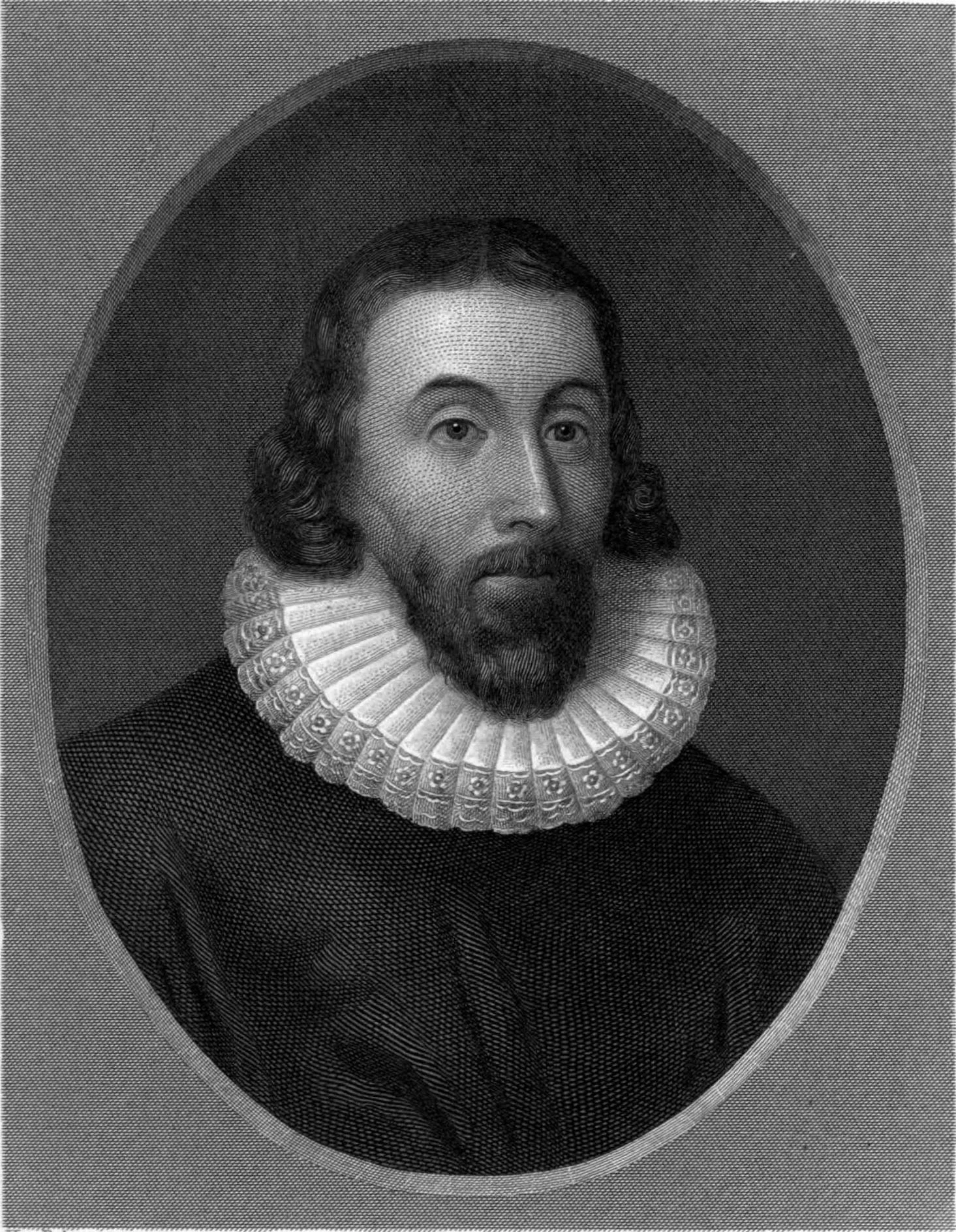
Colonial thanksgiving proclamations did not begin as a single peaceful harvest tradition. In 1637, Massachusetts Governor John Winthrop declared a public day of thanksgiving after colonial militias massacred Pequot villagers at Mystic, and in 1863 Abraham Lincoln established the modern national holiday amid the Civil War without mentioning Pilgrims.
In this dossier (6 chapters) ▾
Historical Dossier: Colonial Thanksgiving Proclamations and the 1863 National Holiday Location: New England & Washington, D.C., United States | Year: 1621–1863 | Key Figures: John Winthrop, William Bradford, Massasoit, Sarah Josepha Hale, Abraham Lincoln
Two Very Different Colonial Origins
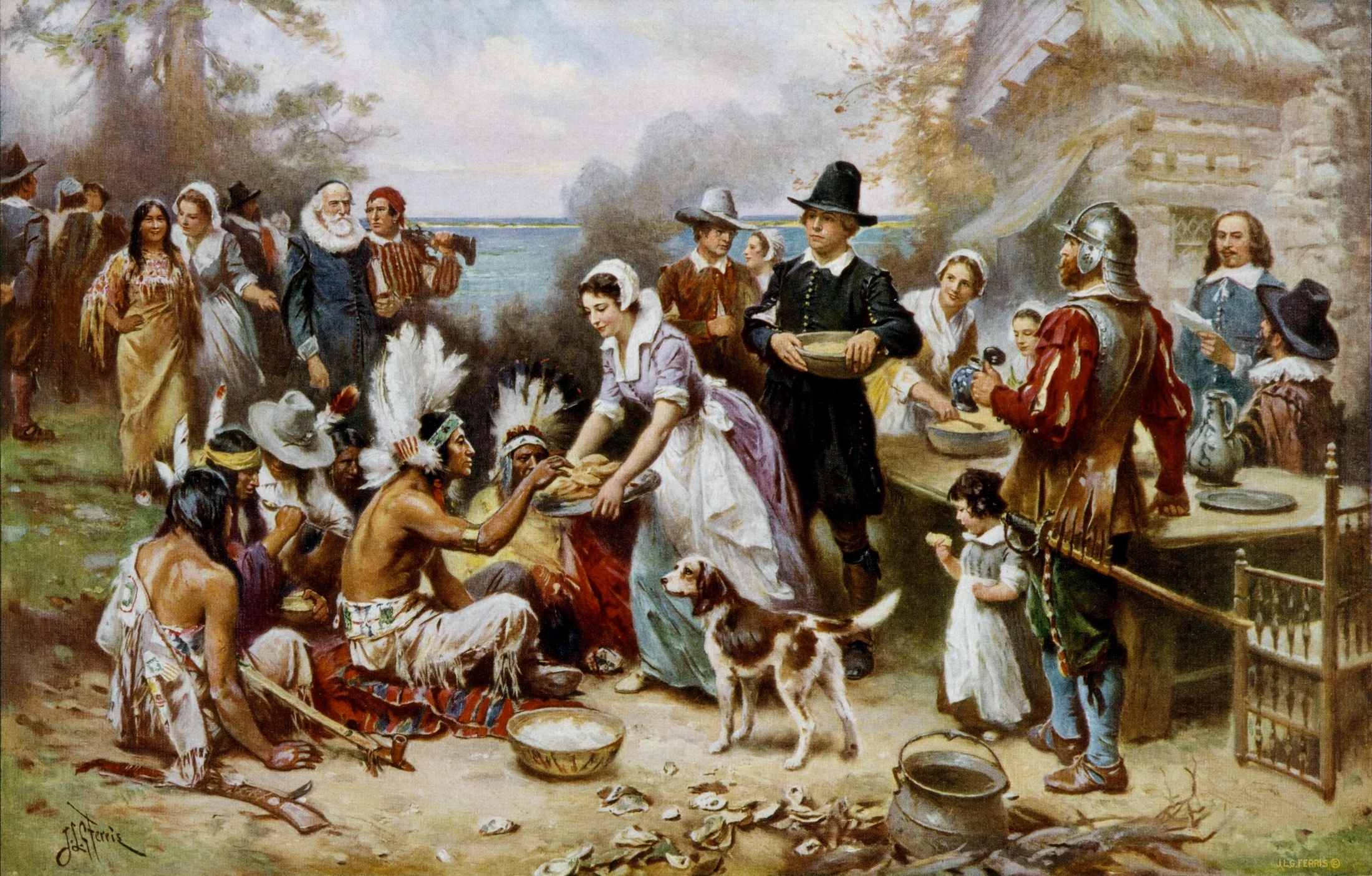
Modern popular memory often collapses every colonial New England gathering into a single 1621 dinner at Plymouth. In the surviving archival record, however, early New England colonists separated secular harvest celebrations from formal religious “days of thanksgiving”—and some of the earliest officially proclaimed thanksgiving days followed military slaughter rather than peaceful diplomacy.
The 1621 Plymouth harvest feast itself is documented in Mourt’s Relation (1622), written by Edward Winslow. After English settlers survived their first year in Patuxet—built on the site of a Wampanoag village devastated by epidemic disease—Wampanoag leader Massasoit arrived with ninety men. As Winslow recorded, the Wampanoag guests were entertained and fed for three days, and they went out, killed five deer, and presented them to the governor and militia captain. It was a diplomatic and seasonal harvest gathering between fragile neighbors, not a recurring religious holiday or a template for national unity.
For Puritan congregations in New England, an official “day of thanksgiving” had a specific liturgical meaning: a day set aside for prayer, fasting, and church services after an unmistakable act of divine favor, such as rain ending a drought, a ship arriving with supplies, or a decisive victory in war. Those proclamations were issued by colonial magistrates as single-day decrees rather than annual autumn feasts.
Mystic Fort (1637) and King Philip’s War (1676)
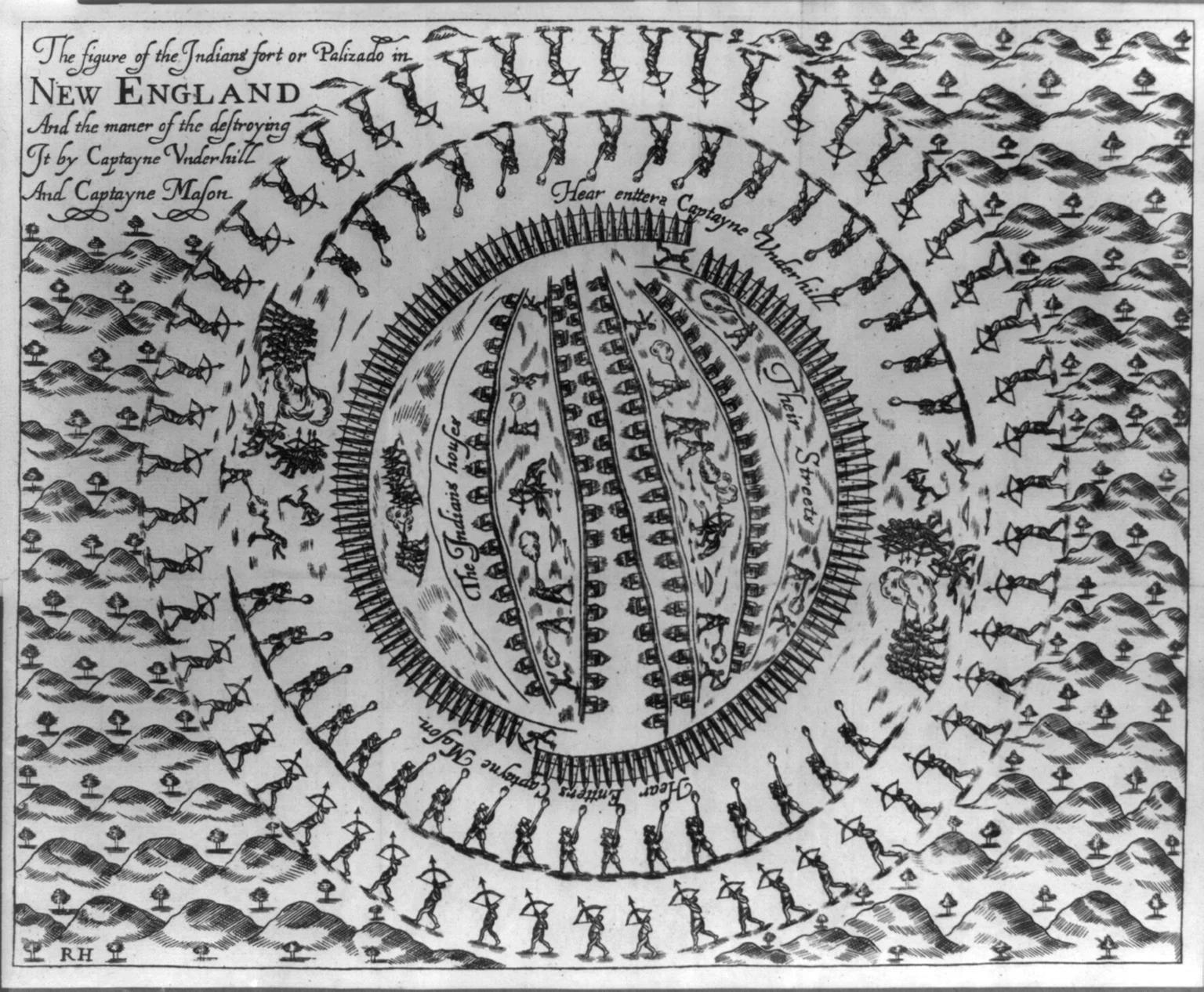
Sixteen years later, the word “thanksgiving” carried a starkly different meaning during the Pequot War. Before dawn on May 26, 1637, English militia forces under Captains John Mason and John Underhill, alongside Narragansett and Mohegan allies, surrounded a fortified Pequot village near the Mystic River in Connecticut and set it ablaze.
Plymouth Governor William Bradford later described the scene in Of Plimoth Plantation, writing that those who escaped the fire were killed with the sword and that it was a fearful sight to watch people burning in the flames—yet concluding that “the victory seemed a sweete sacrifice, and they gave the prayers thereof to God.” Following the massacre, Massachusetts Bay Governor John Winthrop proclaimed a public day of thanksgiving to celebrate the military victory.
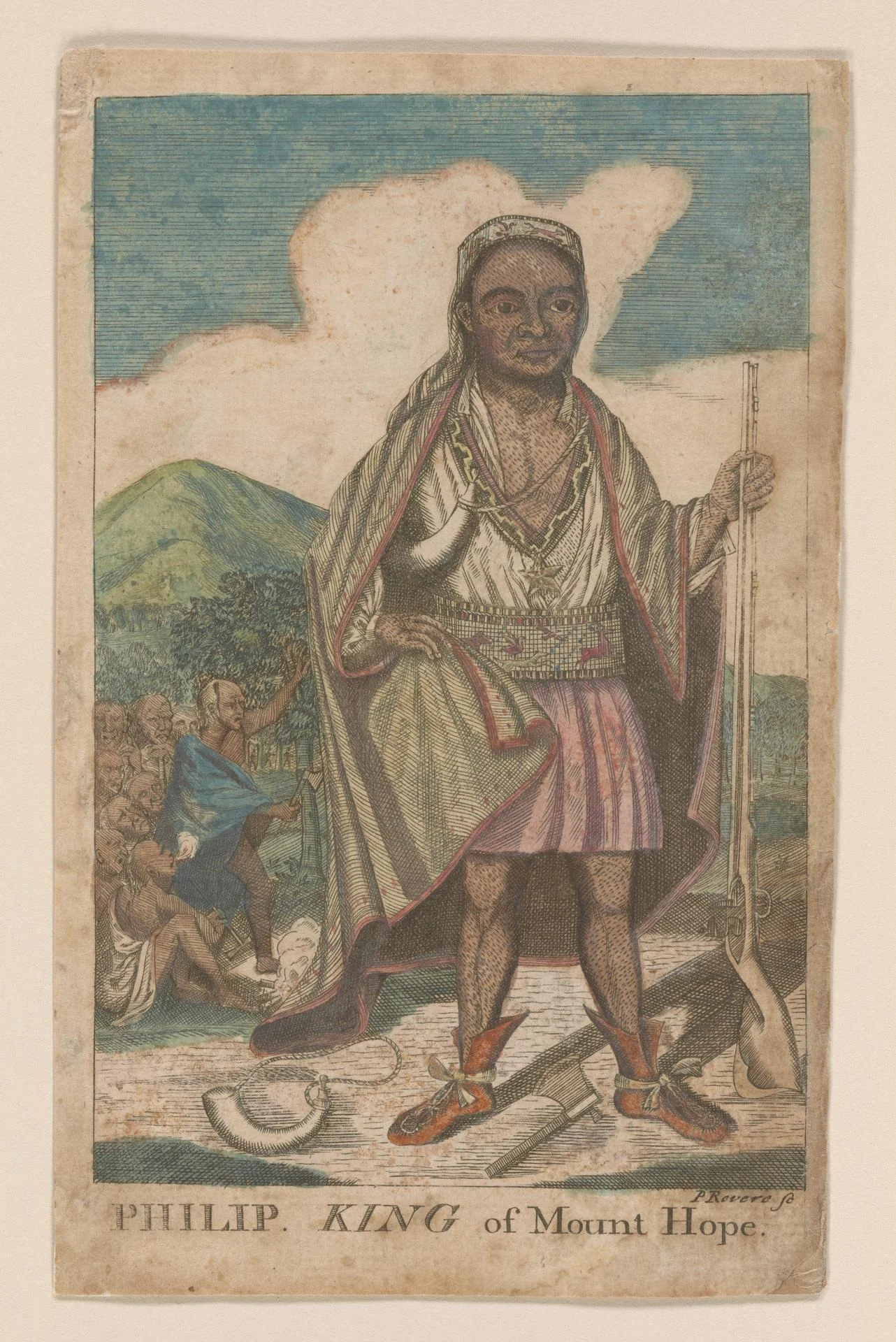
This pattern repeated nearly forty years later during King Philip’s War. On June 29, 1676, the Council of the Massachusetts Bay Colony issued a printed broadside appointing a “day of Solemn Thanksgiving and praise to God” for military advantages gained against Metacom (King Philip) and allied Native nations. For seventeenth-century colonial governments, official thanksgiving days were ad hoc wartime and political observances—not an annual autumn family festival.
Lincoln’s 1863 Proclamation and the Modern Holiday
For more than two centuries after Plymouth, Americans observed regional thanksgiving days on different dates across individual states. Magazine editor Sarah Josepha Hale campaigned for decades to unite the country behind a single national date.
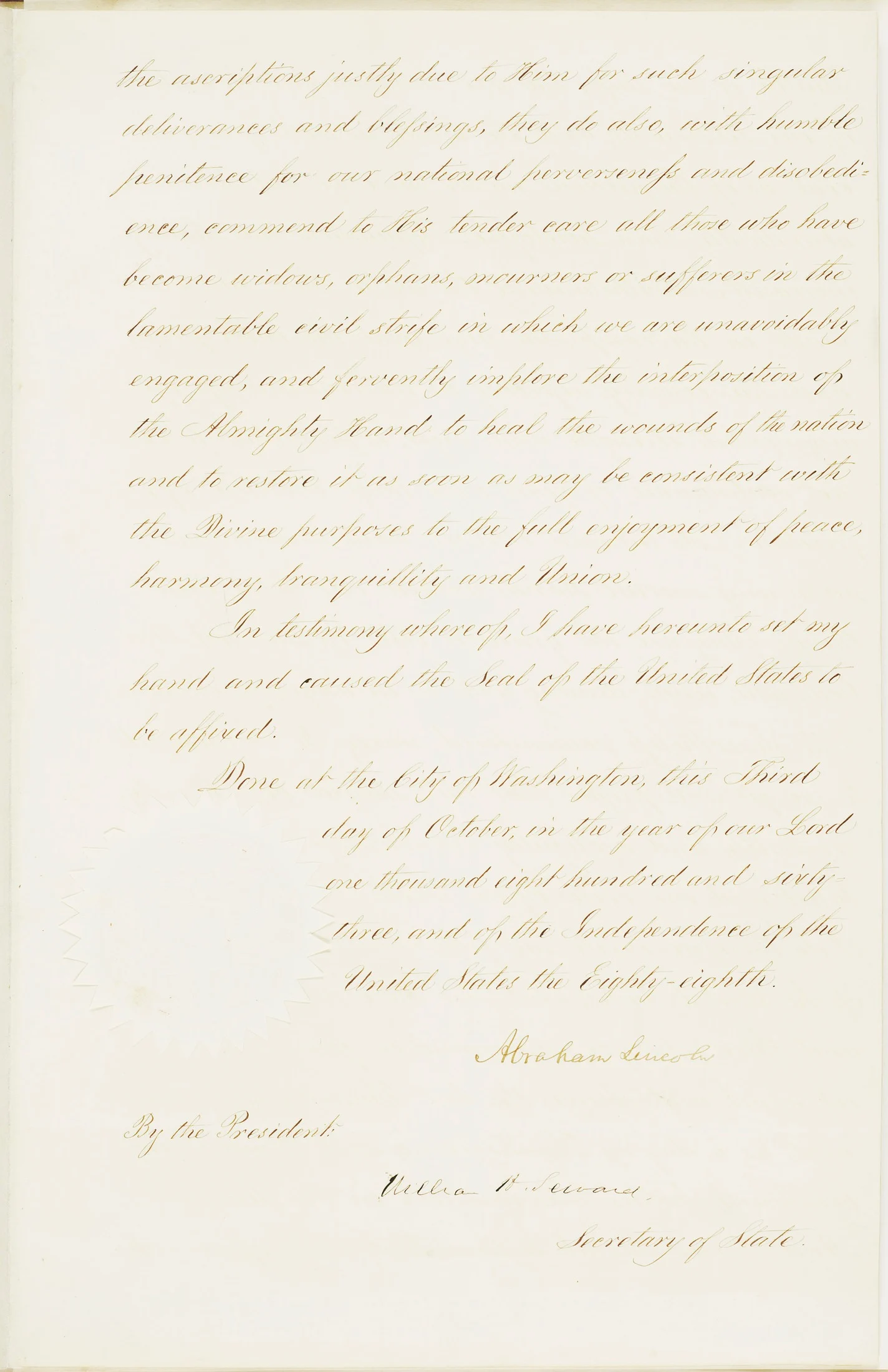
In October 1863, in the middle of the American Civil War—just three months after the Battle of Gettysburg—President Abraham Lincoln issued a proclamation establishing a national Day of Thanksgiving on the last Thursday of November. At the time, Americans observed scattered regional days of thanks, and Hale had argued that a single shared date could help bind a fractured republic together.
Notably, Lincoln’s proclamation never mentioned Pilgrims, Plymouth, or a 1621 feast. Instead, Lincoln urged Americans to commend to God’s “tender care all those who have become widows, orphans, mourners or sufferers in the lamentable civil strife” and to pray for peace, harmony, and Union. Only in the late nineteenth and twentieth centuries were the 1621 Plymouth harvest dinner and Lincoln’s 1863 wartime proclamation retroactively merged into a single national origin story—turning Lincoln’s Civil War call into the annual November holiday Americans still gather around today.
What the Record Shows
- 1637 Victory Proclamation: Massachusetts Bay Governor John Winthrop proclaimed a public day of thanksgiving following the massacre of Pequot villagers at Mystic [1].
- 1621 Plymouth Harvest: Edward Winslow’s Mourt’s Relation (1622) records that Massasoit and ninety Wampanoag men joined colonists for three days and brought five deer [2].
- Mystic Eyewitness Account: Plymouth Governor William Bradford described Pequots burning at Mystic and survivors killed with swords, calling the victory a “sweete sacrifice” [3].
- 1676 Wartime Thanksgiving: On June 29, 1676, during King Philip’s War, Massachusetts authorities proclaimed a solemn thanksgiving for military advantages over Native forces [4].
- 1863 National Holiday: Following Sarah Josepha Hale’s campaign, President Abraham Lincoln established a unified November Thanksgiving in 1863 amid the Civil War [5].
- No Mention of Pilgrims: Lincoln’s October 3, 1863 proclamation omitted Pilgrims and called for care for war widows, orphans, mourners, and national healing [6].
Archival Evidence & Picture Credits
- John Winthrop Portrait: Appletons’ Cyclopaedia of American Biography engraving — Wikimedia Commons (Public Domain).
- 1621 Harvest Gathering: Jean Leon Gerome Ferris painting reproduction — Library of Congress / Wikimedia Commons (Public Domain).
- Mystic Fort Diagram (1638): Captain John Underhill’s Newes from America — Library of Congress (
2001695745, Public Domain). - Metacom (King Philip): Paul Revere engraving (1772) — Wikimedia Commons (Public Domain).
- Lincoln’s 1863 Proclamation: Original signed manuscript (October 3, 1863) — U.S. National Archives (
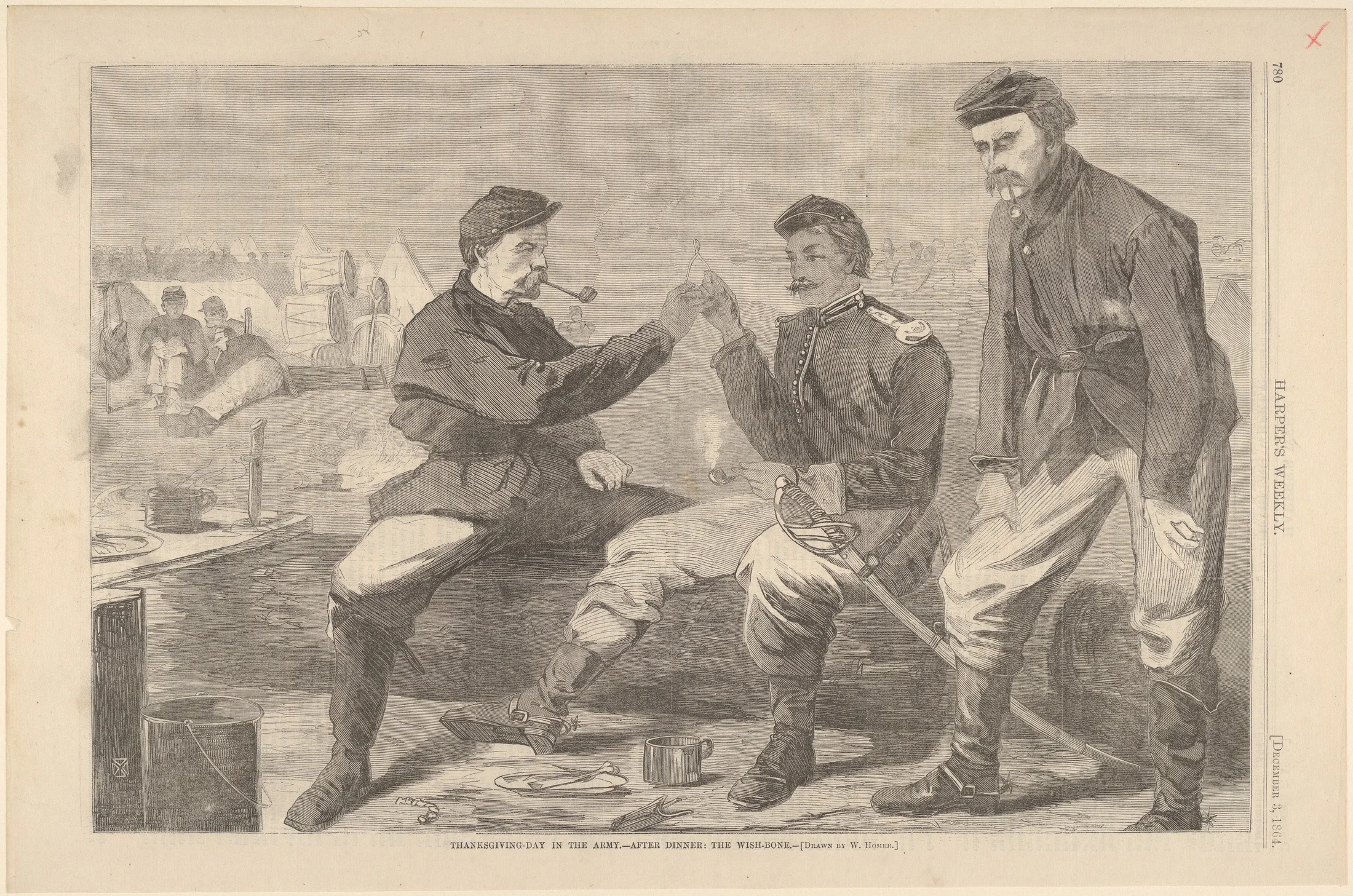
299960, Public Domain). - Thanksgiving Day in the Army (1864): Winslow Homer wood engraving (Harper’s Weekly) — Metropolitan Museum of Art (CC0 1.0).
Verified Archival Sources & Bibliography
- Smithsonian National Portrait Gallery — John Winthrop (NPG.2004.1)
- Smithsonian National Museum of the American Indian (NK360) — Edward Winslow, Mourt’s Relation (1622)
- University of Houston Digital History — William Bradford, Of Plimoth Plantation (Mystic Account)
- University of Michigan Early American Imprints — Massachusetts Council Thanksgiving Proclamation (June 29, 1676)
- U.S. National Archives — President Abraham Lincoln’s Thanksgiving Day Proclamation (1863)
- U.S. National Archives Catalog — Original Manuscript: Lincoln’s October 3, 1863 Proclamation (ID 299960)
Historical Connection Graph
Two Nations Nearly Went to War Over One Pig.
AJ. "Why Colonists Gave Thanks After a Massacre." Echoes of History Uncut. Last modified November 14, 2026. https://echoesofhistoryuncut.com/articles/the-dark-history-behind-thanksgiving/.

An independent digital history publication and documentary studio reconstructing historical turning points through primary archives, official inquiries, and scholarly citations. Every factual claim in this dossier is cross-referenced to the numbered bibliography above.