
Leonardo da Vinci’s Hidden Archival History: Dissections, War Machines, and Withheld Designs
What primary Renaissance notebooks, court records, and travel diaries actually reveal about Leonardo da Vinci’s over thirty human dissections, his 1476 Florentine accusation, his military pitch to Milan, Cesare Borgia’s war-engineer patent, and the underwater breathing apparatus he refused to publish.
In this dossier (8 chapters) ▾
- 01 Over Thirty Bodies at Cloux
- 02 The 1476 Florentine Accusation
- 03 Selling War Machines Before Painting
- 04 Borgia’s War Engineer and the Shattered Clay Horse
- 05 The Submarine Design He Refused to Publish
- 06 What the Record Shows
- 07 Archival Evidence & Picture Credits
- 08 Verified Archival Sources & Bibliography
Historical Dossier & Archival Audit: Leonardo da Vinci (1452–1519) Primary Witnesses & Sources: Antonio de Beatis (1517 Travel Diary), Florentine Night Officers (Ufficiali di Notte, 1476), Codex Atlanticus f. 1082r, Cesare Borgia’s 1502 Patent, and Codex Leicester f. 22v (Richter 1114)
Over Thirty Bodies at Cloux
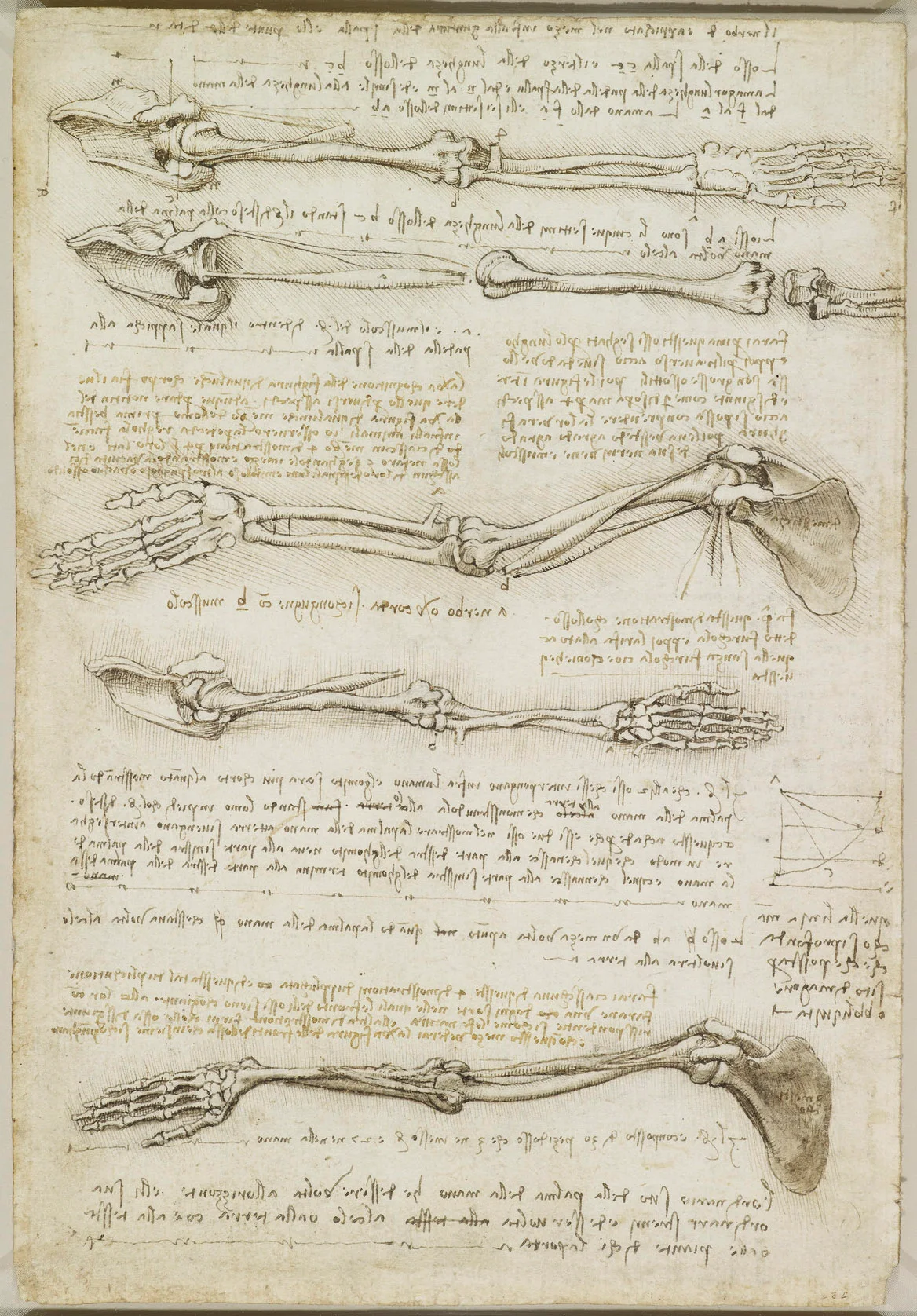
In October 1517, Cardinal Luigi d’Aragona and his secretary, Antonio de Beatis, visited an aging Leonardo da Vinci at the Manor of Cloux near Amboise in France. By then Leonardo’s right hand was partially paralyzed, yet he still kept his anatomical notebooks close at hand. As de Beatis recorded in his travel diary, Leonardo showed his guests volumes filled with detailed studies of muscles, nerves, veins, and internal organs, and told them that he had personally dissected more than thirty bodies—both men and women, of every age.
Those dissections were not casual sketches. Between 1507 and 1513, working inside hospitals in Florence and Milan—including Santa Maria Nuova—Leonardo peeled back human tissue layer by layer, often by candlelight, to understand how tendons pulled on bone and how heart valves closed. His surviving sheets in the Royal Collection, including detailed studies of the bones and muscles of the arm, reveal an accuracy that would not be matched in printed medical textbooks for decades.
The 1476 Florentine Accusation
Long before European monarchs competed for his notebooks, a twenty-four-year-old Leonardo faced a dangerous brush with Florentine law. In April 1476, an anonymous denunciation dropped into the tamburo (accusation box) outside the Palazzo Vecchio named Leonardo da Vinci alongside three other young men in a sodomy charge involving a seventeen-year-old apprentice, Jacopo Saltarelli.
The case was heard by Florence’s Ufficiali di Notte (Night Officers). Under Florentine law, an anonymous tip required corroboration or a confession, and when no witness came forward to substantiate the charge, the magistrates dismissed the case in June 1476 on the condition that no further accusations surfaced (absque alia). Though Leonardo walked free, the episode left a lasting mark on his cautious, private habits.
Selling War Machines Before Painting
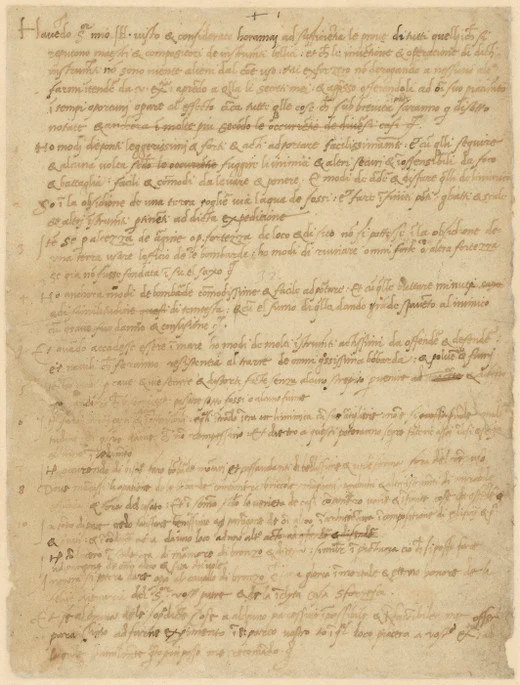
In 1482, seeking patronage in Milan, Leonardo drafted a remarkable job application to Duke Ludovico Sforza. Preserved in the Codex Atlanticus (folio 1082r), the letter barely resembles the resume of a painter. Across nine numbered paragraphs, Leonardo pitched himself first and foremost as a military engineer capable of building portable bridges, draining moats, casting lightweight cannons, tunneling beneath enemy fortresses, and constructing covered armored chariots.
Only in the tenth and final paragraph—almost as an afterthought—did Leonardo mention that in peacetime he could also sculpt in bronze and marble, and paint as well as any man alive.
Borgia’s War Engineer and the Shattered Clay Horse
Leonardo’s willingness to engineer for ruthless rulers reached its height in 1502, when Cesare Borgia—the feared papal commander conquering Romagna—issued a formal ducal patent naming Leonardo his Architect and General Engineer. The decree ordered every military engineer and local official in Borgia’s territories to obey Leonardo’s judgment and grant him free inspection of any fortress. During that campaign, Leonardo surveyed the walled town of Imola and produced an astonishingly accurate ichnographic aerial map long before flight existed.
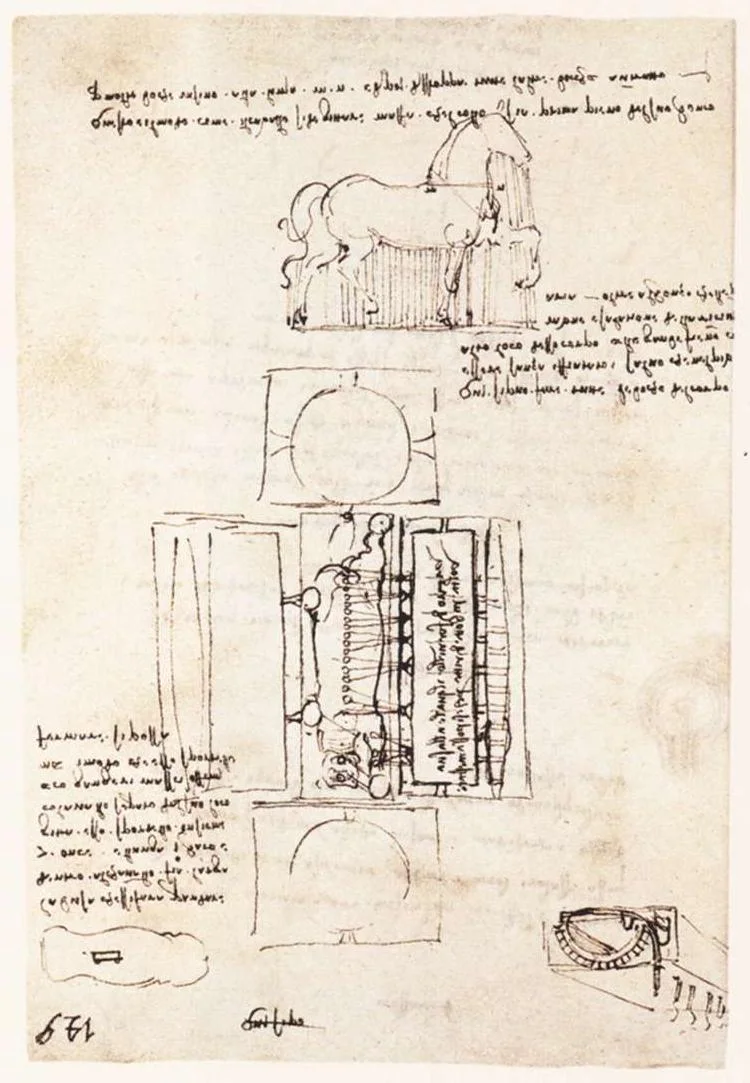
Meanwhile, Leonardo’s grandest sculptural commission for Milan ended in ruin. After spending years designing a colossal twenty-four-foot bronze horse monument for Duke Ludovico Sforza—and completing the full-scale clay model—the bronze earmarked for casting was diverted to make cannons when French armies threatened Italy. In 1499, invading French troops entered Milan and used Leonardo’s giant clay horse for crossbow target practice until it collapsed.
The Submarine Design He Refused to Publish
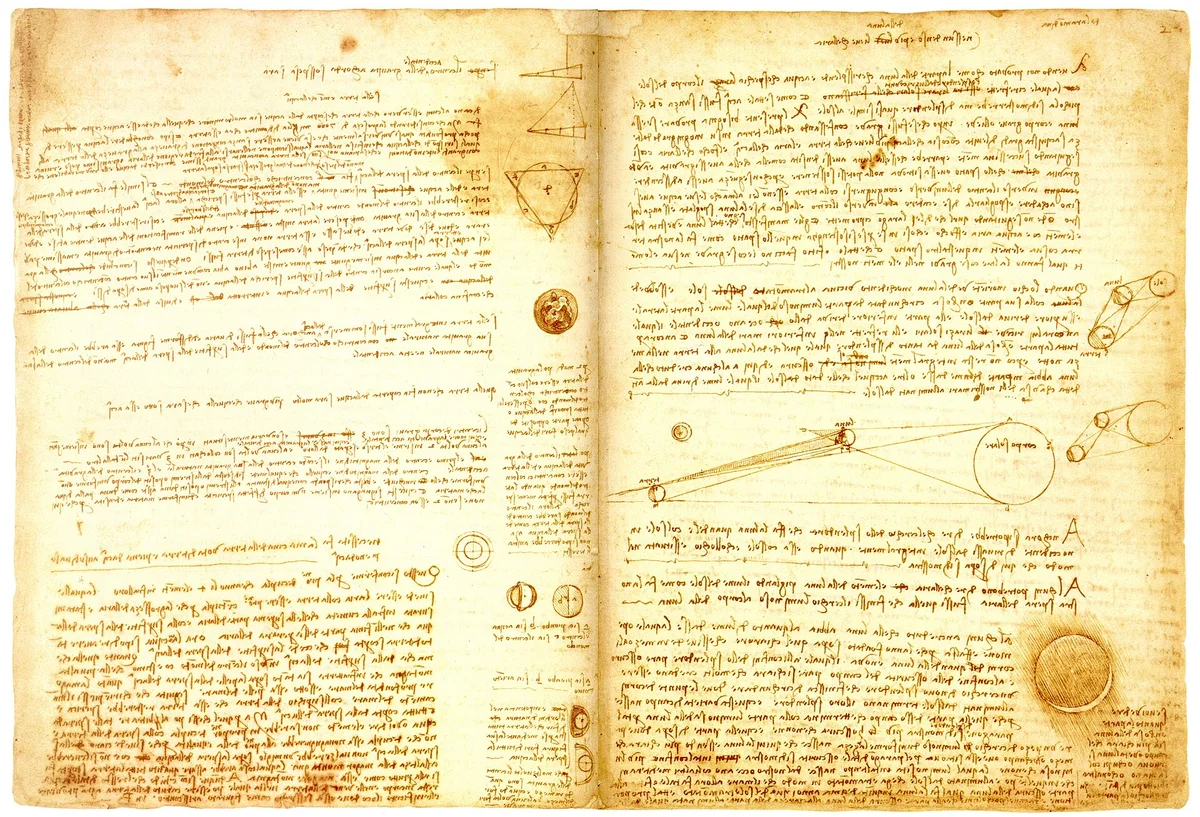
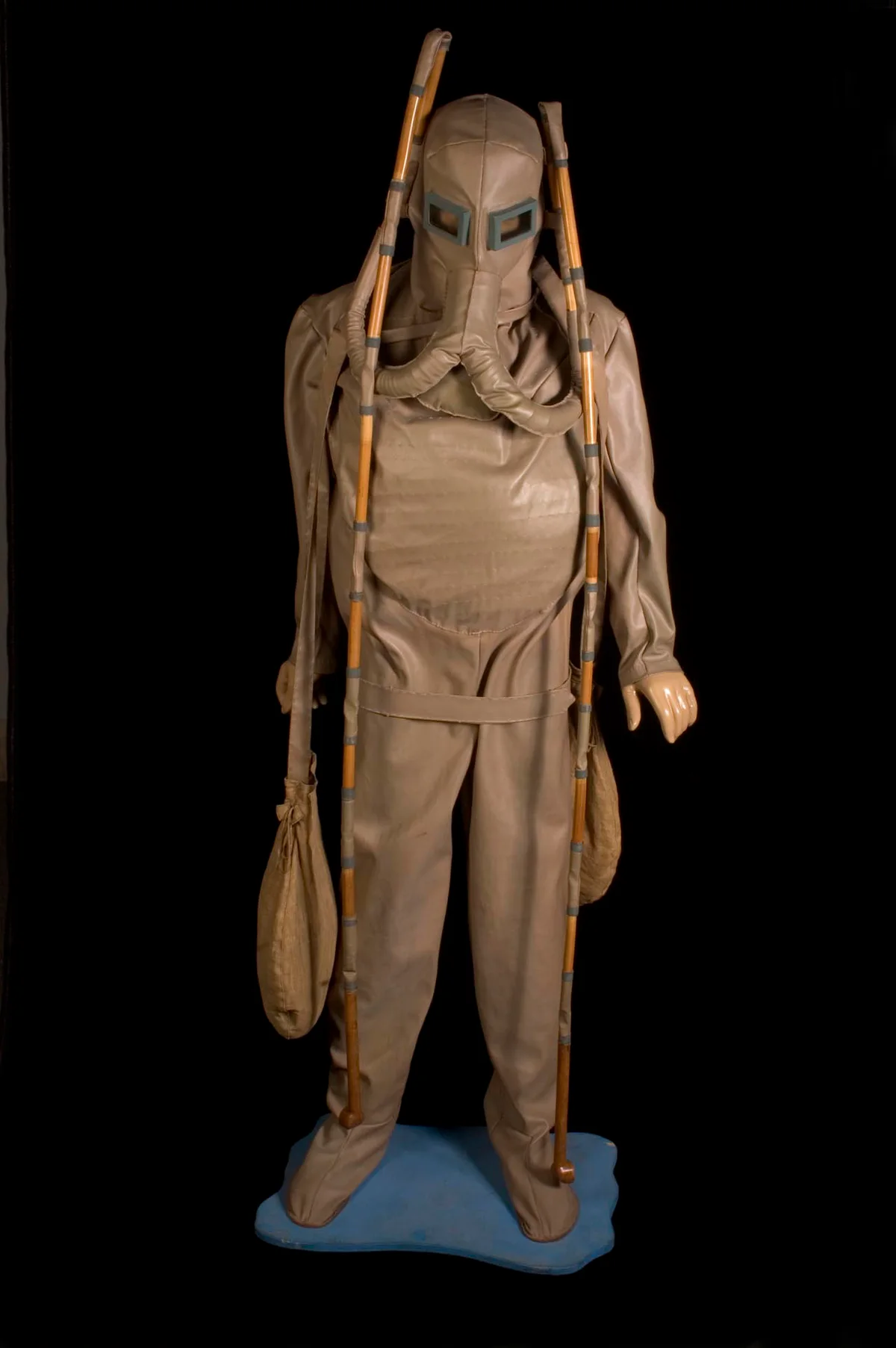
For all his military blueprints, Leonardo drew a strict moral line beneath the sea. In the Codex Leicester (folio 22v, catalogued as Richter 1114), he addressed the temptation to publish his method for remaining underwater without drowning—a system of leather breathing tubes and weighted diving gear.
“How and why I do not describe my method of remaining under water for as long a time as I can remain without food; and this I do not publish or divulge on account of the evil nature of men, who would practise assassinations at the bottom of the seas, by breaking the ships in their lowest parts and sinking them together with the crews who are in them.”
Leonardo understood that an invisible weapon beneath the waterline would strip sailors of any chance to fight or surrender. Centuries before modern submarine warfare, he chose to keep that design locked inside his mirror-written notebooks.
What the Record Shows
- Over 30 Dissections (1517 Witness): Antonio de Beatis recorded in October 1517 that Leonardo told Cardinal Luigi d’Aragona he had dissected more than thirty bodies of men and women of every age.
- 1476 Florentine Court Record: An anonymous tamburo accusation named Leonardo in April 1476; the Ufficiali di Notte dismissed the charge conditionally (absque alia) in June 1476 due to lack of corroborating witnesses.
- Military First, Painting Last (1482): In Codex Atlanticus f. 1082r, Leonardo devoted nine paragraphs to siege engines, cannons, and armored chariots before mentioning sculpture or painting in paragraph ten.
- Cesare Borgia’s 1502 Patent: Borgia’s ducal decree named Leonardo his Architect and General Engineer, ordering all engineers in Romagna to obey his judgment.
- Destroyed Clay Horse (1499): Bronze intended for Leonardo’s Sforza monument was diverted to artillery, and invading French troops destroyed the clay model in 1499.
- Withheld Underwater Method: In Codex Leicester f. 22v (Richter 1114), Leonardo explicitly withheld his underwater breathing method so men could not sink ships with their crews.
Archival Evidence & Picture Credits
- Arm Anatomy Study (
RCIN 919000v): Royal Collection Trust, Public Domain, via Wikimedia Commons. - Draft Letter to Ludovico Sforza (
Codex Atlanticus f. 1082r): Biblioteca Ambrosiana, Milan, Public Domain, via Wikimedia Commons. - Sforza Horse Monument & Mold Study: Royal Collection / Leonardo Manuscript, Public Domain, via Wikimedia Commons.
- Codex Leicester Water Studies (
ff. 35v–2r): Public Domain archival facsimile, via Wikimedia Commons. - Diving Suit Reconstruction: Museo Nazionale Scienza e Tecnologia Leonardo da Vinci, Milan, CC BY-SA 4.0, via Wikimedia Commons.
Verified Archival Sources & Bibliography
- Antonio de Beatis, Die Reise des Kardinals Luigi d’Aragona durch Deutschland, die Niederlande, Frankreich und Oberitalien, 1517–1518 (1517 Travel Diary, National Library of Medicine OCR archive:
nlmuid-0041563-bk). - Leonardo da Vinci, Codex Atlanticus, folio 1082r (Draft Letter to Ludovico Sforza, c. 1482), Biblioteca Ambrosiana, Milan; translated in Jean Paul Richter, The Notebooks of Leonardo da Vinci, Ch. XXI.
- Cesare Borgia, Patent Appointing Leonardo da Vinci Architect and General Engineer (18 August 1502), transcribed in Melzi d’Eril / University of Florida Digital Collections (
BEMIS_E.pdf). - Giorgio Vasari, Lives of the Most Excellent Painters, Sculptors, and Architects (1550 / 1568), “Life of Leonardo da Vinci” (account of the 1499 destruction of the Sforza clay horse).
- Leonardo da Vinci, Codex Leicester, folio 22v (Richter 1114), translated in Jean Paul Richter, The Notebooks of Leonardo da Vinci, Ch. XVIII.
Historical Connection Graph
A 2,000-Year-Old Bronze Lump Was the Oldest Known Analogue Computer
AJ. "Leonardo da Vinci’s Hidden Archival History: Dissections, War Machines, and Withheld Designs." Echoes of History Uncut. Last modified November 15, 2026. https://echoesofhistoryuncut.com/articles/leonardo-da-vinci-hidden-archival-history/.

An independent digital history publication and documentary studio reconstructing historical turning points through primary archives, official inquiries, and scholarly citations. Every factual claim in this dossier is cross-referenced to the numbered bibliography above.