
The Day 1,000 Rabbits Forced Napoleon to Retreat
How General Paul Thiébault's memoirs popularized the famous story of a thousand tame farm rabbits swarming Napoleon Bonaparte during an imperial hunt outside Paris—and what earlier 1800 and 1810 records reveal about its shifting details.
In this dossier (6 chapters) ▾
Historical Dossier & Archival Audit: Napoleon’s Imperial Rabbit Hunt Key Figures: Napoleon Bonaparte, Marshal Alexandre Berthier (Grand Veneur de France), General Paul Thiébault, Charles-Maurice de Talleyrand | Primary Memoir: Mémoires du général Bon Thiébault, Tome III (1893–1895) | Scholarly Analysis: Charles-Éloi Vial, Le grand veneur de Napoléon Ier à Charles X (École nationale des chartes, 2016)
Archival Scope & Historiographical Note: Popular retellings routinely date this episode to July 1807 following the Treaties of Tilsit and claim up to 3,000 rabbits leaped inside Napoleon’s carriage. Primary and scholarly records show a more complex paper trail: Thiébault’s posthumous memoir names Berthier and 1,000 rabbits in an unnamed park outside Paris (without specifying July 1807, and noting that none scaled the carriage’s rear seat), while an earlier 1800–1810 satirical tradition attributed a similar incident to Talleyrand at Neuilly.
The Hunt That Turned Into a Retreat
According to one of the most enduring anecdotes of the Napoleonic era, the conqueror of Europe once suffered an unexpected defeat—not at the hands of a coalition army, but from a swarm of hungry domestic rabbits. In the version popularized by General Paul Thiébault’s posthumously published memoirs, Marshal Alexandre Berthier, serving as Napoleon’s Grand Veneur de France (Grand Huntsman), sought to entertain the Emperor with a grand rabbit-shooting outing in a park he owned just outside Paris.
As Thiébault recounted the scene, Berthier issued orders to assemble enough game for an imperial day of sport, and “not a rabbit of the thousand was wanting.” Cages lined the perimeter of the field. When Napoleon and his officers arrived and the enclosures were opened, the hunters expected wild rabbits to bolt in panic across the grass, offering fast-moving targets.
Instead, the animals did the exact opposite.
Berthier’s Mistake: Hutch Rabbits Instead of Wild Hares
Rather than scattering into the brush, the rabbits charged straight toward Napoleon and his entourage. At first, the sight amused the hunting party, and coachmen stepped forward with long whips to drive the animals back. Yet the rabbits refused to disperse.
As Thiébault explained the blunder, Berthier’s emissary—unaware that there was any practical difference between one rabbit and another—had purchased tame domestic rabbits from the hutch rather than wild rabbits from the warren. Having not yet been fed that day, the domesticated animals mistook the approaching Emperor and his uniformed staff for the purveyors of their daily cabbage.
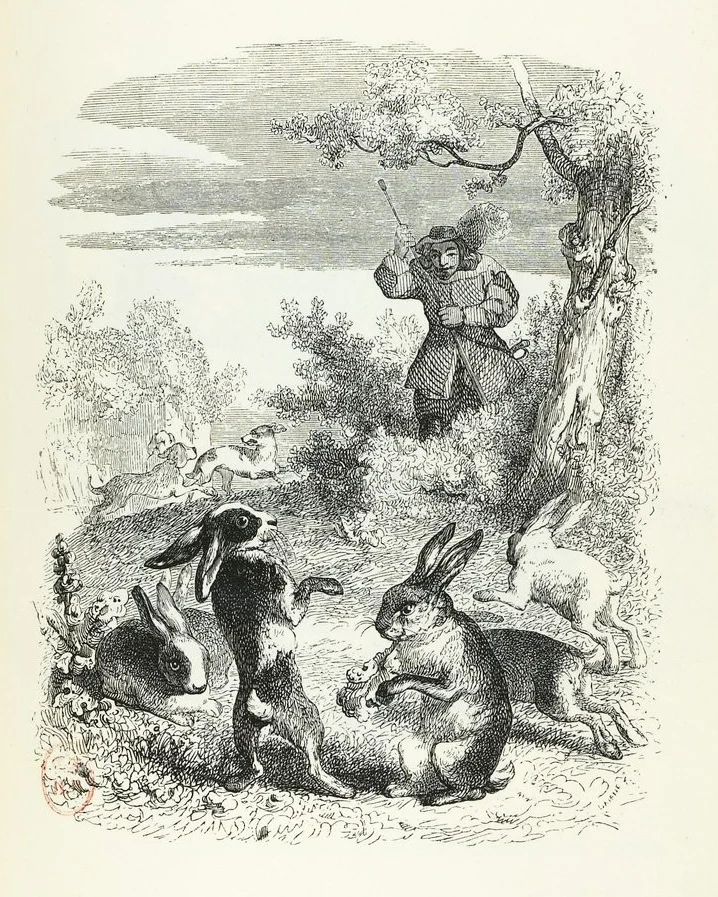
Thiébault’s prose leaned heavily into mock-military comedy. He wrote that the rabbits wheeled in three bodies to the right and left, turned Napoleon’s flank, attacked him frantically in the rear, and piled themselves up between his legs until they made him stagger. Fairly exhausted, “the conqueror of conquerors” was forced to retreat and leave the rabbits in possession of the field—thankful, Thiébault added, that none of them succeeded in scaling the rumble (rear seat) of the Emperor’s carriage to be borne in triumph back to Paris.
Separating Fact From Later Retellings
While the anecdote has become a staple of popular history, historians who have traced its textual lineage note several key discrepancies between Thiébault’s account, earlier printed versions, and modern retellings:
- The 1807 Tilsit Dating: Modern articles frequently place the hunt in July 1807 as a celebration of the Treaties of Tilsit (signed in northern Prussia on July 7 and 9, 1807). However, Thiébault’s memoir places the episode in a section covering the period between Austerlitz and the 1806 campaign, and historian Charles-Éloi Vial notes a later tradition placing Berthier’s anecdote at Grosbois in 1810. Neither July 1807 nor a specific estate is independently proven by contemporary hunting ledgers.
- Talleyrand vs. Berthier (1800–1810): Decades before Thiébault’s memoirs were published in the 1890s, an earlier variant circulated in print. On 10 September 1800, the Journal des hommes libres published a satirical item—later echoed in Lewis Goldsmith’s 1810 The Secret History of the Cabinet of Bonaparte—naming Talleyrand as the host at Neuilly during the summer of 1800, where tame rabbits approached and licked Napoleon’s boots rather than forcing a carriage retreat.
- Did Rabbits Board the Carriage? Later twentieth- and twenty-first-century retellings often claim that rabbits leaped through the carriage windows as Napoleon sped away. Thiébault’s original text explicitly states the opposite: Napoleon escaped thankful that none had managed to climb onto the carriage’s rear seat.
What the Record Shows
- Berthier’s Institutional Role [1][7][8]: Marshal Alexandre Berthier served as Napoleon’s Grand Veneur de France, overseeing imperial hunts, while his aide-de-camp Alexandre de Girardin handled practical hunt organization.
- Thiébault’s 1,000-Rabbit Account [1][2][3]: General Paul Thiébault’s posthumous Mémoires (published 1893–1895) name Berthier, an unnamed park outside Paris, 1,000 hutch rabbits, and coachmen with whips—while noting the rabbits failed to reach the carriage’s rear seat.
- Earlier Talleyrand Precursor (1800–1810) [4][5][13]: A satirical Talleyrand variant at Neuilly appeared in the Journal des hommes libres (10 September 1800) and Lewis Goldsmith’s 1810 Secret History of the Cabinet of Bonaparte.
- Historiographical Caution [5][6][10]: Specialist scholarship by Charles-Éloi Vial warns that Napoleonic hunting anecdotes were frequently copied, adapted, and politicized across nineteenth-century memoirs, leaving the exact date, location, and headcount unverified by primary estate records.
Archival Evidence & Picture Credits
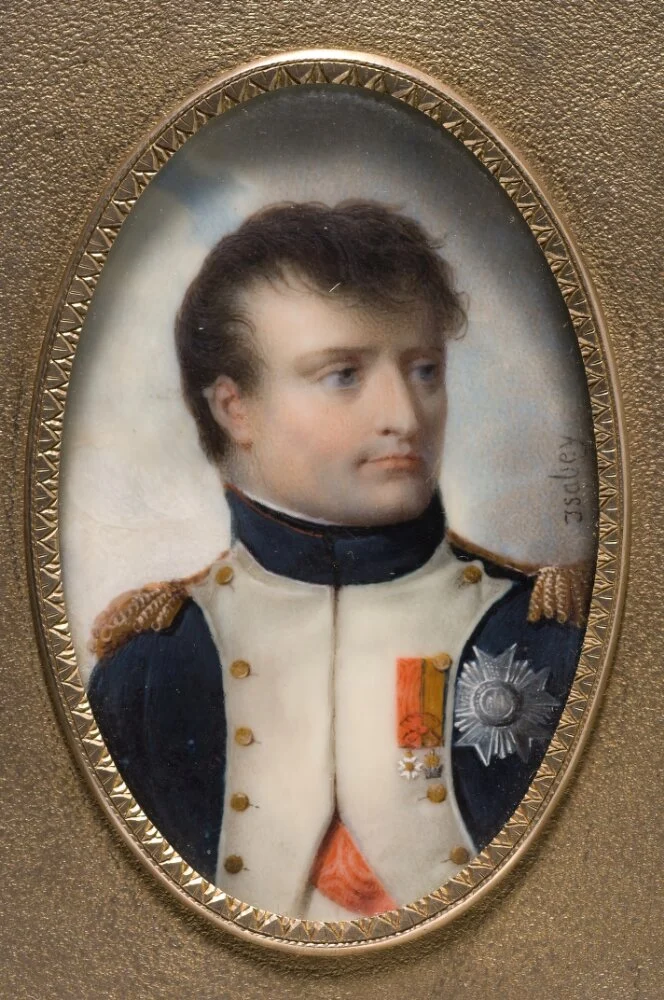
- Napoleon I Bonaparte (1807): Miniature portrait by Jean-Baptiste Isabey, 1807. Nationalmuseum, Stockholm (NMB 951). Public Domain via Wikimedia Commons.
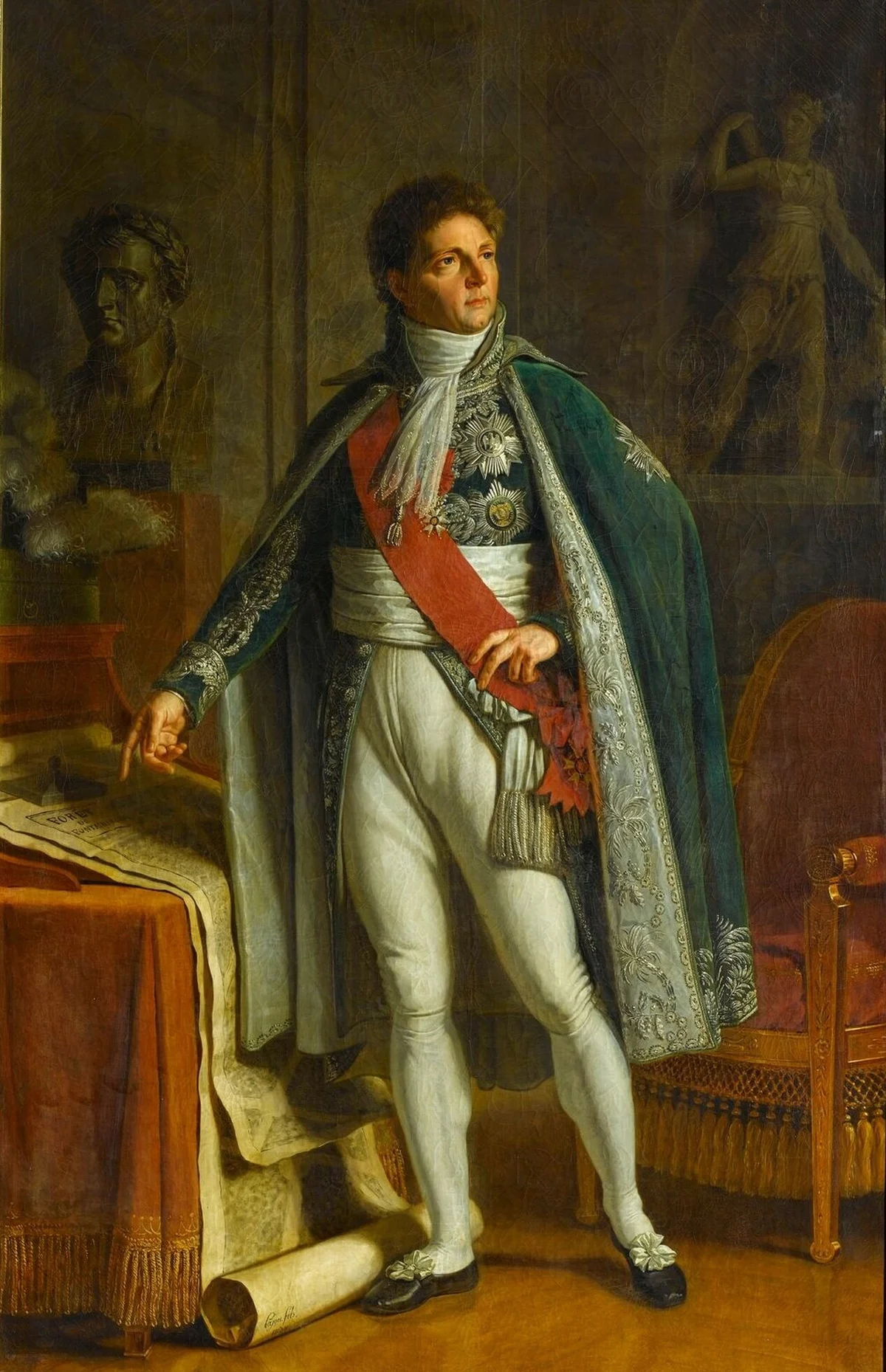
- Louis-Alexandre Berthier (1808): Portrait in Grand Veneur uniform by Jacques Augustin Catherine Pajou, 1808. Musée du Louvre (INV 7080) / Château de Versailles (MV 1113). Public Domain via Wikimedia Commons.
- Les Lapins (19th Century): Engraving by J. J. Grandville for Fables de La Fontaine. Bibliothèque nationale de France. Public Domain via Wikimedia Commons.
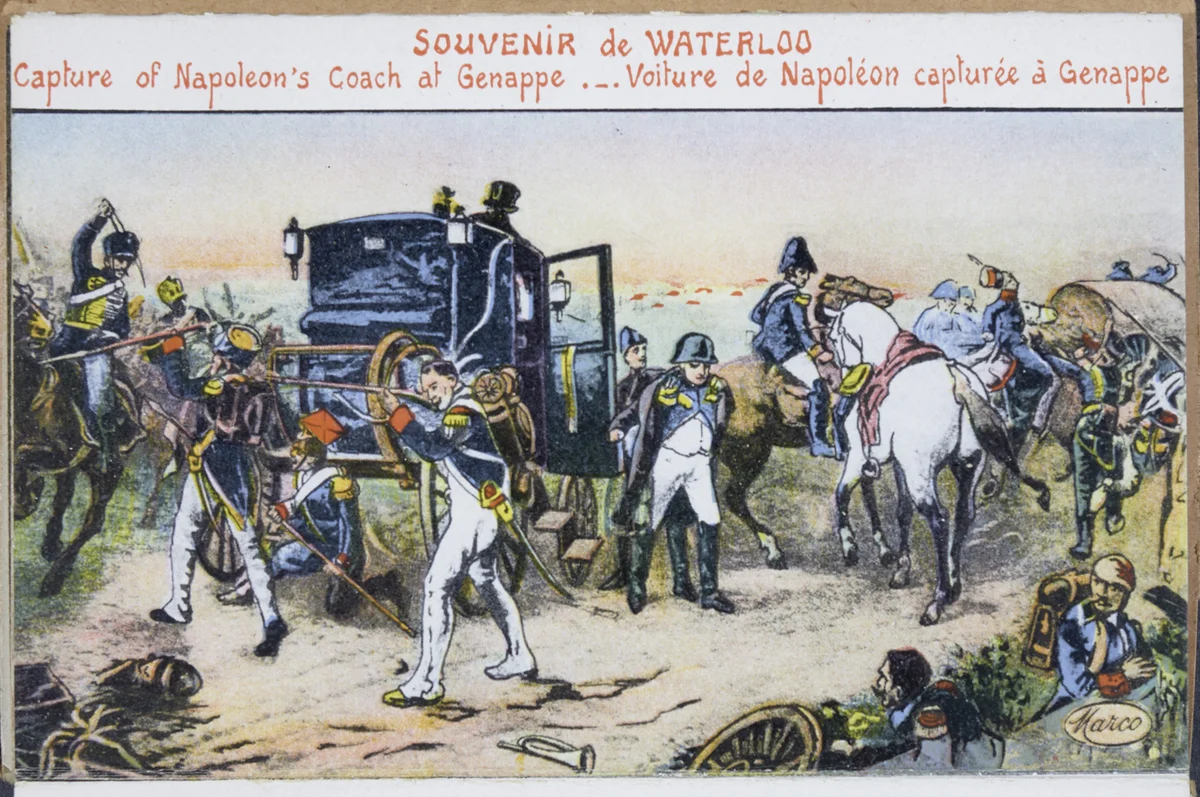
- Napoleon’s Imperial Carriage: Archival lithograph (Voiture de Napoléon, GP076303). Public Domain via Wikimedia Commons.
- The Hunt Breakfast (1858): Oil painting by Gustave Courbet, Wallraf–Richartz Museum (WRM 1171). Public Domain via Wikimedia Commons.


Verified Archival Sources & Bibliography
- Paul Thiébault (trans. Arthur John Butler), The Memoirs of Baron Thiébault, Vol. II (1896), pp. 185–186 — Internet Archive
- Paul Thiébault (ed. Fernand Calmettes), Mémoires du général Bon Thiébault, Tome III (1893–1895), p. 544 — BnF Gallica
- Paul Thiébault, Mémoires du général Bon Thiébault, Tome III, p. 545 (“mille demandés”) — BnF Gallica
- Lewis Goldsmith, The Secret History of the Cabinet of Bonaparte (1810), p. 106 footnote — Internet Archive
- Charles-Éloi Vial, Le grand veneur de Napoléon Ier à Charles X, Imperial Hunting Chapter (École nationale des chartes, 2016) — OpenEdition Books
- Charles-Éloi Vial, Le grand veneur de Napoléon Ier à Charles X, Reception of Hunting Memoirs (2016) — OpenEdition Books
- Franck Favier (interviewed by Irène Delage), “Berthier: The Marshal Existed Well Before and Without Napoleon” (Nov 2015) — Fondation Napoléon
- Philip Mansel, The Survival of the Royal Hunt in France — philipmansel.com (PDF)
- Encyclopaedia Britannica, “Treaties of Tilsit” — Britannica
- Christine Caccipuoti, “Napoleon versus…Rabbits?” — christinecaccipuoti.com
- Lucas Reilly, “The Time Napoleon Was Attacked by Rabbits” — Mental Floss
- Liverpool Herald, “Napoleon and Rabbits” (6 April 1901, p. 3) — National Library of Australia / Trove
- Journal des hommes libres de tous les pays, 10 September 1800, p. 3/4 — RetroNews / BnF
Historical Connection Graph
Rejected at Eight: Harry Kane's Relentless Journey to the Ballon d'Or
AJ. "The Day 1,000 Rabbits Forced Napoleon to Retreat." Echoes of History Uncut. Last modified November 13, 2026. https://echoesofhistoryuncut.com/articles/napoleon-1807-rabbit-hunt/.

An independent digital history publication and documentary studio reconstructing historical turning points through primary archives, official inquiries, and scholarly citations. Every factual claim in this dossier is cross-referenced to the numbered bibliography above.