
Shot in the Chest, He Spoke for 90 Minutes: Teddy Roosevelt’s 1912 Milwaukee Speech
On October 14, 1912, an assassin shot Theodore Roosevelt in the chest at point-blank range outside a Milwaukee hotel. Saved by a folded fifty-page manuscript and a steel eyeglass case, the former president refused medical aid, opened his blood-soaked shirt before 9,000 stunned voters, and delivered an 84-minute address with the bullet lodged against his ribs.

In this dossier (7 chapters) ▾
Historical Dossier: The Attempted Assassination of Theodore Roosevelt Date: October 14, 1912 | Location: Gilpatrick Hotel & Milwaukee Auditorium, Milwaukee, Wisconsin | Weapon: .38 Colt Police Positive Revolver | Outcome: Bullet deflected by manuscript & eyeglasses case; 84-minute speech delivered.
The Point-Blank Ambush at the Gilpatrick Hotel
On the evening of October 14, 1912, former United States President Theodore Roosevelt emerged through the front doors of the Gilpatrick Hotel on Third Street in Milwaukee, Wisconsin. Outside, a dense crowd of cheering supporters lined the sidewalk in the autumn dusk, hoping for a glimpse of the Progressive “Bull Moose” Party candidate before he was driven to the Milwaukee Auditorium for a major campaign rally.
Roosevelt, dressed in an army-cut heavy wool overcoat, stepped into an open tonneau touring car. Raising his black fedora, he stood upright on the rear floorboard to acknowledge the roar of the crowd.
From the shadows of the crowd less than five feet away, a short, dark-haired man stepped forward, raised a .38 caliber Colt Police Positive revolver, and leveled it directly at Roosevelt’s chest.
A sharp gunshot cracked across Third Street. A flash of burning propellant lit the night air, and a heavy lead slug struck Roosevelt squarely in his right breast.
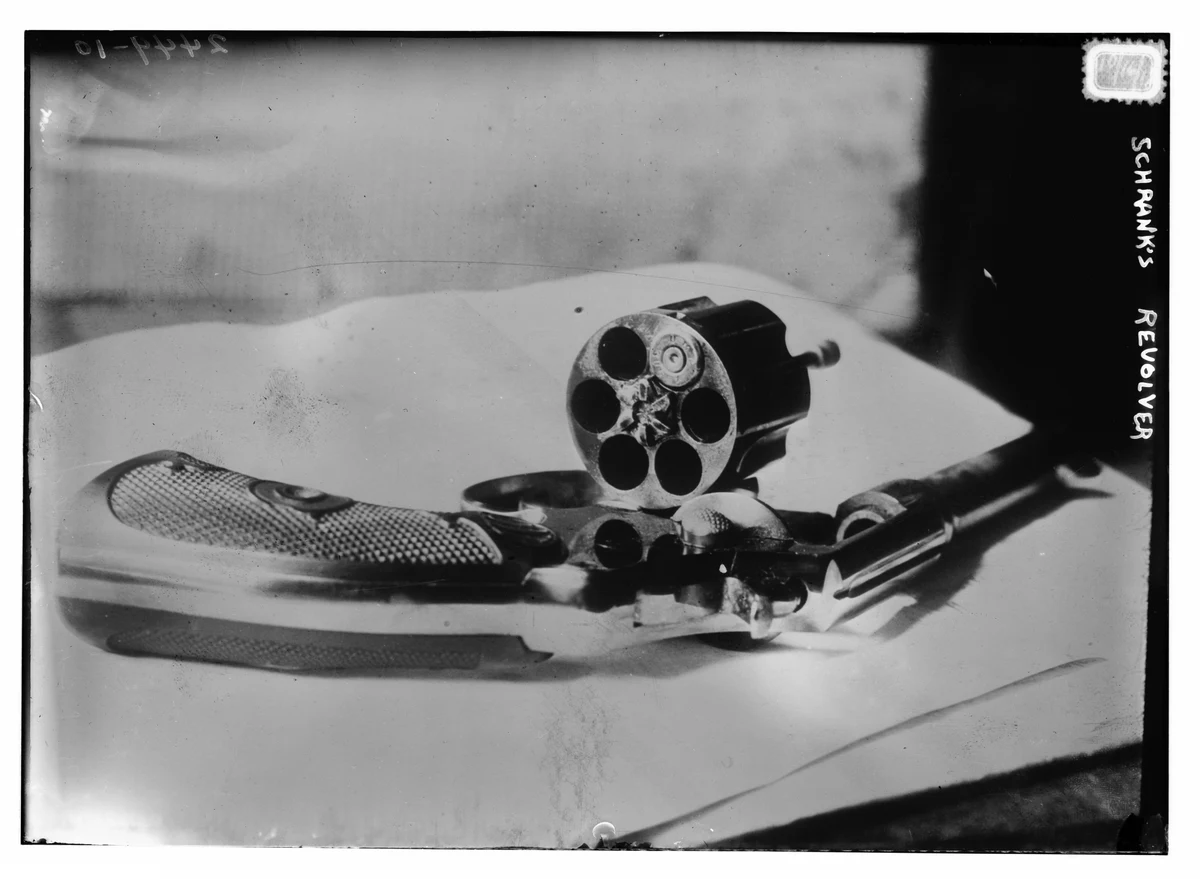
The kinetic force of the impact rocked the 53-year-old former president backward into the leather cushions of the automobile seat. Before the gunman could fire a second cartridge, Roosevelt’s former collegiate football-player stenographer, Elbert E. Martin, vaulted over the car door, tackled the shooter to the pavement, and wrenched the revolver from his grip.
A furious mob surged forward shouting “Lynch him! Kill him!”
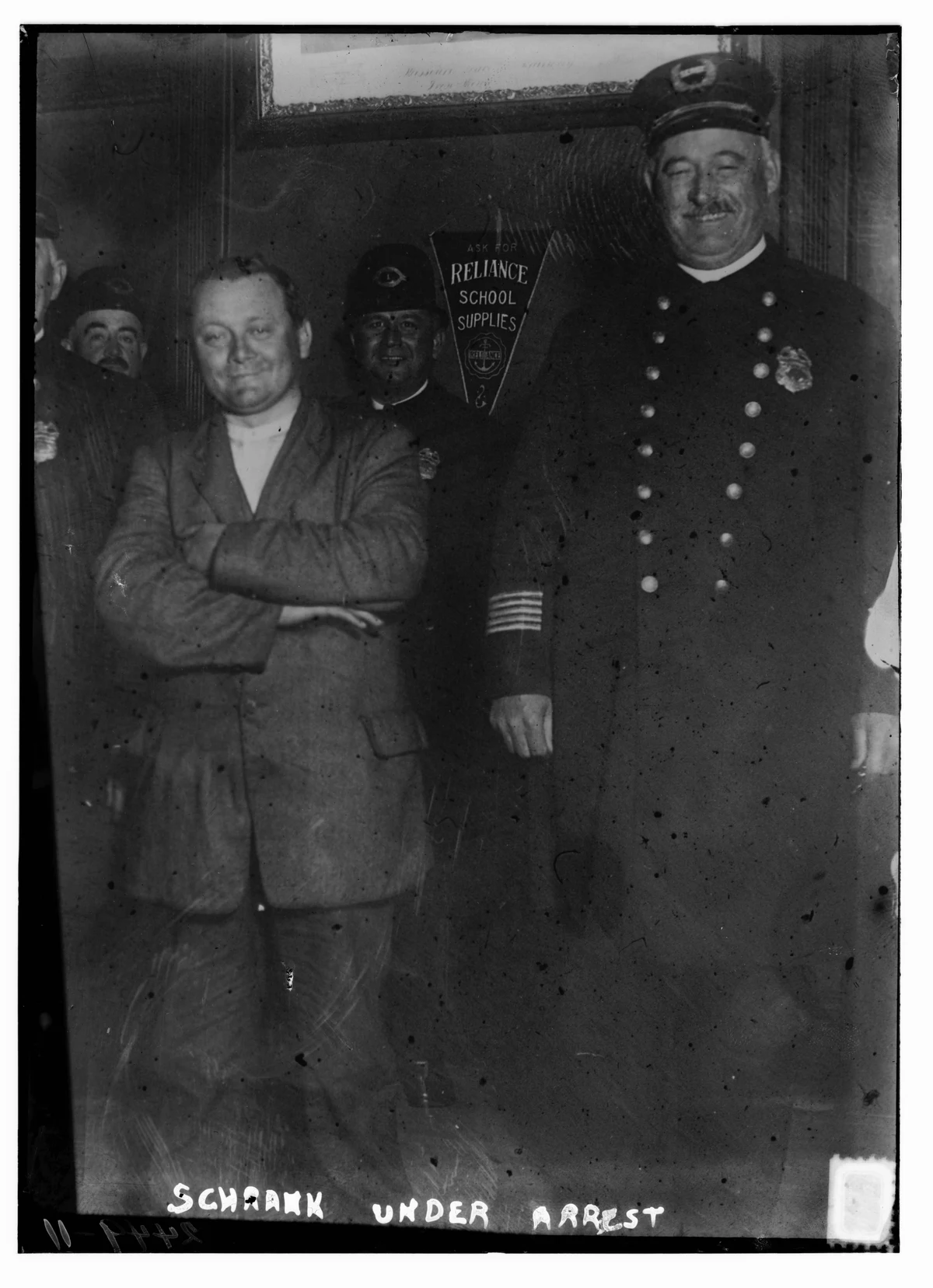
Despite the burning trauma in his chest, Roosevelt stood back up in the vehicle and shouted over the pandemonium: “Don’t hurt him! Bring him here. Mr. Schrank, why did you do it?”
The assassin stared blankly in silence. Roosevelt ordered the police to take custody of the man and ensure his safety before turning his attention to his own wound.
The Fifty-Page Armor and Cold Anatomical Diagnosis
What neither the gunman nor the frantic crowd realized was that an extraordinary coincidence of physics had just saved Roosevelt’s life.
Inside the inside right breast pocket of Roosevelt’s heavy wool jacket sat two dense objects:
- A rigid, steel-jacketed spectacles case.
- A bulky, fifty-page manuscript titled “Progressive Cause Greater Than Any Individual”, folded neatly in half (effectively creating a 100-page paper barrier).
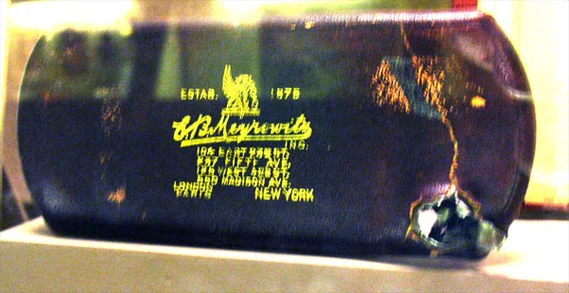
When the .38 caliber bullet struck, it sheared through the thick wool overcoat, slammed into the steel eyeglasses case (absorbing massive kinetic momentum), and tore through all 50 folded sheets of the paper manuscript before penetrating Roosevelt’s flesh.
The spent lead projectile slowed dramatically, burrowing into his right pectoralis major muscle and coming to rest directly against his fourth rib—stopping mere millimeters from his pleural lining and heart.
As campaign staff and local physician Dr. S. L. Terrell pleaded with him to rush to the emergency room, Roosevelt remained remarkably calm. Having spent decades hunting big game in the American West and surviving military action in Cuba during the Spanish-American War, he possessed an intimate knowledge of ballistics and chest trauma.
Roosevelt raised his hand to his lips and coughed hard three times into his palm. He examined his saliva under the street lamps. Finding no bright pink froth or blood, he concluded with iron certainty that the bullet had not perforated his lung.
“He has pinked me, but he has not perforated my lung,” Roosevelt announced. “I will deliver this speech or die in the attempt.”
“It Takes More Than That to Kill a Bull Moose”
Over the vehement objections of his aides and medical attendants, Roosevelt directed his driver to bypass the hospital and proceed directly to the Milwaukee Auditorium.
When he stepped onto the platform before an audience of nine thousand people, the auditorium erupted in thunderous applause. Sensing that the crowd was restless and unaware of the mortal drama that had just occurred outside, Roosevelt stepped up to the podium, raised his hand for silence, and opened his overcoat.
Beneath the coat, his white dress shirt was soaked in dark crimson blood spreading across his right side.
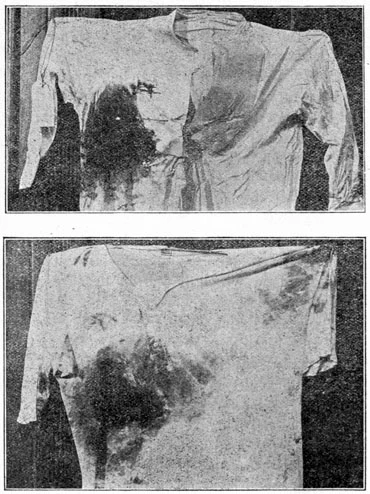
Holding up the blood-stained, bullet-punctured sheets of his manuscript, Roosevelt began with words that instantly entered American political legend:
“Friends, I shall ask you to be as quiet as possible. I don’t know whether you fully understand that I have just been shot; but it takes more than that to kill a Bull Moose.”
Gasps and cries echoed across the vast arena. Roosevelt insisted he was in no danger, assuring the crowd: “The bullet is in me now, so that I cannot make a very long speech, but I will try my best.”
For the next 84 minutes, Theodore Roosevelt held the auditorium spellbound. His voice, at first quiet and hoarse, gained vigor as he expounded on social reform, corporate regulation, and democratic accountability. Blood slowly seeped through his waistline, yet he refused to yield the lectern until he had delivered his final planned sentence.
Only as he finished his concluding remarks did he step down, allowing his aides to guide him into a waiting automobile bound for Chicago’s Mercy Hospital.
The Bullet Left Behind
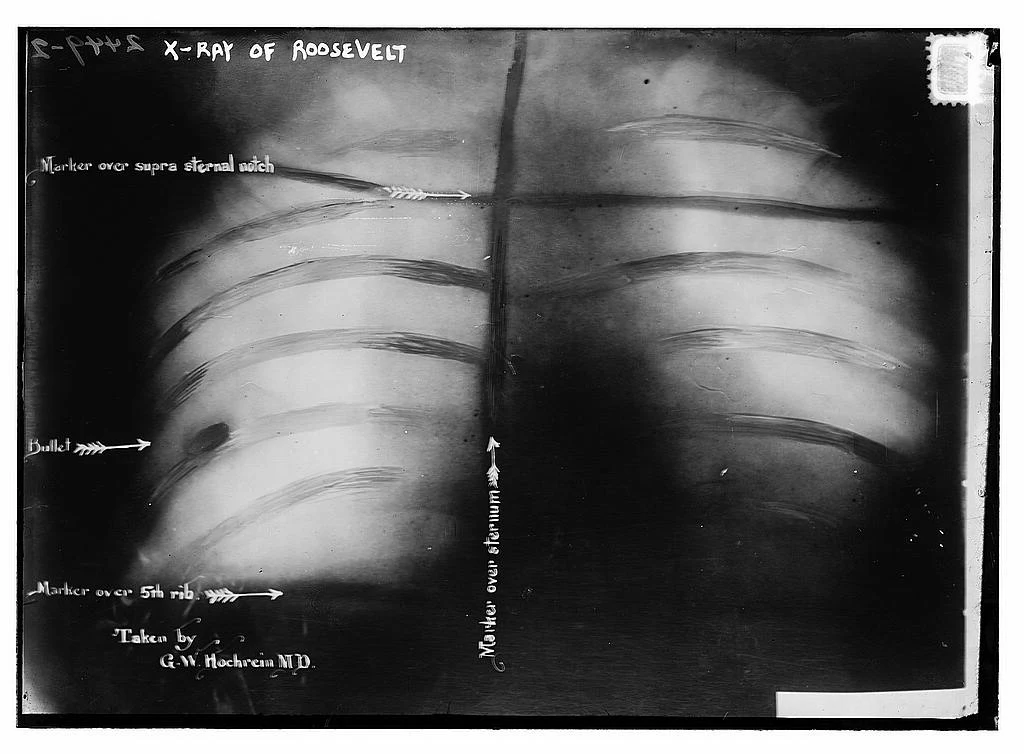
At Mercy Hospital, chief surgeon Dr. John B. Murphy performed radiographic examinations using early X-ray technology. The images confirmed Roosevelt’s self-diagnosis: the bullet was resting against the fourth rib, having penetrated roughly three inches of tissue without breaching the pleural cavity.
Recognizing that exploratory thoracic surgery in 1912 carried severe risks of fatal sepsis and infection, Dr. Murphy advised against extracting the slug.
Roosevelt agreed. The wound was cleaned and dressed, and the former president carried John Schrank’s .38 caliber bullet embedded within his chest for the remaining seven years of his life.
The shooter, John Schrank, was found legally insane after claiming that the ghost of assassinated President William McKinley had visited him in a dream, commanding him to avenge McKinley’s death by stopping Roosevelt from seeking an unprecedented third term. Schrank was committed to the Central State Hospital for the Insane in Waupun, Wisconsin, where he remained until his death in 1943.
Roosevelt returned to the campaign trail within two weeks. In the November 1912 general election, Roosevelt garnered more popular and electoral votes than incumbent Republican President William Howard Taft—cementing the Progressive Bull Moose campaign as the most successful third-party presidential bid in American history.
What the Record Shows
- Theodore Roosevelt was shot at point-blank range outside the Gilpatrick Hotel in Milwaukee on October 14, 1912 - sources: 1, 2
- The bullet from John Schrank’s .38 Colt revolver was slowed by an overcoat, steel eyeglass case, and a 50-page folded manuscript - sources: 1, 3
- Roosevelt examined his cough for blood, verified his lung was intact, and prevented a bystander mob from lynching the shooter - sources: 1, 4
- He delivered an 84-minute campaign speech before 9,000 spectators while bleeding from his chest before seeking medical treatment - sources: 1, 5
- Doctors at Chicago Mercy Hospital performed X-rays and decided leaving the bullet lodged against his ribs was safer than surgery - sources: 1, 6
Archival Evidence & Picture Credits
Every image on this page was verified against museum registries, national archives, and historical collections:
- Theodore Roosevelt campaigning from an open touring automobile in Milwaukee, Wisconsin on October 14, 1912 (Bain News Service, Library of Congress / Public Domain) - Wikimedia Commons file page
- The .38 caliber Colt Police Positive revolver used by John Schrank (Harris & Ewing, Library of Congress / Public Domain) - Library of Congress catalog
- Roosevelt’s steel spectacles case with bullet damage and perforated 50-page manuscript (National Park Service, Sagamore Hill NHS / Public Domain) - Wikimedia Commons file page
- John Flammang Schrank under arrest following the shooting in Milwaukee (Bain News Service, Library of Congress / Public Domain) - Library of Congress catalog
- Theodore Roosevelt’s blood-stained undershirt worn during the Milwaukee address (National Park Service / Public Domain) - Wikimedia Commons file page
- Radiograph (X-ray) of Theodore Roosevelt’s chest showing the bullet lodged against his ribs (Mercy Hospital Chicago, Library of Congress / Public Domain) - Wikimedia Commons file page


Verified Archival Sources & Bibliography
Every claim in this account has been cross-referenced with primary medical records, municipal police archives, and historical consortiums:
- Wikimedia & Academic Consortium: Attempted Assassination of Theodore Roosevelt (historical overview)
- Library of Congress: Harris & Ewing Photographic Collection - Schrank’s Revolver (primary photographic evidence)
- National Park Service: Theodore Roosevelt Assassination Attempt Artifacts at Sagamore Hill (curatorial archive)
- Theodore Roosevelt Center at Dickinson State University: Milwaukee Assassination Attempt Encyclopedia (scholarly digital repository)
- Milwaukee County Historical Society: The Gilpatrick Hotel and the 1912 Assassination Attempt (regional archival record)
- Library of Congress: Bain Collection - Arrest and Custody of John Schrank (primary law enforcement record)
Echoes of History Uncut. "Shot in the Chest, He Spoke for 90 Minutes: Teddy Roosevelt’s 1912 Milwaukee Speech." Echoes of History Uncut. Last modified November 4, 2026. https://echoesofhistoryuncut.com/articles/roosevelt-bullet-in-chest-1912/.

An independent history publication using AI-assisted research, drafting and production. Consult each article’s citations and limitations; source inclusion does not establish independent verification of every claim.
▶
Watch the Complete Archival Documentary on YouTube
Subscribe to Echoes of History Uncut on YouTube for full widescreen 16:9 documentaries, primary archival footage, and declassified deep dives.