
He Flew Across the English Channel in 1909 Despite Severe Burns
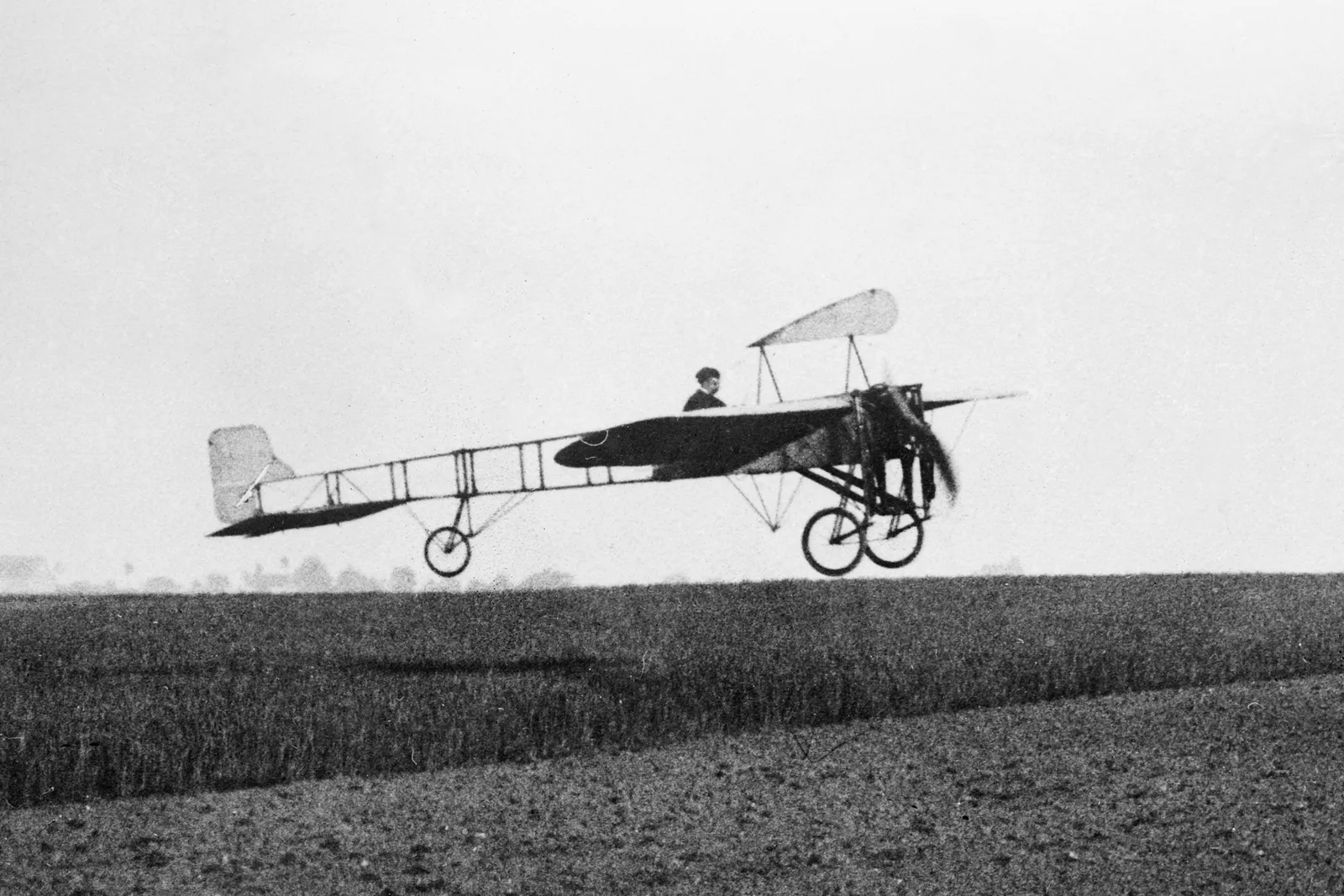
On July 25, 1909, French aviation pioneer Louis Blériot made the first aeroplane flight across the English Channel. Despite severe burns on his foot from an earlier flight, Blériot took off from Calais in his Blériot XI monoplane without a compass. Flying over the water and losing sight of land for several minutes, he circled above the cliffs of Dover and landed safely after about thirty-six minutes to win the Daily Mail prize.

In this dossier (10 chapters) ▾
Historical Dossier: Blériot’s Crossing of the English Channel Location: Les Baraques near Calais, France, to Dover, England | Year: 1909 | Key Figures: Louis Blériot, Hubert Latham, Charles de Lambert, Alfred Leblanc, Charles Fontaine
A Newspaper’s Challenge
In October 1908 the Daily Mail offered a prize of £500 to the first aviator to fly across the English Channel before the end of the year. Nobody came close, and the newspaper doubled the stake to £1,000 for 1909. In Paris, Le Matin brushed the offer off as publicity and implied that winning it was impossible. The Channel is about 20 miles wide at its narrowest, and in 1909 an aeroplane that could fly for half an hour was still a marvel.
By the summer of 1909 three serious contenders were on the French coast. The best backed was Hubert Latham, a French-English aviator flying an Antoinette IV monoplane, who based himself at Sangatte in disused buildings left over from an 1881 Channel Tunnel scheme. Charles de Lambert, a Russian aristocrat and a pupil of Wilbur Wright, set up at Wissant. A third entrant, an Englishman named Arthur Seymour, had signed up without any real preparation.
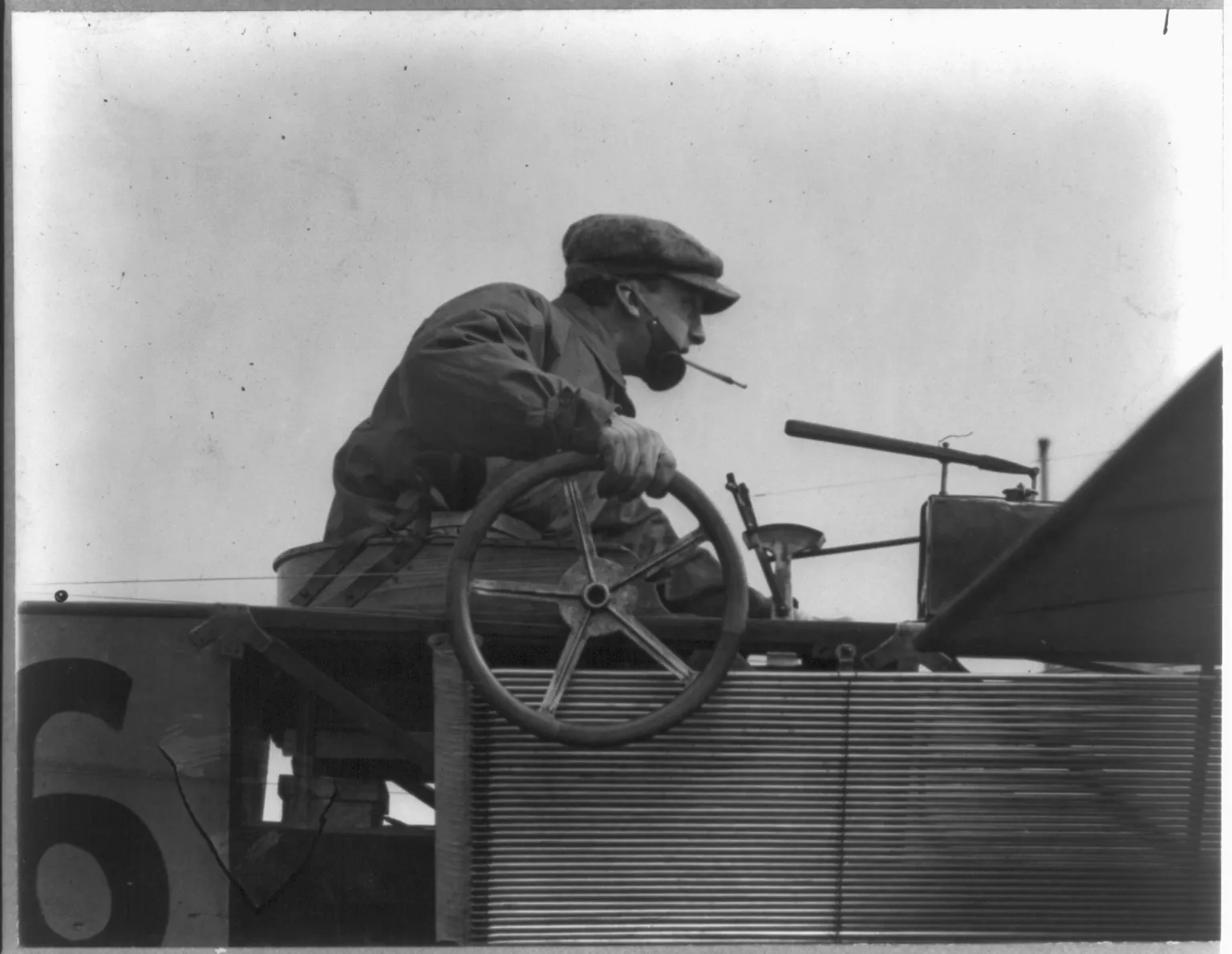
Around 10,000 spectators gathered at Calais, with similar crowds expected at Dover, and the Marconi Company set up a radio link between Cap Blanc Nez and the Lord Warden Hotel at Dover to carry news of the attempt.
Latham Falls Into the Sea
On 19 July Latham went first. Six miles from the English coast his engine failed and the Antoinette came down on the water. It was the first landing of an aircraft on the sea. He was picked up by the French destroyer Harpon. A replacement aeroplane came from the Antoinette factory, but strong winds kept Latham grounded on the days that followed.
This is the point at which Louis Blériot, an engineer and manufacturer who had sunk a fortune into flying machines, arrived on the scene.
The Man With the Burned Foot
Blériot reached Calais on Wednesday, 21 July with two mechanics and his friend Alfred Leblanc, and set up camp at a farm near the beach at Les Baraques, between Calais and Sangatte. He was not in good shape. During a flight at Douai that month, asbestos insulation had come loose from his exhaust pipe, and “one of his shoes had been burnt through and he was in considerable pain.” He continued flying until the engine failed. The result was a third-degree burn that needed over two months to heal.
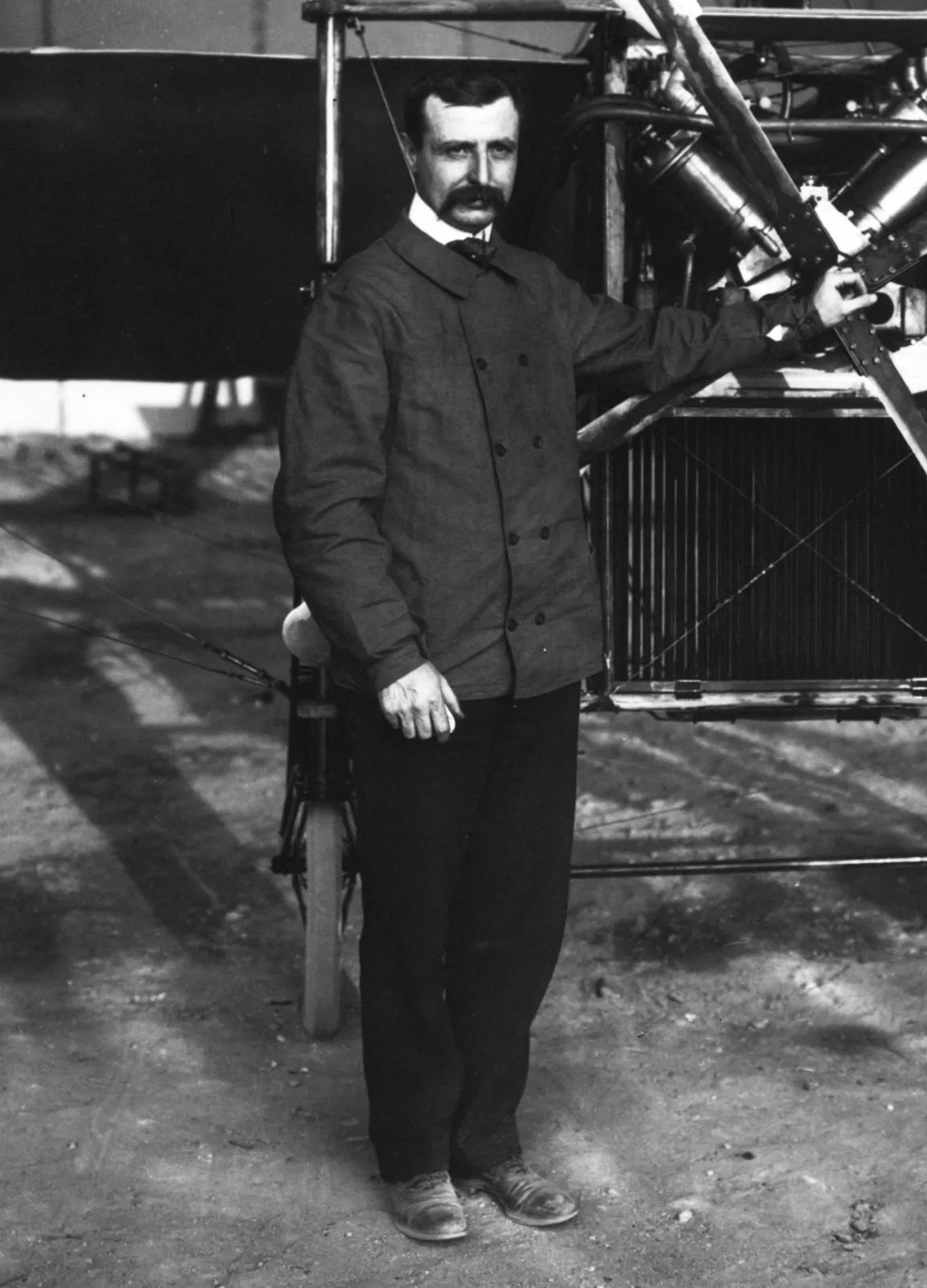
He had spent at least 780,000 francs on his aviation experiments by this point, a sum that would have ruined most men. The prize was not only glory. It was a chance to make the whole investment pay.
25 July 1909
At 4:15 on the morning of 25 July, Blériot made a short trial flight. The rules required a crossing between sunrise and sunset, and at 4:41 he took off in his Blériot XI monoplane. He flew at about 45 miles an hour and about 250 feet, at first keeping the French destroyer Escopette in sight as his reference, since he had no compass.
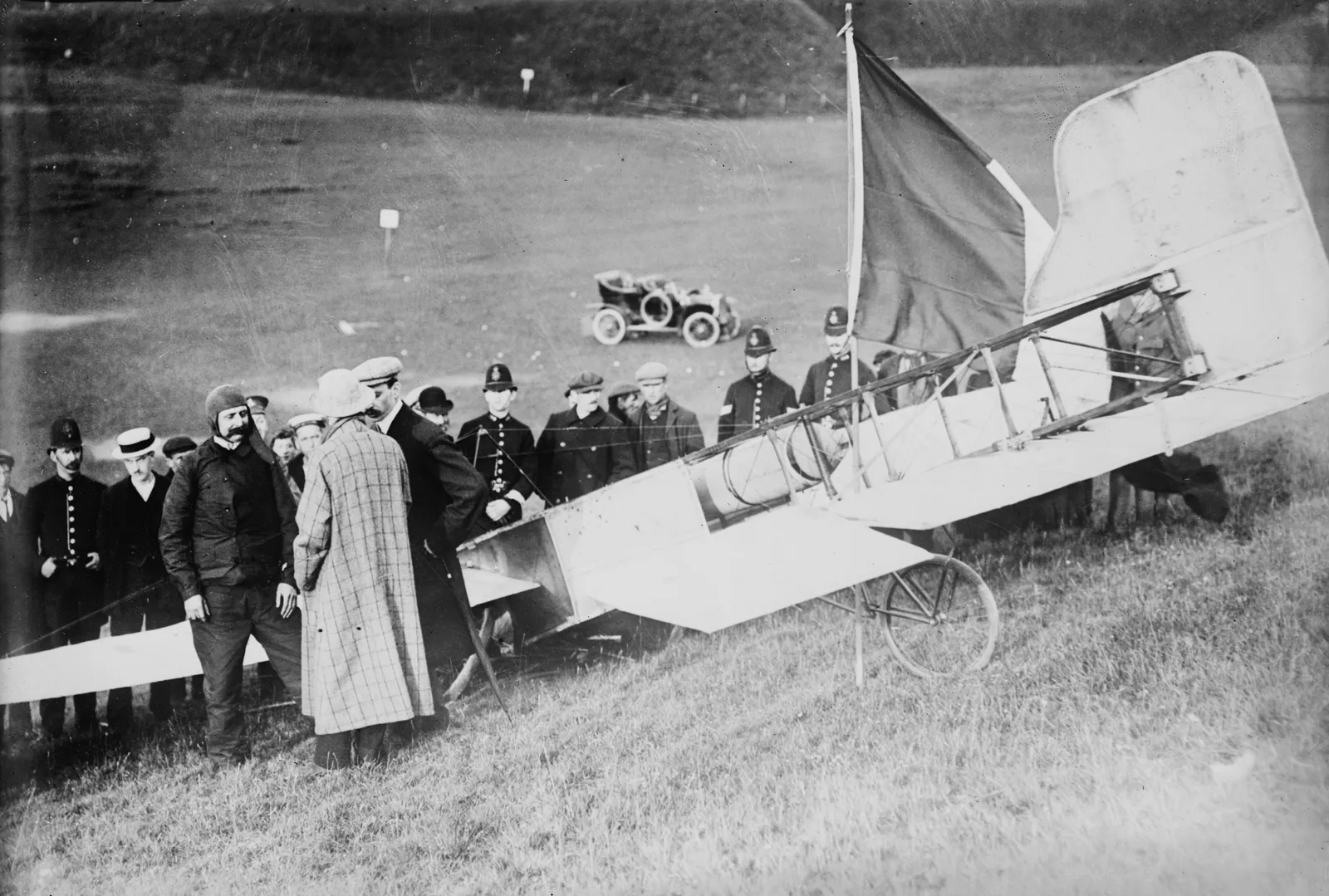
Then the destroyer fell behind and the coast vanished. Blériot later recalled: “for more than 10 minutes I was alone, isolated, lost in the midst of the immense sea, and I did not see anything on the horizon or a single ship.” The wind was carrying him east, but after a time the grey line of the English coast showed up on his left. He turned toward it, and on the cliffs near Dover Castle he saw a man waving a large French tricolour. It was Charles Fontaine, the correspondent of Le Matin, waving the flag at Northfall Meadow.
The crossing had taken 36 minutes and 30 seconds. Blériot circled twice to lose height, cut the engine at about 66 feet and came down hard in the gusty wind in a heavy landing. The undercarriage was damaged and a propeller blade shattered, but he climbed out uninjured.
Dover, the Prize and the Orders
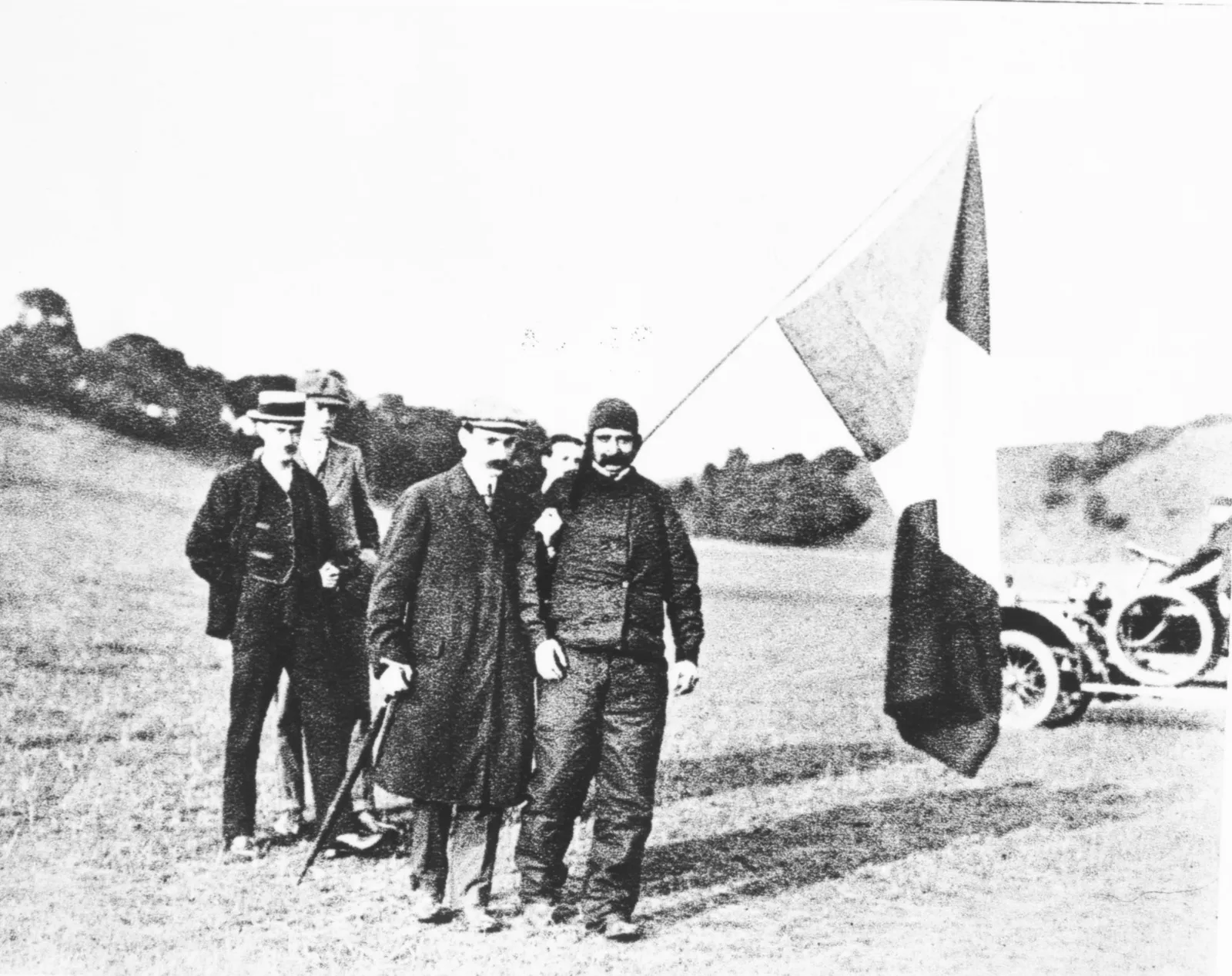
A Daily Mail correspondent hurried Blériot to Dover harbour by car, where he was reunited with his wife and met by cheering crowds and photographers. He collected the £1,000 prize, which the Daily Mail had set, and something much more valuable: proof.
What Changed
The crossing changed what governments and businessmen believed about aeroplanes. Britain had always counted on the Channel to keep invaders away, and a Frenchman had flown over it before breakfast. The effect on Blériot’s business was immediate. Over 100 copies of his aeroplane were ordered at 10,000 francs each, and between 1909 and 1914 he built about 900 aircraft, most of them variations on the Type XI. Along with the Voisin biplanes, his monoplanes dominated the market before the First World War.
The aeroplane in which he crossed the Channel survives and is kept at the Musée des Arts et Métiers in Paris. Near Dover Castle, a granite outline in the shape of the aircraft marks the spot where he came down. It was paid for by the oil manufacturer Alexander Duckham and built by his brother Frederick.
Why It Still Matters
Blériot’s flight was not the longest or the highest of its time, but it did something that mattered more: it showed that the air could be crossed as a matter of routine, and that the sea was no longer a wall. A man with a burned foot, no compass and a machine built by his own company had done it in just over half an hour.
What the Record Shows
14 sourced claims in this story, resting on 10 sources. Numbers link to the bibliography below.
- Louis Blériot flew his monoplane across the English Channel on July 25, 1909 - sources: 4, 8
- Louis Blériot suffered severe burns to his foot on an earlier flight - sources: 1, 8
- The Daily Mail offered a prize of one thousand pounds for the first aeroplane crossing of the English Channel - sources: 5, 8, 6
- Hubert Latham attempted to fly across the English Channel in July 1909 but motor trouble forced his monoplane to plunge into the sea - sources: 2, 10
- Louis Blériot and Hubert Latham were rivals competing for the Channel prize - sources: 1, 8
- Louis Blériot took off from Calais to fly across the English Channel - sources: 4, 5, 1
- Louis Blériot flew his aeroplane across the English Channel from Calais to Dover in 1909 - sources: 3, 4
- Louis Blériot flew across the English Channel without a compass - sources: 5, 8
- Louis Blériot could see neither coast nor any boat for several minutes during his flight across the Channel - sources: 1, 8
- Louis Blériot circled above the cliffs of Dover before landing - sources: 1, 8
- Louis Blériot landed near the cliffs of Dover where a French tricolor flag was waved as a signal - sources: 1, 8
- Louis Blériot crossed the English Channel in a flight of about 36 minutes - sources: 6, 4
- The historic flight in the Blériot XI monoplane took place on July 25, 1909 - sources: 4, 9, 5
- In 1909 Louis Blériot flew an aeroplane between two countries - sources: 7, 5
Archival Evidence & Picture Credits
Every image on this page was checked against its Wikimedia Commons file page.
- Hubert Latham in an Antoinette monoplane, Blériot’s most serious rival (Wikimedia Commons) - Wikimedia Commons file page
- Louis Blériot in 1908, a year before the Channel crossing (Wikimedia Commons) - Wikimedia Commons file page
- Louis Blériot with his monoplane (Wikimedia Commons) - Wikimedia Commons file page
- Louis Blériot after his Channel flight in 1909 (Wikimedia Commons) - Wikimedia Commons file page
- Louis Blériot, the first pilot to fly across the English Channel (Wikimedia Commons) - Wikimedia Commons file page


Verified Archival Sources & Bibliography
Every claim in this account has been fact-checked against primary archives and scholarly repositories:
- New-York Tribune (July 26, 1909): Bleriot Flies Across English Channel (primary)
- The Washington Times (July 19, 1909): Latham Plunges into Sea (primary)
- The Brownsville Herald (September 15, 1933): Bleriot First to Fly Channel (primary)
- Smithsonian National Air and Space Museum: Blériot XI (primary)
- The New York Times: Channel Crossing Anniversary (news)
- BBC News: Bleriot 100 Year Channel Flight (news)
- The Aeronautical Journal: Blériot Crosses the Channel (primary)
- Wikipedia: Louis Blériot (reference)
- Wikipedia: Blériot XI (reference)
- Wikipedia: Hubert Latham (reference)
Echoes of History Uncut. "He Flew Across the English Channel in 1909 Despite Severe Burns." Echoes of History Uncut. Last modified September 24, 2026. https://echoesofhistoryuncut.com/articles/bleriot-channel-flight-1909/.

An independent history publication using AI-assisted research, drafting and production. Consult each article’s citations and limitations; source inclusion does not establish independent verification of every claim.
▶
Watch the Complete Archival Documentary on YouTube
Subscribe to Echoes of History Uncut on YouTube for full widescreen 16:9 documentaries, primary archival footage, and declassified deep dives.