
He Hid His Name in Atari’s Secret Room
In 1979, Atari management banned programmer credits from game boxes and manuals to prevent rival tech companies from poaching talent. Developing Adventure for the Atari 2600 inside just 4,096 bytes of ROM, programmer Warren Robinett secretly coded an invisible one-pixel object that bypassed collision routines, revealing an unauthorized secret room with his name. By the time the signature was discovered, cartridges were already in homes and Robinett had resigned, letting his name reach players anyway.

In this dossier (8 chapters) ▾
- 01 The Anonymity Doctrine and the Textile Executive
- 02 The Hardware Crucible: Programming the Atari 2600
- 03 The 50-Byte Clandestine Hack: The Gray Dot
- 04 The Resignation and the Salt Lake City Letter
- 05 The Silicon Economics: Why Atari Couldn’t Delete It
- 06 What the Record Shows
- 07 Archival Evidence & Picture Credits
- 08 Verified Archival Sources & Bibliography
Historical Dossier: The Clandestine Creation of the First Console Video Game Easter Egg Location: Sunnyvale, California, United States | Year: 1978–1980 | Key Figures: Warren Robinett, Ray Kassar, Steve Wright, David Crane, Al Alcorn
The Anonymity Doctrine and the Textile Executive
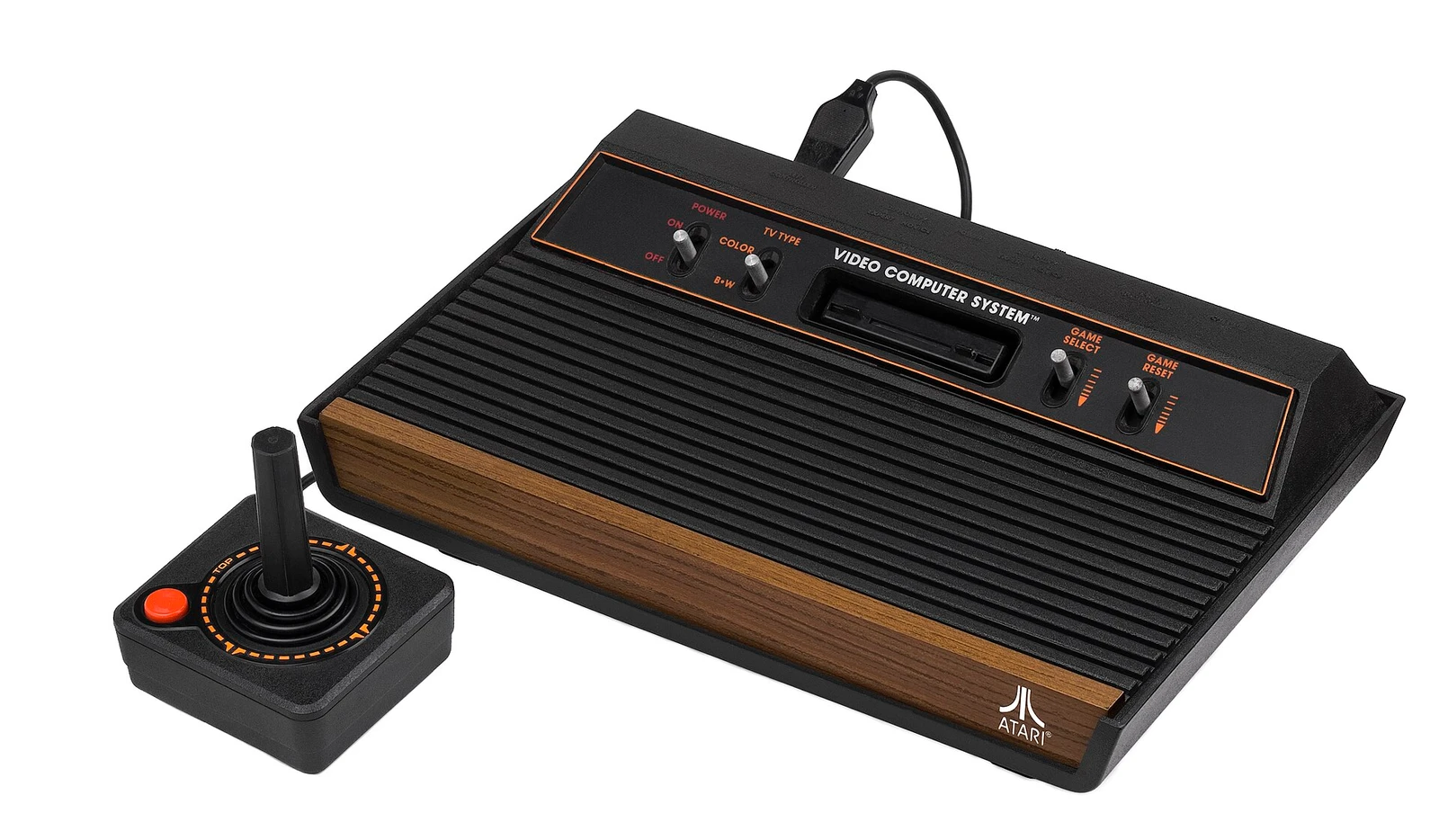
In the late 1970s, Atari was the undisputed vanguard of the home video game revolution. Its flagship console, the Video Computer System (VCS), later known as the Atari 2600, was transforming living rooms across North America. Millions of families were purchasing cartridges, generating astronomical revenues for Warner Communications, which had acquired Atari from founder Nolan Bushnell in 1976 for $28 million.
Yet behind the scenes in Sunnyvale, California, a fierce cultural and financial battle was raging between creative engineers and corporate executives. Following Bushnell’s contentious departure in late 1978, Warner installed Ray Kassar as Atari’s Chief Executive Officer. Kassar, a former executive vice president at Burlington Industries, brought a rigid, textile-industry management doctrine to the freewheeling Silicon Valley pioneer.
Under Kassar’s leadership, Atari instituted a strict corporate policy: game designers and programmers were expressly forbidden from receiving public credit. Management viewed software engineers not as creative authors, but as interchangeable factory technicians. Game boxes, printed instruction manuals, and cartridges bore only the Atari corporate logo.
Management’s justification was commercial and defensive: executives feared that if individual programmers became famous, competing electronics firms and toy manufacturers would recruit them away with lucrative royalty contracts. Programmers were paid flat salaries—typically between $18,000 and $30,000 a year—with zero royalties, even as single titles grossed tens of millions of dollars. Kassar reportedly dismissed engineers as “high-strung prima donnas.”
This forced anonymity infuriated Atari’s creative talent. In May 1979, four of Atari’s top programmers—David Crane, Larry Kaplan, Alan Miller, and Bob Whitehead—confronted Kassar to demand royalties and public recognition. When Kassar rebuffed them, the four walked out and, in October 1979, founded Activision, the world’s first independent third-party video game publisher.
Meanwhile, sitting in his cubicle in Sunnyvale, 26-year-old programmer Warren Robinett decided on a different, more subversive path.

The Hardware Crucible: Programming the Atari 2600
In 1978, Robinett set out to create an ambitious graphical action-adventure game inspired by Will Crowther and Don Woods’ text-based mainframe game Colossal Cave Adventure, which Robinett had played at the Stanford Artificial Intelligence Laboratory. When Robinett pitched the idea to his supervisor, head of software development Don Reisinger, Reisinger dismissed it as technically impossible.
The hardware constraints of the Atari 2600 were punishing:
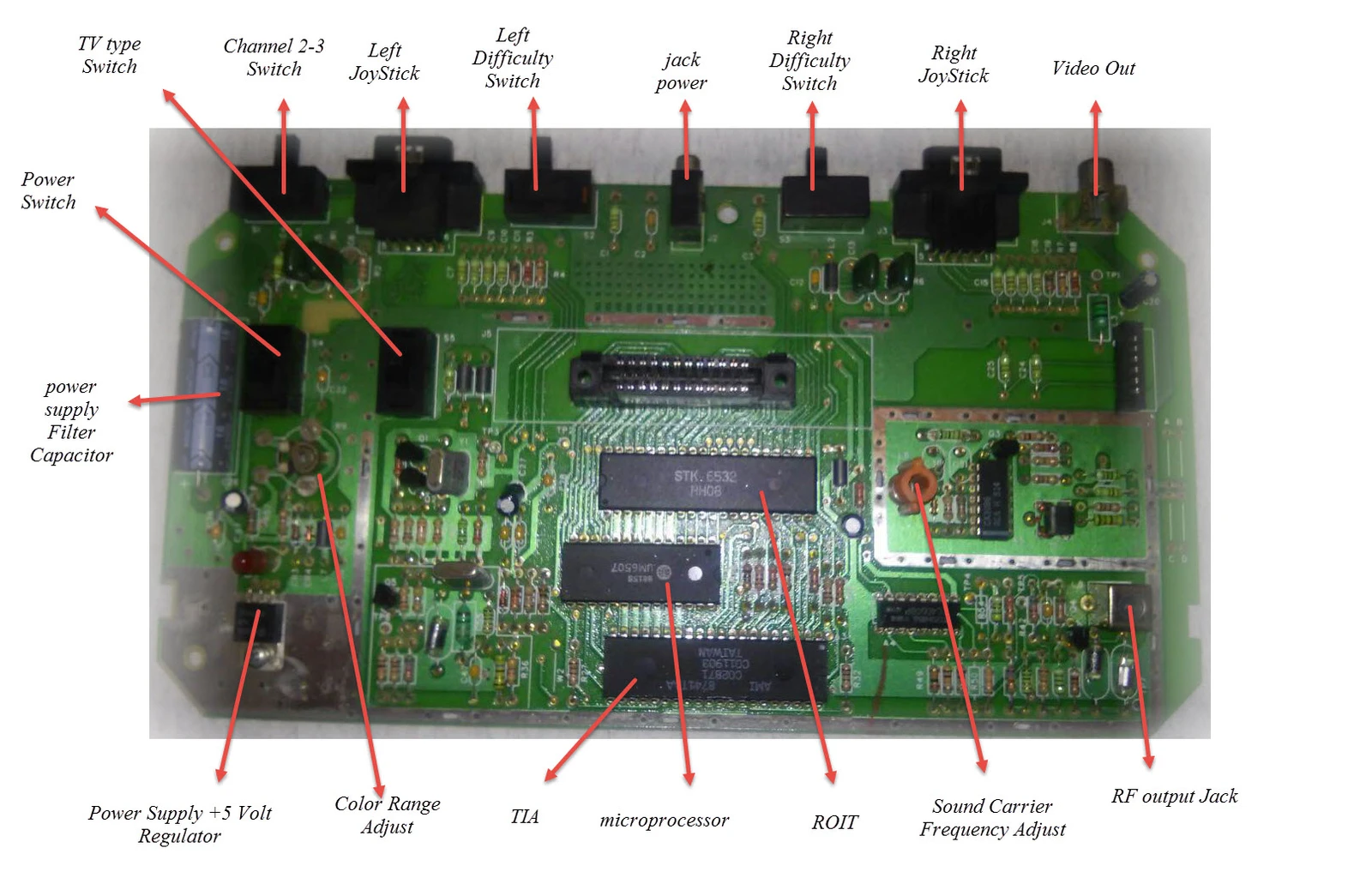
- Microscopic System RAM: The system relied on the MOS Technology 6532 RIOT (RAM-I/O-Timer) chip, which provided exactly 128 bytes of RAM (one-eighth of a single kilobyte). There was no memory buffer to store screen graphics.
- “Racing the Beam”: Designed by Jay Miner, the Television Interface Adaptor (TIA) graphics chip could not store a bitmap image. Programmers had to write tight assembly routines synchronized with the electron gun of the cathode-ray tube (CRT) television, rewriting register values on every horizontal scanline during horizontal blanking intervals (exactly 76 machine cycles per scanline).
- Cartridge ROM Ceiling: The physical cartridge mask ROM held exactly 4,096 bytes (4 KB) of program memory.
- Severe Hardware Sprite Limits: The TIA hardware supported only five movable objects: two 8-pixel players, two 1-pixel missiles, and one 1-pixel ball.
To build Adventure, Robinett had to pioneer foundational video game design concepts from scratch:
- Multi-Room Spatial Navigation: Connecting 30 distinct rooms across three castles, labyrinths, and catacombs.
- Dynamic Object Inventory: Giving the player’s square avatar the ability to pick up, carry, and drop items (keys, a sword, a magic bridge, a magnet).
- Autonomous Artificial Intelligence: Programming three roaming dragons (Yorgle, Grundle, and Rhindle) with distinct behavioral states (pursuing, biting, swallowing, guarding), alongside a mischievous bat that stole and swapped items between rooms.
Every byte of the 4,096-byte ROM was contested. Yet despite the extreme scarcity of memory, Robinett quietly reserved approximately 50 bytes of code for a secret act of rebellion.
The 50-Byte Clandestine Hack: The Gray Dot
Robinett knew that asking management for permission to include his name on the screen would result in an immediate veto and potential termination. Instead, he engineered a clandestine puzzle buried deep within the game’s assembly routines.
He created an unauthorized item: a single 1x1 pixel object known in the source code as the “Gray Dot” (or simply the dot). Robinett deliberately set its color luminance to match the exact background color of the catacombs maze floor ($00 / gray), rendering it completely invisible to the human eye.
The mechanism relied on exploiting the Atari 2600’s object-handling limitations:
- Under the TIA display architecture, only a limited number of movable objects could exist on a single scanline simultaneously.
- In the room containing the southern wall of the Rhombus Castle, the solid boundary wall prevented horizontal transit.
- However, if a player brought the invisible Gray Dot along with two other items (such as the bridge and a key) to the barrier, the total number of objects in the room caused the collision-detection routine to overflow.
- The boundary collision bitmask failed, allowing the player’s avatar to slip directly through the solid purple barrier into an unmapped off-screen coordinate.
Inside this secret chamber, Robinett coded a breathtaking visual surprise:
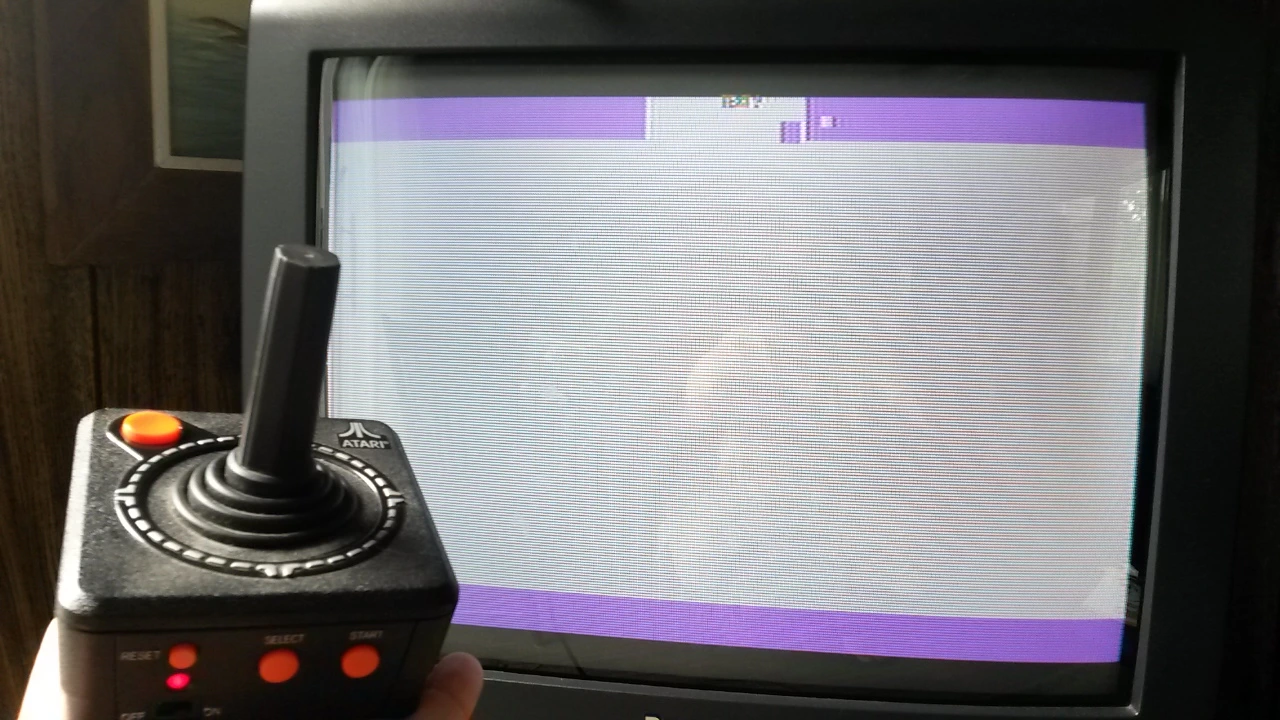
By continuously incrementing the playfield color register (COLUPF) on each vertical frame, horizontal bands of vibrant, cycling rainbow colors swept across the screen, illuminating pixelated letters stacked vertically:
CREATED BY
WARREN
ROBINETT
Robinett kept the entire hack secret—not only from Atari management, but from his fellow programmers in Sunnyvale.
The Resignation and the Salt Lake City Letter
In June 1979, having finalized the assembly code for Adventure, Warren Robinett handed in his master ROM and resigned from Atari. He had saved enough money to spend the next several months backpacking across Europe. He did not utter a single word about the secret room to anyone.
Adventure was manufactured and shipped to retail stores across North America in early 1980. The game was an immediate commercial and critical triumph, selling over one million cartridges and becoming one of the defining titles of the second console generation.
Several months after release, a 15-year-old player in Salt Lake City, Utah, stumbled across the invisible pixel while experimenting with the magic bridge in the catacombs. After dragging the dot to the southern wall, he breached the barrier and entered the secret room. Astonished by the flashing letters, the young player typed out a detailed letter to Atari management, complete with step-by-step instructions on how to reach the secret chamber.
The Silicon Economics: Why Atari Couldn’t Delete It
When Atari executives received the letter and reproduced the glitch in their Sunnyvale testing lab, management was furious. Senior leadership initially demanded that the code be altered immediately to purge Robinett’s name from all future cartridge runs.
However, the hardware engineering team delivered harsh economic realities to executive offices:
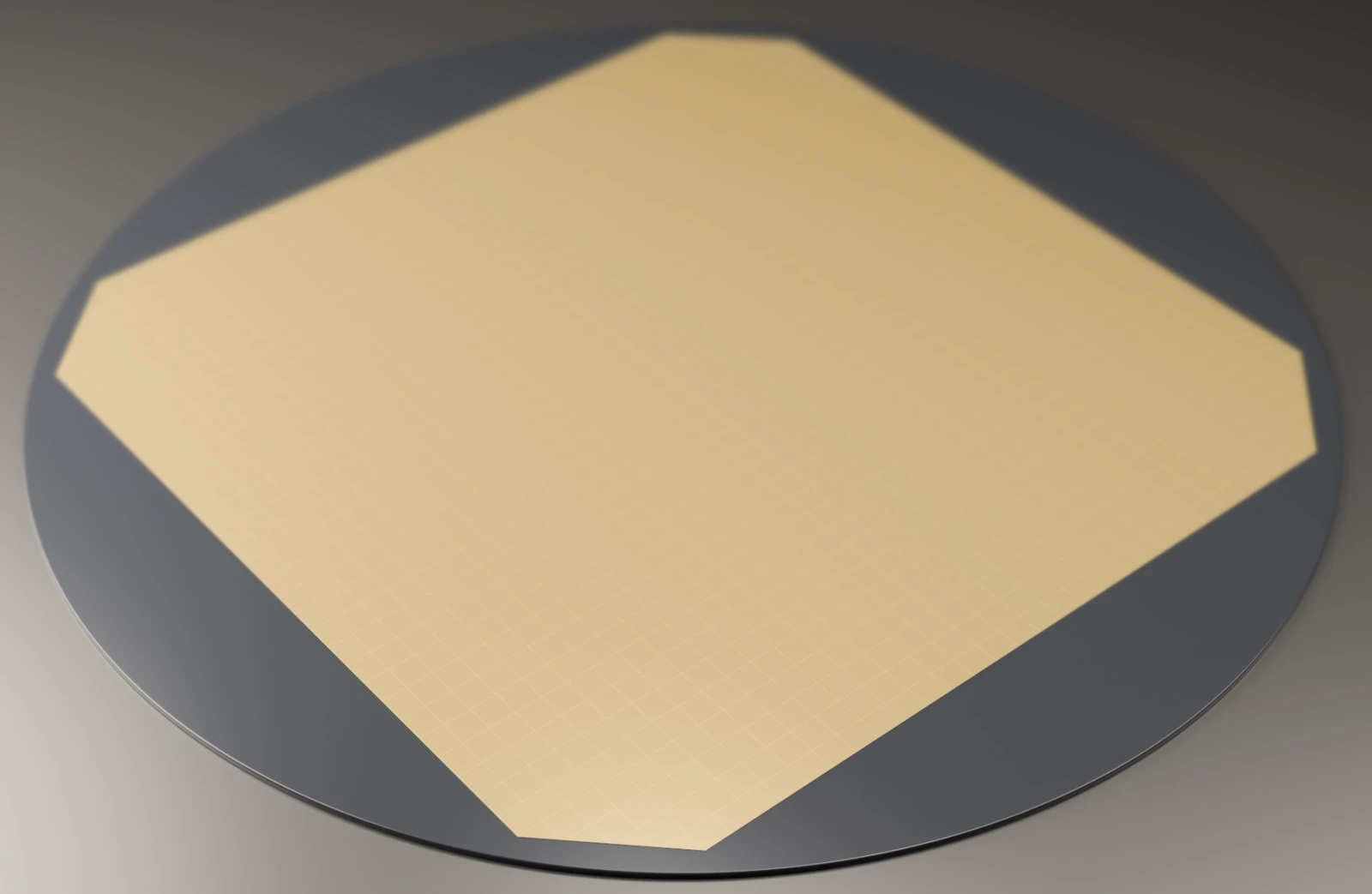
- Mask ROM Manufacturing: Atari cartridges did not use reprogrammable EEPROMs or flash memory. They used factory mask ROMs, where binary machine code is permanently etched onto physical silicon wafers during semiconductor fabrication.
- Tooling & Inventory Costs: Altering the code required etching brand-new photolithographic silicon masks—a process that cost thousands of dollars in 1980 currency (equivalent to over $35,000 today) and required a multi-month fabrication lead time.
- Distribution Reality: Hundreds of thousands of cartridges were already sitting on retail shelves in Sears, JCPenney, and toy stores, or already plugged into consumer consoles in living rooms across America. Discarding existing inventory would inflict severe financial losses.
- Jurisdiction: Robinett had already resigned a year earlier and was traveling abroad; Atari could neither fire nor discipline him.
At this critical juncture, Steve Wright, the Director of Software Development for Atari’s Consumer Division, stepped in with a brilliant strategic pivot.
Wright argued that attempting to recall or censor the game would generate disastrous publicity and financial waste. Instead, he proposed that Atari embrace the secret room as an added layer of player engagement. Wright famously compared the hidden room to finding an “Easter egg” on Easter morning, suggesting that Atari should encourage its developers to secretly hide similar surprises in future cartridges to delight players and foster community word-of-mouth.
Management agreed. Instead of purging Robinett’s signature, Atari institutionalized the practice. Steve Wright’s casual phrase coined an enduring cultural term: the “Easter egg.”
What the Record Shows
- Corporate Denial of Credit: Atari management under Warner Communications and CEO Ray Kassar enforced an explicit company policy forbidding game designers from receiving public credit on packaging, manuals, or cartridges to prevent rival manufacturers from recruiting talent. [1], [4]
- The 4KB and 128-Byte Barrier: The Atari 2600 hardware featured only 128 bytes of RAM on the MOS 6532 RIOT chip and 4,096 bytes (4 KB) of cartridge ROM, requiring cycle-accurate “racing the beam” synchronization with CRT electron beams. [2], [3]
- The Gray Dot Collision Overflow: Robinett hid a 1x1 pixel object matching the catacomb floor color (
$00). Bringing the dot alongside other items to the southern castle wall exceeded the TIA scanline object limit, disabling boundary collision detection and allowing entrance into the secret room. [1], [2] - Economic Impracticality of Recall: Cartridge code was etched into physical silicon mask ROMs. Purging the secret room would have required commissioning new photolithographic masks and scrapping existing inventories already distributed to retailers, costing thousands of 1980 dollars. [1], [2]
- Resignation Before Discovery: Warren Robinett had already resigned from Atari in June 1979 to travel Europe; the secret chamber was discovered by a 15-year-old player in Salt Lake City in mid-1980. [1]
- Coining the Term: Steve Wright, Director of Software Development at Atari Consumer Division, officially coined the term “Easter egg” to describe Robinett’s secret room, establishing a precedent that transformed developer protest into an industry staple. [1], [4]
Archival Evidence & Picture Credits
- Figure 1 (Atari 2600 VCS Console): Authentic 1977-1979 Atari Video Computer System with 4-switch woodgrain bezel and CX40 joystick. Provenance: Photo by Evan-Amos, Public Domain via Wikimedia Commons.
- Figure 2 (Warren Robinett Portrait): Archival portrait of computer scientist Warren Robinett, creator of Adventure. Provenance: Wikimedia Commons, CC BY-SA 4.0.
- Figure 3 (Atari 2600 VCS Motherboard): Authentic Atari 2600 motherboard displaying the MOS 6507 CPU and TIA graphics silicon. Provenance: Photo by Evan-Amos, Public Domain via Wikimedia Commons.
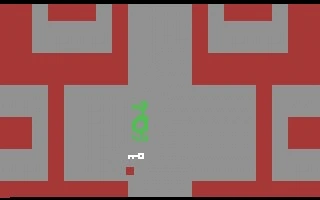
- Figure 4 (Adventure In-Game Screen): Official 1979-1980 Atari 2600 Adventure gameplay screenshot showing the castle and player avatar. Provenance: Atari, Inc. / Fair Use via Wikimedia Commons.
- Figure 5 (The Secret Room Display): Direct scanline capture of the secret chamber cycling through multicolored horizontal bands with the pixelated text “Created by Warren Robinett.” Provenance: Archival CRT capture, Fair Use.
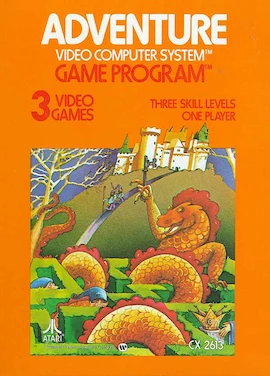
- Figure 6 (Adventure 1980 Box Packaging): Original 1980 Atari VCS CX2613 Adventure cartridge box packaging. Provenance: Atari, Inc. / Fair Use via Wikipedia.
- Figure 7 (Silicon Mask ROM Wafer): Photomask semiconductor integrated circuit wafer illustrating physical silicon ROM fabrication. Provenance: Wikimedia Commons, CC BY-SA 3.0.
Verified Archival Sources & Bibliography
- Robinett, Warren. (2006). Adventure as a Video Game: Adventure for the Atari 2600. Technical post-mortem and source code analysis. Available at: warrenrobinett.com/adventure/
- Robinett, Warren. (2007). The Designer’s Notebook: Twenty-Seven Years Later, Warren Robinett on Adventure. In-depth interview by Ernest Adams, Gamasutra.
- Montfort, Nick, & Bogost, Ian. (2009). Racing the Beam: The Atari Video Computer System. Platform Studies Series. Cambridge, MA: MIT Press. ISBN: 978-0262012577.
- Kent, Steven L. (2001). The Ultimate History of Video Games: From Pong to Pokémon and Beyond. New York: Three Rivers Press. ISBN: 978-0761536437.
- Alcorn, Allan. (2008). Oral History of Allan (Al) Alcorn. Computer History Museum. Interviewed by Gardner Hendrie. Reference no. X4684.2008.
- Atari, Inc. (1980). Adventure Game Program Instructions (Model CX2613). Sunnyvale, CA: Atari, Inc.
Echoes of History Uncut. "He Hid His Name in Atari’s Secret Room." Echoes of History Uncut. Last modified November 5, 2026. https://echoesofhistoryuncut.com/articles/atari-adventure-easter-egg-1979/.

An independent history publication using AI-assisted research, drafting and production. Consult each article’s citations and limitations; source inclusion does not establish independent verification of every claim.
▶
Watch the Complete Archival Documentary on YouTube
Subscribe to Echoes of History Uncut on YouTube for full widescreen 16:9 documentaries, primary archival footage, and declassified deep dives.