
They Glowed in the Dark. It Was Killing Them.
In the 1920s, young female factory workers at the United States Radium Corporation in Orange, New Jersey, painted luminous watch dials with radioactive paint trade-named 'Undark'. Instructed to 'lip-point' camel-hair brushes between their lips to paint fine numerals, the women ingested lethal quantities of radium that decayed their bones from within, sparking an epic legal battle that laid the foundation of modern American occupational safety laws.

In this dossier (10 chapters) ▾
Historical Dossier: The Radium Girls Location: Orange, New Jersey, and Ottawa, Illinois, USA | Year: 1917–1939 | Key Figures: Grace Fryer, Edna Hussman, Katherine Schaub, Quinta McDonald, Albina Larice, Catherine Donohue, Arthur Roeder, Cecil and Katherine Drinker
Paint That Glowed
From 1917 to 1926 the United States Radium Corporation, originally called the Radium Luminous Material Corporation, extracted and purified radium from carnotite ore mined in Colorado’s Paradox Valley and in Utah. It sold luminous paint under the brand name “Undark,” and it became a major supplier of glowing watches and instruments to the military. Its plant in Orange, New Jersey, employed about 300 people, most of them women, painting radium onto watch faces and instruments.
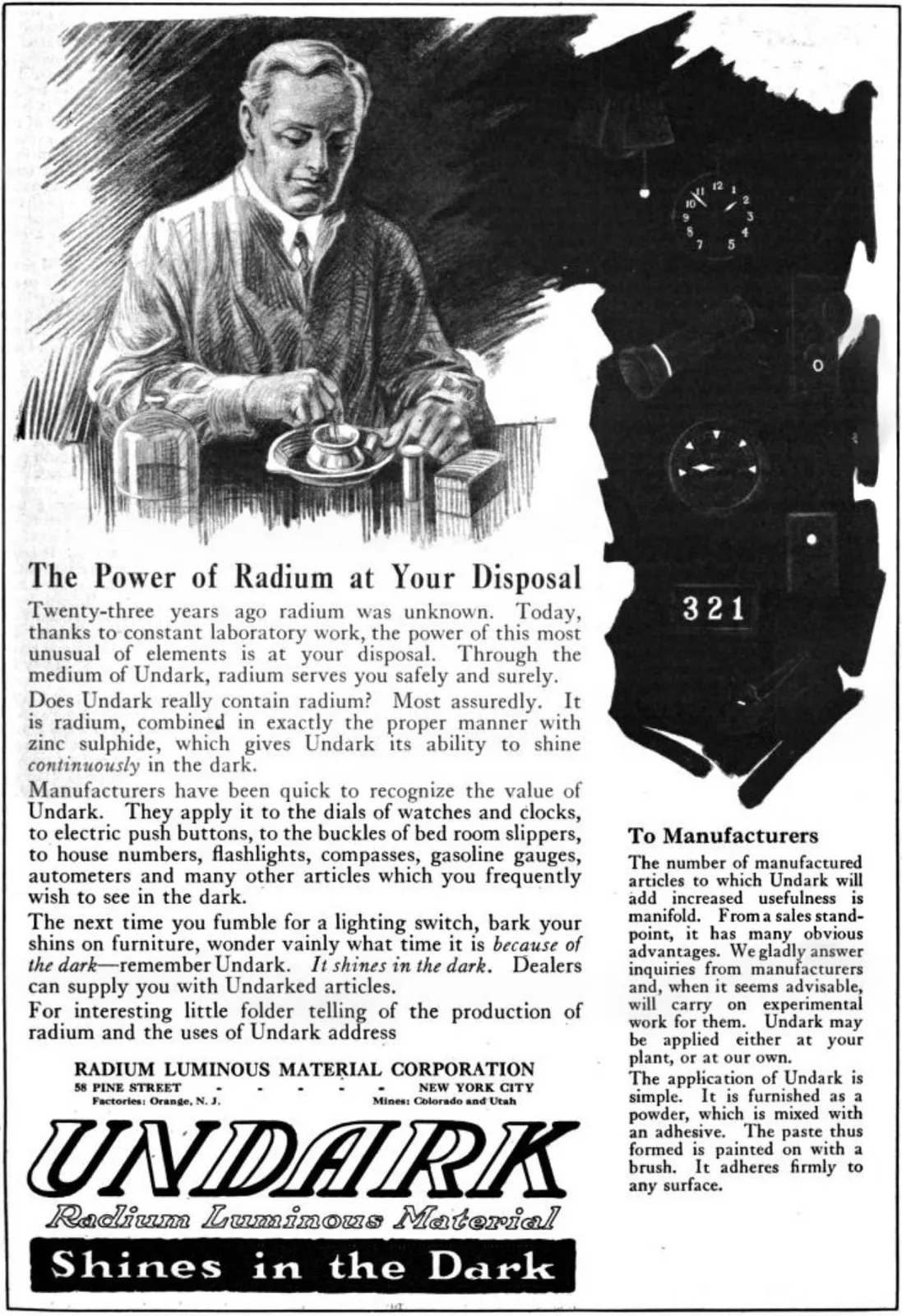
The company knew more than it told. It had distributed literature to the medical community describing the “injurious effects” of radium. Its chemists worked behind lead screens, with tongs and masks. Yet it hired about 70 women to handle the paint with no protection at all, and told them it was harmless.
Lip, Dip, Paint
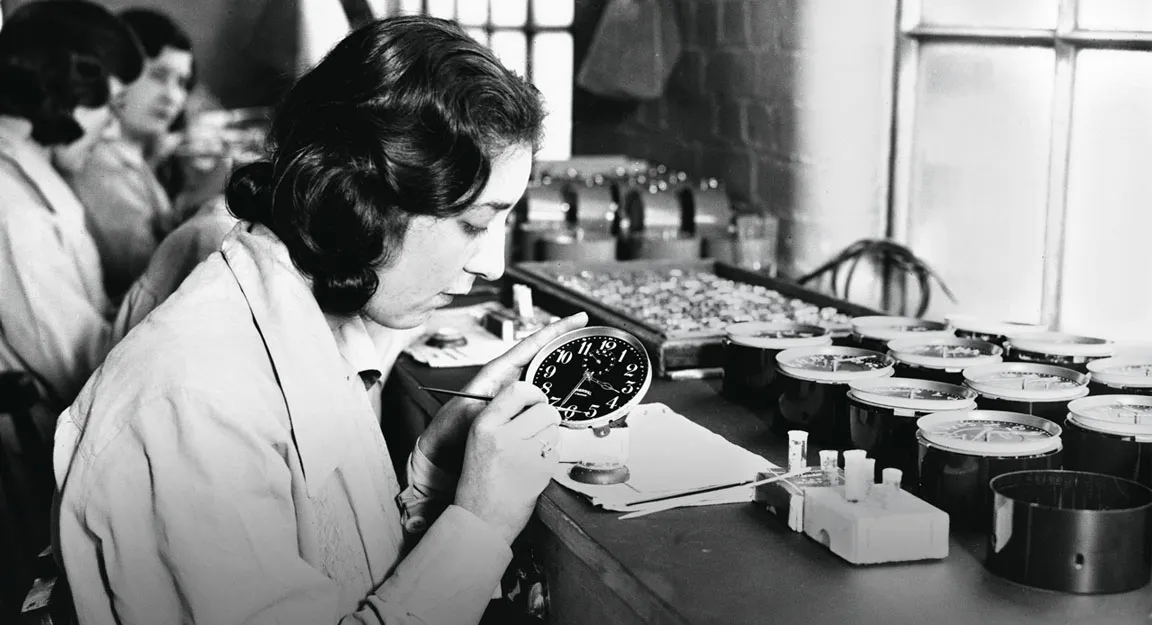
The women were paid by the piece, about a penny and a half per dial. A painter could do about 250 dials in a shift, for about $3.75 a day. The brushes had fine tips, and supervisors told the workers to shape them with their lips. That was faster and cheaper than using a rag or water. The method, “lip, dip, paint,” meant that each woman swallowed radium all day. Some of the painters even used the paint on their nails, teeth and faces for fun, because it made them glow.
The Dying Begins
The first documented death of a dial painter came in 1922. By 1924 fifty women had fallen ill and a dozen had died. By 1927 more than fifty of the factory’s women workers had died of radium poisoning.
Dentists were among the first to notice. The women developed toothaches, loose teeth, sores and ulcers, and a condition that came to be called “radium jaw,” the death of the bone of the jaw. They also suffered anaemia, broken bones, sterility and suppressed menstruation.
In the early 1920s two researchers from the Harvard School of Public Health, Cecil Kent Drinker and Katherine Rotan Drinker, inspected the Orange plant. They found “an environment saturated with radium contaminated dust with no protection for workers from the radioactive material.” The company’s president, Arthur Roeder, disagreed and blamed the illnesses on infections from outside the factory. When he learned that the Drinkers meant to publish, he threatened to sue. Then Alice Hamilton found that Roeder had altered the Drinker report before sending it to the New Jersey Department of Labor, and Drinker published his findings as he had written them.
Five Women Sue
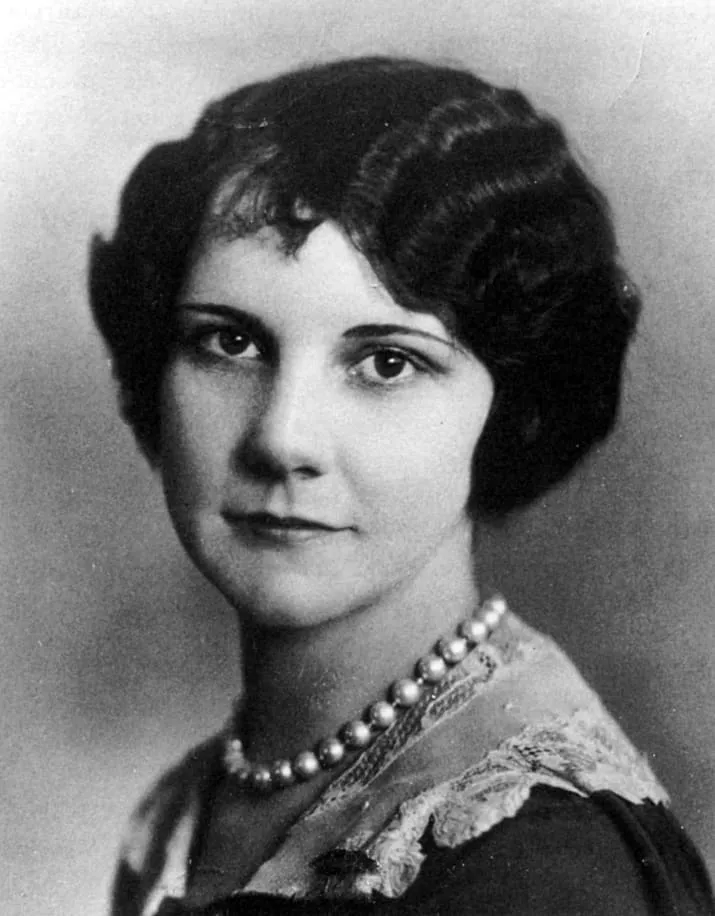
Grace Fryer could not find a lawyer for two years. Eventually she did, and five women, Fryer, Edna Hussman, Katherine Schaub, Quinta McDonald and Albina Larice, brought suit against the company. They became known as the Radium Girls. By their first court appearance in January 1928, two were bedridden and could not raise their arms to take the oath.
The company settled in the autumn of 1928, before a jury could consider the case. Each of the women received $10,000, an annuity of $600 a year, and payment of all medical and legal expenses. The settlement also required the company to pay each of them $12 a week for life. All five were dead by the 1930s.
Ottawa, Illinois
The same practice went on elsewhere. The Radium Dial Company, set up in Ottawa, Illinois, in 1922, employed women to paint clock dials for the Westclox Corporation by the same method. The company carried out medical examinations and toxicity tests but kept the results from its workers. When the women heard about the New Jersey case, they were told that radium was safe and that the New Jersey workers had died of viral infections. One of the company’s co-founders, George Willis, lectured them on how harmless radium was. Dr. Sabin Arnold von Sochocky, the inventor of the paint, said it contained nothing dangerous.
Workers showed signs of poisoning in 1926 and 1927. After a ruling in their favour by the Illinois Industrial Commission in 1937, the attorney Leonard Grossman took on five women without a fee, since they were poor and unable to work. The case was heard at the home of Catherine Donohue, who was too ill to travel. The commission ruled for them in the spring of 1938, but the company had by then closed and moved to New York, and the commission would not reach across state lines for compensation. Donohue died before the case ended, and some of the women got nothing. The case was finally closed when the U.S. Supreme Court declined to hear the appeal on 23 October 1939.
Von Sochocky himself died in November 1928, and was counted as the 16th known victim of radium dial paint. His death, which affected his hands and not his jaw, strengthened the women’s case.
What Changed
The Radium Girls’ lawsuits established the right of workers to sue corporations for injuries caused by their jobs, and led to the first laws on occupational disease. Radium dial painters were given safety training and protective gear, and “they no longer shaped paint brushes by lip.” In 1949 Congress passed legislation requiring compensation for all workers suffering from occupational diseases. The cases also shaped the field of health physics.
Radium paint stayed in use until the 1970s. The last manufacturing plant, Luminous Processes Inc., closed in 1978. Mabel Williams, one of the last surviving Radium Girls, died on 23 July 2015 at the age of 104. She said she survived because she never tipped her brush with her lips. She “didn’t think that was a good idea.”
Why It Is Remembered
The story of the Radium Girls is a story about what a company knew and what it said. The women did what they were told, with a tool they had been told was safe, and paid for it with their bones. It is also a story about the few who did not accept being told they were fine.
What the Record Shows
8 sourced claims in this story, resting on 4 primary and medical historical records. Numbers link to the bibliography below.
- The United States Radium Corporation hired women to paint watch dials with luminous Undark paint in Orange, New Jersey - sources: 4
- Workers were taught to lip-point camel-hair brushes between their lips to paint fine numerals - sources: 2
- Ingested radium-226 mimics calcium, settling into bone tissue and causing radiation-induced osteonecrosis - sources: 3
- Amelia Maggia suffered complete jawbone decay and died in 1922; her death was falsely attributed to syphilis - sources: 2, 4
- Grace Fryer led five dying dial painters in a landmark 1927 lawsuit represented by attorney Raymond Berry - sources: 2, 4
- USRC suppressed independent toxicology investigations conducted by Harvard physiologist Cecil Drinker - sources: 2
- A settlement was reached in June 1928 granting the women cash payouts, pensions, and medical coverage - sources: 2, 4
- The case established the legal right of workers to sue employers for labor-induced diseases and spurred OSHA standards - sources: 5
Archival Evidence & Picture Credits
Every image on this page was checked against its Wikimedia Commons file page.
- A 1921 magazine advertisement for Undark luminous paint (Wikimedia Commons) - Wikimedia Commons file page
- Women painting dials with luminous paint in a studio (Wikimedia Commons) - Wikimedia Commons file page
- Grace Fryer, who spent two years looking for a lawyer before suing the U.S. Radium Corporation (Wikimedia Commons) - Wikimedia Commons file page


Verified Archival Sources & Bibliography
Every claim in this account has been fact-checked against primary archives and scholarly repositories:
- Internet Archive: The Radium Girls - The Dark Story of America’s Shining Women (Kate Moore) (book)
- Journal of the American Medical Association (JAMA): Some Unrecognized Dangers in the Use and Handling of Radioactive Substances (Hoffman, 1925) (academic)
- Wikipedia: Radium Girls (reference)
- Occupational Safety and Health Administration (OSHA): Historical Foundations of Radiation Workplace Safety Standards (primary)
Echoes of History Uncut. "They Glowed in the Dark. It Was Killing Them.." Echoes of History Uncut. Last modified September 13, 2026. https://echoesofhistoryuncut.com/articles/radium-girls/.

An independent history publication using AI-assisted research, drafting and production. Consult each article’s citations and limitations; source inclusion does not establish independent verification of every claim.
▶
Watch the Complete Archival Documentary on YouTube
Subscribe to Echoes of History Uncut on YouTube for full widescreen 16:9 documentaries, primary archival footage, and declassified deep dives.