
How Two Young Cousins Fooled the Creator of Sherlock Holmes with Paper Fairies
In 1917, two young Yorkshire cousins staged a series of photographs showing dancing fairies by a beck. To the astonishment of post-war Britain, Sir Arthur Conan Doyle—creator of the world's most analytical detective—championed the images as incontrovertible proof of the supernatural.
In this dossier (7 chapters) ▾
Historical Dossier: The Cottingley Fairy Hoax & The Spiritualist Era Location: Cottingley, West Yorkshire, England | Year: 1917–1920 | Key Figures: Elsie Wright, Frances Griffiths, Sir Arthur Conan Doyle, Edward Gardner
A Beck at the End of the Garden
In the summer of 1917, in the quiet village of Cottingley near Bradford, sixteen-year-old Elsie Wright and her nine-year-old cousin Frances Griffiths frequently returned from playing in the garden beck with wet shoes and muddied skirts. When scolded by Elsie’s mother, Polly Wright, the girls offered a whimsical excuse: they went down to the beck to see the fairies.
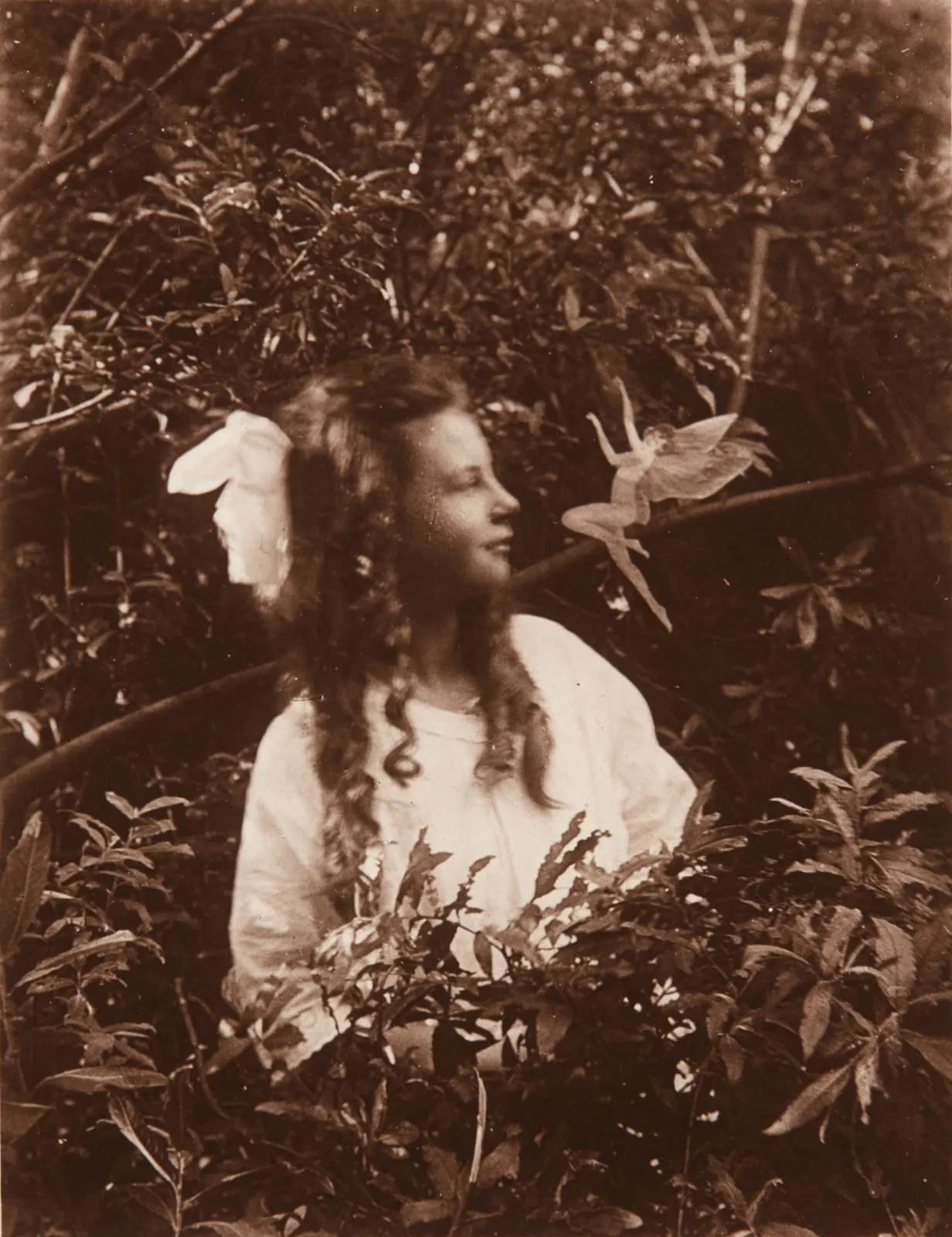
To put an end to what her father, Arthur Wright, considered childish nonsense, he lent Elsie his Midg quarter-plate camera, hoping to prove once and for all that nothing was there. Less than an hour later, the cousins returned with an exposed plate. Arthur developed it in his makeshift darkroom: there was Frances sitting in the grass, surrounded by four delicately posed, winged winged sprites dancing upon a sprig of hazel.
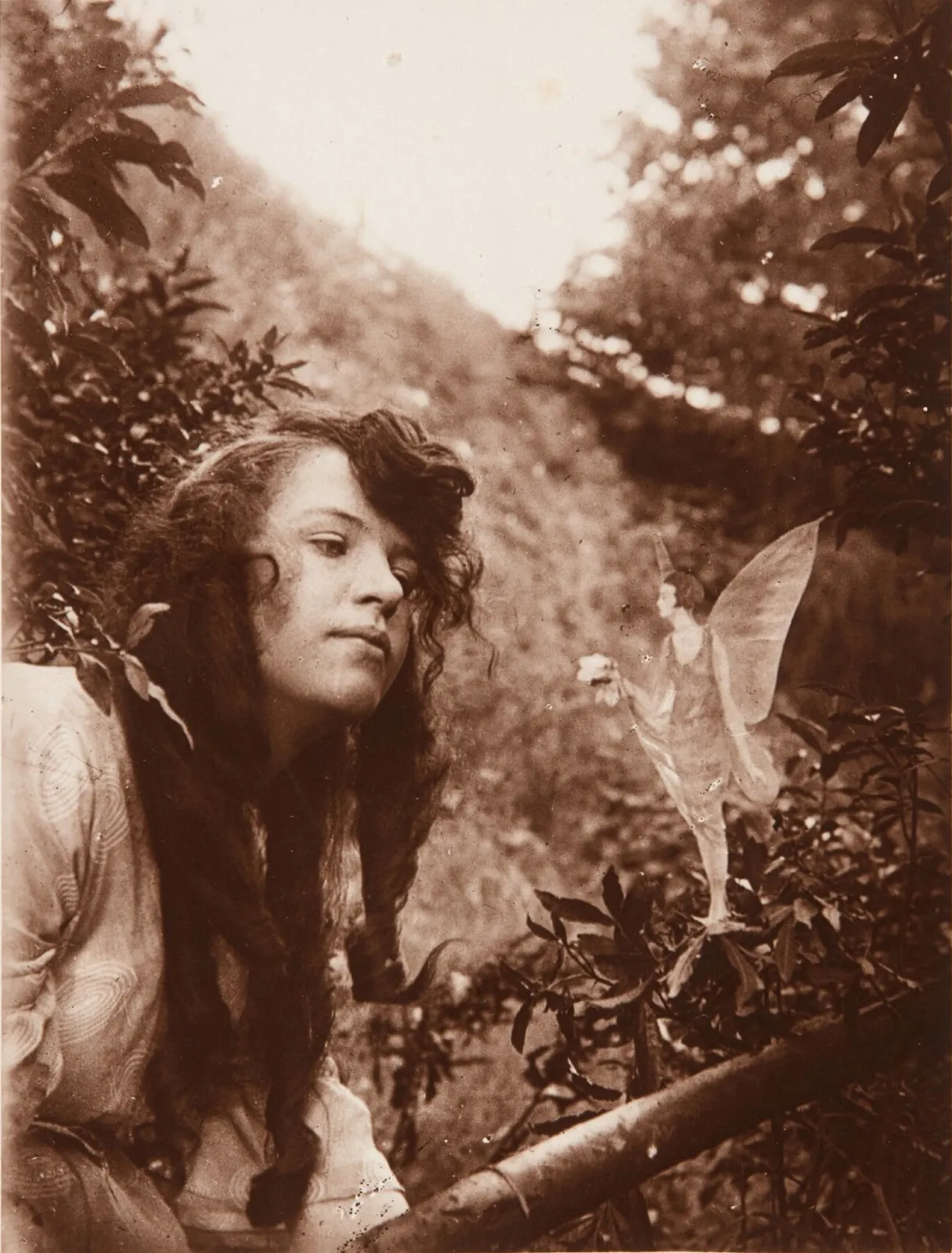
Arthur Wright, an amateur photographer knowledgeable in retouching and double exposures, dismissed the plate as a clever practical joke. He forbade the girls from borrowing his camera again. But two months later, in September 1917, the girls persuaded him once more, producing a second negative showing Elsie seated with a 45-centimeter gnome dancing on her outstretched cape. Arthur remained skeptical and locked the camera away.
The World After the Great War
What might have remained a quiet domestic prank took an unexpected turn in 1919. Polly Wright attended a lecture on occultism in Bradford and afterwards mentioned the photographs to the speaker. The plates quickly came into the hands of Edward Gardner, a prominent leader of the Theosophical Society in London.
Britain in the wake of the First World War was a nation steeped in profound grief. Millions of young men had perished in the trenches of France and Flanders, leaving grieving families desperate for reassurance of life beyond the grave. Spiritualism and theosophy flourished across all social classes. Gardner had duplicate prints made by photographic expert Harold Snelling, who concluded that the negatives were straight, single exposures made without double-printing or darkroom tampering.
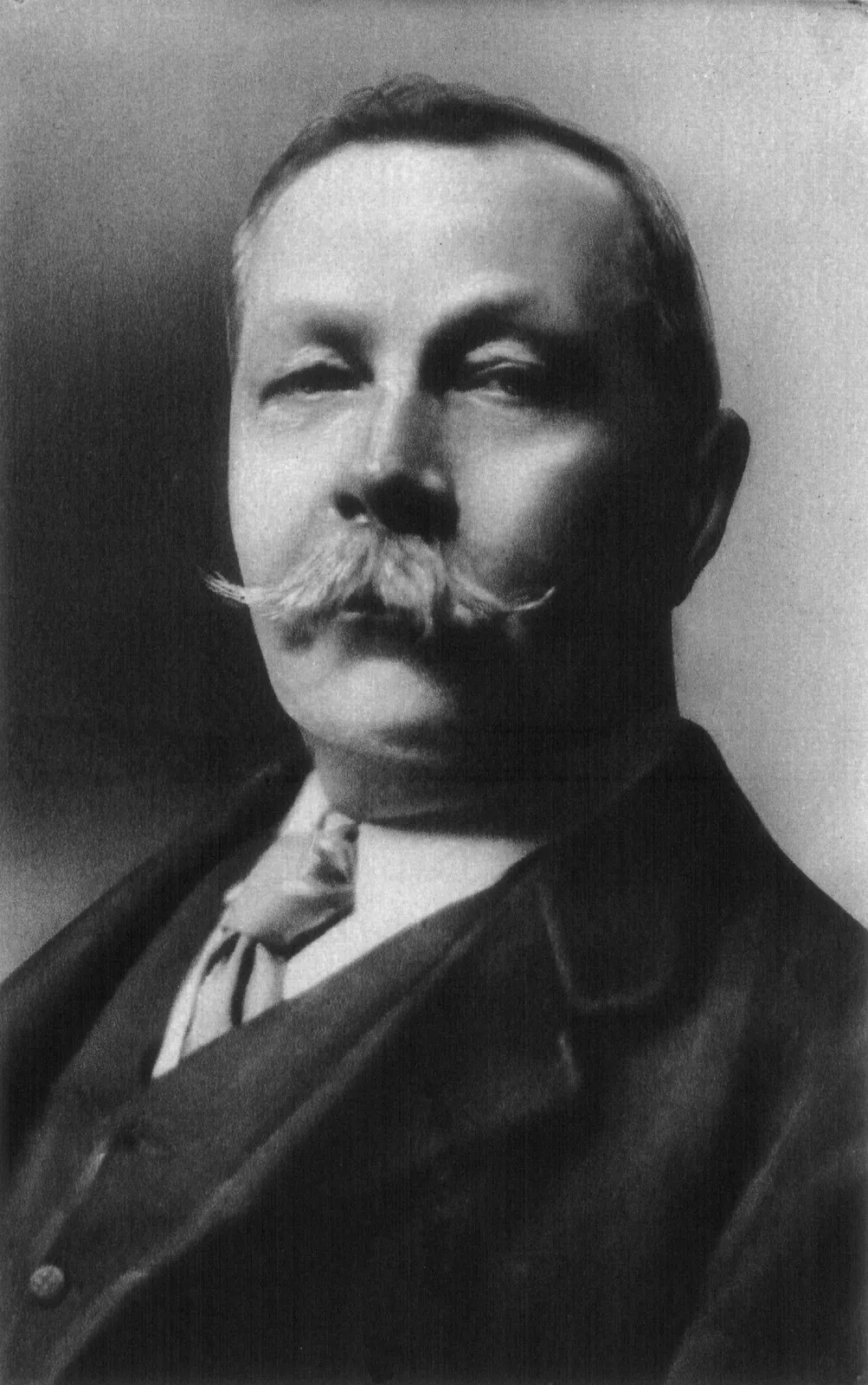
In the spring of 1920, the images reached Sir Arthur Conan Doyle. The creator of Sherlock Holmes was himself an ardent, impassioned spiritualist, having lost his son, brother, two brothers-in-law, and two nephews in the war. Doyle was preparing an article on fairy lore for the Christmas 1920 edition of The Strand Magazine—the very publication that had made Sherlock Holmes a global household name.
Doyle saw the photographs not as a curio, but as monumental, scientific proof that an invisible, benevolent spiritual plane coexisted alongside our material world.
The Strand Phenomenon and New Plates
Doyle commissioned Gardner to visit Cottingley in July 1920. Gardner presented the cousins with two state-of-the-art Cameo folding cameras and twenty secretly marked photographic plates, asking them to capture more evidence if the fairies returned.
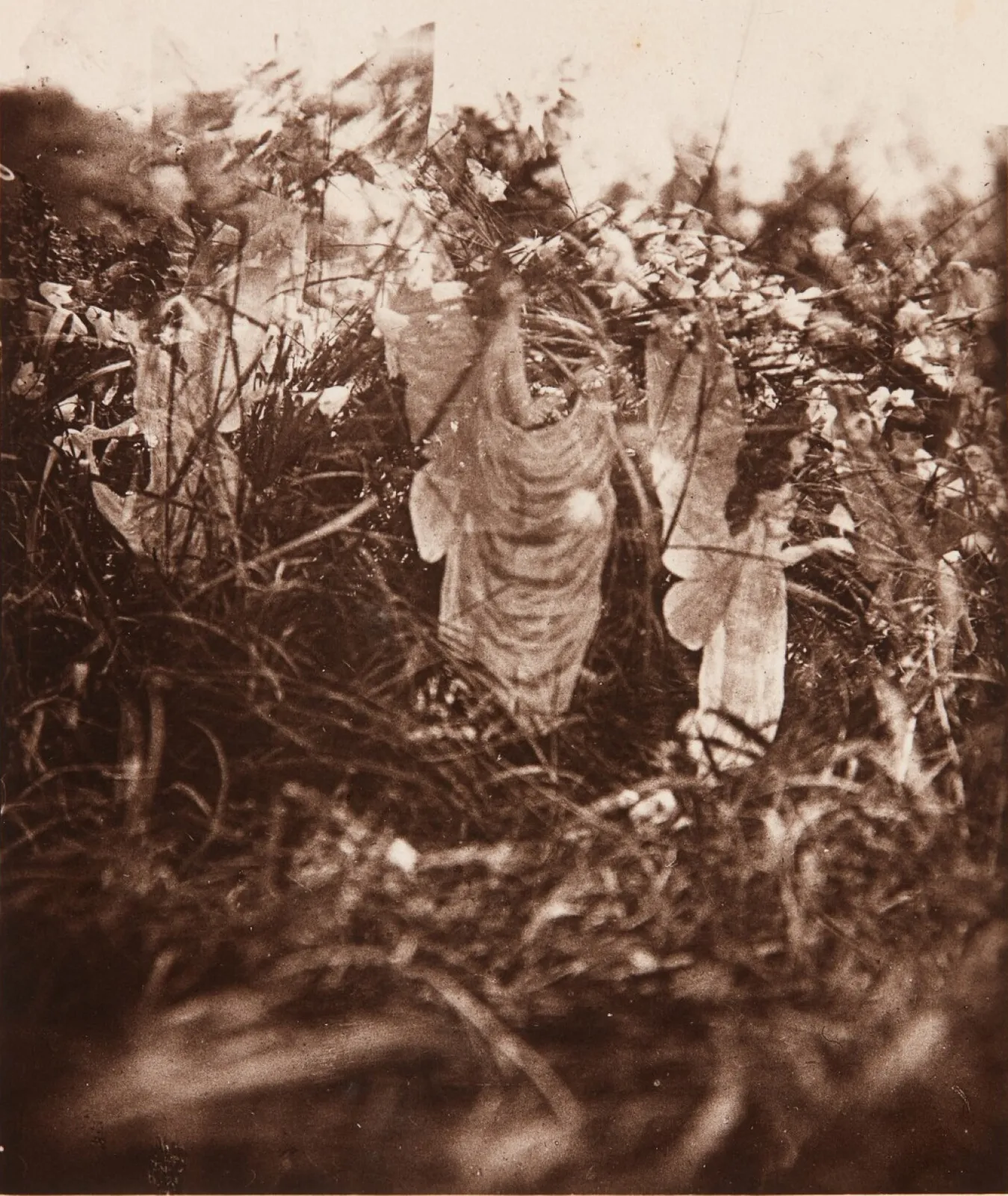
Left alone near the beck in August 1920, Elsie and Frances exposed several more plates. The resulting images—showing a fairy offering a posy of hare-bells, a fairy leaping toward Frances, and fairies basking in a sunbath—electrified Doyle.
The Christmas 1920 issue of The Strand Magazine sold out within days. Doyle proclaimed in its pages:
“The recognition of their existence will jolt the material twentieth-century mind out of its heavy ruts in the mud, and will make it admit that there is a glamour and a mystery to life.”
Public opinion split sharply. While thousands welcomed the revelation with romantic fervor, critics and optical specialists pointed out unsettling anomalies: the fairies sported contemporary Parisian hairstyles, their wings looked suspiciously like hat trimmings, and despite fluttering mid-air, their contours exhibited no motion blur whatsoever.
The Confession: Hatpins and Cardboard
For over sixty years, Elsie and Frances kept their secret, even as Doyle published his 1922 book The Coming of the Fairies. They grew up, married, and scattered to different continents.
It was not until the early 1980s—when investigative journalists and photographic historians tracked them down—that the full truth was revealed. In 1983, Elsie Wright admitted in a letter to researcher Joe Cooper that the first four photographs were entirely staged.
Elsie had copied illustrations of dancing girls from Claude Arthur Shepperson’s drawings in a popular 1914 children’s volume, Princess Mary’s Gift Book. She had traced the figures, drawn wings onto them, painted them, cut them out of stiff cardboard, and anchored them into the ground and foliage using common long steel hatpins. After the shutter clicked, the girls tossed the cutouts into the stream to destroy the evidence.
Why had they kept the charade going for so long? Elsie explained that they had only intended to play a trick on her father. But once the celebrated Sir Arthur Conan Doyle staked his public reputation and immense prestige on their innocence, two young schoolgirls felt unable to tell the truth without publicly humiliating one of the most beloved authors in the British Empire.
Curiously, Frances maintained until her death in 1986 that although the first four photographs were cutouts, the fifth photograph—The Fairy Bower—depicted genuine fairies they had truly seen in the glen. The cameras, original glass negatives, and original cutouts now reside in the National Science and Media Museum in Bradford—a permanent testament to how grief, hope, and the desire to believe can disarm even the most analytical minds.
What the Record Shows
11 sourced claims in this story, resting on 7 verified sources. Numbers link to the bibliography below.
- Two cousins fooled much of the world with fairy photographs, including Arthur Conan Doyle, the creator of Sherlock Holmes - sources: 2
- Elsie Wright, a teenager, and her young cousin Frances Griffiths took photographs that appeared to show fairies in Cottingley, England - sources: 3, 6
- The Cottingley fairy photographs came to the attention of Arthur Conan Doyle - sources: 8, 7
- Arthur Conan Doyle was writing an article on fairies for the Christmas edition of The Strand Magazine - sources: 8, 7
- Arthur Conan Doyle used the photographs in his article on fairies in The Strand Magazine - sources: 4
- Public reaction to the Cottingley fairy photographs was mixed; some accepted them as genuine and others believed they had been faked - sources: 6, 7
- Elsie Wright later confessed to the hoax - sources: 7, 8
- The fairies in the photographs were paper cutouts - sources: 7, 8, 6
- The fairies were copied from images in a children’s book, Princess Mary’s Gift Book - sources: 8, 2
- Arthur Conan Doyle believed the photographs were genuine and published a book about them, The Coming of the Fairies - sources: 5
- Frances Griffiths maintained until her death that one of the photographs was genuine - sources: 3
Archival Evidence & Picture Credits
- Cottingley Fairies Plate 1 (1917): Frances Griffiths with the alleged fairies at Cottingley beck. Photo by Elsie Wright. Public domain via Wikimedia Commons: File:Cottingley_fairies_1.jpg
- Cottingley Fairies Plate 2 (1917): Elsie Wright with winged gnome figure. Photo by Frances Griffiths. Public domain via Wikimedia Commons: File:Cottingley_fairies_2.jpg
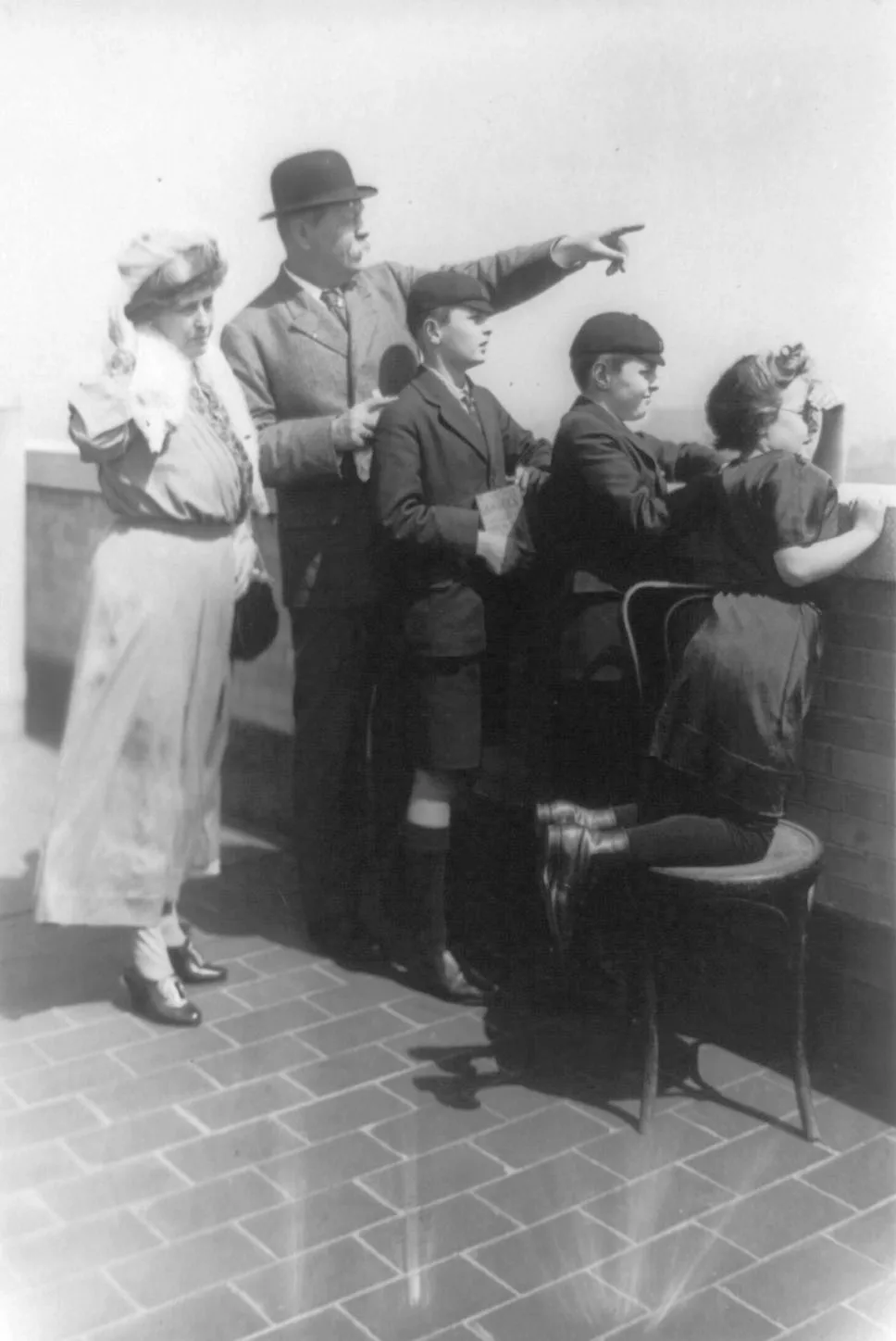
- Sir Arthur Conan Doyle & Family (1922): Bain News Service photographic archive. Public domain via Wikimedia Commons / Library of Congress: File:Sir_Arthur_Conan_Doyle_and_family.jpg


Verified Archival Sources & Bibliography
- Atlas Obscura: Photographic proof of fairies for sale
- BBC News: Cottingley Fairies print sells at auction
- University of Chichester: Sprites, spiritualists and sleuths
- Smithsonian Magazine: The Man Who Believed in Fairies
- Bradford Museums: Cottingley Fairies Archives
- History.com: Britain’s Great Fairy Hoax
- Historic UK: The Cottingley Fairies
Historical Connection Graph
A 2,000-Year-Old Bronze Lump Was the Oldest Known Analogue Computer
AJ. "How Two Young Cousins Fooled the Creator of Sherlock Holmes with Paper Fairies." Echoes of History Uncut. Last modified October 2, 2026. https://echoesofhistoryuncut.com/articles/cottingley-fairies-1917/.

An independent digital history publication and documentary studio reconstructing historical turning points through primary archives, official inquiries, and scholarly citations. Every factual claim in this dossier is cross-referenced to the numbered bibliography above.