
Machine Guns Against Emus: Australia's Emu War of 1932
In November 1932, three soldiers with two Lewis guns and 10,000 rounds were sent to the Western Australian wheatbelt to cull emus that were wrecking farmers' crops. The birds scattered into small groups, a gun jammed at the decisive moment, and the army withdrew twice. Bounties and fences, not machine guns, eventually did the job.

In this dossier (9 chapters) ▾
Historical Dossier: The Emu War Location: Campion district, Wheatbelt, Western Australia | Year: 2 November – 10 December 1932 | Key Figures: Major G. P. W. Meredith, Sergeant S. McMurray, Gunner J. O’Halloran, Defence Minister Sir George Pearce, Premier James Mitchell
Soldier-Settlers and a Wheat Crisis
After the First World War, the Australian government gave many returned servicemen land to farm in Western Australia, often in marginal country. When the Great Depression began in 1929, these farmers were encouraged to grow more wheat, with the government promising subsidies that never came. Wheat prices kept falling. By October 1932 the farmers were preparing to harvest while threatening to refuse to deliver the wheat.
Then the emus arrived. Emus migrate after their breeding season, moving from the inland towards the coast, and in 1932 an estimated 20,000 of them found the cleared farmland and its water supplies around Chandler and Walgoolan. They ate and trampled the crops and broke gaps in fences that let rabbits through. As one former Campion farmer told ABC News decades later, “it’s not what they eat, it’s what they flatten.”
The Minister Agrees
A deputation of ex-soldiers went to the Minister of Defence, Sir George Pearce. Having served in the First World War, they knew what machine guns could do, and they asked for them. Pearce agreed, on conditions: soldiers would operate the guns, the Western Australian government would pay for their transport, and the farmers would provide food, accommodation and payment for the ammunition. Historians have also suggested the government wanted to be seen helping Western Australian farmers at a time when the state was flirting with secession. A cinematographer from Fox Movietone went along.
Six Days in November
On 2 November 1932, Major G. P. W. Meredith of the Royal Australian Artillery’s Seventh Heavy Battery arrived at Campion with Sergeant S. McMurray and Gunner J. O’Halloran, two Lewis guns and 10,000 rounds of ammunition.
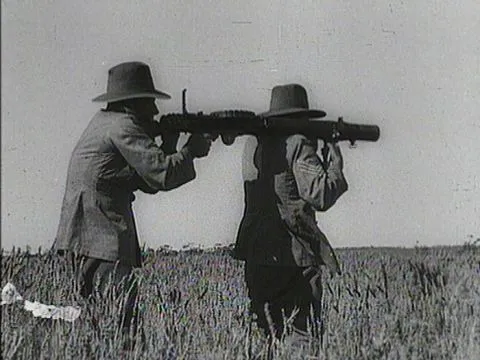
About 50 emus were sighted on the first day. They were out of range, so local settlers tried to herd them into an ambush, but the birds split into small groups and ran. Only a handful were killed.
On 4 November Meredith set an ambush near a dam, and more than 1,000 emus came towards it. The gunners waited until the birds were close before opening fire. Then a gun jammed. Only 12 birds had been killed, and the rest scattered.
Meredith even mounted a gun on a truck. It did not work: the truck could not keep up with the birds, and the ride was so rough that the gunner could not fire. By 8 November about 2,500 rounds had been fired. Nobody knows how many emus died. Estimates run from about 50 to 500, the highest figure coming from the settlers. Meredith reported that his men had suffered no casualties.
That same day, after mocking press coverage and questions in the House of Representatives, Pearce withdrew the soldiers and the guns.
“The Invulnerability of Tanks”
After the withdrawal, Meredith praised his opponents:
“If we had a military division with the bullet-carrying capacity of these birds, it would face any army in the world … They can face machine guns with the invulnerability of tanks. They are like Zulus whom even dum-dum bullets could not stop.”
He compared them to tanks in general. He did not mention Sherman tanks, which did not exist until the Second World War.
The Second Attempt
The emus kept coming, and the farmers asked again, citing heat and drought that drove the birds onto farms in their thousands. The Premier of Western Australia, James Mitchell, backed them. A report from the base commander said 300 emus had been killed in the first operation. By 12 November Pearce had approved a second attempt, and because Western Australia had no experienced machine gunners, Meredith went back.
The soldiers returned to the field on 13 November and killed about 40 emus in the first two days. By early December they were killing about 100 a week. Meredith was recalled on 10 December. He reported 986 confirmed kills from 9,860 rounds, and claimed that another 2,500 wounded birds had died of their injuries. Historians treat that last figure with suspicion: Greg Beyer wrote that it “is highly disputed and is likely to be very inflated.”
Who Won?
The press decided quickly. The federal Labor MP A. E. Green suggested any medals should go to the emus, who had “won every round so far”, and Pearce picked up the unofficial title “Minister for the Emu War”. Ornithologist Dominic Serventy later wrote that “the Emu command had evidently ordered guerrilla tactics”, splitting into “innumerable small units that made use of the military equipment uneconomic.”
The farmers asked for the army again in 1934, 1943 and 1948 and were refused each time. Instead, a bounty system that had begun in 1923 continued, and it worked: 57,034 bounties were claimed in six months in 1934. Exclusion fences kept emus, dingoes and rabbits off farmland.
So did Australia “lose a war to birds”? The jokes write themselves, and they have been told for 90 years. The more accurate summary is less funny: a small military cull was sent to solve a farm crisis that was really about the Depression, the price of wheat and broken promises, and it did not work.
What the Record Shows
7 sourced claims in this story, resting on 3 sources. Numbers link to the bibliography below.
- About 20,000 migrating emus damaged wheat farms in Western Australia in 1932 - sources: 1, 2, 3
- Major Meredith, Sergeant McMurray and Gunner O’Halloran arrived at Campion on 2 November 1932 with two Lewis guns and 10,000 rounds - sources: 1, 3
- On 4 November a gun jammed during an ambush on about 1,000 emus, after only 12 had been killed - sources: 1, 2
- About 2,500 rounds were fired before the withdrawal on 8 November; estimates of emus killed range from about 50 to 500 - sources: 1, 2, 3
- Meredith said the emus could “face machine guns with the invulnerability of tanks” - sources: 1, 3
- The operation resumed on 12-13 November and ended on 10 December, with Meredith claiming 986 confirmed kills - sources: 1, 2
- Later requests for military help were refused; bounties and fences were used instead - sources: 1, 3
Archival Evidence & Picture Credits
Every image on this page was checked against its Wikimedia Commons file page.
- Two soldiers, very likely McMurray and O’Halloran, with a Lewis gun during the Emu War, 1932 (public domain) - Wikimedia Commons file page

Verified Archival Sources & Bibliography
Every claim in this account has been checked against the sources below:
- Wikipedia: Emu War (reference, citing contemporary newspapers on Trove)
- ABC News: Australia’s Emu War spawns feature film, jokes and memes 90 years on (10 December 2022) (journalism)
- Australian Geographic: Looking back: Australia’s Emu Wars (journalism)
Echoes of History Uncut. "Machine Guns Against Emus: Australia's Emu War of 1932." Echoes of History Uncut. Last modified October 13, 2026. https://echoesofhistoryuncut.com/articles/great-emu-war/.

An independent history publication using AI-assisted research, drafting and production. Consult each article’s citations and limitations; source inclusion does not establish independent verification of every claim.
▶
Watch the Complete Archival Documentary on YouTube
Subscribe to Echoes of History Uncut on YouTube for full widescreen 16:9 documentaries, primary archival footage, and declassified deep dives.