
A Drug Lord Smuggled 4 Hippos Into Colombia. Now There Are Hundreds.
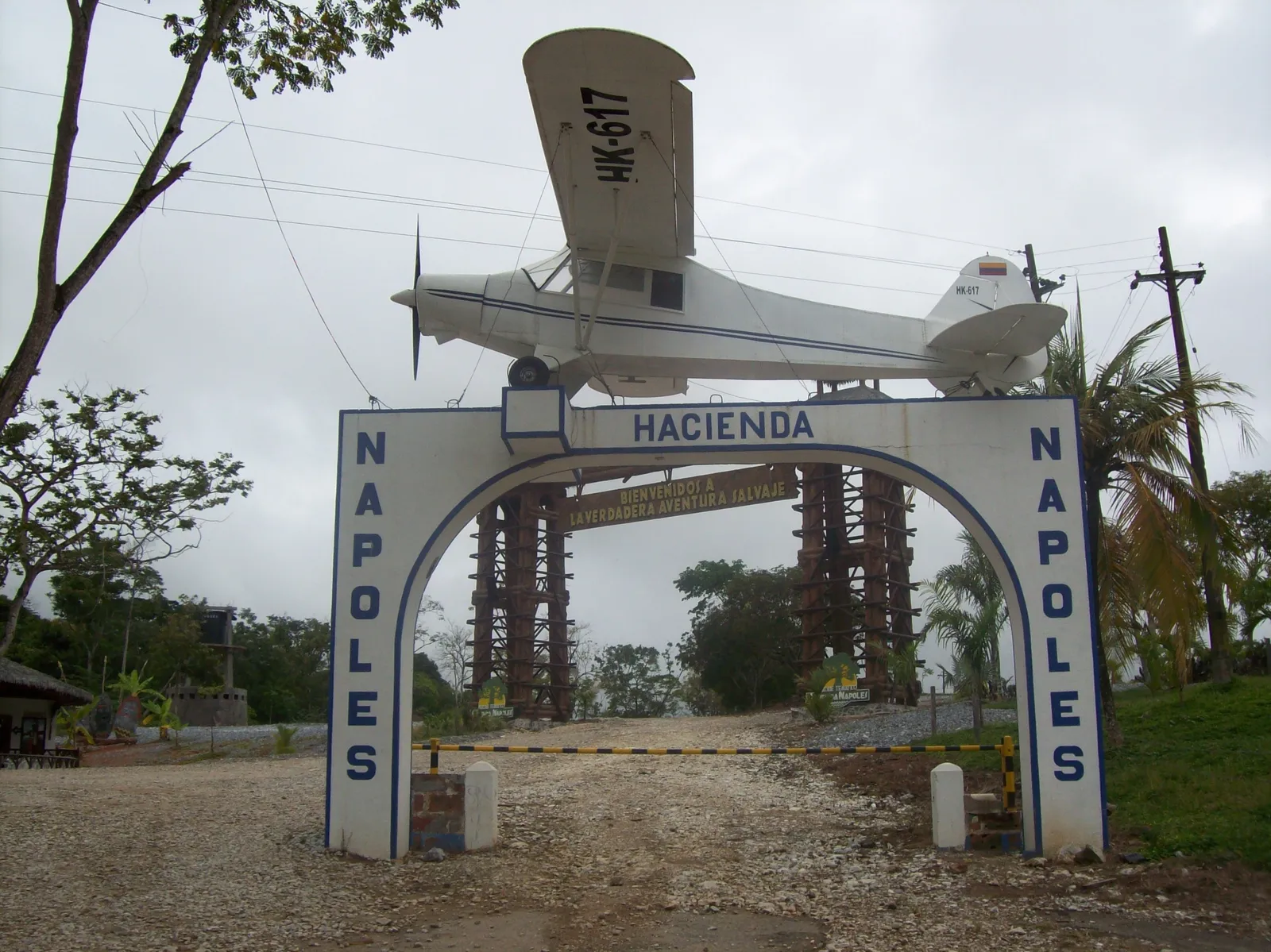
In 1981, Medellín cartel kingpin Pablo Escobar illegally smuggled four African hippopotamuses into Colombia to populate his private zoo at Hacienda Nápoles. Following Escobar's death in a 1993 rooftop shootout, government authorities seized the estate and distributed the exotic wildlife—yet the massive, aggressive hippos were deemed impossible to capture and abandoned to roam free. Finding the lush Magdalena River basin an ecological paradise devoid of droughts or apex predators, the original four multiplied into over two hundred feral giants, creating the largest invasive megagenera crisis on Earth.
In this dossier (10 chapters) ▾
Historical Dossier: Pablo Escobar’s Hippos Location: Hacienda Nápoles and the Magdalena River basin, Colombia | Year: 1981–present | Key Figures: Pablo Escobar, the descendants of four hippopotamuses
A Private Zoo
In 1981 the drug lord Pablo Escobar imported four hippopotamuses, three females and one male, to his estate, Hacienda Nápoles, in Colombia. They came from a wildlife facility in Texas. Escobar had built a private zoo on his property, and the hippos were among its most unusual exhibits.
Escobar was killed in 1993. His estate was abandoned and the authorities moved most of the animals elsewhere. The hippos were hard to move, and they were left behind. They went into the lakes and then into the rivers of the surrounding country.
A Population Explosion
Hippos had no natural enemies in Colombia, and plenty of food and water. In 2007 there were about 16. By 2014 there were around 40, by 2019 between 90 and 120, and by 2023 between 181 and 215. Colombian hippos mature earlier than their African relatives, and experts have warned that the population could reach thousands within a few decades.
What They Do to the Rivers
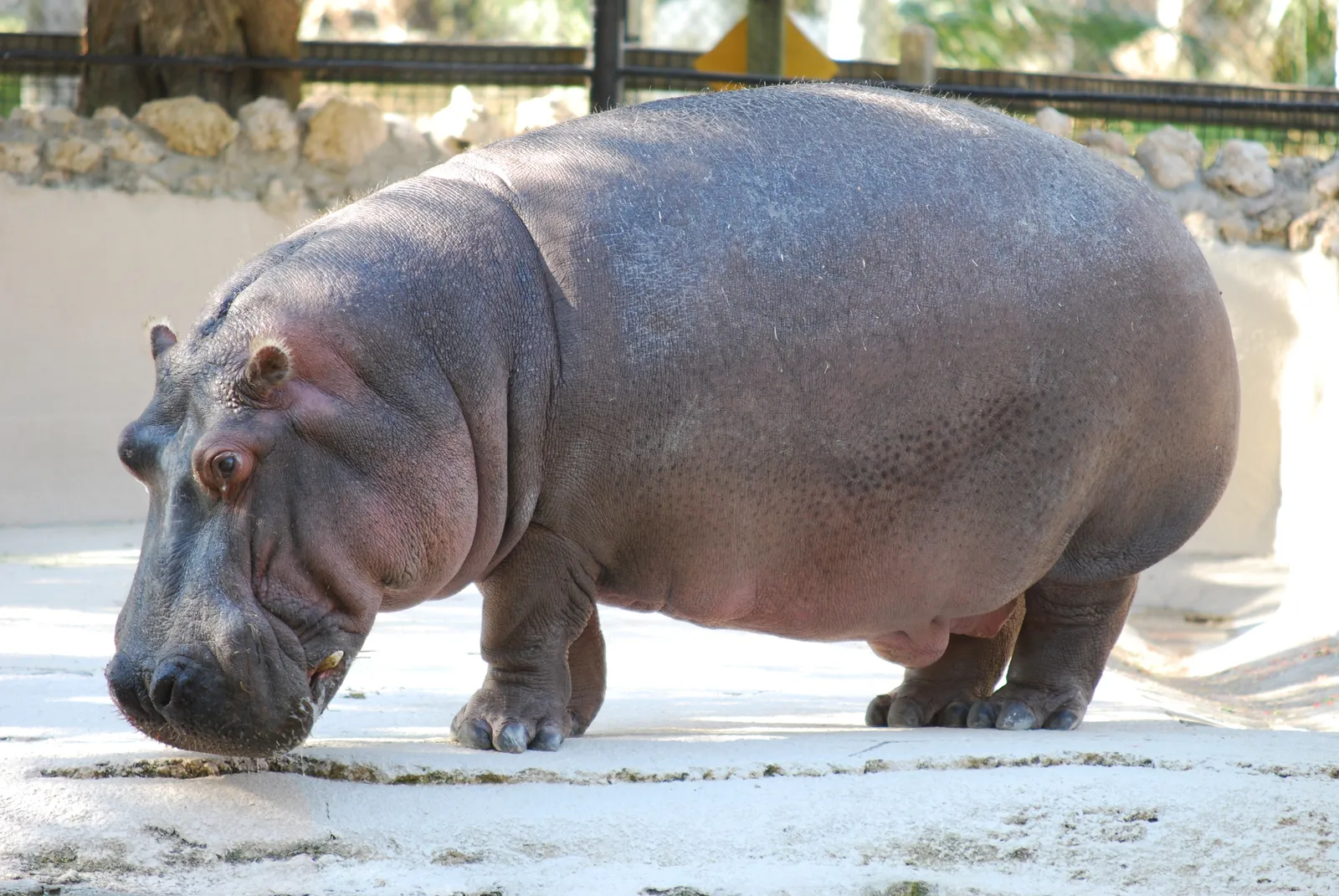
The harm is not only a matter of large animals in unexpected places. The hippos move up to 750 kilograms of carbon and nutrients a year from the land into the water, by grazing on grass at night and defecating in the rivers by day. This raises the nutrient levels in the water and feeds cyanobacteria, which cause algal blooms. Their movement reshapes riverbeds, and they damage the nursery habitats of native species, including West Indian manatees, neotropical otters, caimans and endangered turtles.
There is also the risk to people who live along the rivers. Hippos are among the most dangerous large animals in Africa, and the animals in Colombia have lost the shyness that wild herds show.
Hard Choices
Controlling the herd has been hard. In 2017 a male was castrated, at a cost of about $50,000. In 2021 officials began using a chemical sterilisation vaccine, GonaCon. In 2023 a plan was proposed to move 70 hippos to India and Mexico, and the Indian billionaire Anant Ambani offered to house some at his private facility. In April 2026 the government approved the killing of more than 80 hippos.
The First Culling and the Photograph
By 2007 the hippos had multiplied to 16, roaming for food in the nearby Magdalena River. In 2009 the authorities tried the first control measure. On 18 June 2009 a hippo named Pepe was killed by government-authorised hunters. A photograph of the dead animal, surrounded by 15 armed men, became public and led to protests by animal-rights campaigners at the Colombian Environment Ministry.
The public reaction mattered. It showed that the hippos, however damaging, had admirers, and that any decision to kill them would be contested. Since then the authorities have favoured sterilisation and relocation, which are slower and more expensive.
Where the Herd Is Now
By early 2014 about 40 hippos lived around Puerto Triunfo, in Antioquia. In December 2019 estimates were 90 to 120 animals ranging over about 2,250 square kilometres. A 2023 study found between 181 and 215, and warned that the number could reach thousands within a few decades.
In March 2023 Colombia proposed moving at least 70 hippos to India and Mexico. On 13 April 2026 the Ministry of Environment approved the euthanasia of more than 80 of them, with an investment of 7.2 billion pesos. The Indian billionaire Anant Ambani then offered to transport and house the animals in India.
An Argument Without an Easy Side
The case divides people in an unusual way. To scientists, the hippos are an invasive species whose numbers will only grow. To some local people they are a tourist attraction and a source of pride, a strange souvenir of a dark period. To animal-welfare groups, the idea of killing animals brought to Colombia by a criminal is unacceptable.
All of these positions are held in good faith. What nobody disputes is that four animals became a population of about two hundred in forty years, and that the longer the decision is delayed, the larger and more costly the problem becomes.
What the Record Shows
8 sourced claims in this story, resting on 6 primary and historical records. Numbers link to the bibliography below.
- Pablo Escobar illegally smuggled four African hippos (one male, three females) into Hacienda Nápoles in 1981 - sources: 1, 2
- After Escobar’s death in 1993, the hippos were abandoned because they were too dangerous and costly to capture - sources: 1, 3
- The hippos escaped into the Magdalena River basin, thriving in a warm climate free of African seasonal droughts - sources: 3, 4
- With no natural predators, females began reproducing at earlier ages and breeding continuously - sources: 3, 5
- The wild population expanded past 170–200 individuals and is modeled to reach over 1,000 by 2035 without culling - sources: 3, 4
- Massive fecal deposits alter freshwater oxygenation and fuel toxic algae blooms, harming native fish and manatees - sources: 5, 6
- The hunting of an escaped bull hippo named Pepe in 2009 caused public protests that halted government culling - sources: 1, 2
- Colombia’s Ministry of Environment officially declared the hippopotamus an invasive species in 2022 - sources: 1, 6
Archival Evidence & Picture Credits
Every image on this page was checked against its Wikimedia Commons file page.
- The entrance gate of Hacienda Nápoles, topped by an aircraft associated with Escobar’s smuggling (Wikimedia Commons) - Wikimedia Commons file page
- An African hippopotamus (Hippopotamus amphibius), photographed at a wildlife park in Florida (Wikimedia Commons) - Wikimedia Commons file page
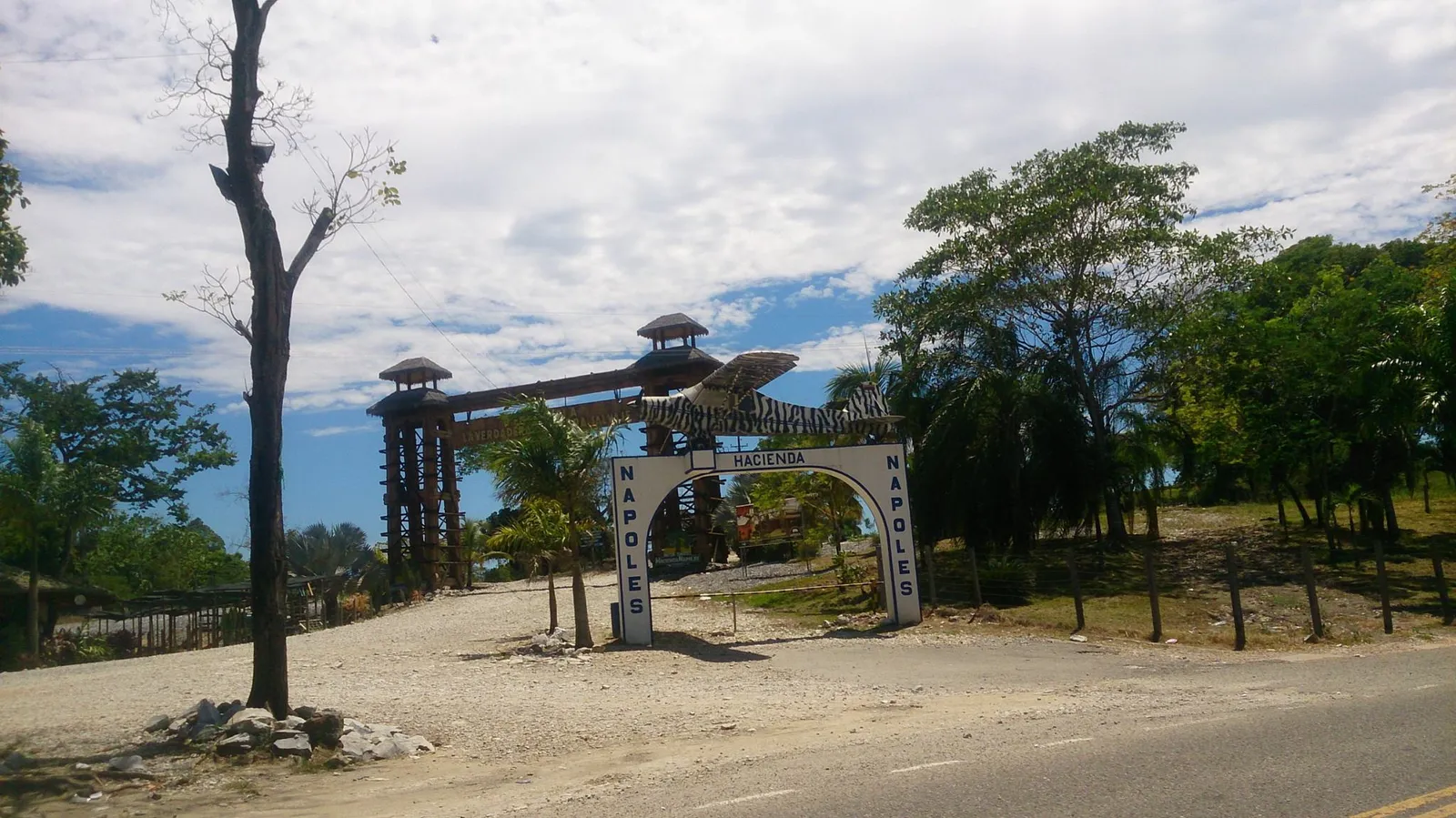
- The lakes and savanna landscape at the Hacienda Nápoles theme park (Wikimedia Commons) - Wikimedia Commons file page
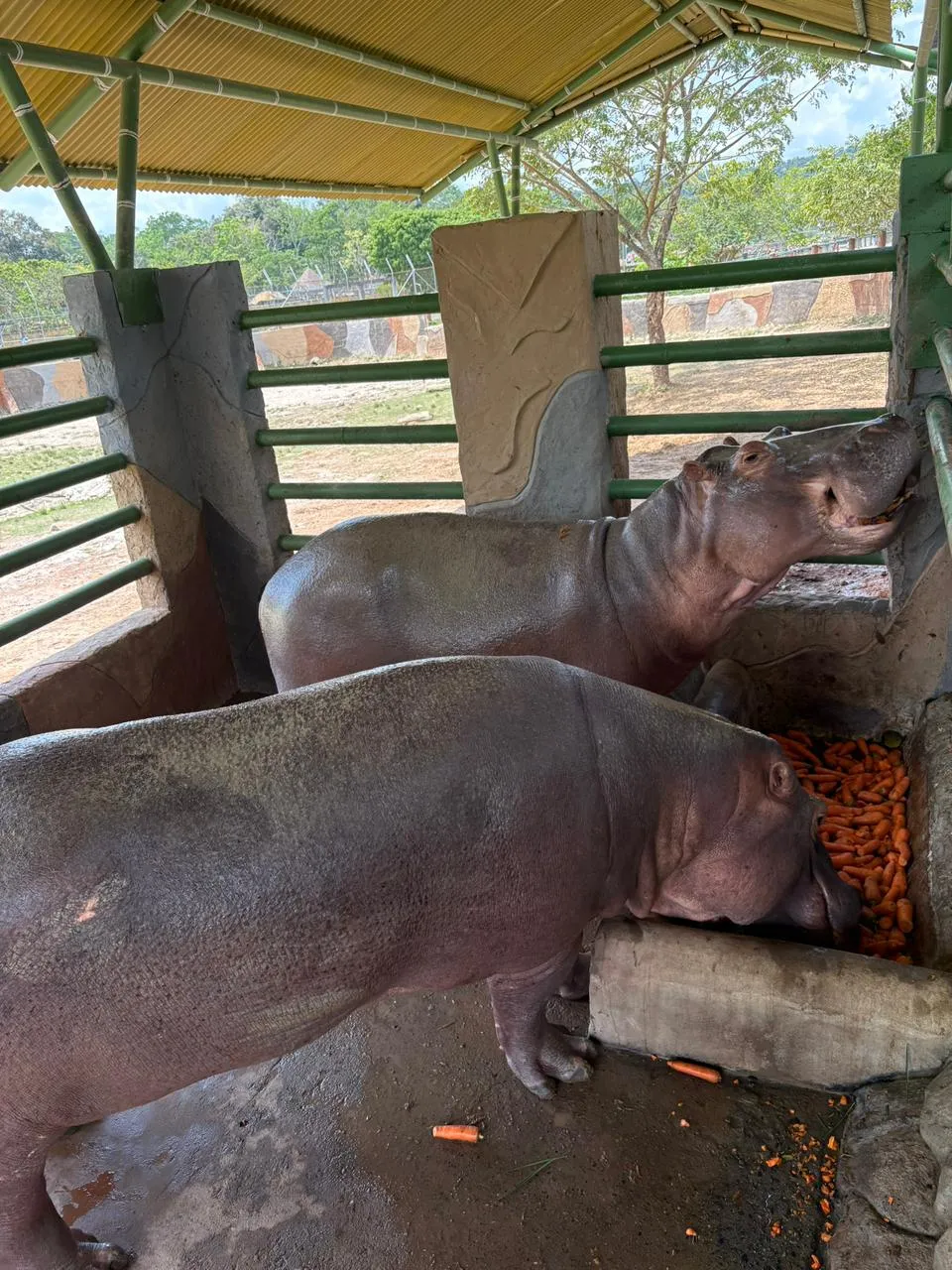
- Hippo habitat at Hacienda Nápoles, where Escobar’s herd was first kept (Wikimedia Commons) - Wikimedia Commons file page


Verified Archival Sources & Bibliography
Every claim in this account has been fact-checked against primary archives and scholarly repositories:
- Wikipedia: Hippopotamuses in Colombia (reference)
- Internet Archive: Killing Pablo: The Hunt for the World’s Greatest Outlaw (Mark Bowden) (book)
- Biological Conservation: A Hippo in the Room: Predicting the Expansion and Ecological Impacts of an Invasive Megaherbivore in Colombia (academic)
- Nature: The Fight Over Colombia’s Cocaine Hippos (academic)
- Ecology: Introduced Hippos Alter the Chemistry and Ecology of Carbon in Aquatic Systems (academic)
- Ministerio de Ambiente y Desarrollo Sostenible (Colombia): Resolución sobre Especies Invasoras: Hippopotamus amphibius (primary)
Historical Connection Graph
A Whole Town Faked Wild West Shootouts for Tourists
AJ. "A Drug Lord Smuggled 4 Hippos Into Colombia. Now There Are Hundreds.." Echoes of History Uncut. Last modified September 14, 2026. https://echoesofhistoryuncut.com/articles/escobar-hippos/.

An independent digital history publication and documentary studio reconstructing historical turning points through primary archives, official inquiries, and scholarly citations. Every factual claim in this dossier is cross-referenced to the numbered bibliography above.