
The Worst Industrial Disaster in History Happened While a City Slept.
On the night of December 2–3, 1984, over forty tons of lethal methyl isocyanate gas erupted from an American-owned Union Carbide pesticide factory in Bhopal, India. Carried by cool midnight winds, the heavier-than-air toxic plume enveloped densely populated shantytowns surrounding the plant while families slept. Within hours, thousands suffocated in agonizing blindness. Over five hundred thousand survivors suffered permanent respiratory and ocular damage, making Bhopal the deadliest industrial catastrophe in human history.

In this dossier (15 chapters) ▾
- 01 A Pesticide Plant in the City
- 02 The Night of 2–3 December 1984
- 03 The Toll
- 04 What Caused It?
- 05 A Plant in Decline
- 06 Warnings
- 07 The Night, Hour by Hour
- 08 A City Unprepared
- 09 Settlement and Afterwards
- 10 Justice
- 11 The Site Today
- 12 Why It Is Remembered
- 13 What the Record Shows
- 14 Archival Evidence & Picture Credits
- 15 Verified Archival Sources & Bibliography
Historical Dossier: The Bhopal Gas Disaster Location: Bhopal, Madhya Pradesh, India | Year: 2–3 December 1984 | Key Figures: Union Carbide India Limited, Warren Anderson, Keshub Mahindra, the survivors of Bhopal
A Pesticide Plant in the City
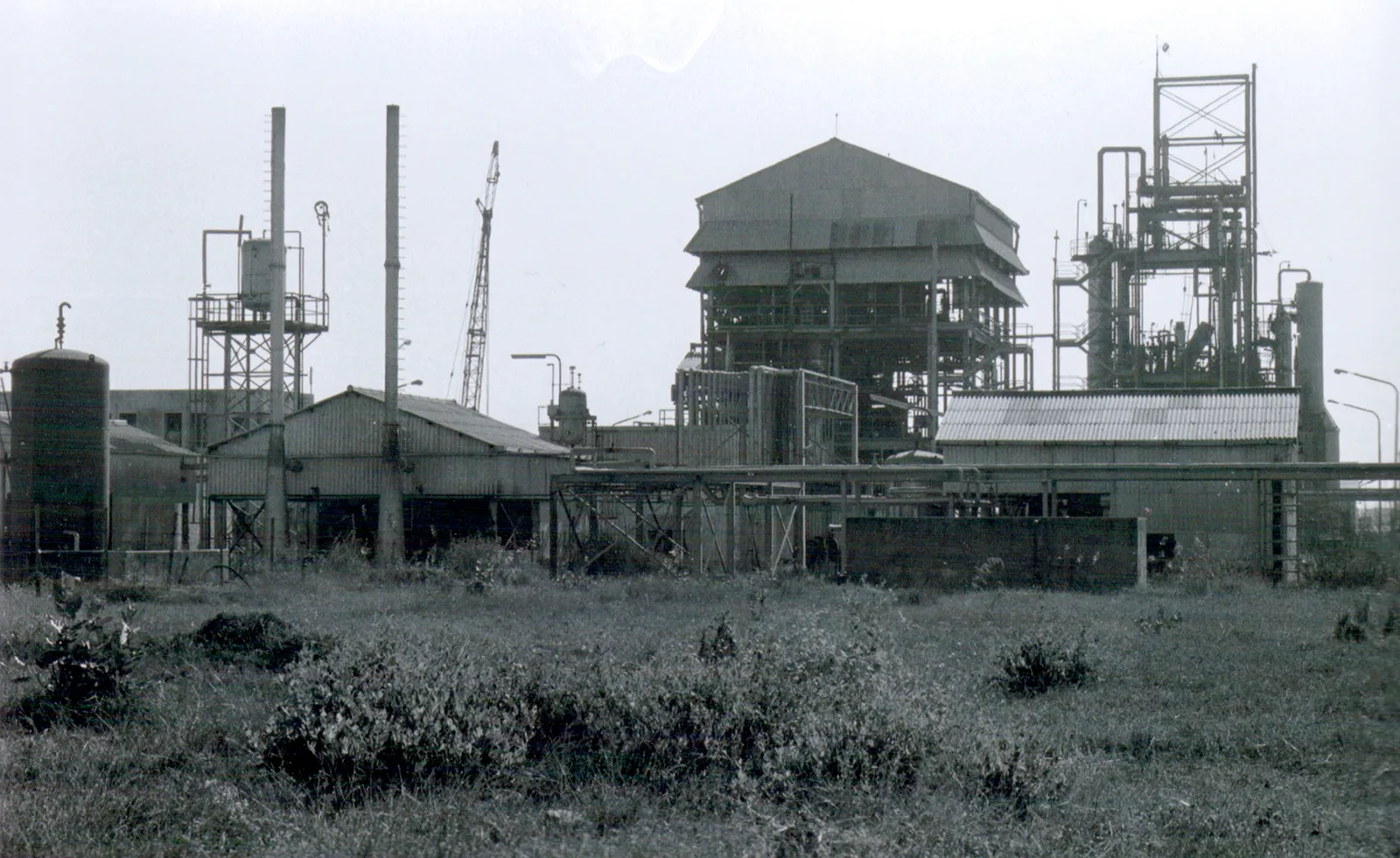
In the 1980s a pesticide plant owned by Union Carbide India Limited stood on the edge of Bhopal, in the middle of India. It made carbaryl, an insecticide, using methyl isocyanate, or MIC, a highly toxic chemical. The plant was surrounded by neighbourhoods where many thousands of people lived, many of them poor.
The Night of 2–3 December 1984
On 2–3 December 1984, water entered a storage tank, E610, holding MIC. The result was a runaway exothermic reaction. Within 45 to 60 minutes, about 30 tonnes of toxic gas escaped from the tank and drifted southeast across the city while people slept.
The plant’s safety systems were meant to prevent just such an escape, and they did not work. The refrigeration system had been shut down since January 1982. The flare tower was under maintenance, and was too small in any case. The vent gas scrubber lacked sufficient caustic soda and power. The alarm systems had been disconnected years earlier. The plant’s public warning siren was “quickly turned off, as per company procedure meant to avoid alarming the public.”
The Toll
The numbers are uncertain and disputed. The official figure for immediate deaths was 2,259. The government of Madhya Pradesh later confirmed 3,787 deaths related to the release. Independent estimates say that “8,000 died within two weeks” and that “another 8,000 or more” died later of gas-related diseases. More than 500,000 people were exposed. A 2006 government affidavit spoke of 558,125 injuries, including 3,900 severely disabling cases.
The survivors suffered respiratory disease, eye damage, neurological problems, and an increase in birth defects. A 2014 report said that 120,000 to 150,000 survivors were still struggling with serious medical conditions.
What Caused It?
Two explanations have been put forward, and neither was proved. One is corporate negligence. On this view the company had underinvested in safety, and conditions at the plant had deteriorated. Workers, it is said, were cleaning pipes with water when it leaked into the tank through faulty valves.
The other is sabotage. Union Carbide has argued that a disgruntled employee deliberately connected a water hose to the tank. A report by Arthur D. Little, commissioned by the company, said that this was more likely than an accident. India’s Central Bureau of Investigation did not “successfully demonstrate” either account.
A Plant in Decline
The Bhopal plant began making the pesticide Sevin in 1969, and in 1979 it began making methyl isocyanate itself. By the early 1980s the demand for pesticides had fallen significantly, but production went on, and unused MIC built up on the site. The economic pressure led to cost-cutting that weakened the safety measures.
A safety audit in May 1982 found “a total of 61 hazards, 30 of them major and 11 minor in the dangerous phosgene/methyl isocyanate units.” Union Carbide never sent a follow-up team to check that they had been put right. By 1984 only six of the original twelve MIC operators were still employed, the supervisory staff had been halved, and there was no maintenance supervisor on the night shift. Instrument readings, once taken every hour, were now taken every two hours.
Warnings
The plant had leaked before. In December 1981 a worker exposed to phosgene died 72 hours later. In January 1982 a phosgene leak affected 24 workers who had no protective equipment. In February 1982 an MIC leak affected eighteen workers, and in August and October that year other MIC incidents caused severe chemical burns. Through 1983 and 1984 MIC, chlorine, monomethylamine, phosgene and carbon tetrachloride leaked again and again, sometimes together.
The Night, Hour by Hour
Water entered tank E610 during pipe-clearing work late in the evening. At 10:30 p.m. the pressure in the tank was a normal 2 psi. Half an hour later it had risen to 10 psi. By 11:30 p.m. workers could smell a little MIC. Management did not act until after a tea break at 12:15 a.m.
After the break ended, at 12:40 a.m., the reaction ran out of control. The temperature went past safe limits and the pressure reached 55 psi, in spite of venting to the atmosphere. Three safety systems failed. The refrigeration unit had been shut down in January 1982, and its freon was removed in June 1984. The flare tower was undersized and under maintenance. The vent scrubber had been turned off and had too little caustic soda.
About 30 tonnes of MIC escaped within 45 to 60 minutes, and the total rose to about 40 tonnes within two hours, drifting southeast across densely populated districts.
A City Unprepared
Bhopal’s hospitals did not know what they were dealing with. Doctors thought at first that it was ammonia, then phosgene, and learned only later that the gas was MIC, a chemical most of them had never heard of, and for which there was no known antidote. Nearly 70 percent of the doctors in the worst-hit areas were not fully qualified. There were mass funerals and cremations.
Warren Anderson, the chairman of Union Carbide, arrived in India on 4 December 1984. He was put under house arrest, and was released within six hours on bail of $2,100. Later accounts attributed his release to the direction of state officials.
Settlement and Afterwards
The settlement of 1989 provided $470 million, about $1.03 billion in 2024 dollars, to be distributed immediately. In 2001 Dow Chemical acquired Union Carbide, and took on the continuing disputes over cleaning up the soil and groundwater at the abandoned site.
Justice
In February 1989 Union Carbide agreed to pay $470 million. In 2010 seven Indian employees of UCIL, among them its former chairman Keshub Mahindra, were convicted of negligence and sentenced to two years in prison. Warren Anderson, the chief executive of Union Carbide’s American parent, was declared a fugitive from justice and died in 2014 at 92, without having stood trial.
For many survivors and campaigners, the money and the sentences were not enough, and the question of who was responsible for the disaster, and who should pay for the clean-up, has never been fully answered.
The Site Today
The factory is abandoned, and the site remains contaminated with toxic compounds, including mercury, chromium and pesticide residues.
Why It Is Remembered
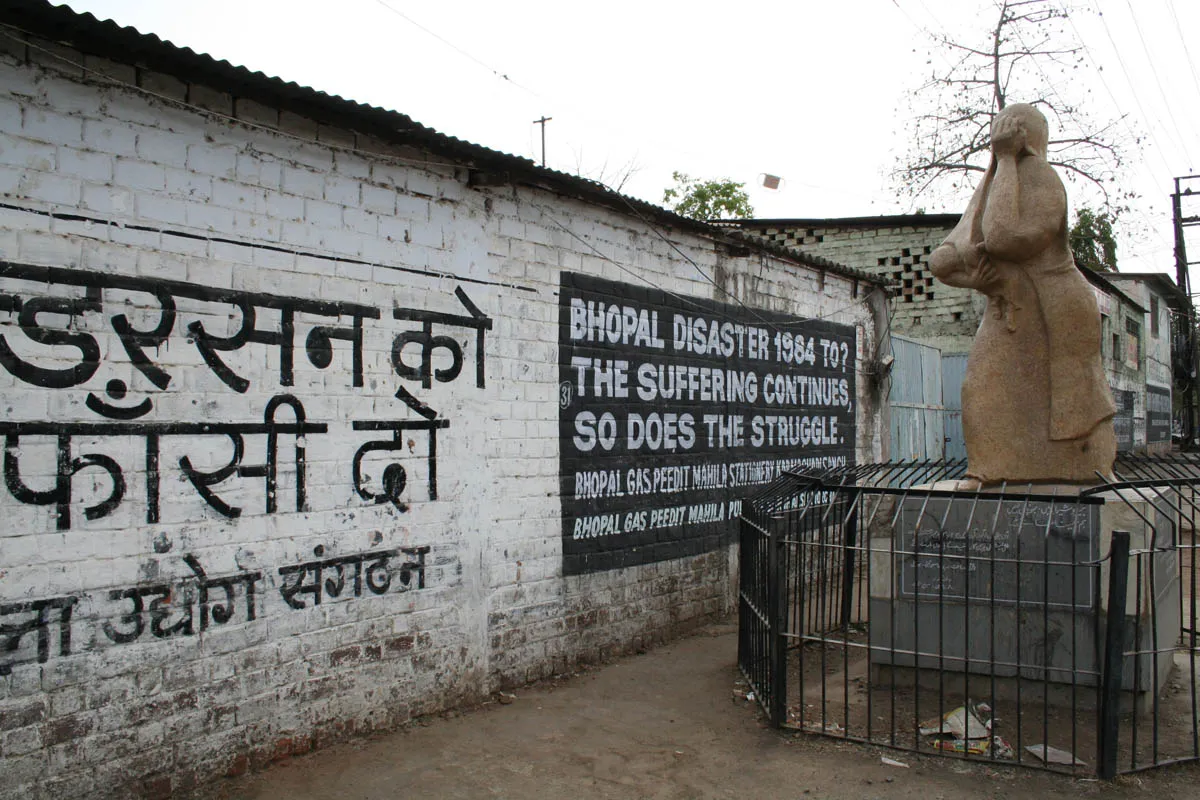
Bhopal is often called the worst industrial disaster in history. It is remembered because of its scale, but also because it was not unavoidable. The plant’s safety systems were out of action, and the warnings were not sounded. Decades later, the people who lived through that night and their children are still living with the consequences.
What the Record Shows
8 sourced claims in this story, resting on 5 primary and historical records. Numbers link to the bibliography below.
- On December 2–3, 1984, over 40 metric tons of methyl isocyanate gas leaked from the Union Carbide plant in Bhopal - sources: 1, 2
- Water ingress into underground Tank 610 provoked a runaway exothermic chemical reaction - sources: 2, 3
- Critical safety systems including the refrigeration unit, scrubber, and flare tower were inactive due to cost cuts - sources: 1, 4
- The heavier-than-air toxic gas cloud remained close to the ground and drifted into dense residential bustees - sources: 2
- Official government registries recorded 3,787 immediate deaths, while municipal and medical estimates exceed 15,000–20,000 - sources: 1
- Over 550,000 people were treated for severe acute and permanent pulmonary, ophthalmic, and immunological trauma - sources: 6
- CEO Warren Anderson was charged with culpable homicide, posted bail, fled India, and evaded extradition until his death - sources: 1, 4
- Thousands of metric tons of hazardous organochlorine residues continue to contaminate groundwater around the abandoned site - sources: 1, 6
Archival Evidence & Picture Credits
Every image on this page was checked against its Wikimedia Commons file page.
- The Union Carbide pesticide factory in Bhopal, photographed in 1985 (Wikimedia Commons) - Wikimedia Commons file page
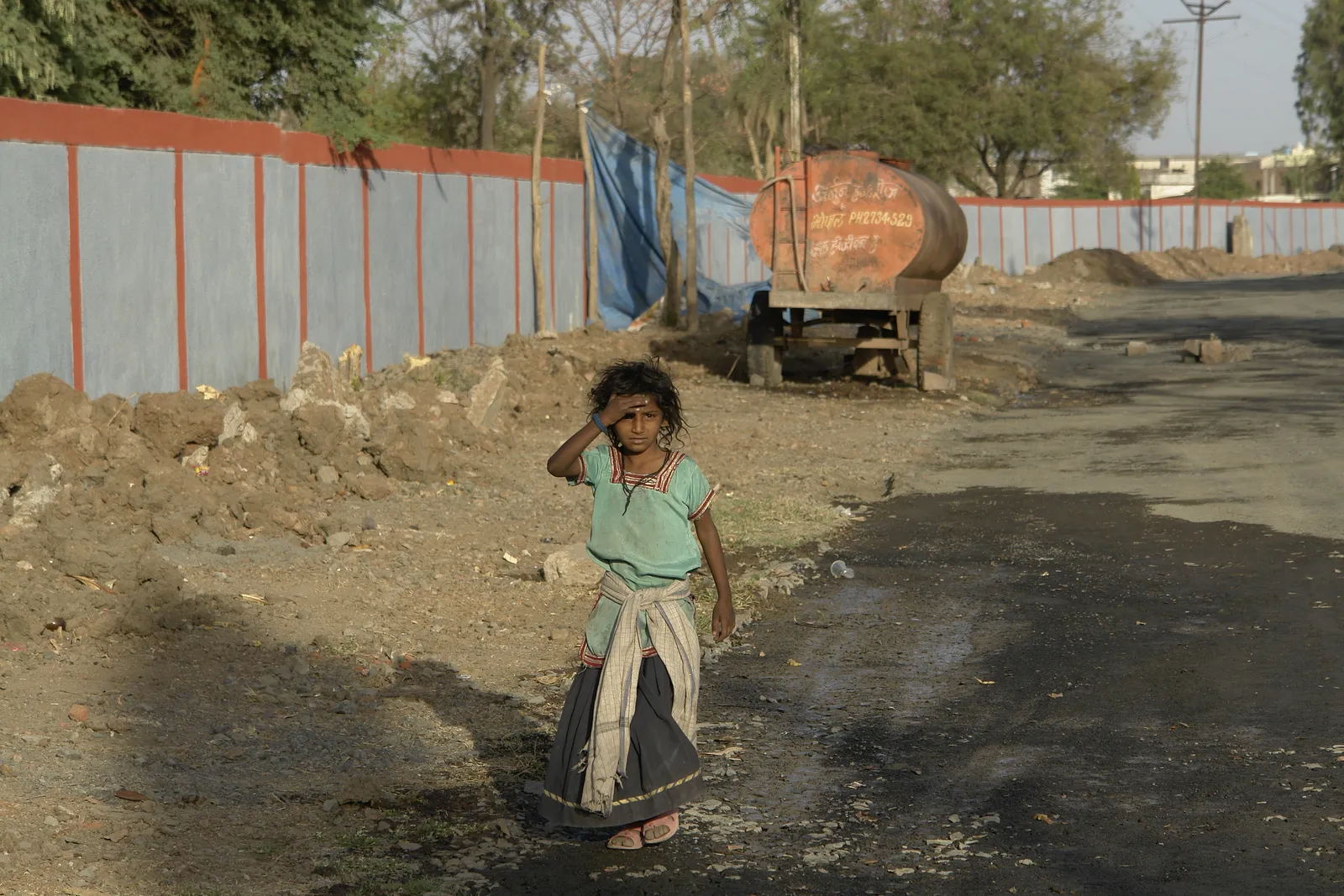
- A young girl near the abandoned Union Carbide factory in Bhopal (Wikimedia Commons) - Wikimedia Commons file page
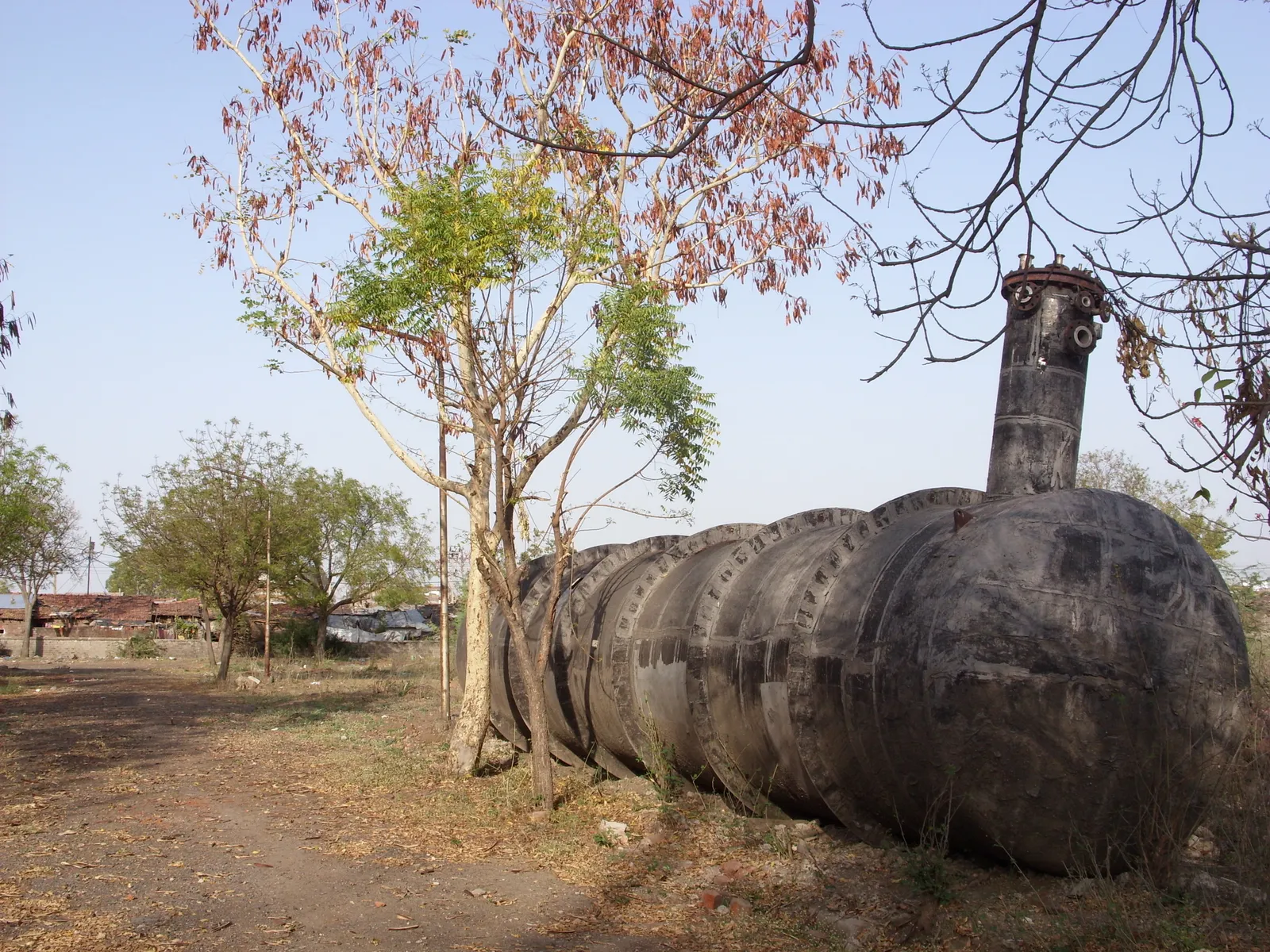
- Abandoned production units at the Union Carbide plant in Bhopal (Wikimedia Commons) - Wikimedia Commons file page
- Derelict tanks and storage facilities inside the Union Carbide plant perimeter in Bhopal (Wikimedia Commons) - Wikimedia Commons file page


Verified Archival Sources & Bibliography
Every claim in this account has been fact-checked against primary archives and scholarly repositories:
- Wikipedia: Bhopal Disaster (reference)
- Internet Archive: Five Past Midnight in Bhopal: The Epic Story of the World’s Deadliest Industrial Disaster (Dominique Lapierre & Javier Moro) (book)
- Journal of Loss Prevention in the Process Industries: The Bhopal Gas Tragedy 20 Years On (academic)
- The Hindu: Thirty Years After Bhopal: The Unfolding Legal and Corporate Tragedy (news)
- Indian Council of Medical Research (ICMR): Health Effects of the Bhopal Gas Leak Toxic Residues (primary)
Echoes of History Uncut. "The Worst Industrial Disaster in History Happened While a City Slept.." Echoes of History Uncut. Last modified September 14, 2026. https://echoesofhistoryuncut.com/articles/bhopal-gas-disaster/.

An independent history publication using AI-assisted research, drafting and production. Consult each article’s citations and limitations; source inclusion does not establish independent verification of every claim.
▶
Watch the Complete Archival Documentary on YouTube
Subscribe to Echoes of History Uncut on YouTube for full widescreen 16:9 documentaries, primary archival footage, and declassified deep dives.