
They Banned Pets on Ships. So Troops Enlisted a Bear.
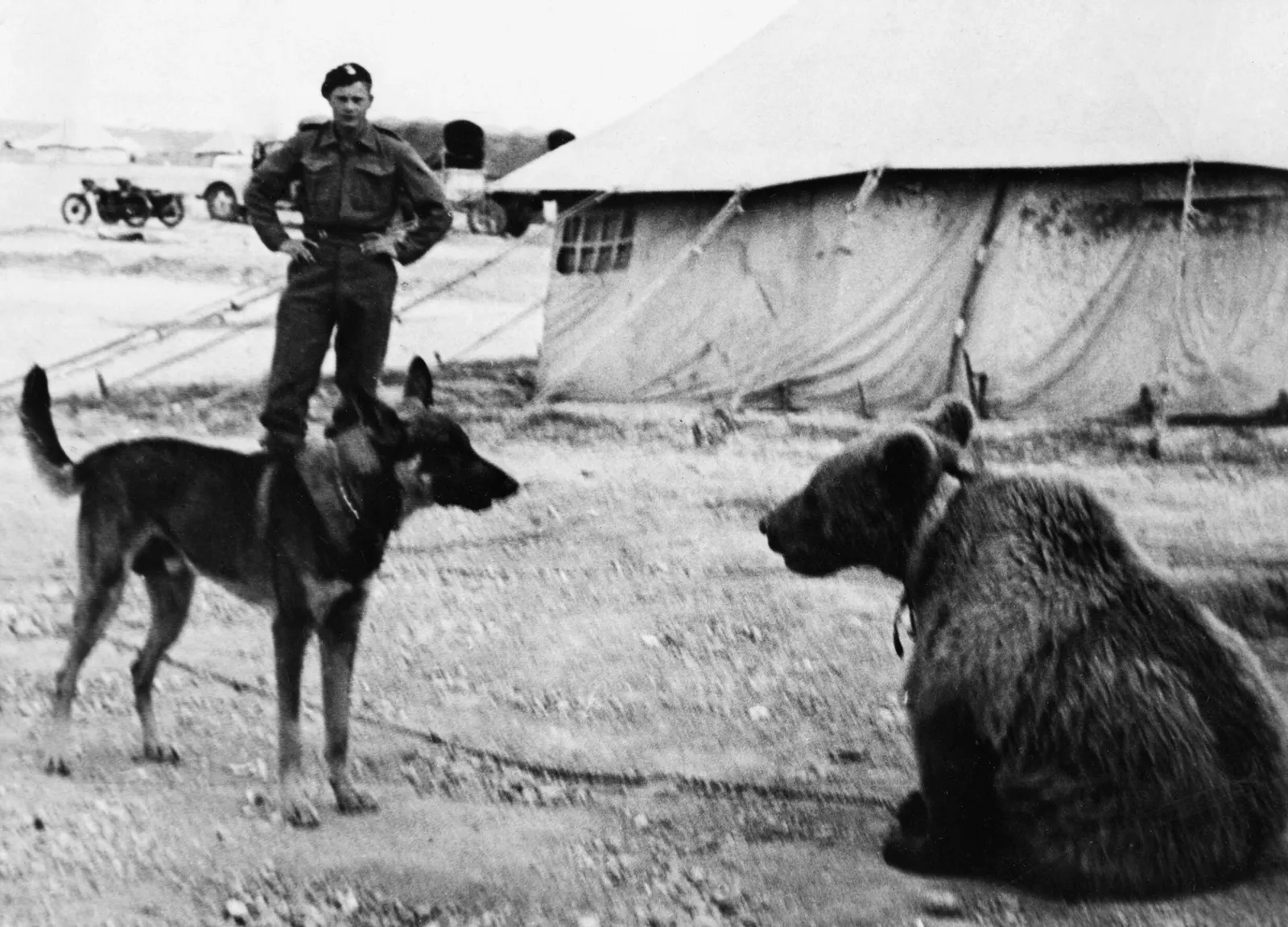
British transport ships to Italy forbade pet animals from boarding. To bring their bear with them, soldiers from Poland officially enlisted Wojtek as a soldier with an army rank and a paybook. During the Battle of Monte Cassino in May 1944, Wojtek hauled heavy ammunition boxes under cannon fire, inspiring his unit to adopt a shell-carrying bear as their official emblem.

In this dossier (9 chapters) ▾
Historical Dossier: Wojtek, the Soldier Bear of the Polish II Corps Location: Iran, Middle East, Italy (Monte Cassino) and Scotland | Year: 1942–1963 | Key Figures: Wojtek, Irena Bokiewicz, Lieutenant Anatol Tarnowiecki, the 22nd Artillery Supply Company
A Cub on a Road in Iran
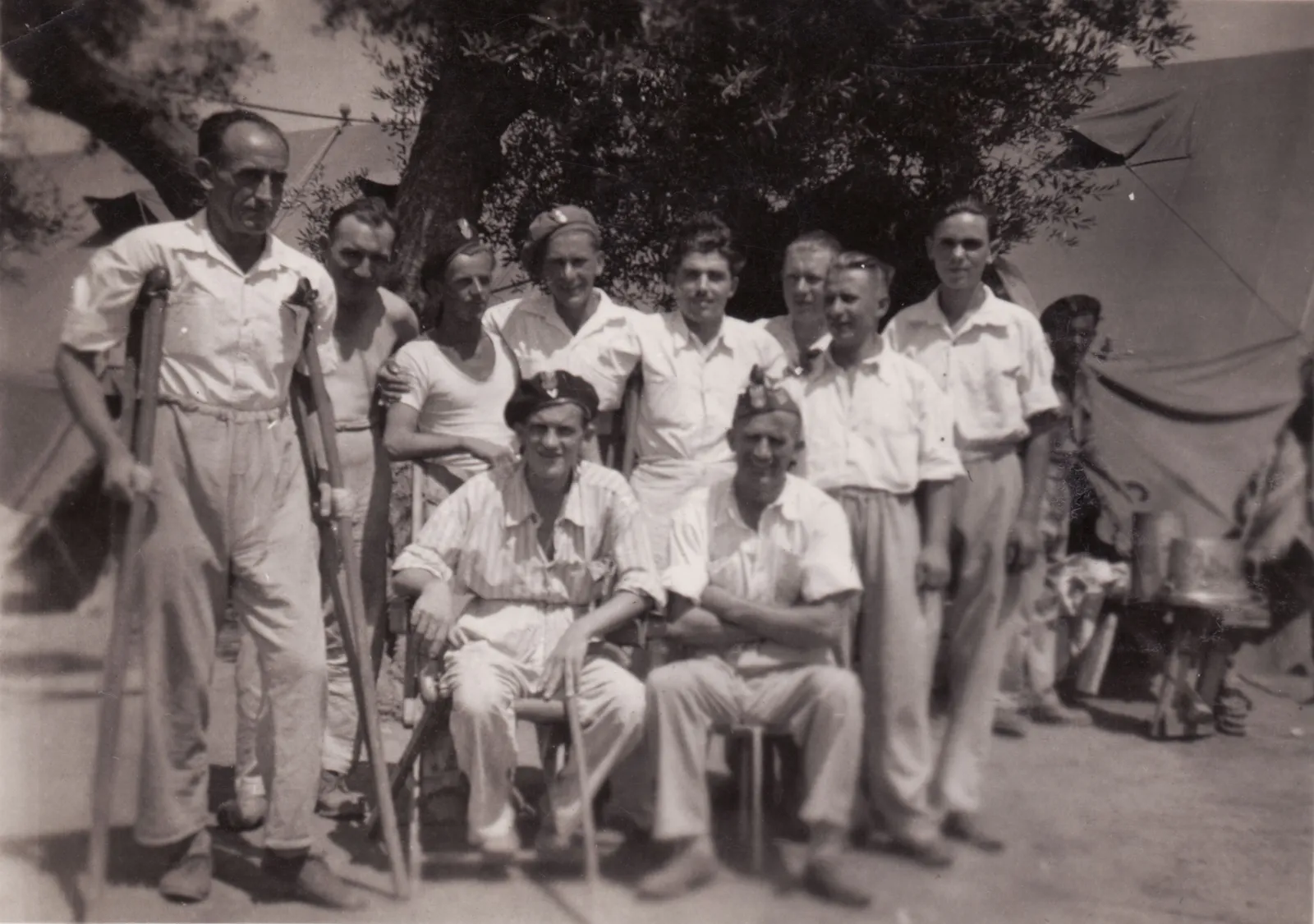
In the spring of 1942, near Hamadan in Iran, Polish soldiers met a young Iranian boy who was carrying a bear cub. Its mother had been shot by hunters. The soldiers were part of the Polish forces who had come out of the Soviet Union after years of captivity and exile, and who were gathering in the Middle East under British command. They were a long way from home, with no country to return to, and a cub in a sack was a strange but welcome distraction.
An 18-year-old Polish refugee, Irena Bokiewicz, became attached to the animal and persuaded a Lieutenant, Anatol Tarnowiecki, to buy it. The cub spent the next three months in a Polish refugee camp near Tehran, mostly in Irena’s care. In August 1942 the bear was formally given to the 2nd Transport Company, later renamed the 22nd Artillery Supply Company, and received the name Wojtek, a diminutive of the Polish name Wojciech.
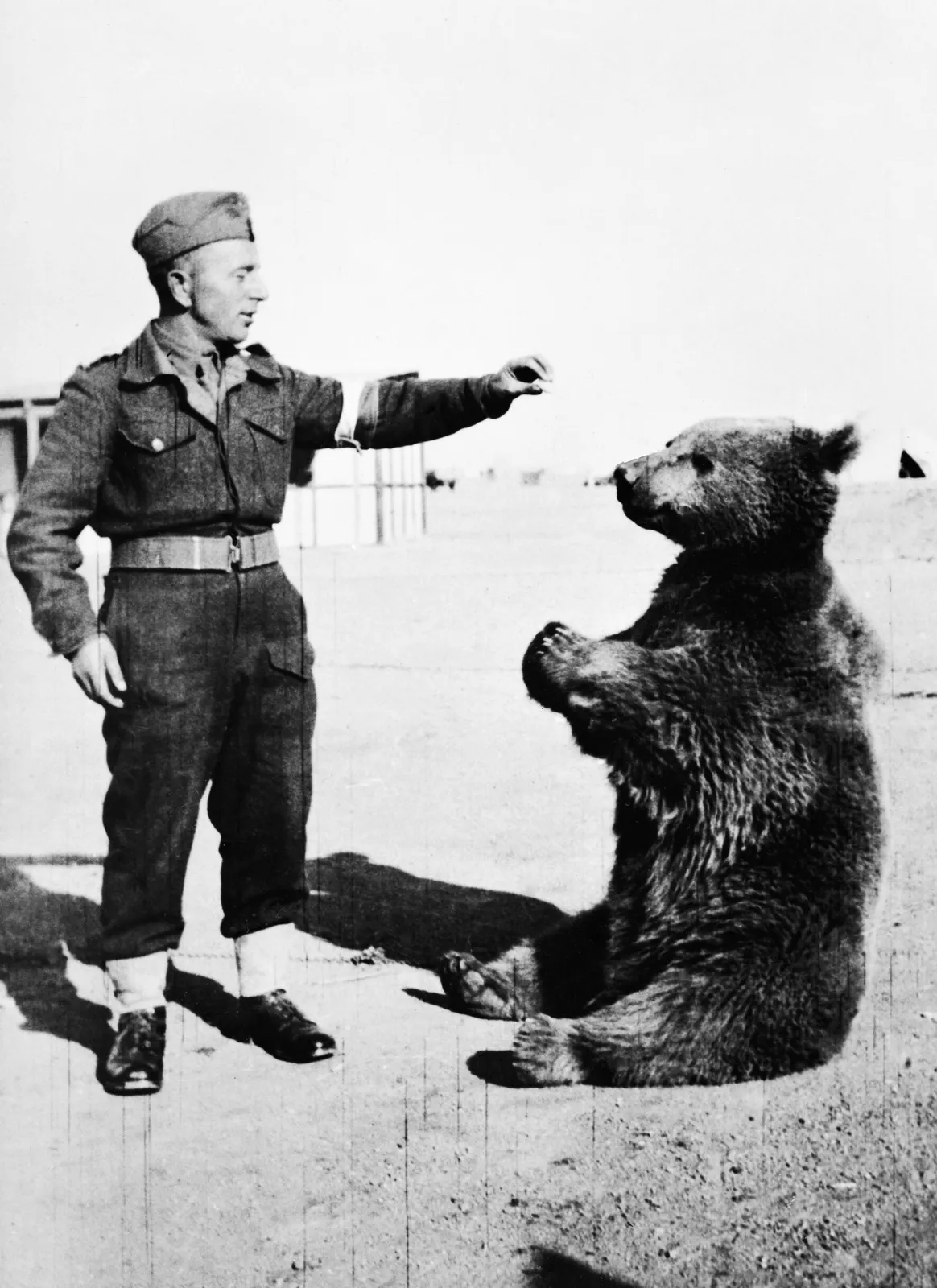
At first the cub could not feed himself properly. The soldiers gave him condensed milk from an old vodka bottle, and later fruit, marmalade, honey and syrup. As he grew up, beer became his favourite treat.
A Private With a Service Number
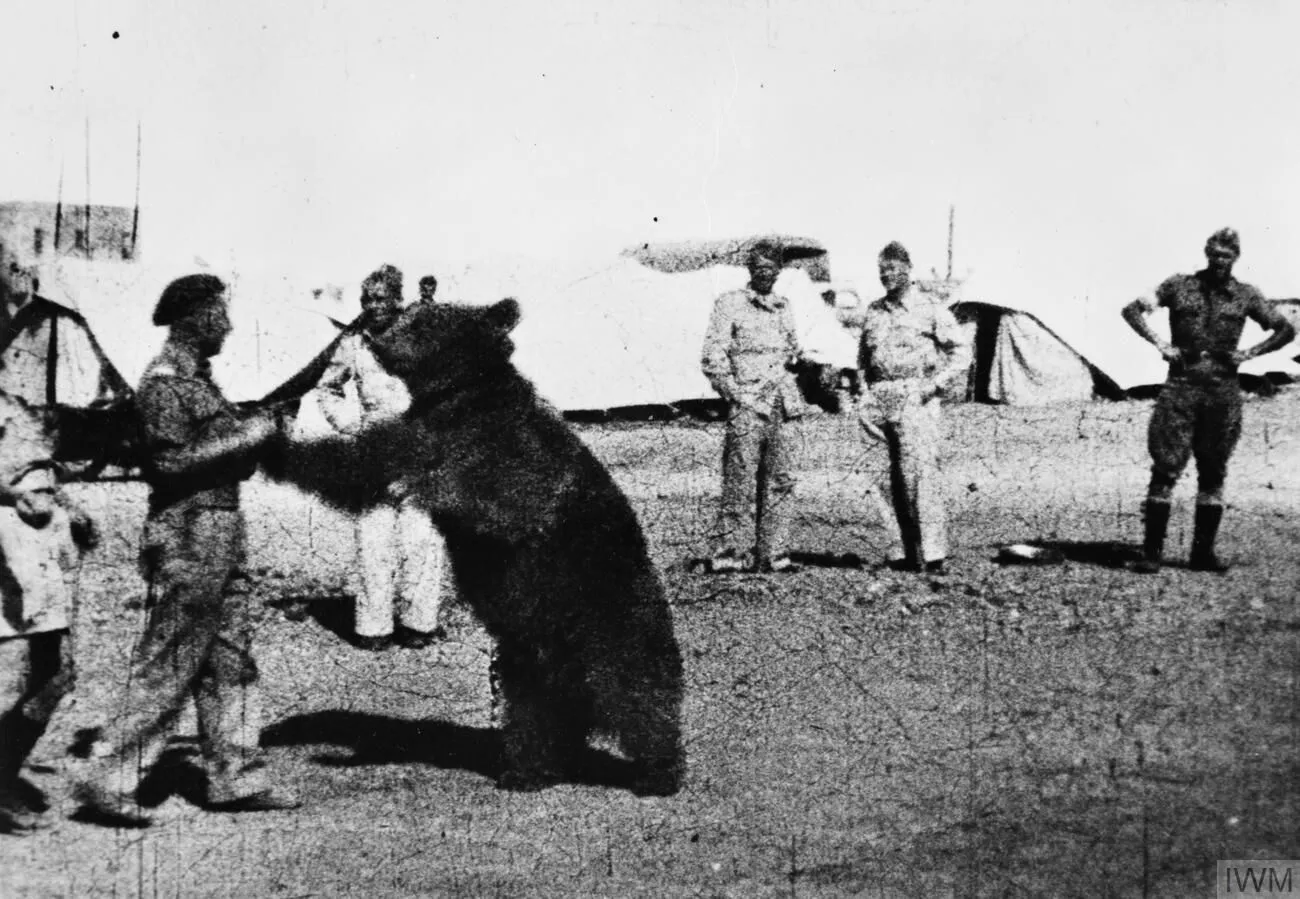
Wojtek travelled with the 22nd Company through Iraq, Syria and Egypt, and the men treated him as one of their own. They wrestled with him, shared food with him. He was, by all accounts, remarkably gentle.
The trouble came when the unit prepared to sail for Italy. British transport regulations did not allow mascots and pets on the ships. The solution was a piece of military paperwork that has become part of the legend: Wojtek was formally enlisted as a soldier, a private with the service number 253, and could therefore travel with his comrades. He was later promoted to corporal.
Monte Cassino
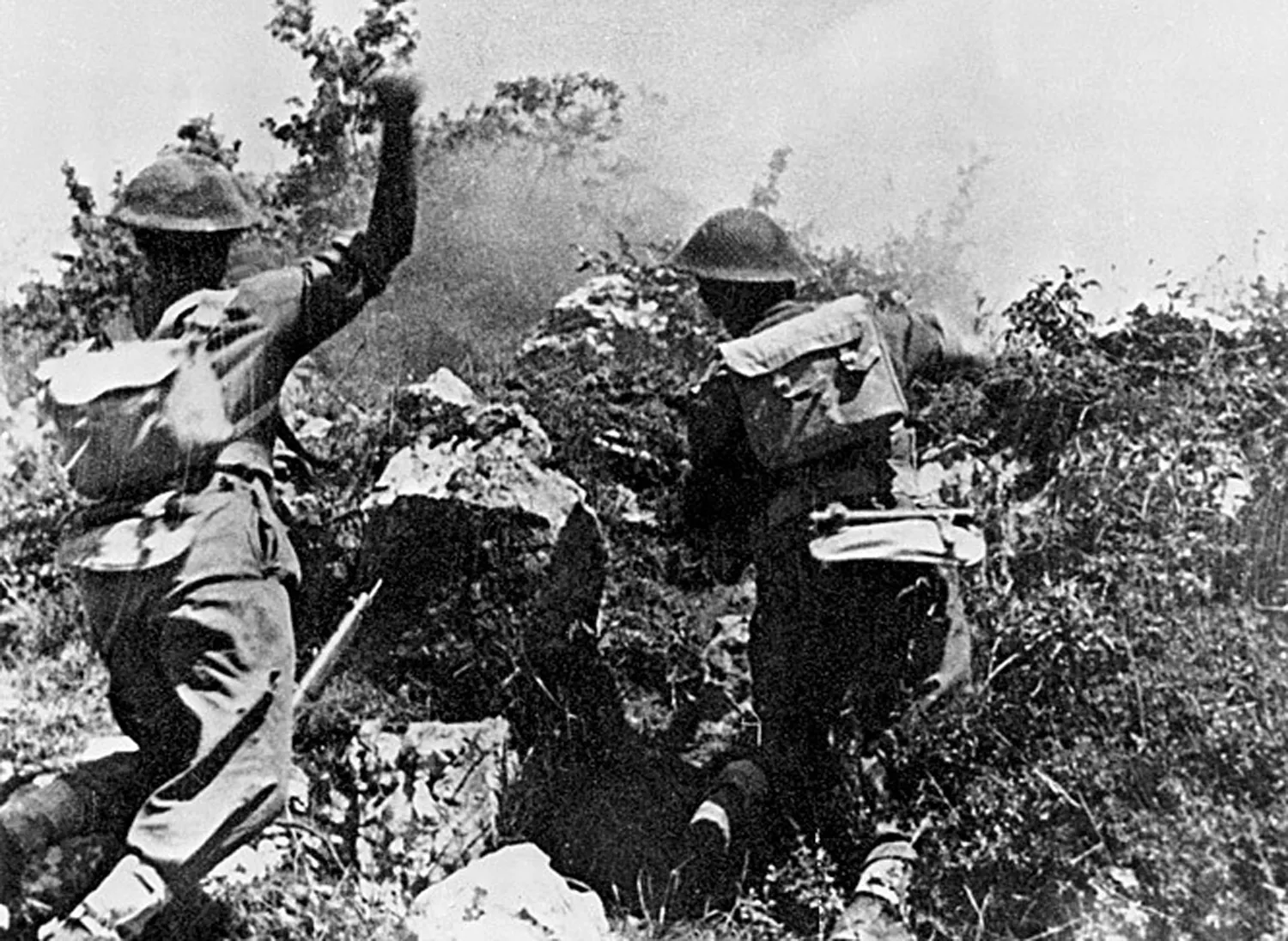
In 1944 the Polish II Corps joined the Allied assault on the German defences at Monte Cassino, a bitter battle that cost many lives on both sides. The 22nd Company’s work was to supply the artillery with shells, which are heavy, awkward and dangerous.
The story that made Wojtek famous is that he carried the ammunition himself. According to the usual account, he watched the men lifting the crates and began to help, carrying 100-pound (45 kg) crates of 25-pound artillery shells and never dropping one. By this time he weighed about 90 kilograms. The company took the image of a bear carrying an artillery shell as its official emblem.
It is worth being honest about the evidence. The story has been debated, and no one claims that Wojtek served as a front-line combatant. At the same time, at least one account exists of a British soldier recalling seeing a bear carrying crates of ammunition. The emblem is documented, and so is the bear’s enlistment and presence with the company; the exact details of the shell-carrying are the part that rests on memory.
From the War to Scotland
After the war in 1945, the company was moved to Scotland, to Winfield Airfield in Berwickshire. The Polish soldiers were not able to go home to a free Poland, and many of them stayed in Britain. Wojtek came with them. After his demobilisation on 15 November 1947, he was given to Edinburgh Zoo.
He lived there for sixteen years. Visitors came to see him, and former comrades are remembered to have visited him there. By the end he weighed nearly 500 kilograms and stood over 1.8 metres tall. He died on 2 December 1963.
Remembered in Bronze
Today Wojtek is remembered in several countries. A monument in Kraków was unveiled on 18 May 2014, the 70th anniversary of Monte Cassino. A statue by the sculptor Alan Beattie Herriot, unveiled in Edinburgh in 2015, shows Wojtek and a Polish soldier walking together. Others followed in Duns (2016), Poznań, Cassino itself (2019), Szczecin and Sopot.
What the Story Means
Wojtek’s story is partly a charming tale about a bear who liked beer. But it is also a story about the soldiers who adopted him, men who had lost their homes and families and who found, in an orphaned animal, something to look after. The bureaucrats who forced them to give the bear a rank only made the tale better.
What the Record Shows
12 sourced claims in this story, resting on 11 sources. Numbers link to the bibliography below.
- British transport ship regulations forbade pet animals from boarding ships to Italy - sources: 9, 5, 7
- Soldiers from Poland enlisted the bear as an official soldier with an army rank and a paybook - sources: 5, 1, 9, 4
- Soldiers of the 22nd Artillery Supply Company adopted an orphaned bear cub in 1942 - sources: 1, 5, 10, 9
- The soldiers gave the bear the name Wojtek - sources: 1, 5, 7, 9
- Wojtek was fed milk from a bottle and enjoyed wrestling with soldiers - sources: 1, 7, 5
- Wojtek drank beer alongside his fellow soldiers in camp - sources: 1, 5, 6, 9
- The Polish II Corps entered the Battle of Monte Cassino in Italy in May 1944 - sources: 1, 3, 11
- Wojtek watched soldiers moving heavy artillery shells during the Battle of Monte Cassino - sources: 1, 2, 9
- Wojtek copied his comrades and carried heavy ammunition boxes to artillery positions during the Battle of Monte Cassino - sources: 1, 5, 9
- Wojtek transported ammunition boxes under heavy artillery cannon fire - sources: 1, 5, 6
- The 22nd Company adopted an official emblem featuring a bear carrying an artillery shell in honour of Wojtek - sources: 1, 5, 9
- After the war Wojtek lived out his retirement in Scotland at Edinburgh Zoo - sources: 1, 2, 6, 8, 9
Archival Evidence & Picture Credits
Every image on this page was checked against its Wikimedia Commons file page.
- Wojtek, the bear adopted by Polish soldiers in 1942 (Wikimedia Commons) - Wikimedia Commons file page
- Troops of the Polish 22nd Transport Artillery Company watching a comrade play-wrestle with their mascot bear (Wikimedia Commons) - Wikimedia Commons file page
- Polish soldiers at Monte Cassino in 1944 (Wikimedia Commons) - Wikimedia Commons file page
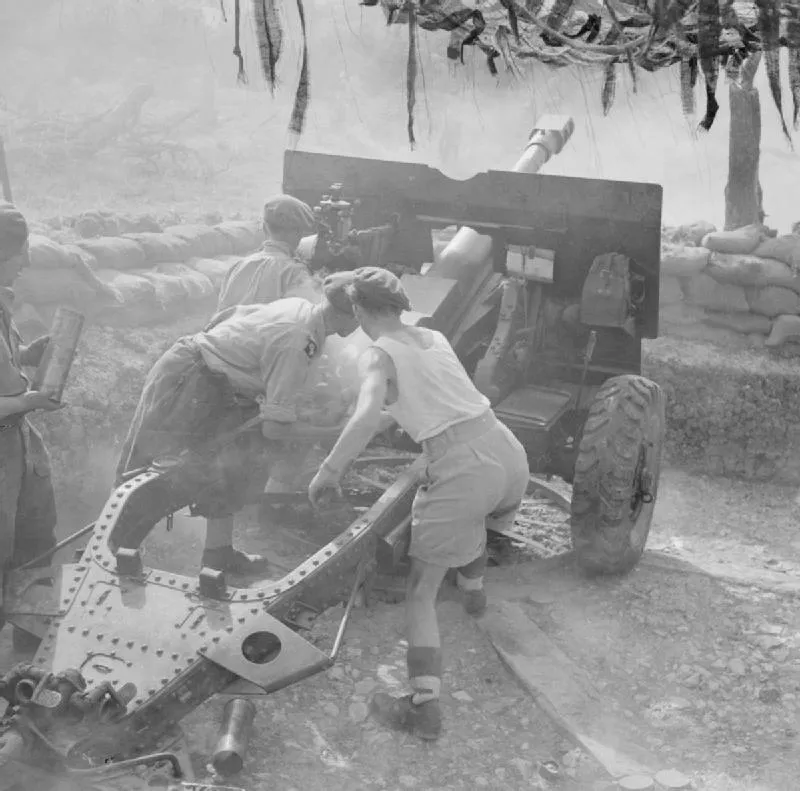
- British Army forces in Italy in 1944, the theatre in which the 22nd Company served (Wikimedia Commons) - Wikimedia Commons file page
- Wojtek with a new friend (Wikimedia Commons) - Wikimedia Commons file page
- Soldiers of the Polish II Corps at Palagiano, Italy, in June 1945 (Wikimedia Commons) - Wikimedia Commons file page


Verified Archival Sources & Bibliography
Every claim in this account has been fact-checked against primary archives and scholarly repositories:
- British Library: Wojtek the Soldier Bear from the Polish Army (primary)
- Environment and Planning D: Society and Space - Hybrid Encounters: Wojtek the Bear (primary)
- Bloomsbury Military History: Battle of Monte Cassino Account (book)
- The Polish Review: Polish II Corps History (primary)
- Der Spiegel: Wojtek the Bear That Joined the Polish Army (news)
- BBC News: Honouring the WWII Bear Who Fought the Nazis (news)
- BBC News: Wojtek the Bear Memorial in Warsaw (news)
- The Scotsman: Princes Street Gardens Statue of Polish Army Bear (news)
- Wikipedia: Wojtek (bear) (reference)
- Wikipedia: Anders’ Army (reference)
- Wikipedia: Battle of Monte Cassino (reference)
Echoes of History Uncut. "They Banned Pets on Ships. So Troops Enlisted a Bear.." Echoes of History Uncut. Last modified September 25, 2026. https://echoesofhistoryuncut.com/articles/wojtek-soldier-bear-1944/.

An independent history publication using AI-assisted research, drafting and production. Consult each article’s citations and limitations; source inclusion does not establish independent verification of every claim.
▶
Watch the Complete Archival Documentary on YouTube
Subscribe to Echoes of History Uncut on YouTube for full widescreen 16:9 documentaries, primary archival footage, and declassified deep dives.