
They Built a Cannon Out of Five Nations' Junk to Survive a 55-Day Siege
During the fifty-five-day Siege of the International Legations in Peking in 1900, foreign legation guards and thousands of Chinese Christian refugees were trapped and besieged by imperial Qing forces. Facing heavy artillery fire without any big guns of their own, Chinese refugees excavated an old, rusted British bronze cannon barrel from an abandoned junk shop. American Navy Gunner Joseph Mitchell mounted the barrel onto a spare Italian gun carriage, loaded it with Russian shells found in a well, primed it with German powder, and fired it using American gunners. Nicknamed the 'International Gun' or 'Old Betsy,' this improvised cannon shattered enemy barricades until an international relief column broke through.

In this dossier (10 chapters) ▾
Historical Dossier: The International Gun of the Peking Siege Location: The Legation Quarter, Peking (Beijing), China | Year: 20 June–14 August 1900 | Key Figures: Claude MacDonald, Herbert G. Squiers, Captain John T. Myers, Gorō Shiba, Gunner’s Mate Joseph Mitchell
Fifty-Five Days
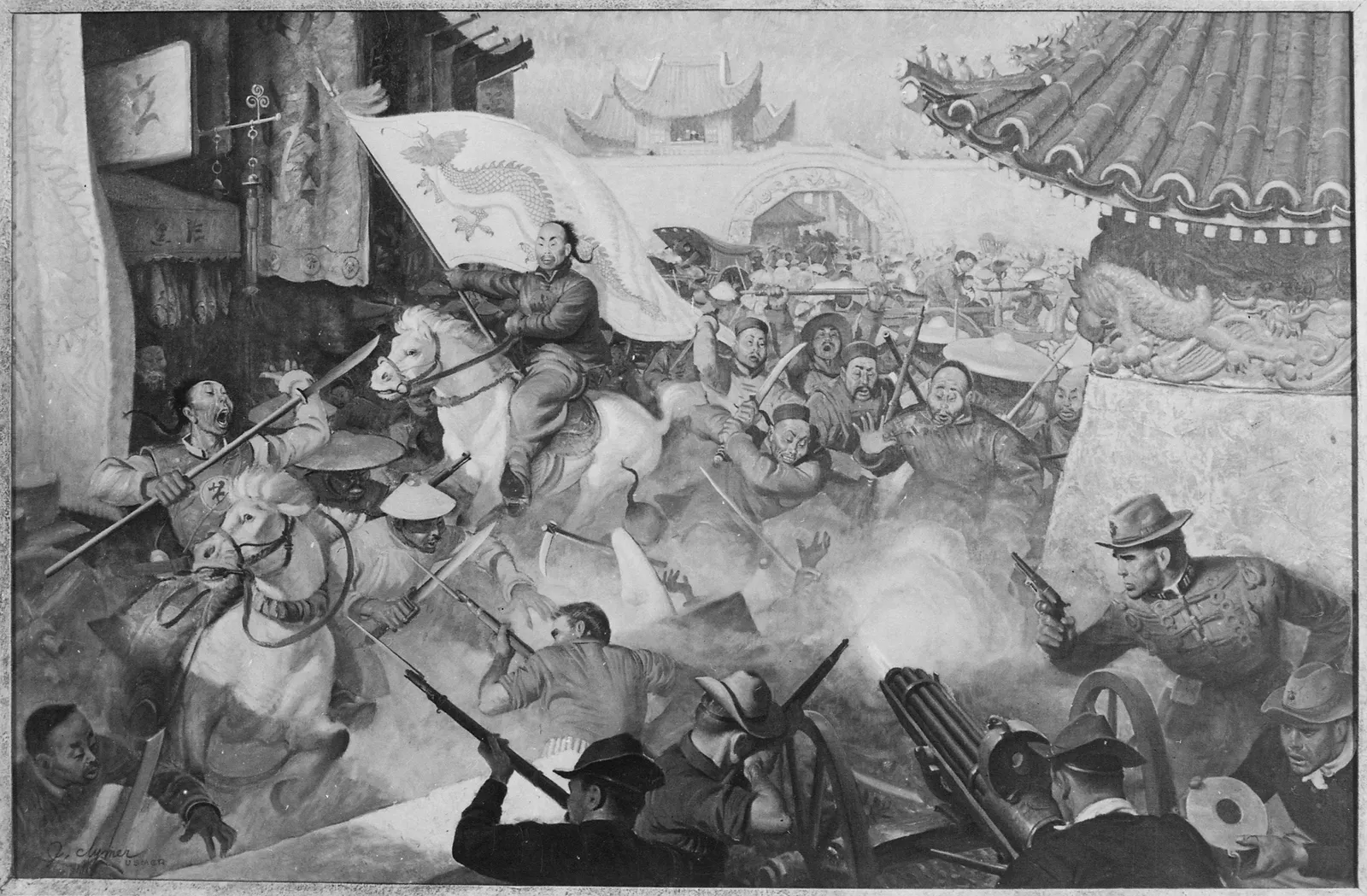
The Siege of the International Legations lasted 55 days, from 20 June to 14 August 1900, in Peking, during the Boxer Rebellion. The defenders came from eight nations: Britain, Russia, France, Japan, the United States, Italy, Germany and Austria-Hungary. With them were about 473 foreign civilians and between 2,800 and 3,000 Chinese Christians who had taken refuge in the Legation Quarter.
The British Minister, Claude MacDonald, served as overall commander. The American diplomat Herbert G. Squiers was his chief of staff, and the military leaders included the Japanese Lieutenant Colonel Gorō Shiba and the American Captain John T. Myers.
Too Few Guns
The defenders had little artillery. They had three machine guns, one small Italian cannon, and rifles. The Italian gun was a one-pounder, and it was moved frequently from one post to another to give the impression that there were five or six guns. Meanwhile the besiegers, the Qing forces and Boxers, had much heavier weapons and kept up the bombardment.
A Barrel in a Junk Shop
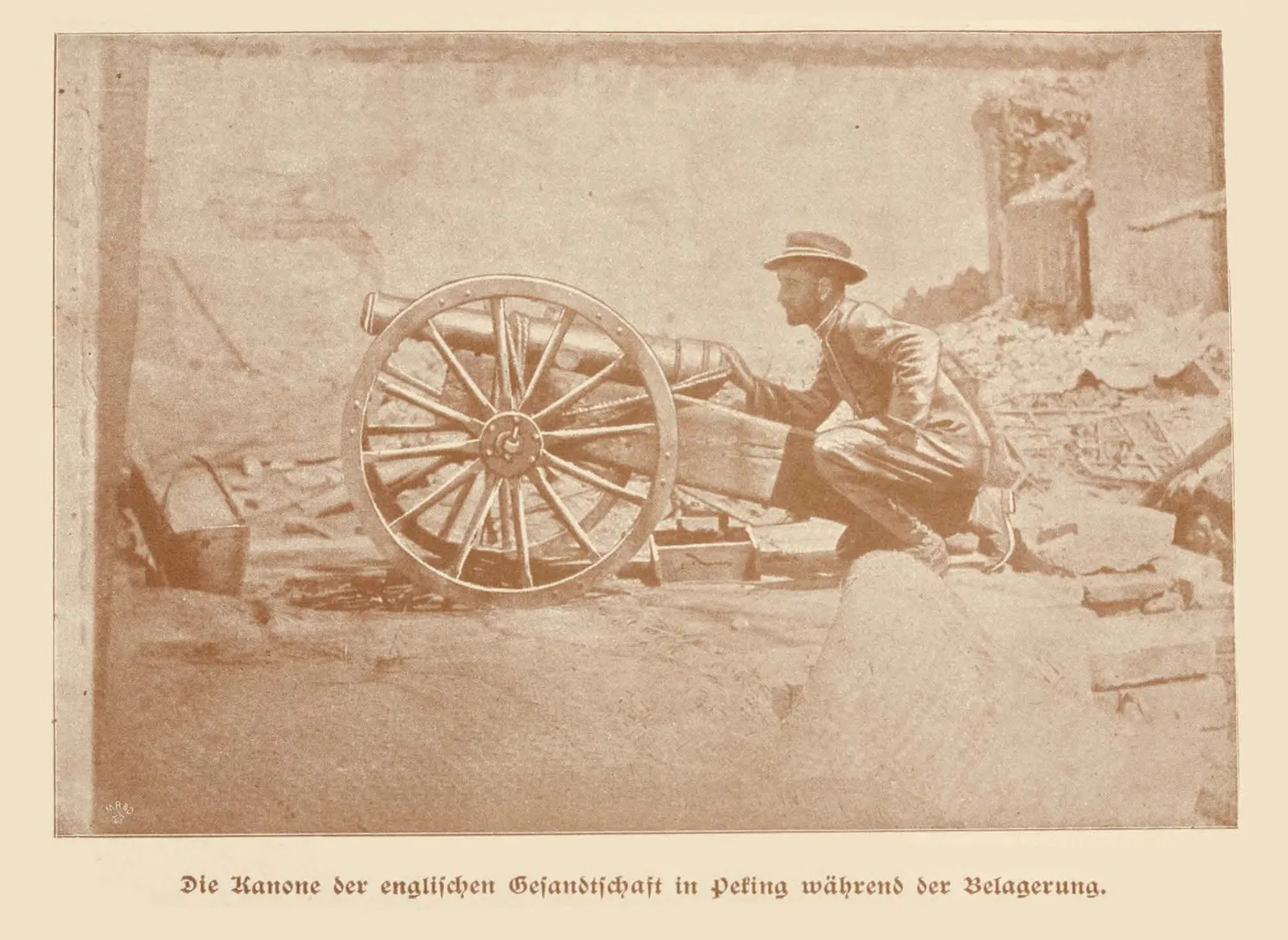
Then a cannon barrel turned up. Chinese Christians sheltering in the Legation Quarter found an old cannon barrel, reportedly lying in a junk shop. It was probably a relic of the Anglo-French expedition of 1860, in the Second Opium War, which had left weapons behind in the city.
The man who made it into a working gun was a US Navy Gunner’s Mate First Class, Joseph Mitchell. He took the barrel and fixed it to the carriage of the Italian one-pounder, tying it on with rope. Then came a piece of luck. The defenders had Russian 9-pounder shells that were of no use to anyone, and they proved to fit the new gun.
The International
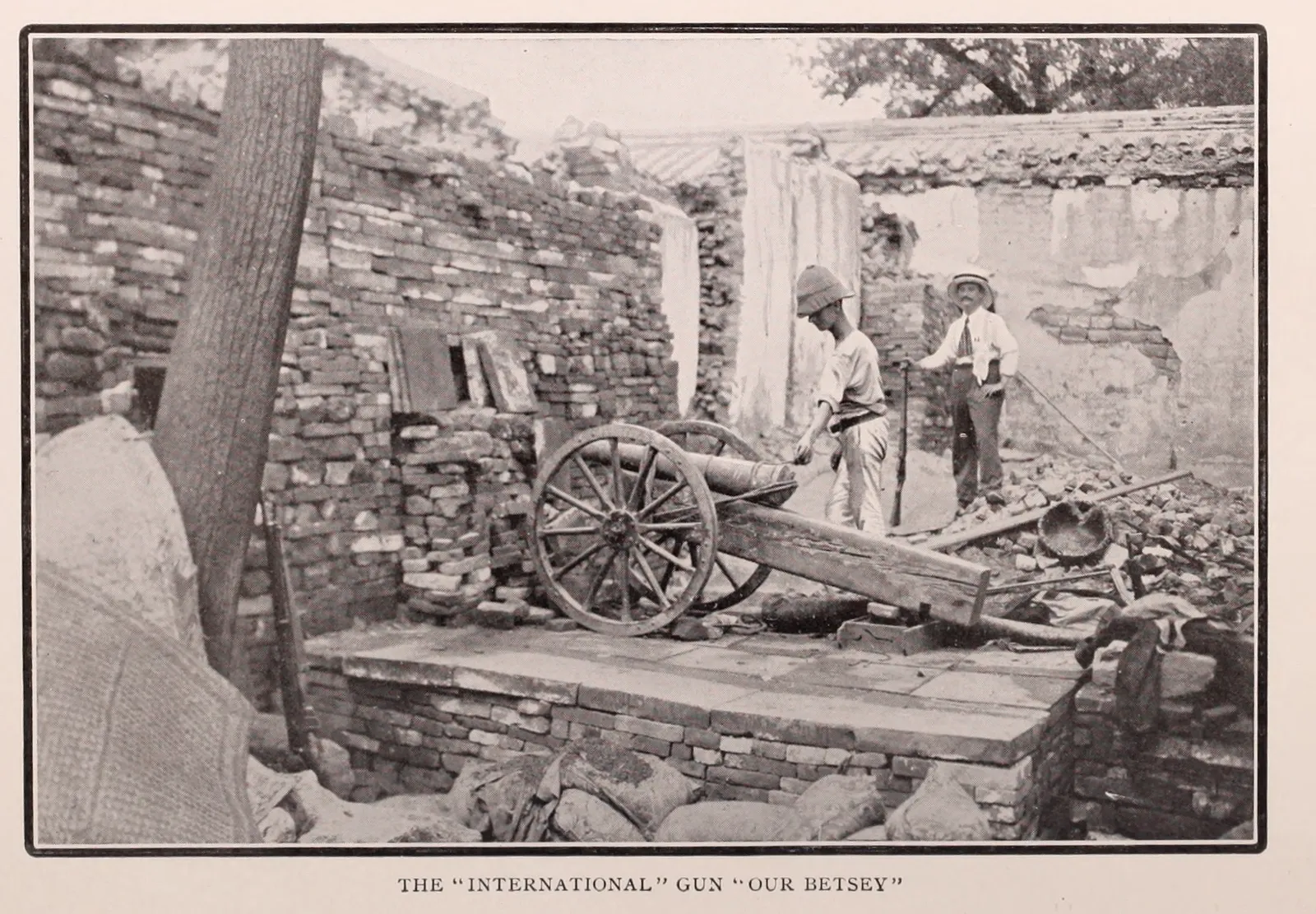
The result was called the International Gun. The barrel was British, the carriage Italian, the shells Russian and the crew American. The Marines gave it a nickname too, “Old Betsy” or “Betsey.” It was not a modern weapon. It was a cannon of an older age, put together from what was at hand in the middle of a siege.
Throughout the 55 days Mitchell fired it from different positions around the Legation Quarter. It did some damage to the besiegers. Perhaps its most useful effect was to make the Chinese believe that the defenders had plenty of artillery.
The Defence and the Relief
The Chinese Christian volunteers who defended the perimeter were an important part of the story. They built barricades, carried supplies and fought alongside the foreign marines.
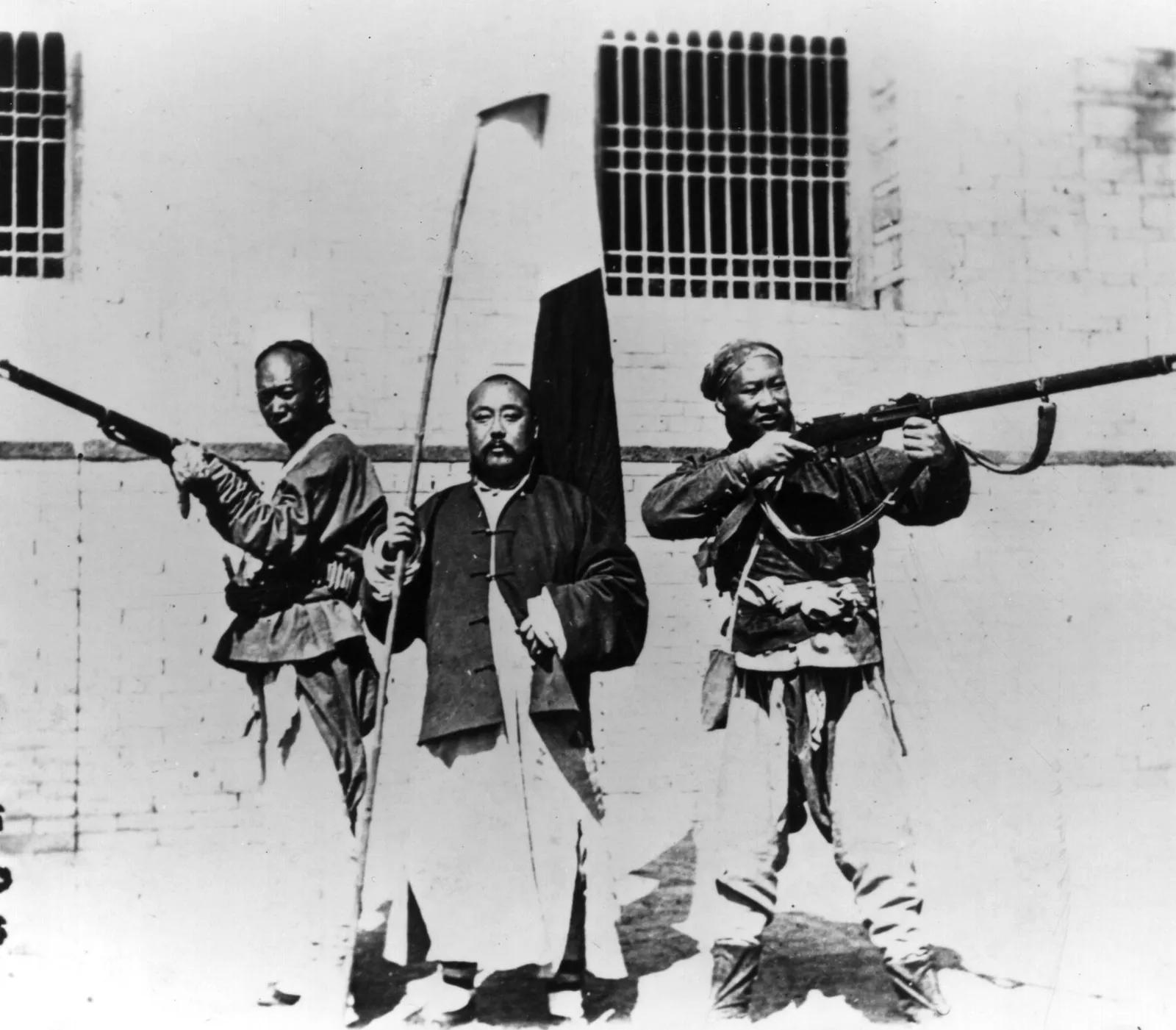
The cost was heavy. Of 409 foreign soldiers, 55 were killed and 135 were wounded, a casualty rate of about 46.5 percent. Chinese and Boxer casualties are estimated at about 2,500. On 14 August 1900 a relief force of the Eight-Nation Alliance arrived. British entered through an unguarded gate, and Sikh and Rajput soldiers from India were the first to reach the Legation Quarter, at 3 p.m.
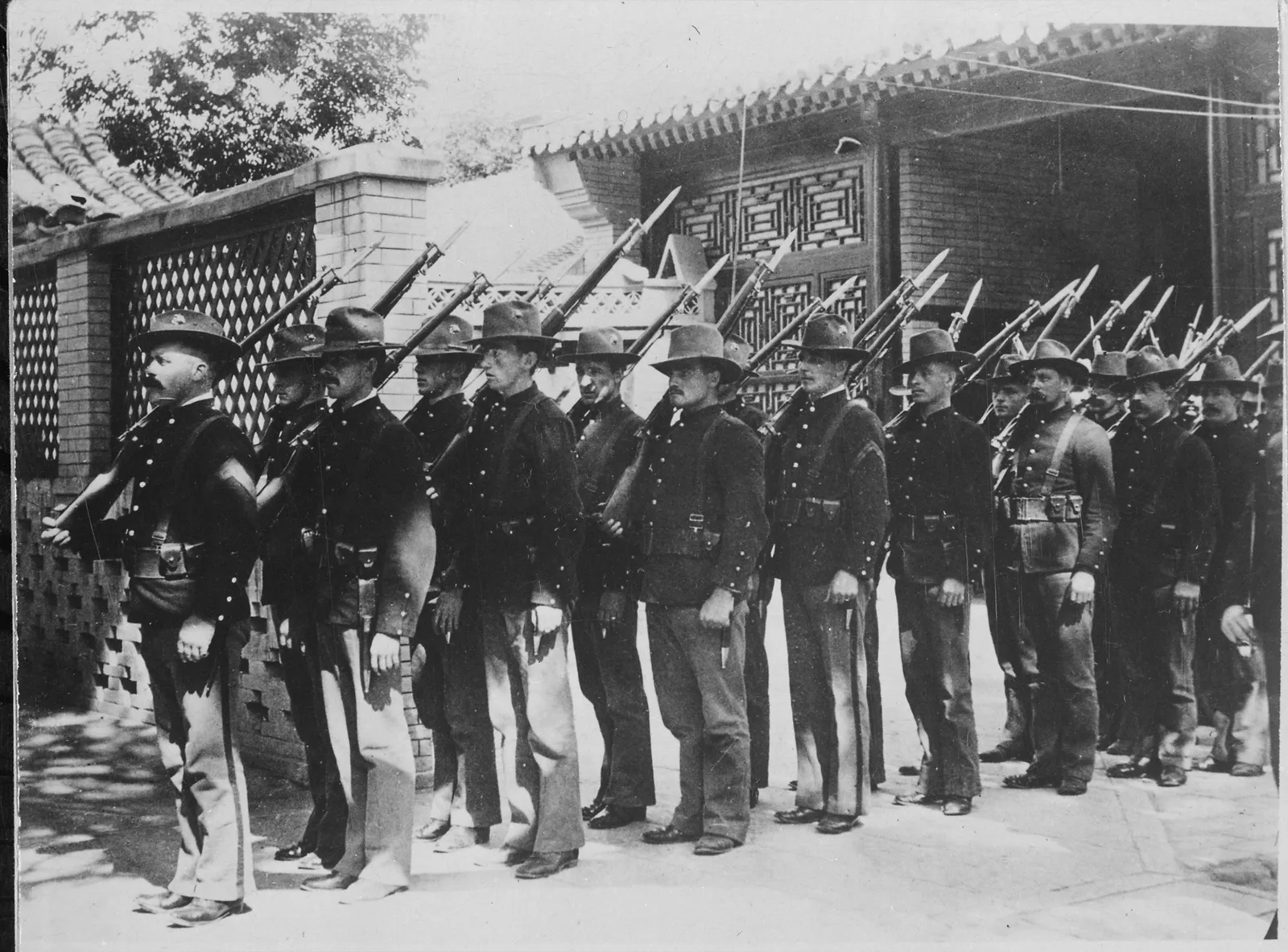
Where the Gun Is Now
The International Gun survived the siege. It is now kept at the United States Naval Academy in Annapolis, Maryland, where it is a reminder of an episode in which several countries fought side by side with a gun that none of them had designed.
Why the Gun Is Remembered
Old Betsy is not important because of what it did, which was modest. It is remembered because it stands for the improvisation of the siege, and for the fact that the defenders, who were of many nationalities and many languages, found a way to work together. It was also, like the siege itself, partly made by Chinese hands: a Chinese find, and Chinese labour, in a fight that is usually told as a story about the foreigners.
What the Record Shows
8 sourced claims in this story, resting on 6 primary and historical records. Numbers link to the bibliography below.
- The Siege of the International Legations in Peking lasted 55 days, from June 20 to August 14, 1900 - sources: 1, 2
- Over 900 foreign personnel and nearly 3,000 Chinese Christians were besieged without heavy artillery - sources: 1, 3
- Chinese Christian refugees found an abandoned 1860 British bronze cannon barrel in an iron junk shop - sources: 2, 4
- U.S. Navy Gunner Joseph Mitchell mounted the barrel on an Italian gun carriage using cable and brackets - sources: 1, 4
- The gun fired modified Russian three-inch shells using German powder charges and American gunners - sources: 1, 2
- The cannon was dubbed the ‘International Gun’, ‘Old Betsy’, and ‘The Empress Dowager’ by defenders - sources: 1, 5
- Gunner Joseph Mitchell was awarded the Medal of Honor for his artillery heroics during the siege - sources: 4, 6
- The improvised cannon survived the siege and is preserved at the U.S. Naval Academy Museum in Annapolis - sources: 1, 5
Archival Evidence & Picture Credits
Every image on this page was checked against its Wikimedia Commons file page.
- U.S. Marines fighting Boxers outside the Peking Legation in 1900, from a painting by Sergeant John Clymer (National Archives / Wikimedia Commons) - Wikimedia Commons file page
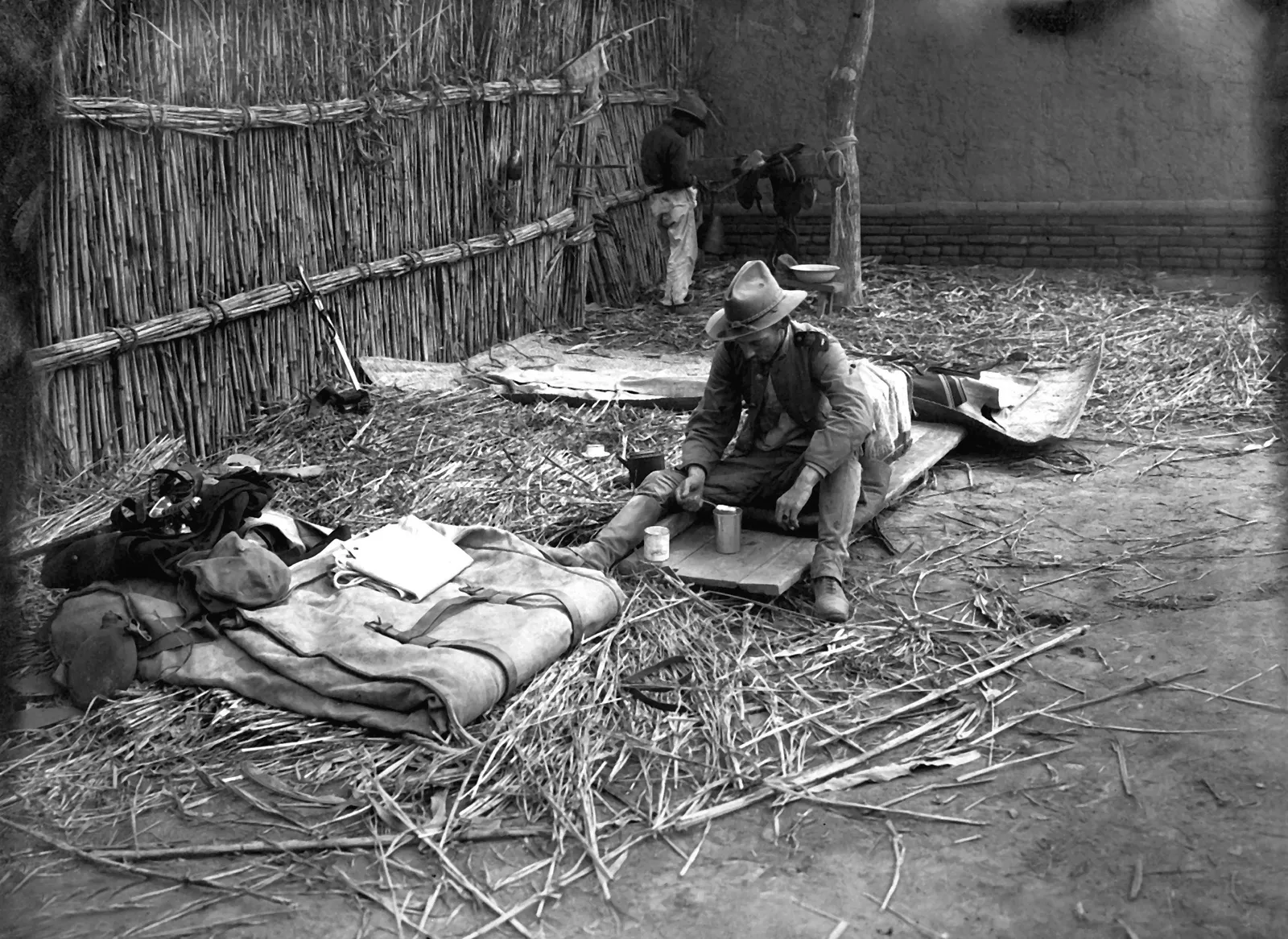
- Sandbagged American military quarters in the Legation Quarter during the Boxer Rebellion (Wikimedia Commons) - Wikimedia Commons file page
- The cannon at the British Legation in Peking during the siege (Wikimedia Commons) - Wikimedia Commons file page
- The International Gun, known as Betsey, with its gun crew (Wikimedia Commons) - Wikimedia Commons file page
- Chinese Catholic militiamen prepared to defend the Peking perimeter during the Boxer Rebellion in 1900 (Wikimedia Commons) - Wikimedia Commons file page
- U.S. Marines in the relief party at Peking, China, in 1900 (National Archives / Wikimedia Commons) - Wikimedia Commons file page


Verified Archival Sources & Bibliography
Every claim in this account has been fact-checked against primary archives and scholarly repositories:
- Wikipedia: International Gun & Siege of the International Legations (reference)
- Internet Archive: The Siege at Peking (Peter Fleming) (book)
- The International History Review: The Boxer War and the Siege of the Legations (academic)
- Naval History and Heritage Command: The Boxer Rebellion and U.S. Navy Bluejackets (primary)
- U.S. Naval Academy Museum: The International Gun ‘Old Betsy’ Catalog Record (primary)
- Congressional Medal of Honor Society: Gunner Joseph A. Mitchell Citation (primary)
Echoes of History Uncut. "They Built a Cannon Out of Five Nations' Junk to Survive a 55-Day Siege." Echoes of History Uncut. Last modified September 20, 2026. https://echoesofhistoryuncut.com/articles/peking-international-gun-1900/.

An independent history publication using AI-assisted research, drafting and production. Consult each article’s citations and limitations; source inclusion does not establish independent verification of every claim.
▶
Watch the Complete Archival Documentary on YouTube
Subscribe to Echoes of History Uncut on YouTube for full widescreen 16:9 documentaries, primary archival footage, and declassified deep dives.