
Trapped on the Ocean Floor: The Sinking and Rescue of USS Squalus
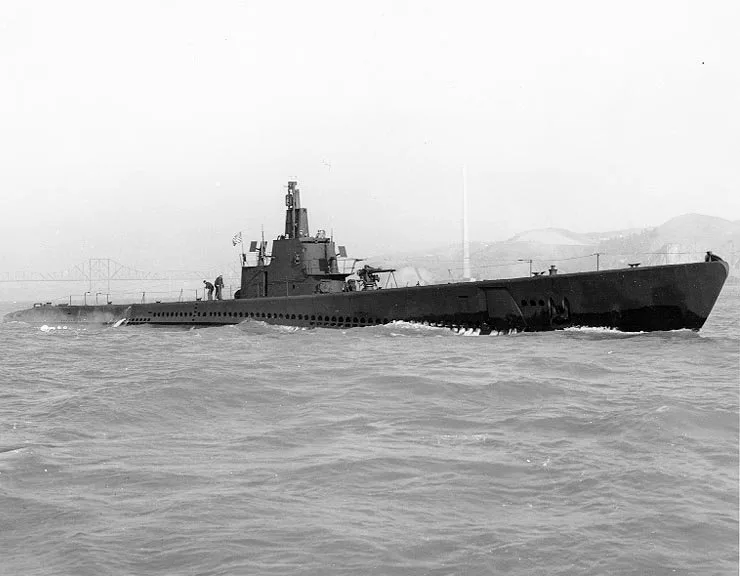
Partially flooded off the coast of New Hampshire, the submarine sank to the bottom and came to rest keel down at 40 fathoms (240 feet) of water. The USS Squalus was tragically lost at sea during test maneuvers. Trapped in the dark ocean depths, the crew faced terrifying odds, as no-one had ever been saved from a stricken sub beneath the ocean before.
In this dossier (8 chapters) ▾
The Sinking in 240 Feet of Water
Partially flooded off the coast of New Hampshire, the submarine sank to the bottom and came to rest keel down at 40 fathoms (240 feet) of water. The USS Squalus was tragically lost at sea during test maneuvers. Trapped in the dark ocean depths, the crew faced terrifying odds, as no-one had ever been saved from a stricken sub beneath the ocean before.
The Distress Signals
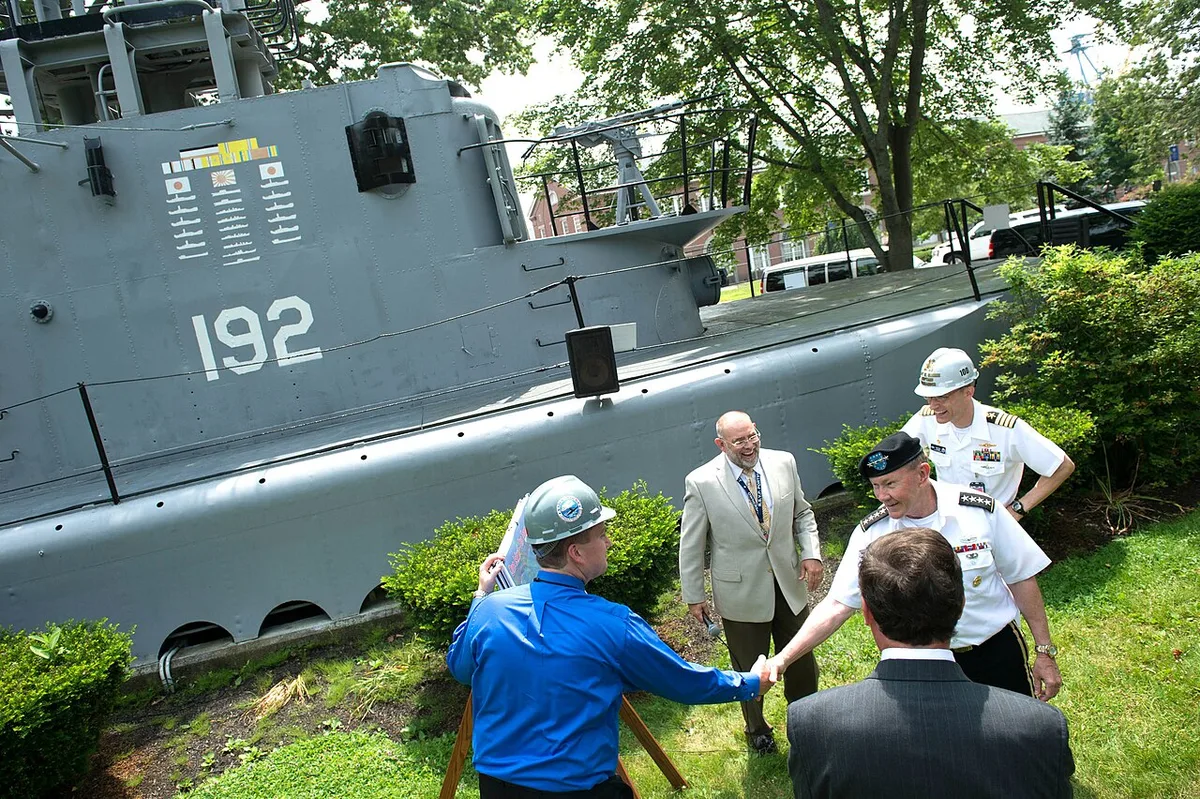
To attract attention, red smoke rockets were fired periodically, and a buoy trailing a telephone line was deployed to the surface. The Sculpin’s propellers drew near overhead and stopped to assist the sunken vessel. Soon after, the Falcon arrived at the Squalus’s position and moored over the Squalus to commence rescue operations.
The Unprecedented Rescue
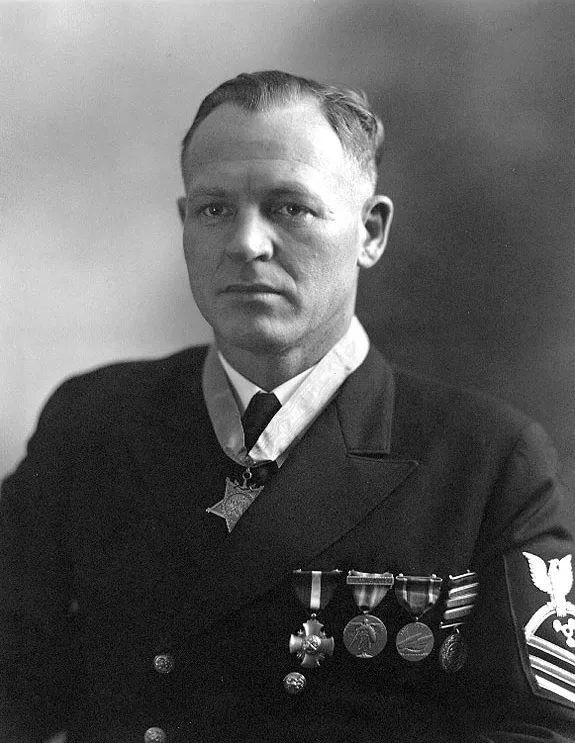
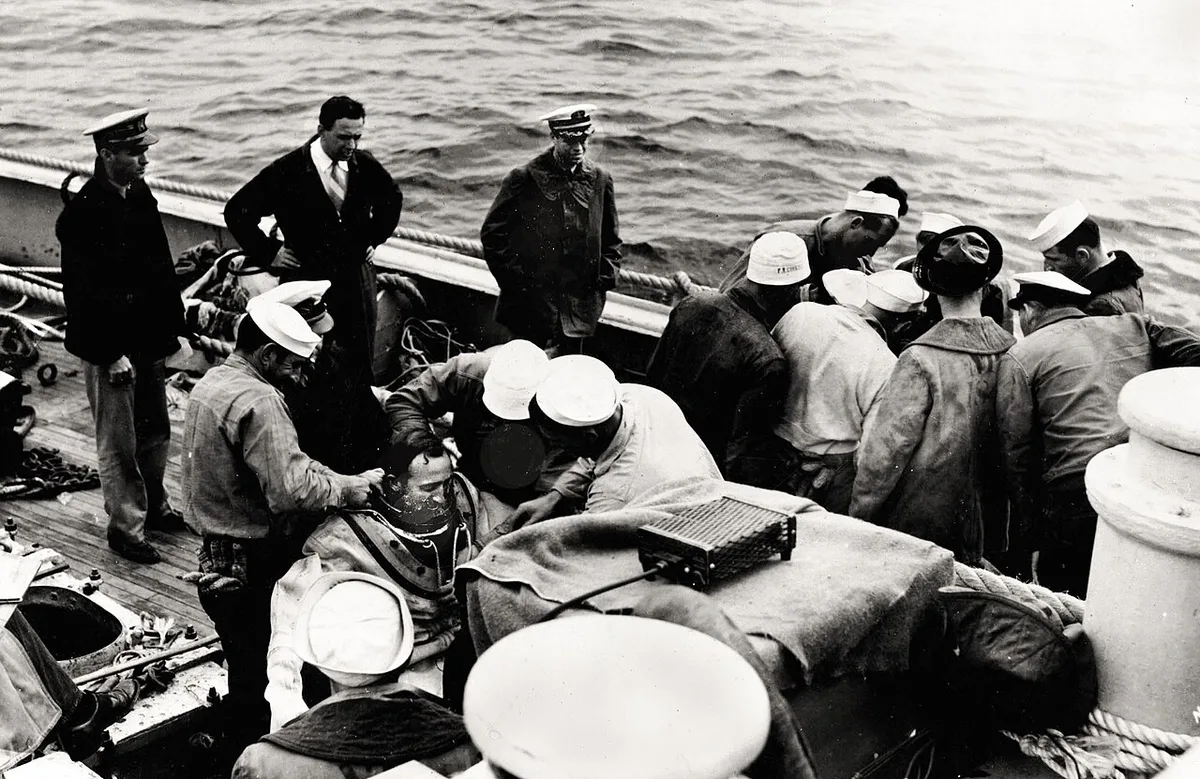
Charles Momsen was a maverick designer, though Charles Momsen was ignored by the navy top brass for years. When catastrophe struck, maverick designer Charles Momsen was called into action to bring up the crew. Utilizing his newly developed rescue chamber, all the men who survived the sinking were rescued.
The Divers and Diving Science
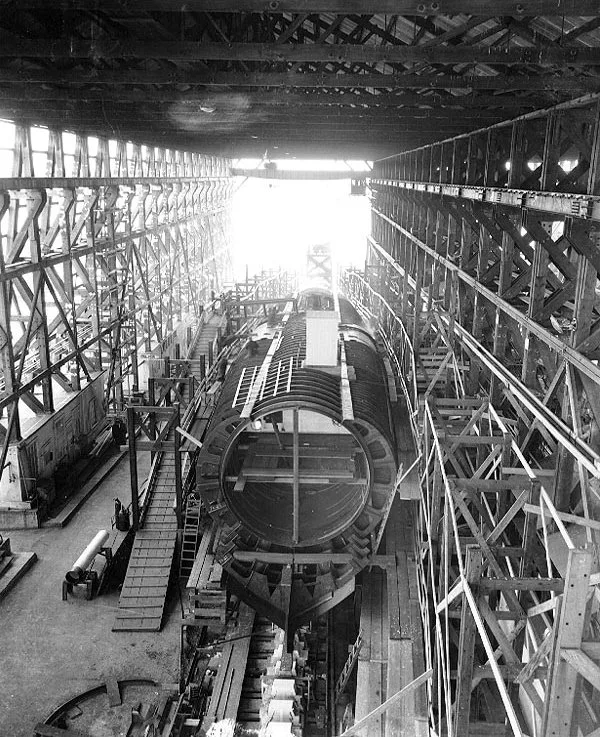
Four enlisted divers were awarded the Medal of Honor for their work during the rescue and subsequent salvage. The rescue kick-started a whole new era of technology, and the program aimed to develop improvements in Navy diving equipment. Through these daring operations, modern deep-sea diving was laid as a foundation by the rescue.
Exoneration and Rebirth as Sailfish
A Navy court of inquiry concluded that a mechanical malfunction caused the disaster, and a Court of Inquiry attributed probable cause to a piping system failure. The court exonerated the Squalus crew, commending Naquin for outstanding leadership during the crisis. USS Squalus was raised and towed into the Portsmouth Navy Yard on 13 September. The Squalus was overhauled in Portsmouth and rechristened the Sailfish, and USS Sailfish was recommissioned on 15 May 1940. Many survivors returned to submarines, with three joining the Sailfish.
What the Record Shows
22 sourced claims in this story, resting on 6 sources. Numbers link to the bibliography below.
- The submarine sank to the bottom and came to rest keel down in 40 fathoms (240 feet) of water. - source: 1
- No-one had ever been saved from a stricken sub beneath the ocean before. - source: 2
- The USS Squalus was lost off the coast of Portsmouth, New Hampshire on May 23, 1939. - source: 3
- A buoy trailing a telephone line was deployed to the surface. - source: 3
- Red smoke rockets were fired periodically to attract attention. - source: 3
- The Sculpin’s propellers drew near overhead and stopped. - source: 3
- The Falcon arrived at the Squalus’s position at 0430 and moored over the Squalus at 0800. - source: 3
- Charles Momsen was a maverick designer. - source: 2
- Charles Momsen was ignored by the navy top brass. - source: 2
- Maverick designer Charles Momsen was called into action to bring up the crew. - source: 2
- All the men who survived the sinking were rescued. - source: 4
- The program aimed to develop improvements in Navy diving equipment. - source: 5
- The rescue kick-started a whole new era of technology. - source: 2
- Modern deep-sea diving was laid as a foundation by the rescue. - source: 2
- Four enlisted divers were awarded the Medal of Honor for their work during the rescue and subsequent salvage. - source: 6
- USS Sailfish was recommissioned on 15 May 1940. - source: 1
- USS Squalus was raised and towed into the Portsmouth Navy Yard on 13 September. - source: 1
- A Court of Inquiry attributed probable cause to a piping system failure. - source: 5
- A Navy court of inquiry concluded that a mechanical malfunction caused the disaster. - source: 3
- The court exonerated the Squalus crew, commending Naquin for outstanding leadership during the crisis. - source: 3
- The Squalus was overhauled in Portsmouth and rechristened the Sailfish. - source: 3
- Many survivors returned to submarines, with three joining the Sailfish. - source: 3
Archival Evidence & Picture Credits
- USS Sailfish;0819202 (Public domain, unknown) - Wikimedia Commons file page
- Martin Dempsey at Portsmouth Naval Shipyard 2013 (Public domain, DoD photo by D. Myles Cullen/Released) - Wikimedia Commons file page
- William Badders (MOH) (Public domain, Naval Historical Center) - Wikimedia Commons file page
- Orson Leon Crandall (Public domain, United States Navy) - Wikimedia Commons file page
- USS Squalus (SS-192) under construction, January 1938 (Public domain, US Navy Employee) - Wikimedia Commons file page
- US Navy 030808-N-0000X-002 Cdr. Charles ‘Swede’ Momsen stands next to the rail (third from left) as USS Falcon (ASR 2) crewmen suit-up two Deep Sea Divers (Public domain, U.S. Navy photo) - Wikimedia Commons file page


Verified Archival Sources & Bibliography
- history.navy.mil
- bbc.co.uk
- navalhistory.org
- oneternalpatrol.com
- purl.access.gpo.gov
- en.wikipedia.org
Recommended Archival Reading
Primary memoirs, declassified investigative reports, and authoritative historical treatises directly related to this dossier.
- Archival Literature Recommended
- Audiobook Edition Free Trial
* Affiliate Disclosure: As an Amazon Associate, Echoes of History Uncut earns from qualifying purchases. This supports our independent historical research, declassified document retrieval, and archival audio production at no additional cost to you.
Echoes of History Uncut. "Trapped on the Ocean Floor: The Sinking and Rescue of USS Squalus." Echoes of History Uncut. Last modified October 20, 2026. https://echoesofhistoryuncut.com/articles/uss-squalus/.