
Two Lions Stopped a Railway by Eating the Workers Building It.
In 1898, a pair of maneless male lions terrorized British Uganda Railway construction camps in Tsavo, Kenya. Over nine months of nocturnal predatory attacks, the lions dragged dozens of Indian indentured laborers from their tents, repeatedly halting work on the railway bridge until engineer John Henry Patterson hunted them down.

In this dossier (11 chapters) ▾
Historical Dossier: The Man-Eaters of Tsavo Location: Tsavo River, British East Africa (now Kenya) | Year: 1898 | Key Figures: Lieutenant-Colonel John Henry Patterson, the railway workers, two male lions
A Railway Across Africa
In March 1898 British engineers began building a railway bridge over the Tsavo River in what is now Kenya. It was part of the Uganda Railway, a line meant to link the Indian Ocean at Kilindini Harbour with Lake Victoria and Uganda. The construction site stretched over about 8 miles and housed thousands of workers, most of them Indian labourers brought in for the project.
Lieutenant-Colonel John Henry Patterson arrived to oversee the building of the bridge, and the killings began almost as soon as he did.
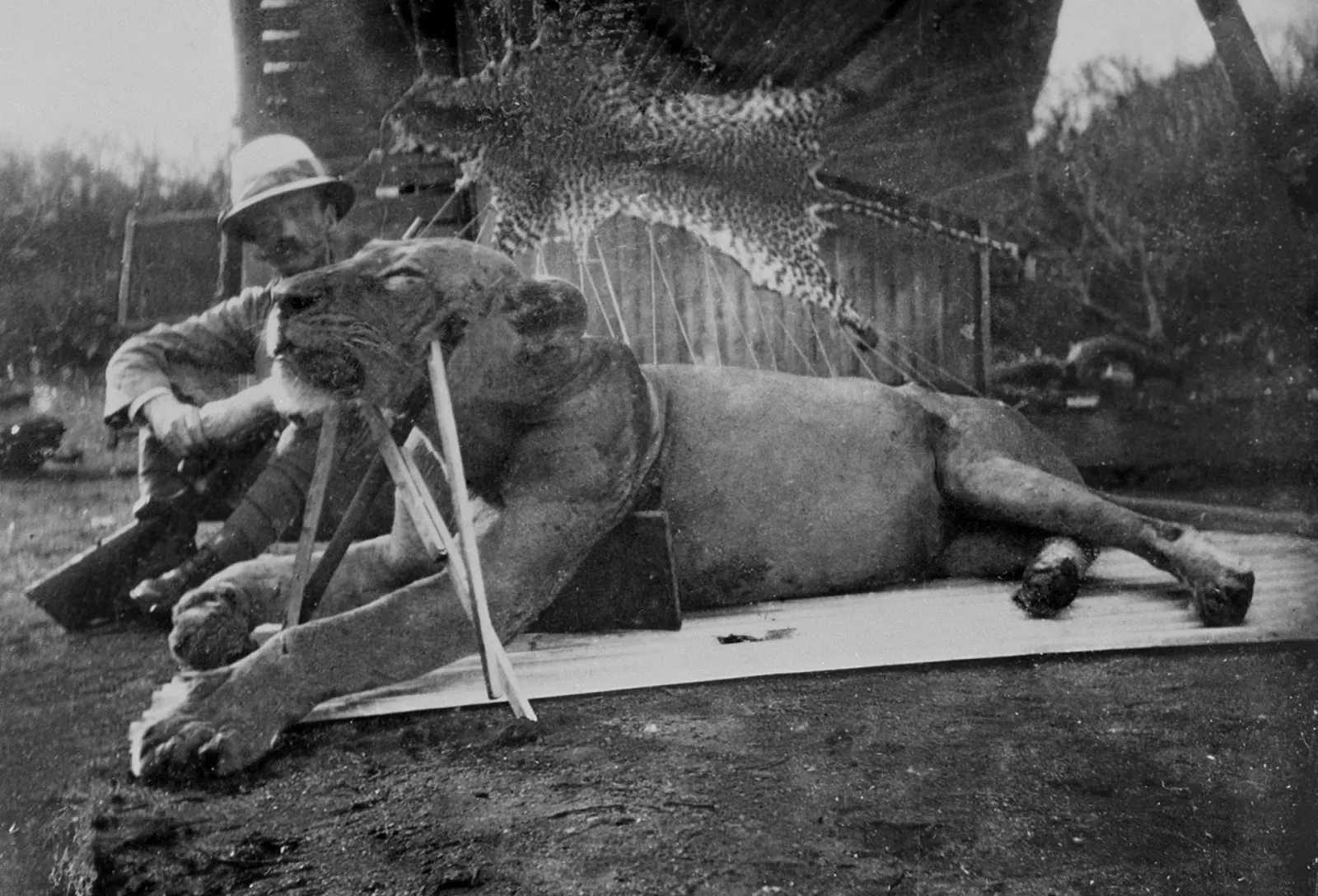
The Engineer
John Henry Patterson was born on 10 November 1867 at Forgney, near Ballymahon in County Longford, Ireland, to a Protestant father and a Roman Catholic mother. He joined the British Army in 1885, at seventeen, and rose to the rank of lieutenant-colonel and was awarded the Distinguished Service Order. In 1898 the Uganda Railway committee in London commissioned him to oversee the construction of the bridge over the Tsavo River, and he reached the site in March of that year. He was a man with a taste for adventure and, as it turned out, for writing: his semi-autobiographical book about the episode, The Man-eaters of Tsavo, was published in 1907. He died on 18 June 1947.
Two Lions
Two male lions, both maneless, began to haunt the camps. They dragged workers from their tents at night, over a period of nine months. At first they attacked one at a time. According to Patterson, they later “became more brazen, entering together and each seizing a victim.”
The workers were terrified. Some of them took the lions for something more than animals. Work on the bridge slowed and at times stopped as the men refused to leave their camps at night. Patterson tried traps and ambushes, and they failed again and again.
How Many Died?
Patterson wrote in his account that the lions killed 135 people, and he repeated the figure in various forms. Modern research has questioned it. A 2001 review of his original journal concluded that the figure was “most likely an exaggeration” and estimated 28 to 31 documented deaths among the Indian workers. The researchers noted that Patterson said the African casualties were higher but that those deaths were not documented.
Isotope studies in 2009 suggested that one of the lions (FMNH 23969) had eaten about 10.5 humans and the other (FMNH 23970) about 24.2, though the combined total could have been as high as 72.
The Hunt
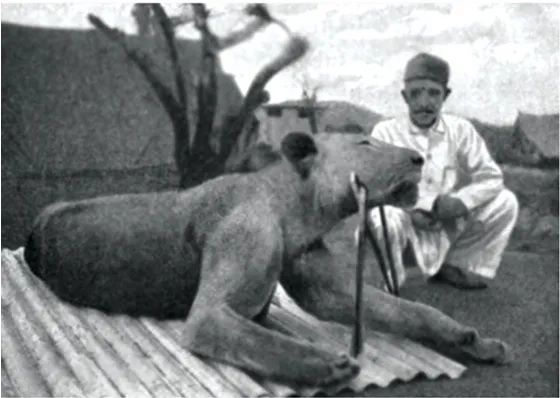
After repeated failed ambushes, Patterson shot the first lion on 9 December 1898. He described hitting it in the shoulder and then, with a more powerful rifle, penetrating its heart. He found it dead the next morning. Twenty days later, on 29 December, the second lion was killed. It was the tougher of the two and took nine shots across several encounters.
What the Lions Ate
A 2024 DNA analysis of hair found in cavities in the lions’ teeth showed that the animals were brothers and that they had fed on zebra, oryx, waterbuck, wildebeest and giraffe as well as humans. They seem to have alternated between wild prey and the workers.
The Lions in Chicago
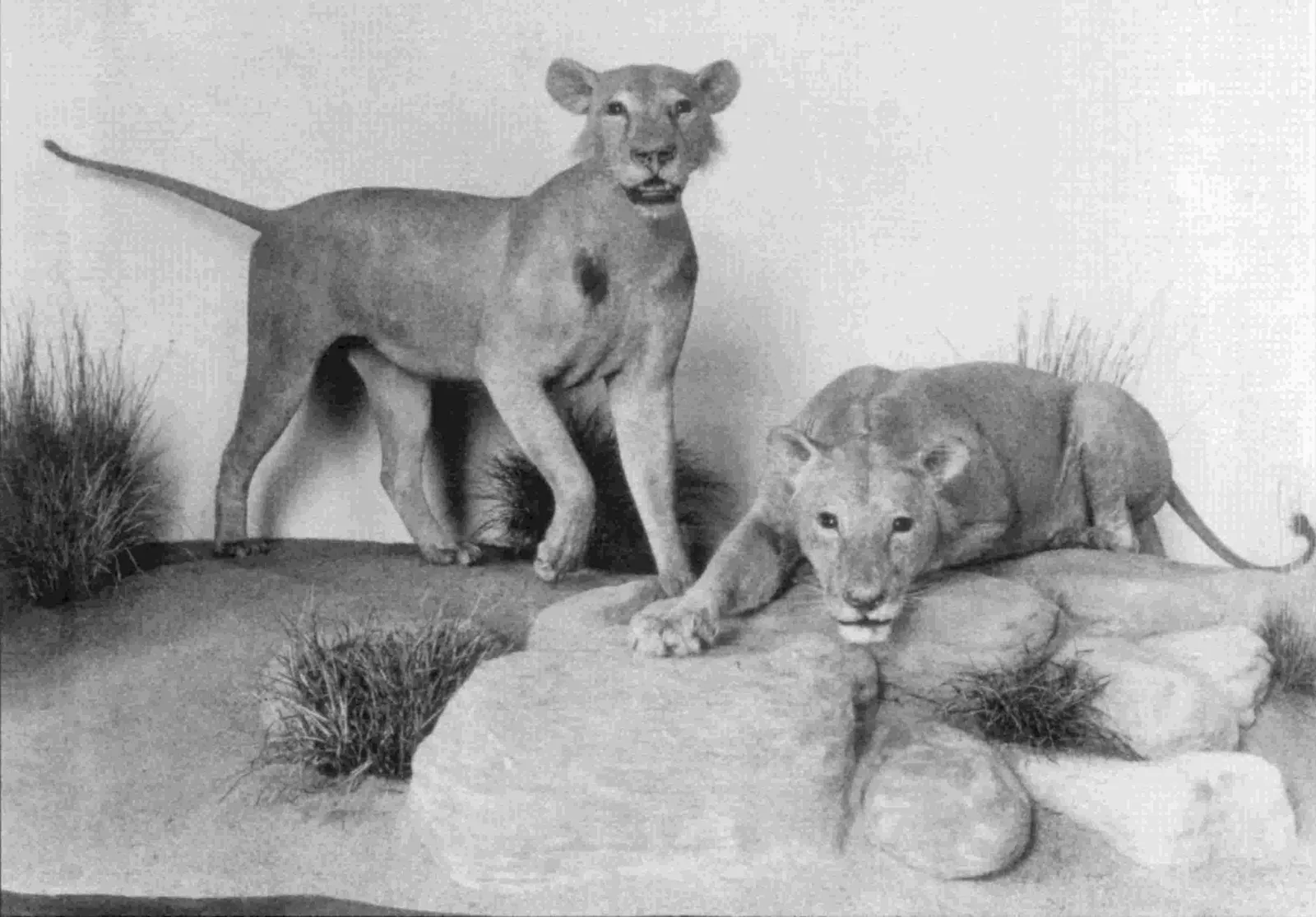
Patterson turned his story into a book, The Man-Eaters of Tsavo, which was adapted for several films, the best known of which is The Ghost and the Darkness (1996), with Val Kilmer as Patterson. In 1924 the Field Museum in Chicago bought the lions’ remains for $5,000, and the mounted animals are still on display.
A Story Told by One Man
The story of Tsavo comes mostly from Patterson himself, who had every reason to make it exciting. Scientists have found that the figure of 135 is probably too high, and yet the lions were real, they did kill workers, and for nine months they stopped one of the largest engineering projects in the British Empire. That is enough to make the legend of Tsavo worth telling.
What the Record Shows
8 sourced claims in this story, resting on 4 primary and historical records. Numbers link to the bibliography below.
- Two maneless male lions preyed on railroad workers building the Uganda Railway at Tsavo in 1898 - sources: 4
- Construction was halted for nearly a month as hundreds of Indian laborers refused to work - sources: 2
- Engineer Lt. Col. John Henry Patterson shot both lions in December 1898 - sources: 2, 4
- Patterson sold the lion skins and skulls to the Field Museum of Natural History in Chicago in 1924 - sources: 2, 3
- Stable isotope analysis in 2009 scientifically verified that the lions consumed approximately 35 humans - sources: 3
- Dental pathology examinations revealed severe jaw injuries and broken canine teeth that impaired hunting buffalo - sources: 5
- Tsavo lions typically lack manes due to extreme regional heat and thorn-dense scrub ecology - sources: 3, 4
- The lions’ taxidermy mounts remain one of the Field Museum’s most celebrated zoological exhibits - sources: 3, 4
Archival Evidence & Picture Credits
Every image on this page was checked against its Wikimedia Commons file page.
- Lieutenant Colonel John Henry Patterson with one of the Tsavo lions he shot (Wikimedia Commons) - Wikimedia Commons file page
- The second man-eating lion shot by Patterson (Wikimedia Commons) - Wikimedia Commons file page
- The mounted Tsavo man-eaters on display at the Field Museum in Chicago (Wikimedia Commons) - Wikimedia Commons file page


Verified Archival Sources & Bibliography
Every claim in this account has been fact-checked against primary archives and scholarly repositories:
- Internet Archive: The Man-Eaters of Tsavo (Lt. Col. J. H. Patterson) (primary)
- Field Museum of Natural History (Chicago): The True Story of the Tsavo Lions (primary)
- Wikipedia: Tsavo Man-Eaters (reference)
- Scientific Reports: Dental pathology and prey choice in the Tsavo man-eaters (academic)
Echoes of History Uncut. "Two Lions Stopped a Railway by Eating the Workers Building It.." Echoes of History Uncut. Last modified September 15, 2026. https://echoesofhistoryuncut.com/articles/tsavo-man-eaters/.

An independent history publication using AI-assisted research, drafting and production. Consult each article’s citations and limitations; source inclusion does not establish independent verification of every claim.
▶
Watch the Complete Archival Documentary on YouTube
Subscribe to Echoes of History Uncut on YouTube for full widescreen 16:9 documentaries, primary archival footage, and declassified deep dives.