
A Former President Paddled Into an Unmapped River. It Nearly Killed Him.
After losing the 1912 presidential election, Theodore Roosevelt joined legendary Brazilian explorer Colonel Cândido Rondon to map the Rio da Dúvida—the River of Doubt—an unknown, treacherous tributary deep in the Amazon basin. Heavy dugout canoes were repeatedly smashed in violent rapids, forcing the party to hack trails through virgin jungle while running on starvation rations. Struck by malaria and a horrific bacterial leg infection, Roosevelt begged his son to leave him behind to die. Of the nineteen men who entered the jungle, sixteen returned. The river was officially renamed Rio Roosevelt, but the brutal ordeal permanently shattered the former president's health.

In this dossier (14 chapters) ▾
- 01 A Former President in the Wilderness
- 02 Rondon
- 03 Into the River
- 04 The Team
- 05 The Rubber Tappers
- 06 How the Trip Changed
- 07 Up to the River
- 08 Sickness and Murder
- 09 The Wound
- 10 A New Name
- 11 Why It Matters
- 12 What the Record Shows
- 13 Archival Evidence & Picture Credits
- 14 Verified Archival Sources & Bibliography
Historical Dossier: The Roosevelt-Rondon Expedition and the River of Doubt Location: The Rio da Dúvida (now Rio Roosevelt), Brazil | Year: 1913–1914 | Key Figures: Theodore Roosevelt, Cândido Rondon, Kermit Roosevelt, George Cherrie
A Former President in the Wilderness
After losing the 1912 presidential election as the Bull Moose candidate, Theodore Roosevelt looked for a challenge. He found it in Brazil. With his son Kermit and the great Brazilian explorer Cândido Rondon, he set out to follow a river that had not been mapped, the Rio da Dúvida, the River of Doubt. Nobody knew where it flowed, or whether it joined the Amazon system.
Roosevelt was no longer young. He was still carrying a bullet from the attempt on his life in 1912. The expedition had about 17 other members in addition to the leaders, among them the naturalist George Cherrie.
Rondon
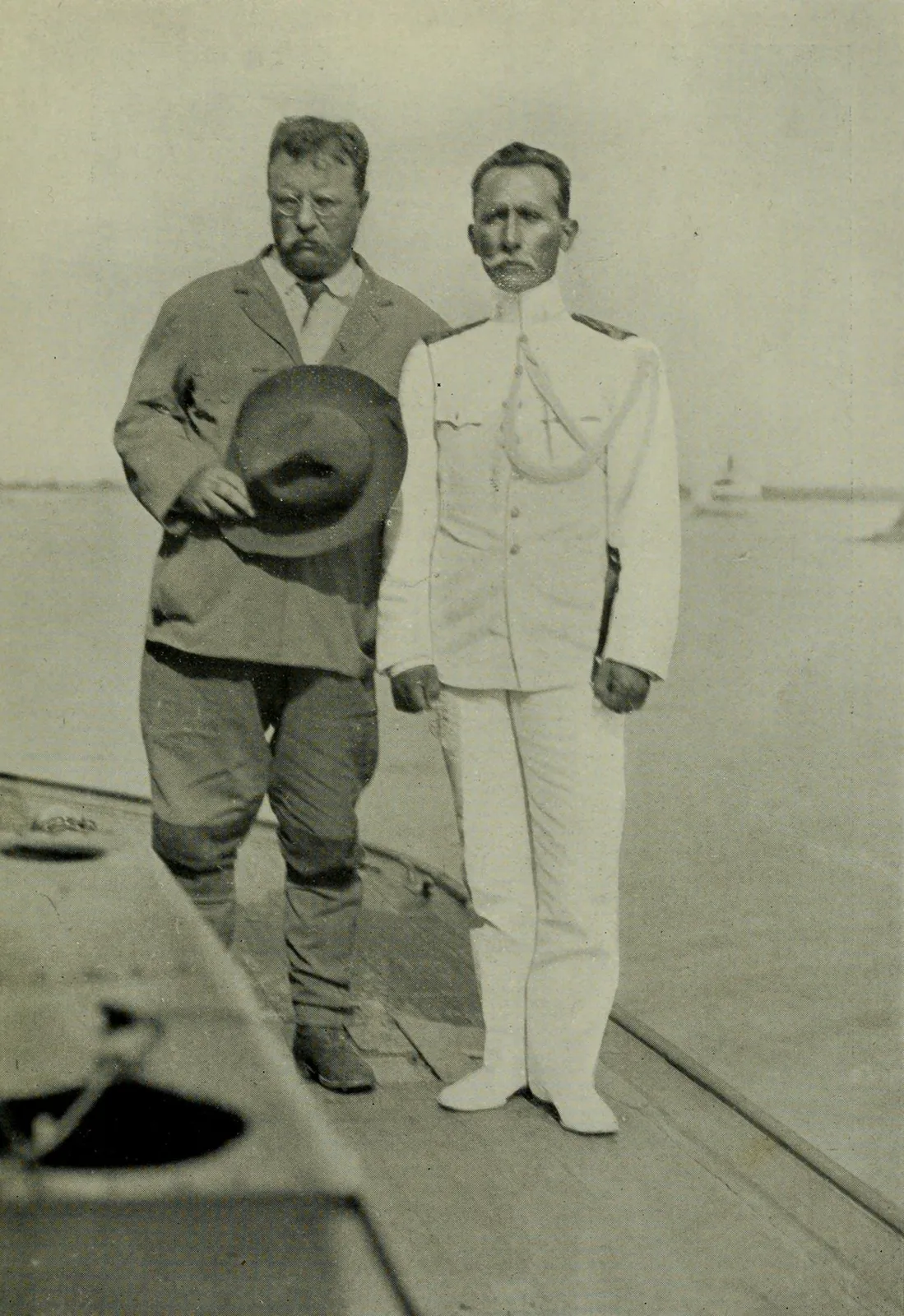
Rondon was the best-known explorer in Brazil, the man who had discovered the river. He and Roosevelt made a good pair: Roosevelt was a former president and a writer, and Rondon a soldier who had spent years mapping the interior.
Into the River
The expedition entered the River of Doubt on 27 February 1914. It reached the junction with the Aripuanã on 26 April, about 58 days and roughly 470 miles later.
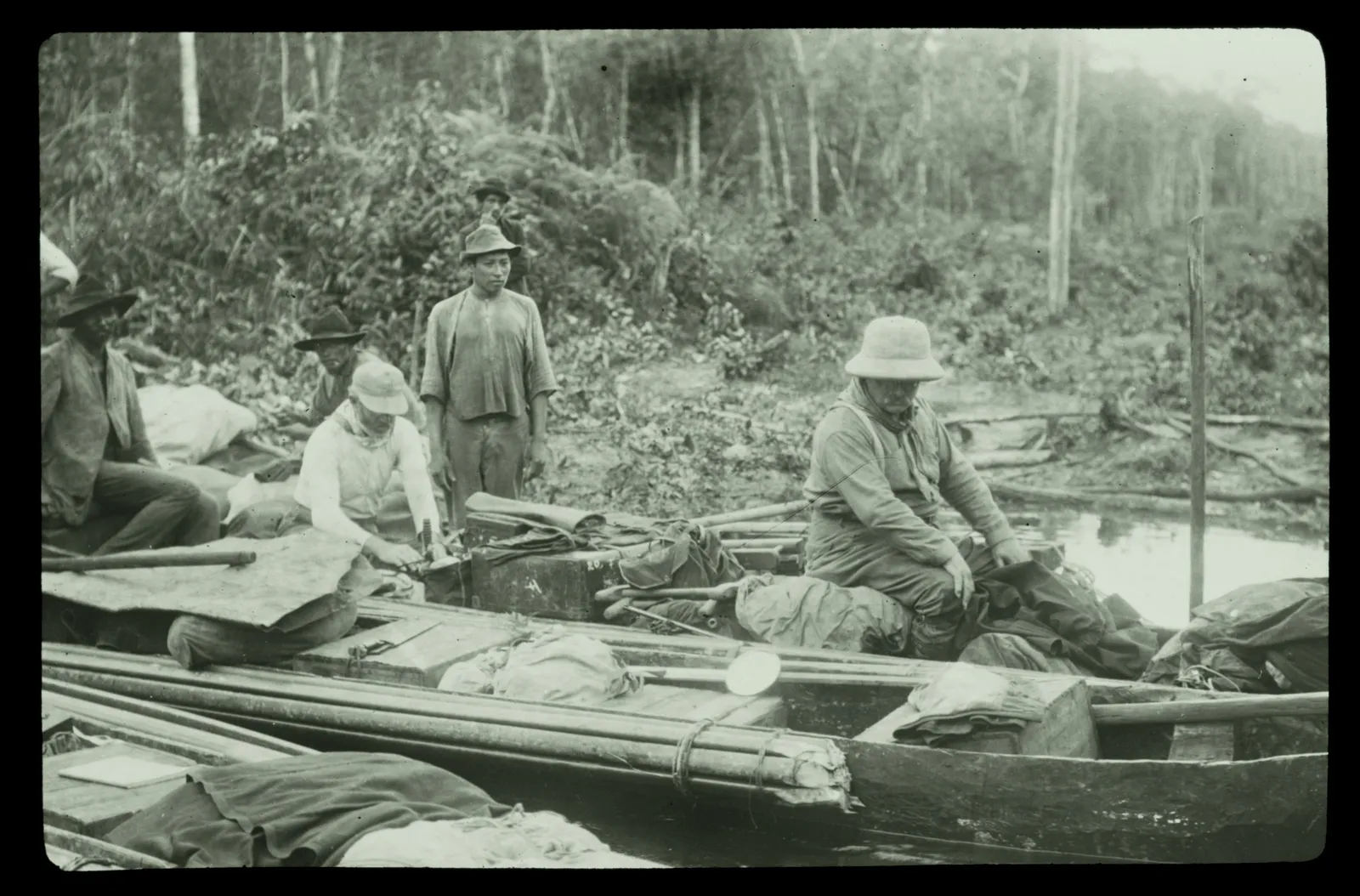
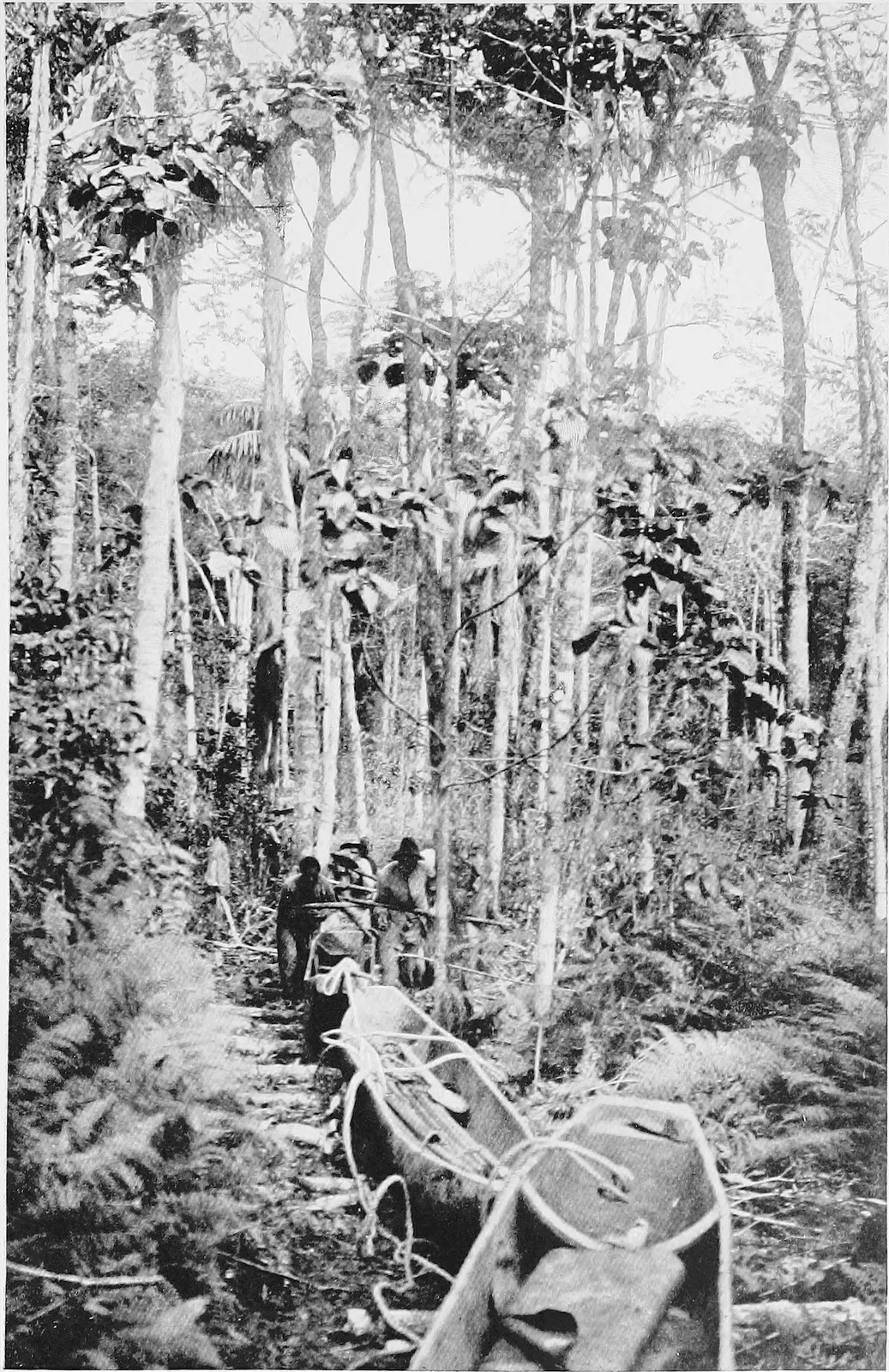
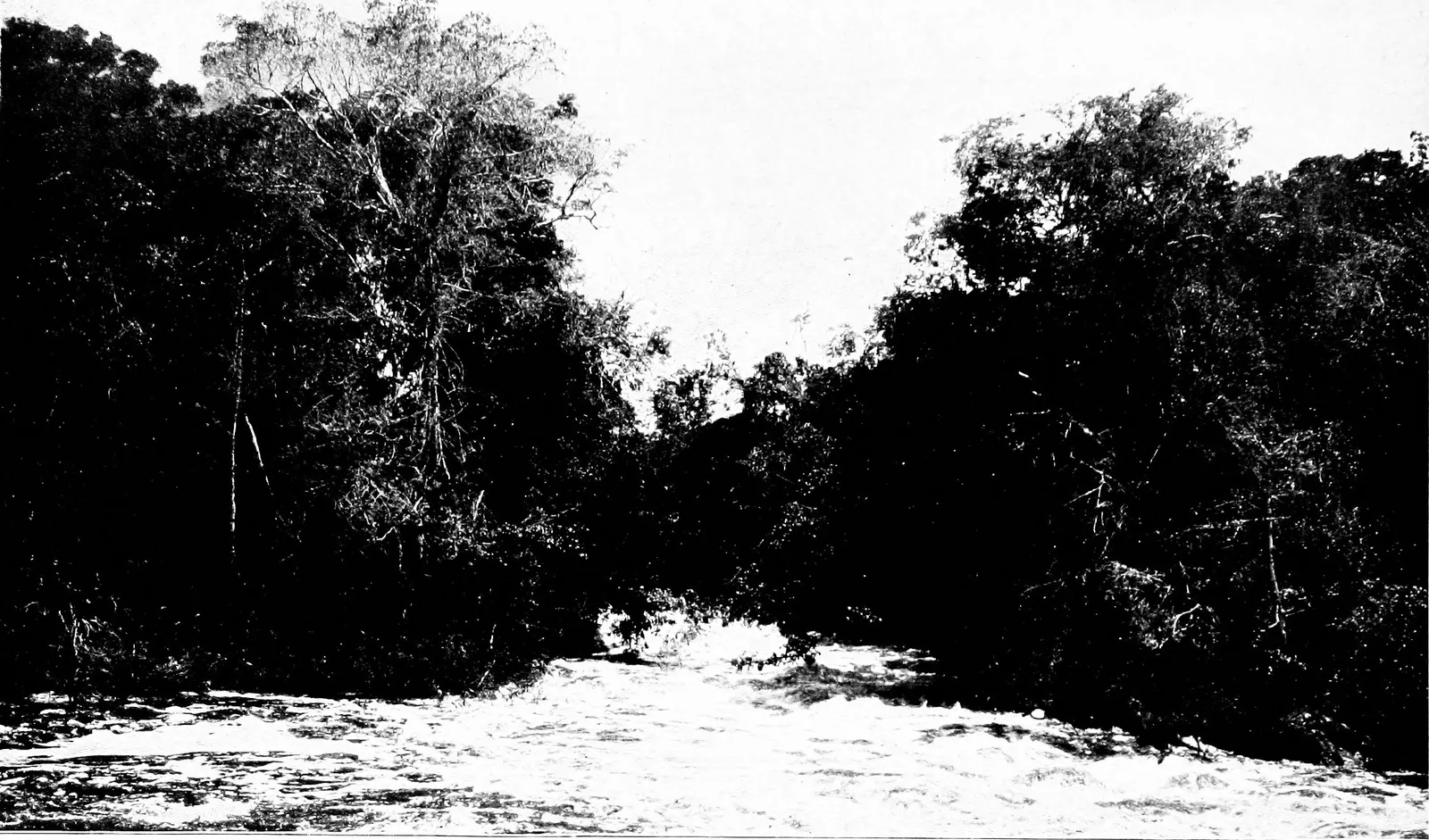
The river was not kind. The party faced rapids and waterfalls that forced them to portage heavy dugout canoes through the forest again and again. Canoes capsized. Food ran low, and there was disease and hunger.
There were deaths, by drowning and by violence. And Roosevelt himself was gravely ill. A tropical infection, following an injury sustained in the descent, brought him close to death. According to accounts, he considered staying behind so as not to slow the others, but in the end he carried on. By the end he had lost about 55 pounds.
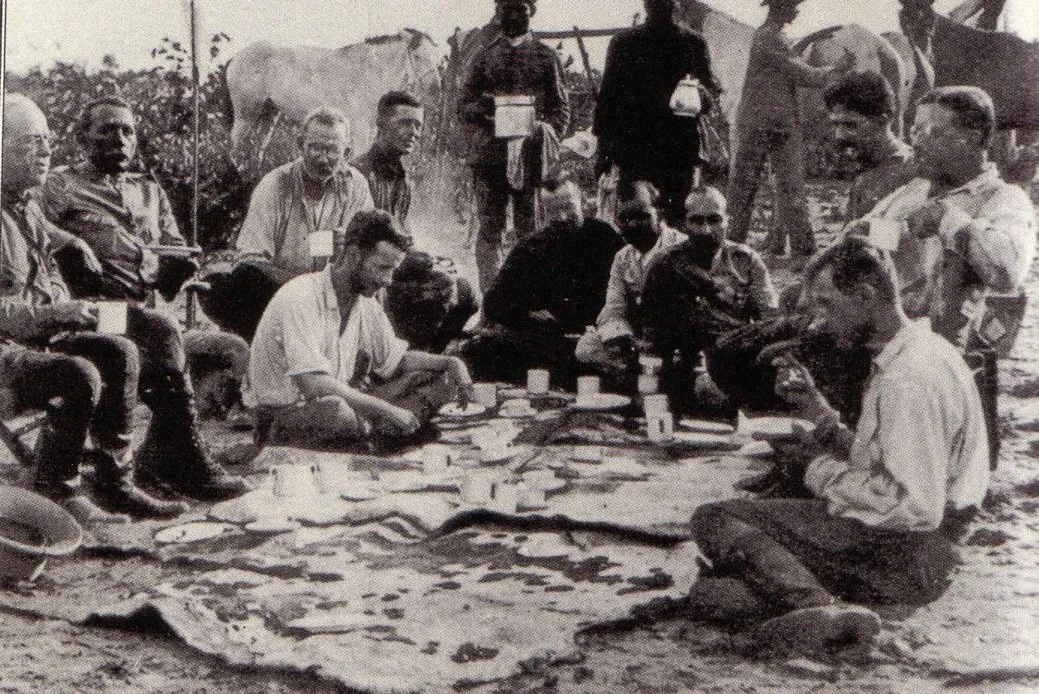
The Team
The party moved as a group, with Brazilian soldiers and boatmen doing much of the labour, and the Americans and Brazilians relying on one another through the worst of it.
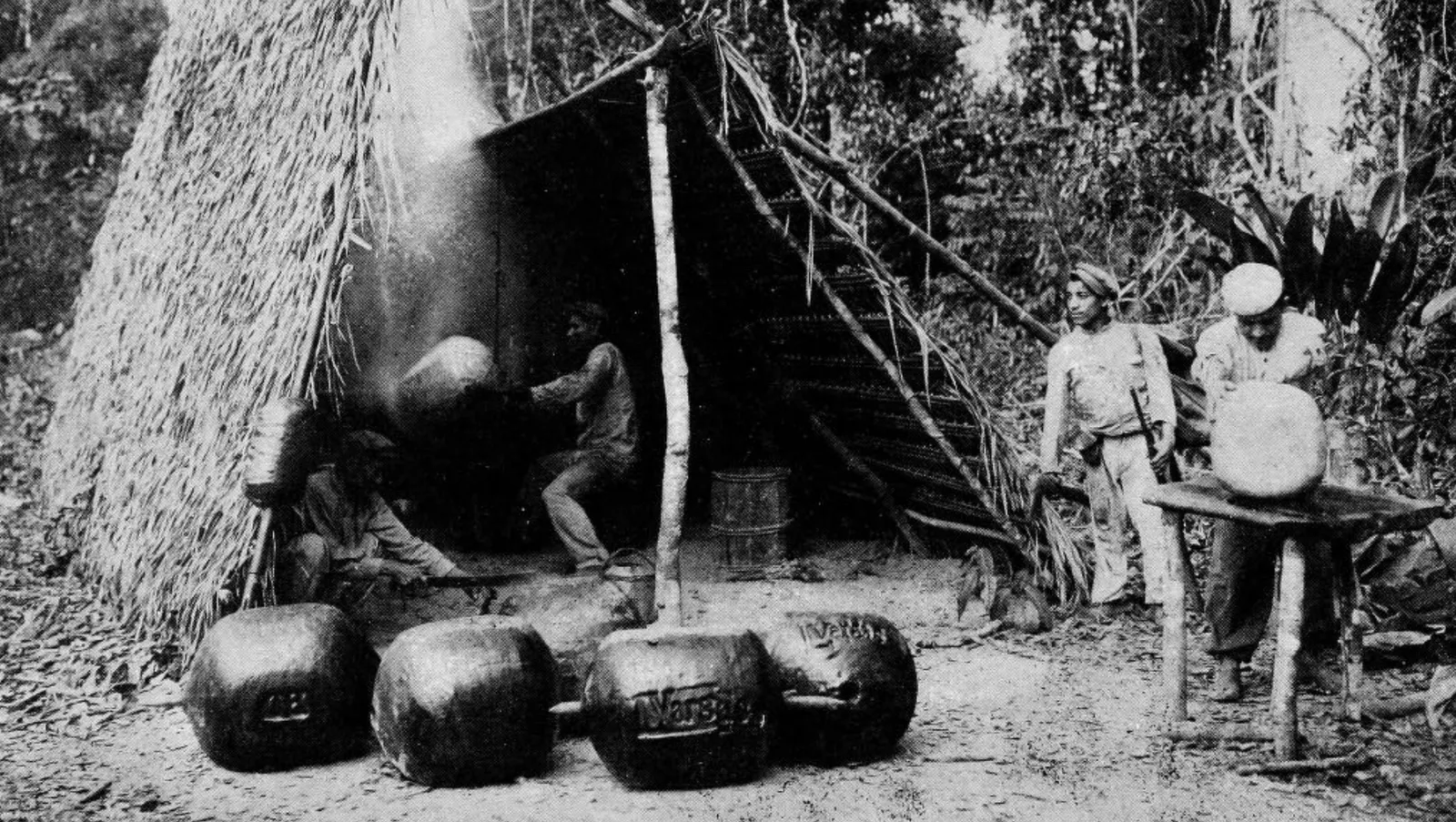
The Rubber Tappers
At the end of the journey the survivors met settlers who lived by tapping rubber trees, and who helped them. The rubber economy had made the Amazon interior a place of small, remote communities.
How the Trip Changed
Roosevelt had first planned a speaking tour of Argentina and Brazil, followed by an Amazon cruise arranged by his friend Father John Augustine Zahm. The Brazilian government offered something more ambitious: to join Rondon on an expedition down the Rio da Dúvida, whose headwaters Rondon had found only in 1909. Roosevelt accepted with enthusiasm, and the American Museum of Natural History sponsored the trip as a scientific mission to collect animal and insect specimens.
Kermit Roosevelt first declined, because he was recently engaged, but his mother Edith insisted that he go with his father as protection.
Up to the River
The expedition set out in December 1913 from Cáceres, a small town on the Paraguay River in Mato Grosso. It travelled northwest through the Pantanal wetlands to Tapirapuã, where Rondon had found the headwaters, and from there through dense forest and over the Parecis plateau.
When they reached the River of Doubt on 27 February 1914, food was already short. The party split. Father Zahm and the quartermaster Anthony Fiala followed the Ji-Paraná River towards the Madeira. The rest, Theodore and Kermit Roosevelt, Rondon, the naturalist George Cherrie and fifteen Brazilian porters, started down the unknown river.
Sickness and Murder
Dugout canoes proved a poor match for constant rapids, and were often lost, so the men spent days building replacements. Malaria, insects and festering wounds left everyone in “a constant state of sickness.”
Three men died. One porter drowned in the rapids, and his body was never recovered. In early April, a porter named Julio de Lima killed Manoel Vicente da Paixão, the supervisor of the porters, after being caught stealing food. The exhausted expedition could not take the killer into custody and left him in the jungle.
The Wound
Roosevelt was hurt while trying to save canoes in the rapids. The gash in his leg became infected, and turned into an abscess with a high fever. By the middle of the journey everyone except Rondon was sick or injured, and Roosevelt’s condition was so bad that the party feared for his life each day.
Help came from rubber-tappers, the seringueiros, poor workers who gathered rubber for the booming tyre industry and who helped the team through the lower, easier stretches of the river. On 26 April 1914 a relief party of Brazilians and Americans, led by Lieutenant Antonio Pyrineus of Rondon’s Telegraph Commission, met the expedition at the confluence with the Aripuanã.
Roosevelt went home to New York to a hero’s welcome three weeks later, badly weakened. “His health never fully recovered after the trip,” according to one account, “and he died less than five years later of related causes.” He died in January 1919.
A New Name
The Brazilian government renamed the river the Rio Roosevelt, in honour of his contribution to its exploration. Roosevelt wrote an account of the trip, Through the Brazilian Wilderness, which was published in 1914. Some sceptics doubted that he had done what he said. In 1927 the British explorer George Miller Dyott retraced parts of the route and confirmed Roosevelt’s account.
Why It Matters
The expedition showed that the man known as a symbol of American vigour could be pushed to the edge of his strength by a river that nobody had mapped. It also put a river on the map, and it is remembered in Brazil as a joint expedition, in which a Brazilian soldier and a former American president went down together into the unknown.
What the Record Shows
8 sourced claims in this story, resting on 6 primary and historical records. Numbers link to the bibliography below.
- Theodore Roosevelt and Colonel Cândido Rondon co-led an expedition down the unmapped Rio da Dúvida in 1914 - sources: 1, 2
- The nineteen-man party launched seven heavy dugout canoes on February 27, 1914 - sources: 2, 3
- Repeated rapids destroyed five canoes, forcing grueling overland portages through dense jungle - sources: 2, 4
- Porter Simplicio drowned in a whirlpool, and another laborer was murdered by a fellow porter over stolen rations - sources: 1, 2
- Roosevelt suffered from severe malaria and a deep bacterial leg infection, spiking a fever of 105°F - sources: 2, 5
- Roosevelt pleaded with his son Kermit to leave him behind with morphine, but Kermit refused - sources: 2, 5
- Brazilian rubber tappers encountered in late April provided emergency food and guided them out - sources: 1, 2
- Brazil officially renamed the waterway Rio Roosevelt; the lingering infections contributed to Roosevelt’s early death in 1919 - sources: 1, 6
Archival Evidence & Picture Credits
Every image on this page was checked against its Wikimedia Commons file page.
- Theodore Roosevelt resting in camp during the Brazil expedition, 1913, photographed by his son Kermit (Library of Congress / Wikimedia Commons) - Wikimedia Commons file page
- Colonel Roosevelt with Colonel Cândido Rondon of the Brazilian Army, 1914 (Wikimedia Commons) - Wikimedia Commons file page
- Expedition members portaging heavy dugout canoes along the River of Doubt, from Roosevelt’s book (Wikimedia Commons) - Wikimedia Commons file page
- Theodore Roosevelt and Kermit Roosevelt on the riverbank during the expedition (Wikimedia Commons) - Wikimedia Commons file page
- The core team of the Roosevelt-Rondon expedition at camp (Wikimedia Commons) - Wikimedia Commons file page
- Seringueiros, Amazon rubber tappers, smoking Pará rubber (Wikimedia Commons) - Wikimedia Commons file page


Verified Archival Sources & Bibliography
Every claim in this account has been fact-checked against primary archives and scholarly repositories:
- Wikipedia: Roosevelt–Rondon Scientific Expedition (reference)
- Internet Archive: Through the Brazilian Wilderness (Theodore Roosevelt, 1914) (primary)
- The Geographical Review: Mapping the River of Doubt (academic)
- Theodore Roosevelt Center (Dickinson State University): Brazilian Expedition Artifacts (primary)
- Smithsonian Magazine: The Darkest Journey of Theodore Roosevelt (Candice Millard) (historical account)
- Library of Congress: Theodore Roosevelt Papers and Amazon Diaries (primary)
Echoes of History Uncut. "A Former President Paddled Into an Unmapped River. It Nearly Killed Him.." Echoes of History Uncut. Last modified September 21, 2026. https://echoesofhistoryuncut.com/articles/river-of-doubt-brazil-1914/.

An independent history publication using AI-assisted research, drafting and production. Consult each article’s citations and limitations; source inclusion does not establish independent verification of every claim.
▶
Watch the Complete Archival Documentary on YouTube
Subscribe to Echoes of History Uncut on YouTube for full widescreen 16:9 documentaries, primary archival footage, and declassified deep dives.