
Accounts Disagree on Lincoln’s Famous Wrestling Match
In the late summer of 1831, a gangling twenty-two-year-old store clerk named Abraham Lincoln faced off against Jack Armstrong, champion of the roughneck Clary's Grove boys, in a legendary frontier wrestling bout on the dusty streets of New Salem, Illinois. Though later campaign biographers cast Lincoln as a clean victor, eyewitness accounts and historical depositions reveal a far more chaotic, disputed contest that forged a lifelong brotherhood.
In this dossier (9 chapters) ▾
- 01 The Raw Stranger in New Salem
- 02 The Clary’s Grove Boys and Jack Armstrong
- 03 The Duel in the Dust: Side-Hold Wrestling
- 04 The Conflict and the Fractured Accounts
- 05 From Brawlers to Blood Brothers
- 06 The Almanac Trial of “Duff” Armstrong
- 07 What the Record Shows
- 08 Archival Evidence & Picture Credits
- 09 Verified Archival Sources & Bibliography
Historical Dossier: Lincoln vs. Armstrong & The Frontier Culture of New Salem Location: New Salem, Sangamon County, Illinois | Date: August / Autumn 1831 | Key Figures: Abraham Lincoln, Jack Armstrong, Denton Offutt, William H. Herndon
The Raw Stranger in New Salem
In July 1831, twenty-two-year-old Abraham Lincoln floated down the Sangamon River into the tiny frontier settlement of New Salem, Illinois, aboard a flatboat he had piloted from Indiana. Standing six feet four inches tall—a towering giant in an era when the average American male stood barely five-foot-seven—Lincoln was all bone, tendon, and sinew, weighing barely two hundred pounds with sinewy, ape-like arms that could swing an axe with frightening velocity.
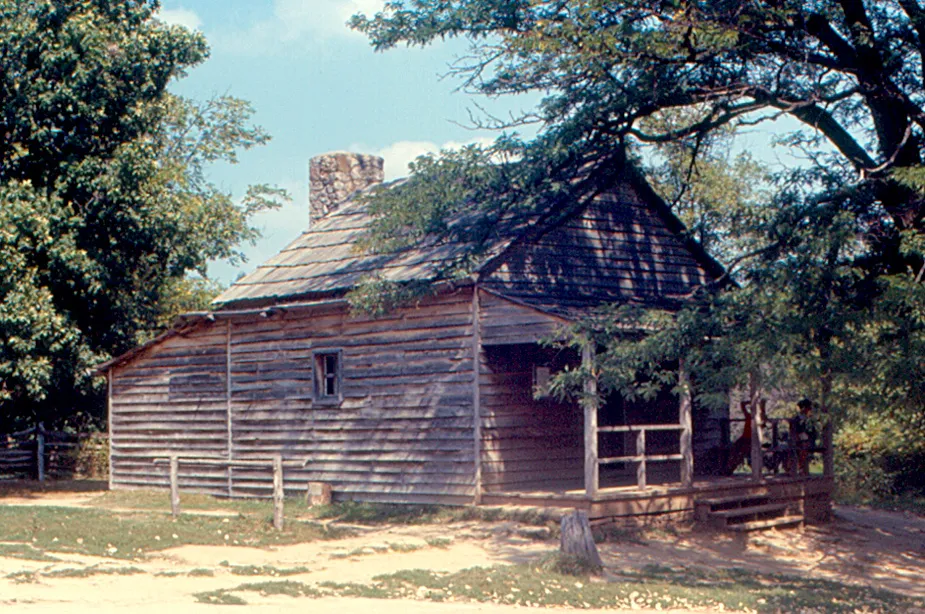
He arrived as an uneducated, destitute stranger wearing faded flax trousers too short for his long legs and a battered straw hat. An ambitious, boastful local merchant named Denton Offutt took a liking to the gangling young man and hired Lincoln as a general store clerk in his newly opened trading post.
Offutt, a chronic gambler and loud braggart, could not resist bragging about his new employee. As locals drank whiskey around the counter, Offutt declared to all within earshot that Lincoln was not only the smartest scholar on the frontier, but could out-run, out-jump, out-throw, and out-wrestle any man in the entire county.
In frontier Illinois, such public boasts were treated as an explicit, binding challenge that had to be answered.
The Clary’s Grove Boys and Jack Armstrong
A few miles southwest of New Salem lay a settlement known as Clary’s Grove, home to a rowdy, clannish band of frontier roughnecks known throughout the region as the “Clary’s Grove boys.” They were hard-drinking, fearless horsemen, brawlers, and practical jokers who routinely tested every newcomer to New Salem by rolling them down a ravine inside a whiskey barrel or forcing them into a fight.
The undisputed champion and physical leader of the Clary’s Grove gang was Jack Armstrong. While shorter than Lincoln at about five feet eight inches, Armstrong was built like a stone boulder—broad-chested, thick-necked, and possessing ferocious wrestling power honed by years of unregulated frontier grappling.
Hearing Offutt’s boasts, Armstrong and his boys marched into New Salem. Offutt immediately offered to wager ten dollars (a substantial sum on the cash-poor frontier) that Lincoln could throw Armstrong in a wrestling bout. Lincoln initially protested, telling Offutt:
“Denton, I don’t want to get into any wool-pulling and scuffling. I’m not a brawler.”
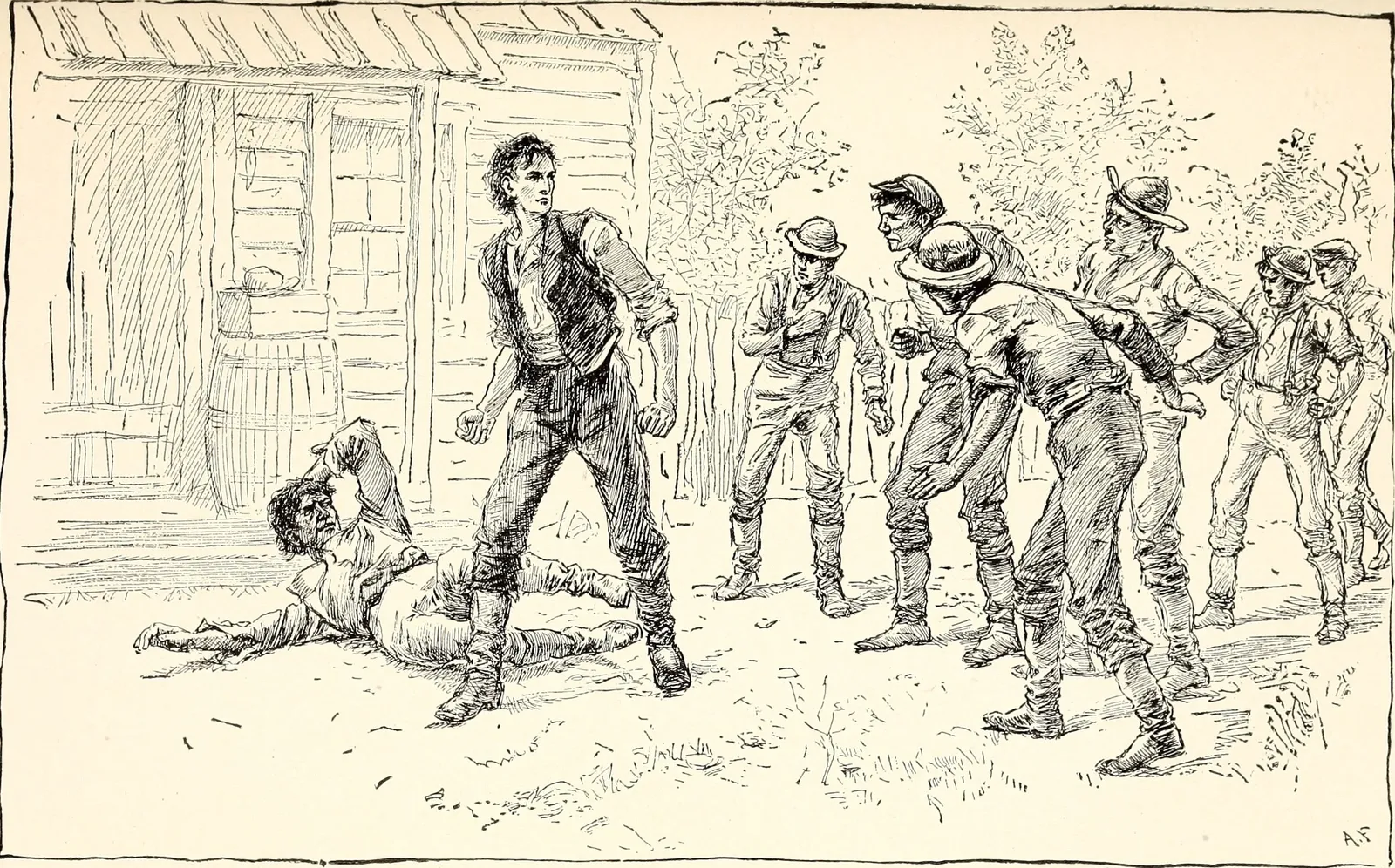
However, in frontier culture, refusing to wrestle marked a man as a coward, making peaceful trade or business impossible. Surrounded by shouting spectators and egged on by Offutt, Lincoln finally took off his wool coat and stepped into the dusty clearing outside the store.
The Duel in the Dust: Side-Hold Wrestling
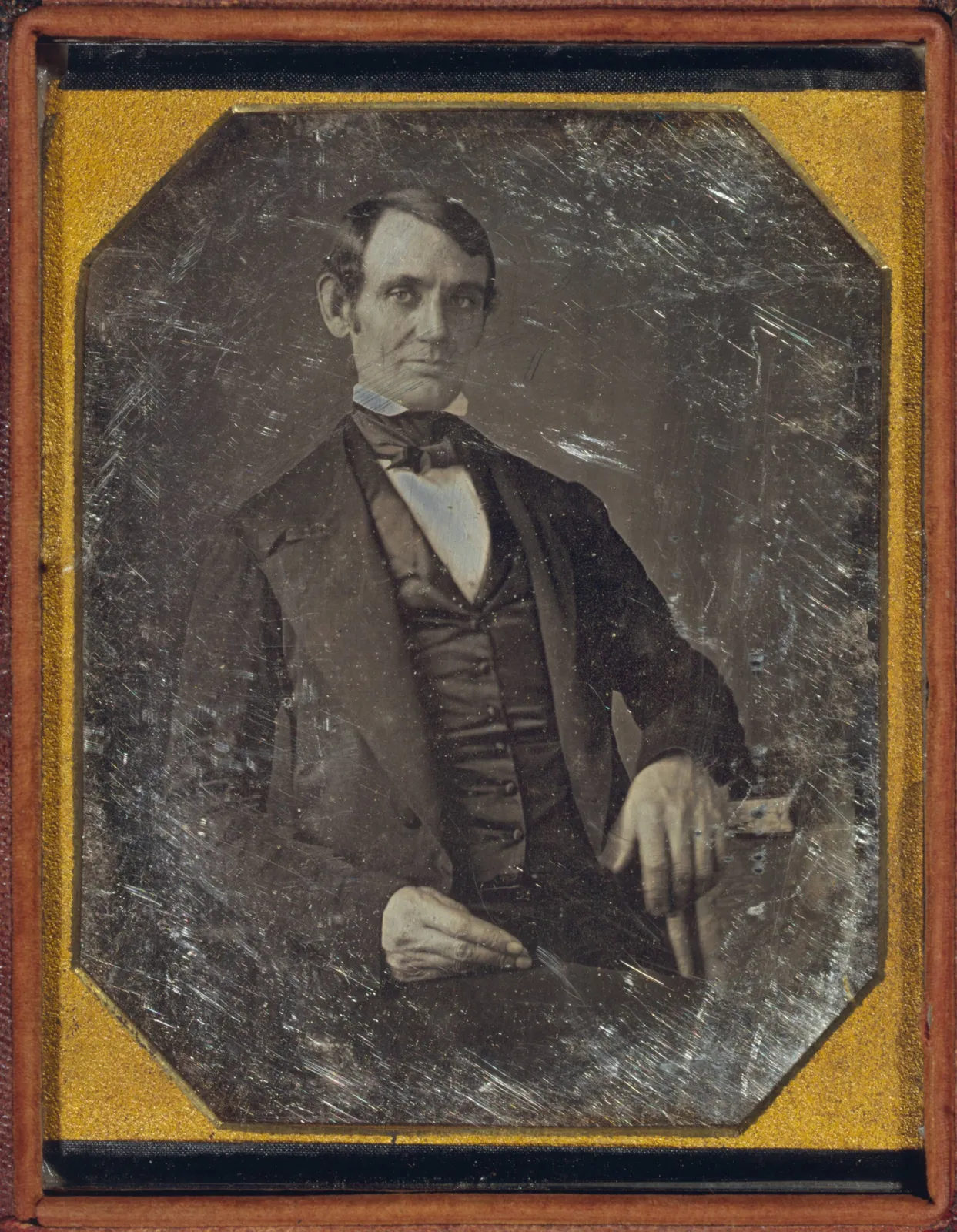
Frontier wrestling was not the collegiate style of the modern era, but “side-hold” (or collar-and-elbow) grappling: each combatant took a firm grip on the other’s coat collar or shoulder with one hand and hip or elbow with the other. The objective was to throw the opponent to the ground so that his back or two shoulders struck the turf cleanly.
The contest began in the afternoon heat. Hundreds of settlers and rowdies formed a circle around the two men.
For several minutes, the two locked grips and strained against each other. Lincoln utilized his enormous reach to keep the muscular Armstrong at arm’s length, while Armstrong repeatedly attempted to close the distance and throw Lincoln over his hip.
Neither man could gain an advantage. Accounts recorded by Lincoln’s law partner and biographer, William H. Herndon, who conducted extensive oral history interviews with New Salem survivors in 1865, record that Armstrong grew increasingly frustrated as his attacks failed to unbalance the lanky storekeeper.
The Conflict and the Fractured Accounts
What happened next became the subject of bitter debate, contested eyewitness testimony, and hagiographic revisionism for over a century:
Account A: The Foul and the Chokehold (Herndon’s Primary Narrative)
According to testimony given by New Salem resident R.B. Rutledge and William Green, Armstrong, realizing he was being bested by Lincoln’s leverage, committed a blatant frontier foul—stomping down heavily on Lincoln’s instep or attempting to trip him unlawfully (“fouling his heels”).
Enraged by the unfair tactic, Lincoln broke his grip, seized Armstrong by the throat with his massive hands, lifted him off his feet, and shook him like a terrier shaking a rat, or hurled him violently into the dirt.
At that moment, the enraged Clary’s Grove gang began closing in to swarm Lincoln. Backing against the timber wall of Offutt’s store, Lincoln held up his fists and roared:
“I’ll take any one of you, or the whole damned pack, but you come on one at a time!”
Intimidated by Lincoln’s terrifying fury and immense height, nobody stepped forward.
Account B: The Mutual Throw and the Honorable Draw
Other credible eyewitness depositions, including testimony from Royal Clary and Isaac Onstot, offer a less sensational, more sportsmanlike conclusion. In this version, after protracted grappling, both men fell heavily to the dirt together in a tangled heap, with neither man able to claim a clean back fall.
Armstrong rose, brushed the dirt from his breeches, turned to his cheering gang, and declared:
“Boys, Abe Lincoln is the best fellow that ever broke into this settlement. He’s not thrown me, and I haven’t thrown him, but he can lick any man among us.”
Armstrong extended his hand, and Lincoln shook it warmly.
From Brawlers to Blood Brothers
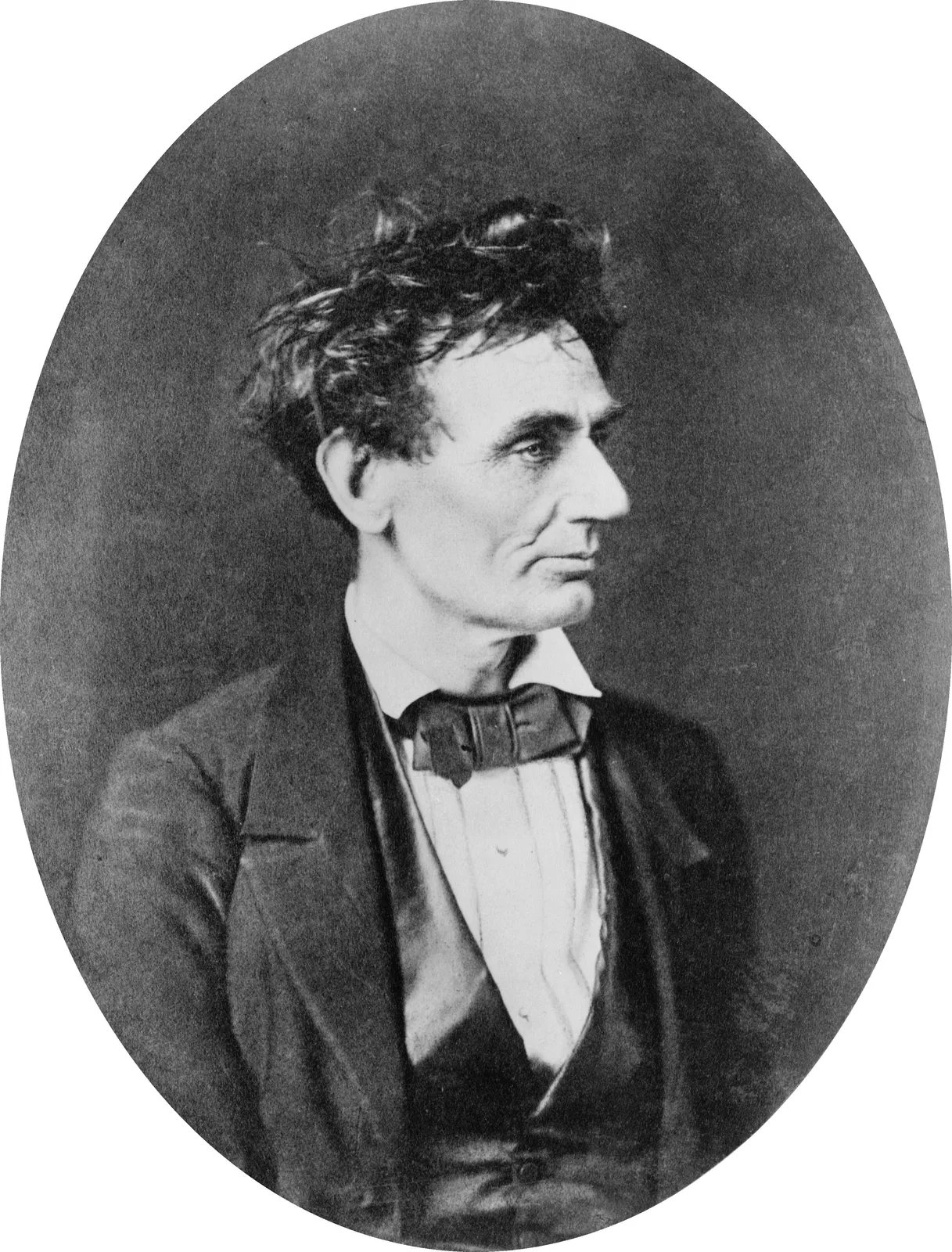
Regardless of whether the bout ended in a violent chokehold throw or a diplomatic draw, the strategic political consequence for Abraham Lincoln was monumental.
On the frontier, physical strength was the supreme currency of masculine leadership. Had Lincoln been easily whipped or showed cowardice, he would have been run out of New Salem. Instead, his fearless performance earned him the lifelong devotion and fierce loyalty of the Clary’s Grove boys.
When the Black Hawk War erupted in 1832, the young men of the New Salem militia company voted overwhelmingly to elect Abraham Lincoln as their Captain—Lincoln’s very first elected public office, which he later called the most gratifying honor of his life. Serving directly under Lincoln’s command was his first lieutenant: Jack Armstrong.
The Almanac Trial of “Duff” Armstrong
The bond forged in that dusty wrestling match repaid itself twenty-six years later in one of the most famous legal dramas in American history.
In 1857, Jack Armstrong passed away. Months later, his son, William “Duff” Armstrong—whom Lincoln had cradled in a makeshift rocker as an infant while visiting the Armstrong cabin—was arrested and charged with first-degree murder following a drunken campfire brawl in Mason County.
Witnesses swore they had seen Duff strike the fatal blow with a slungshot under the bright light of a high full moon at 11:00 PM. Duff faced the gallows.
Penniless and desperate, Jack’s widow, Hannah Armstrong, appealed to Lincoln, who was by then one of the most successful railroad attorneys in Illinois. Lincoln immediately dropped his lucrative legal cases and took Duff’s defense free of charge.
In the courtroom, Lincoln produced a commercial 1857 agricultural almanac. He proved to the jury that on the night of the murder, the moon was in its first quarter, sitting low on the horizon, and had completely set before midnight—rendering the prosecution witness’s claim of seeing the crime in clear moonlight physically impossible.
Duff Armstrong was acquitted in minutes. As tears streamed down Hannah Armstrong’s face, Lincoln embraced the widow of his old wrestling foe, refusing any compensation:
“Why, Hannah, I shan’t charge you a cent. Never. Not for anything I can do for you and Jack.”
The wrestling match between Lincoln and Armstrong remains an indelible chapter of American folklore—a reminder that on the harsh American frontier, an afternoon fight in the dirt could lay the foundation for a presidency, a legal masterpiece, and a lifelong brotherhood of mutual respect.
What the Record Shows
8 sourced claims in this story, resting on 10 primary historical and biographical records. Numbers link to the bibliography below.
- Abraham Lincoln arrived in New Salem in 1831 and was hired as a clerk by Denton Offutt - sources: 3, 5, 7
- Denton Offutt placed a ten-dollar wager that Lincoln could out-wrestle Jack Armstrong of the Clary’s Grove gang - sources: 6, 1, 2
- Lincoln was an elite practitioner of side-hold wrestling, with over 300 recorded frontier bouts - sources: 1, 6
- One set of eyewitness accounts recorded by William Herndon states Armstrong fouled Lincoln, provoking Lincoln to throw or choke him - sources: 6, 11
- Another credible set of eyewitness testimonies states the bout ended in a mutual fall and a recognized draw - sources: 13, 10, 2
- Modern wrestling historians and biographers conclude that Lincoln got the better of the contest regardless of whether a technical pin occurred - sources: 14, 6
- Following the match, Lincoln and Armstrong became close allies, leading to Lincoln’s election as Captain in the Black Hawk War - sources: 3, 2
- In 1858, Lincoln successfully defended Jack Armstrong’s son Duff in the famous Almanac Murder Trial free of charge - sources: 4, 8
Archival Evidence & Picture Credits
- Scene 1: Frontier wrestling depiction of young Lincoln - Library of Congress, Public domain (source)
- Scene 2: Earliest daguerreotype of Abraham Lincoln (1846) - Nicholas H. Shepherd, Library of Congress, Public domain (source)
- Scene 3: Reconstructed Lincoln-Berry Store at New Salem - National Park Service, Public domain (source)
- Scene 4: Abraham Lincoln in 1857 - Alexander Hesler, National Portrait Gallery, Public domain (source)
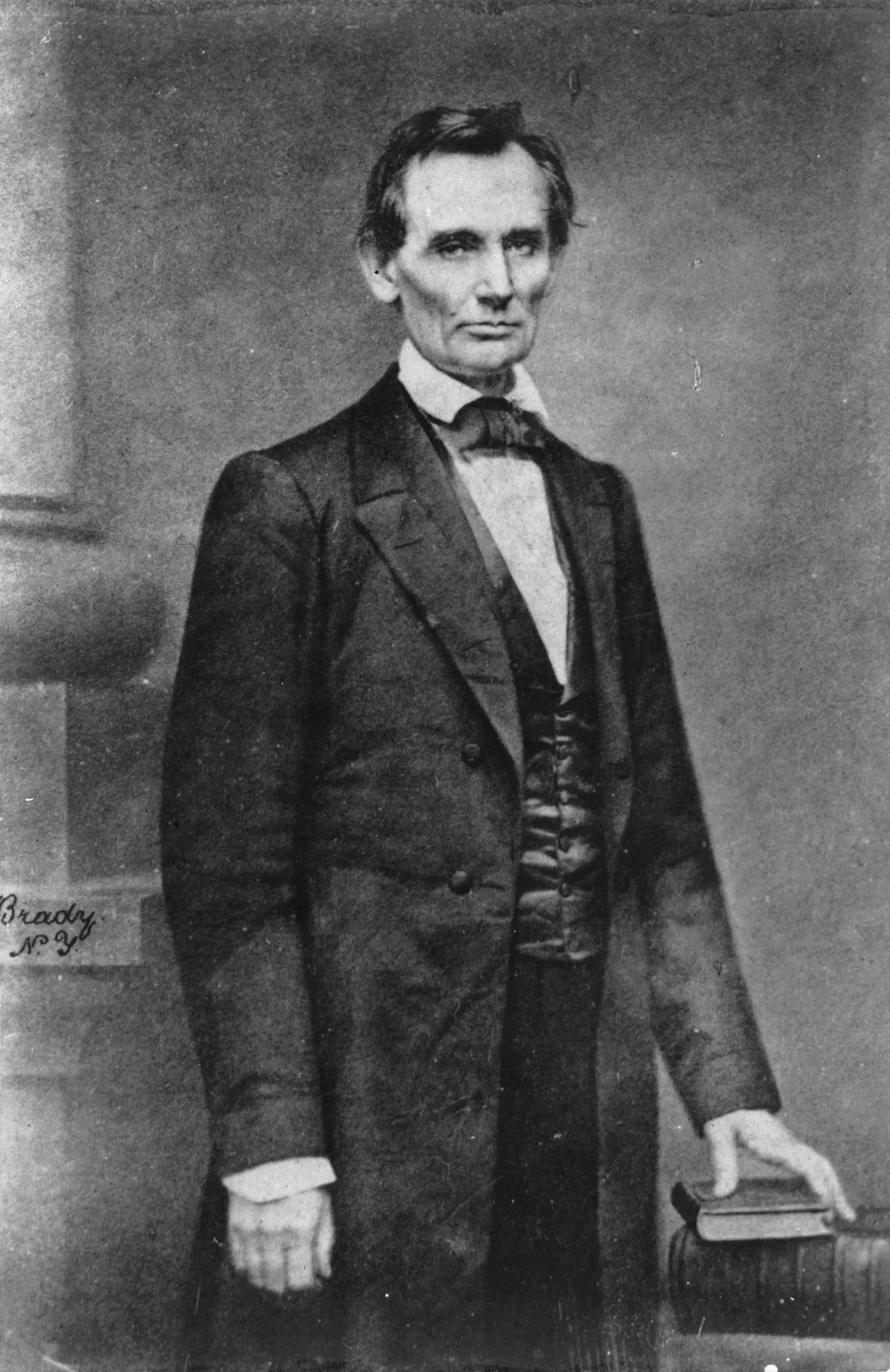
- Scene 5: Mathew Brady campaign portrait (1860) - National Archives, Public domain (source)


Verified Archival Sources & Bibliography
Every claim in this account has been fact-checked against primary archival collections and scholarly Lincoln studies:
- National Wrestling Hall of Fame: Abraham Lincoln (Outstanding American Inductee) (primary sports archive)
- Papers of Abraham Lincoln: John (Jack) Armstrong Biographical Profile (primary archival database)
- Abraham Lincoln Presidential Library and Museum: Lincoln Before Politics Teaching Guide (primary museum educational archive)
- Abraham Lincoln Presidential Library and Museum: People v. Armstrong (The Almanac Trial) (primary judicial record)
- National Park Service: Lincoln’s New Salem Historic Site 1830–1837 (primary federal history site)
- History.com: How Abraham Lincoln Excelled in Wrestling (Christopher Klein) (historical overview)
- Illinois State Archives: Abraham Lincoln in Illinois - Early Frontier Years (state archival repository)
- Library of Congress: Abraham Lincoln Papers, William H. Herndon Interview Notes (primary manuscript collection)
- U.S. Government Publishing Office: Abraham Lincoln, A Legacy of Freedom (official historical record)
- University of Illinois: Lincoln in Photographs - An Album of Every Known Pose (Hamilton & Ostendorf) (monograph)
- University of Illinois: Lincoln and Historic Illinois (State Historical Society) (historical society archive)
- Springfield Journal-Register: Rematch with the Past (Oral histories of New Salem) (journalistic history)
- WWE Classics: Abraham Lincoln: President and Wrestling Pioneer (Ronald C. White Jr. interview) (historical analysis)
- WIN Magazine: Dispelling the Myths About Lincoln’s Wrestling Days (Mike Chapman) (peer-reviewed wrestling historiography)
Historical Connection Graph
Rumors Said Foreigners Were Eating Babies. Seoul Panicked.
AJ. "Accounts Disagree on Lincoln’s Famous Wrestling Match." Echoes of History Uncut. Last modified September 28, 2026. https://echoesofhistoryuncut.com/articles/lincoln-wrestling-match-disputed/.

An independent digital history publication and documentary studio reconstructing historical turning points through primary archives, official inquiries, and scholarly citations. Every factual claim in this dossier is cross-referenced to the numbered bibliography above.