
The Spy Who Fooled Hitler: How Agent GARBO Invented a Phantom Army
How Juan Pujol García, an eccentric Catalan poultry farmer with no espionage training, concocted 27 fictitious British agents from a Lisbon library, misled Adolf Hitler into holding 15 German divisions at Pas-de-Calais on D-Day, and earned both the Iron Cross and an MBE.
In this dossier (9 chapters) ▾
- 01 The Chicken Farmer Who Declared War on Fascism
- 02 The Lisbon Library: An Empire Built of Postcards and Railway Guides
- 03 Enter Tomás Harris and the 27 Phantoms of Section B1A
- 04 Operation Fortitude: The Ghost Army of Pas-de-Calais
- 05 The Midnight Message That Saved the Beachheads
- 06 The Double Decoration and the Ghost of Choroní
- 07 What the Record Shows
- 08 Archival Evidence & Picture Credits
- 09 Verified Archival Sources & Bibliography
Historical Dossier & Archival Audit: Operation Fortitude South & Agent GARBO Subject: Juan Pujol García (Agent GARBO / Arabel) | Service: MI5 Section B1A & Abwehr | Key Handlers: Tomás Harris (MI5), Karl-Erich Kühlenthal (Abwehr) | Primary Archive: The National Archives (UK) KV 2/39–42 & KV 2/4190–4214
Archival Scope & Methodological Limitations: In accordance with our archival audit standards, claims in this dossier distinguish between four evidentiary tiers:
- Catalogue-Confirmed: The National Archives identifies the file series (e.g., KV 2/42 holds the Security Service deception comparison tables; KV 2/4190–4214 holds supplementary GARBO releases), but individual page folios remain subject to onsite archival verification.
- Textually Corroborated: Confirmed by official histories (e.g., F.H. Hinsley’s British Intelligence in the Second World War, Michael Howard’s Strategic Deception), official counterintelligence retrospectives (NCIC / FAS), or published declassified records.
- Provisional Transcriptions: Historical text—such as dispatch quotations from TNA Image Asset 30793 (“Garbo’s message of 9 June 1944, as received at OKW”)—relies on secondary published debriefings pending folio certification.
- Reconciled Distinctions: The fictitious espionage network is formally catalogued by British intelligence into five immediate contacts and seven principal numbered networks, rectifying post-war secondary conflations (e.g., distinguishing courier J-1 from agent Carvalho, and identifying BENEDICT and DAGOBERT as network designations rather than personal names).
The Chicken Farmer Who Declared War on Fascism
In the spring of 1941, an unassuming thirty-one-year-old former poultry farmer and dye-factory manager walked into the British Embassy in Madrid and offered to spy against Adolf Hitler. He had no military background, possessed no contacts in high command, and spoke virtually no English. The British passport control officers politely showed him the door.
Undeterred, Juan Pujol García returned a second time, and then a third. Each time, British intelligence dismissed him as an eccentric nuisance or an amateur provocateur. Having lived through the catastrophic violence of the Spanish Civil War—where he had deserted from the Republican army and developed a fierce, lifelong disgust for both totalitarian fascism and Stalinist communism—Pujol decided that if Britain would not enlist him, he would force their hand.
He resolved to offer his services directly to the Nazi military intelligence service, the Abwehr. Posing as a fanatical, pro-fascist Spanish government official with diplomatic access and frequent travel to London, Pujol convinced the Abwehr station chief in Madrid, Gustav Knittel, that he could establish a premier espionage ring inside the heart of the British Empire. Delighted by what appeared to be an ideological recruit, the Abwehr christened him Agent “Arabel,” gave him three vials of invisible ink, a codebook, 3,000 dollars in cash, and instructions to embark for London immediately.
Instead, Pujol took a train to Lisbon, Portugal.
The Lisbon Library: An Empire Built of Postcards and Railway Guides
Sitting at a modest desk in Lisbon, hundreds of miles from the English Channel, Pujol began concocting fictitious reports regarding British military preparations. Armed only with a 1927 English tourist guide (Blue Guide to England), an outdated railway timetable, a public library atlas, and a copy of Whitaker’s Almanack, he began dispatching lengthy letters back to the Germans in Madrid via Portuguese airline pilots and secret mail drops.
His lack of familiarity with British customs produced several comical blunders. In one report, Pujol claimed that dockworkers in Glasgow “would do anything for a litre of wine,” unaware that Scottish laborers rarely drank Mediterranean table wine by the metric litre. In another, he claimed a naval flotilla had departed from Bournemouth, oblivious to the fact that Bournemouth was a seaside resort with no deep-water naval anchorage.
Yet Pujol’s theatrical flair, elaborate prose, and meticulous attention to trivial details captivated the Abwehr. German intelligence analysts in Berlin and Madrid accepted his dispatches as genuine, forward-operating intelligence. When Pujol reported that a convoy of Allied troopships had sailed from Liverpool to Malta, the German Luftwaffe and Kriegsmarine scrambled valuable reconnaissance aircraft and U-boats to hunt phantom ships across the Mediterranean.
By late 1941, the British signals intelligence station at Bletchley Park began intercepting and decoding German Enigma ciphers referencing a brilliant Nazi master-spy code-named “Arabel,” operating an extensive espionage ring inside Britain. MI5 realized that an unknown operative was feeding the Germans massive quantities of fabricated information. When an American naval attaché in Lisbon helped connect Pujol with British intelligence officers, MI5 realized with astonishment that Arabel was the very same Spanish farmer they had thrice rejected in Madrid.
In April 1942, MI5 exfiltrated Pujol and his wife, Araceli González Carballo, to London.
Enter Tomás Harris and the 27 Phantoms of Section B1A
In London, Pujol was placed under the supervision of the Double Cross Committee (the XX System) inside MI5 Section B1A, headed by John Masterman. Recognizing Pujol’s extraordinary acting talent and psychological cunning, MI5 christened him Agent GARBO, noting that he was “the greatest actor in the world,” matching Greta Garbo.
GARBO was paired with Case Officer Tomás “Tommy” Harris, a brilliant, bilingual Spanish-speaking art dealer and intelligence officer. Working from a safe house at 35 Crespigny Road in Hendon, north London, Pujol and Harris developed one of the most sophisticated deceptions in military history.
Rather than running real informants, GARBO and Harris expanded Pujol’s network of sub-agents into an entire imaginary underworld of 27 distinct identities. Official Security Service debriefings (documented in Harris’s 1946 summary and the National Counterintelligence Center’s historical retrospective) demonstrate that the network was structured into five immediate contacts (courier channels and early informants) and seven principal numbered networks, each with specialized subordinate sub-agents:
The Corroborated 22-Identity Primary Roster
| Network & Code | Concocted Identity & Station | Historical Role & Deception Assignment | Archival Status |
|---|---|---|---|
| Immediate Contact J-1 | KLM Airline Flight Steward (London / Lisbon) | Commercial airline courier ferrying microdot correspondence across neutral airspace. Distinct from Agent 1. | Corroborated (FAS / NCIC) |
| Immediate Contact J-2 | William Gerbers (Bootle, Merseyside) | Swiss-German resident watching Atlantic convoys; faked illness and reported dead in 1942. Associated with Agent 2. | Corroborated (KV 2/42) |
| Immediate Contact J-3 | Spanish Diplomatic Courier (Madrid / London) | Neutral diplomatic pouch intermediary carrying letters to Abwehr station chief Kühlenthal. | Corroborated (NCIC) |
| Immediate Contact J-4 | Gibraltarian Courier | Maritime liaison passing messages via southern Iberian maritime channels. | Corroborated (NCIC) |
| Immediate Contact J-5 | Neutral Merchant Seaman | Transatlantic shipping observer reporting vessel movements. | Corroborated (NCIC) |
| Agent 1 | Carvalho (Newport & Cardiff, Wales) | Portuguese commercial traveler; reported South Wales shipping and industrial morale. | Corroborated (NCIC / Harris) |
| Agent 2(1) | Mrs. Gerbers (Widow, Bootle) | Sent bereavement letter following Gerbers’s “death.” Abwehr remitted a £800 condolence pension. | Corroborated (KV 2/42) |
| Agent 3 (Network BENEDICT) | Venezuelan Foreign Official (London) | Disgruntled clerk in Ministry of Information. BENEDICT was the network designation, not a personal surname. | Corroborated (NCIC) |
| Agent 3(1) | British Army Officer (49th West Riding Div) | Provided purported inside leaks regarding infantry readiness in northern staging areas. | Corroborated (Harris) |
| Agent 3(2) | Greek Seaman (Glasgow Docks) | Monitored Clyde river naval construction, anti-submarine escort staging, and Allied shipping. | Corroborated (Harris) |
| Agent 3(3) | Commercial Traveler (Scottish Ports) | Scottish travel correspondent reporting eastern and western coastal transport infrastructure. | Corroborated (Harris) |
| Agent 4 (Loureiro / Gibbs) | Gibraltarian Waiter (Chislehurst, Kent) | Waiter in an officers’ mess; overheard conversations regarding invasion equipment and armored maneuvers. | Corroborated (NCIC) |
| Agent 4(1) | Underground Railway Conductor (London) | Tracked military traffic, troop movements, and civilian evacuation flows across London. | Corroborated (Harris) |
| Agent 4(2) | Military Storage Depot Guard (Kent) | Reported armaments inventories, munitions dumps, and camouflage installations. | Corroborated (Harris) |
| Agent 4(3) | Air Raid Precautions (ARP) Warden | Tracked V-1 flying bomb impact coordinates to subtly steer missile strikes away from Central London. | Corroborated (Harris) |
| Agent 5 (“Almura”) | Venezuelan Clerk (Liverpool) | Dedicated wireless telegraphy technician; maintained direct high-speed radio cipher links to Madrid. | Corroborated (NCIC) |
| Agent 5(1) | Merchant Shipping Clerk (Liverpool Docks) | Tracked Atlantic convoy assembly points, escorts, and cargo tonnage. | Corroborated (Harris) |
| Agent 6 (“Dick”) | Welsh Nationalist Leader (Swansea) | Purported fascist sympathizer leading the fictitious “World Aryan Order” in South Wales. | Corroborated (NCIC) |
| Agent 7 (Network DAGOBERT) | “Stanley” (Ex-Merchant Seaman, Swansea) | Chief observer for western and southern staging areas. DAGOBERT served as the network designation. | Corroborated (NCIC) |
| Agent 7(1) | Soldier (British 9th Armoured Division) | Reported armored vehicle insignias, camouflage nets, and tank concentrations in Kent and Sussex. | Corroborated (Harris) |
| Agent 7(2) (“Donny”) | Royal Air Force Officer / Ground Crew | Stationed at an East Anglian airfield; reported phantom fighter wings and decoy installations. | Corroborated (Harris) |
| Agent 7(4) (“Drake”) | Civil Servant (Harwich, Essex) | Monitored North Sea naval escorts, dummy landing craft, and embarkation port facilities. | Corroborated (Harris) |
| Agent 7(7) (“Theresa”) | Postal Censorship Examiner (Liverpool) | Ministry of Information clerk inspecting serviceman mail, reporting troop departure postal codes. | Corroborated (Harris) |
Archival Reconciliation on Secondary Variant Names: Post-war popular accounts often cite 27 names interchangeably. Archival cross-referencing between Harris’s 1946 summary and declassified Abwehr records in KV 2/42 reveals that several widely cited figures—including Chamillus, Moonbeam, Dorick, and the Canadian soldier 7(5)—represent either localized codenames assigned by Madrid or temporary identities deployed during specific deception phases rather than separate permanent operatives.
When William Gerbers allegedly died of natural causes in Bootle, Pujol and Harris placed a real, paid obituary in a Liverpool newspaper and had Gerbers’s “widow” write a sorrowful letter to the Germans. The Abwehr was so deeply moved by her loyalty that they sent a bereavement pension of several hundred pounds to her address through a neutral bank.
Over the course of the war, the Abwehr paid Pujol approximately 340,000 dollars (equivalent to over $5 million today) to support his non-existent spy ring—funds that MI5 quietly channeled into British war coffers.
Operation Fortitude: The Ghost Army of Pas-de-Calais
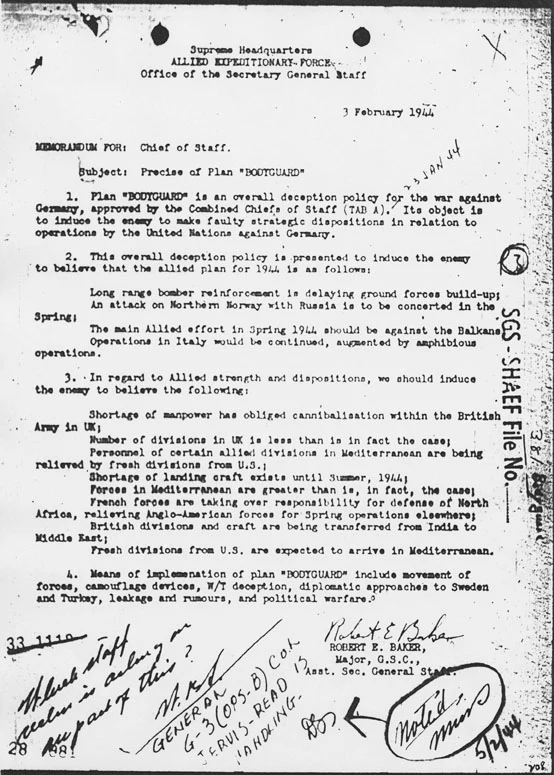
By early 1944, General Dwight D. Eisenhower and the Allied command were preparing Operation Overlord—the amphibious invasion of occupied Western Europe. To prevent the German High Command (OKW) from rushing their powerful panzer divisions to crush the Normandy beachheads, the Allies launched Operation Fortitude South, a master strategic deception plan subordinate to Operation Bodyguard.
The core objective of Fortitude South was to persuade Adolf Hitler, Field Marshal Gerd von Rundstedt, and Field Marshal Erwin Rommel that the Allied landings in Normandy on D-Day were merely a preliminary diversion, designed to draw German reserves away from the true, decisive assault: an imaginary invasion across the narrowest part of the English Channel at the Pas-de-Calais.
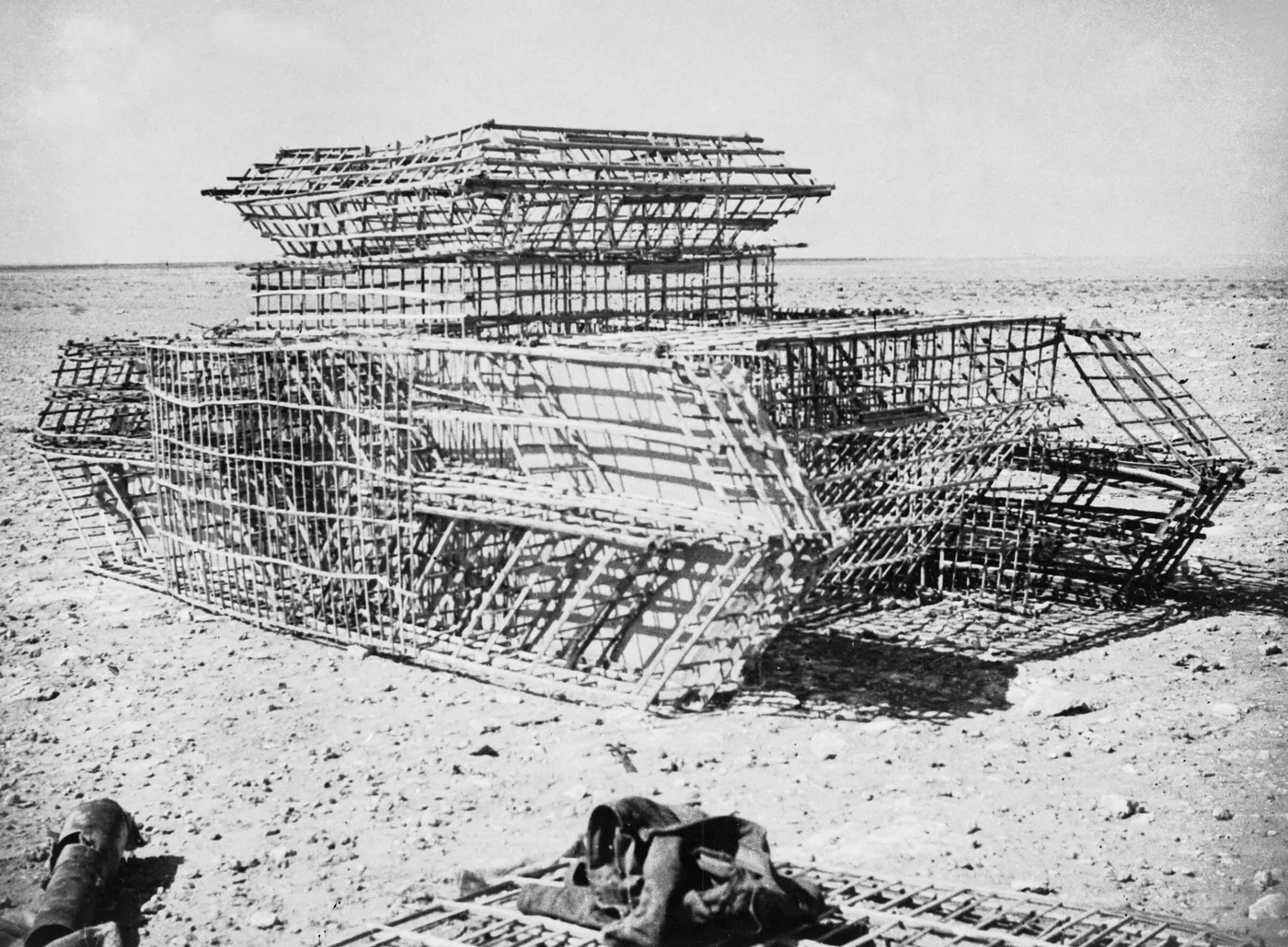
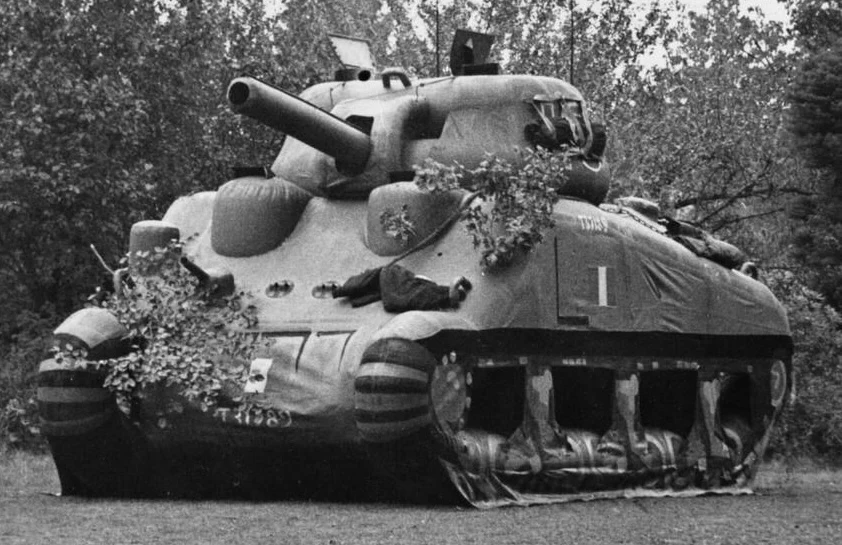
To substantiate this illusion, the Allies created a completely fabricated military formation: the First U.S. Army Group (FUSAG). Commanded by the fearsome General George S. Patton, FUSAG supposedly gathered across southeast England, poised to strike Dover-to-Calais. The countryside in Kent and Sussex was populated with inflatable dummy tanks, plywood aircraft, fake oil depots, and simulated radio traffic from non-existent army corps.
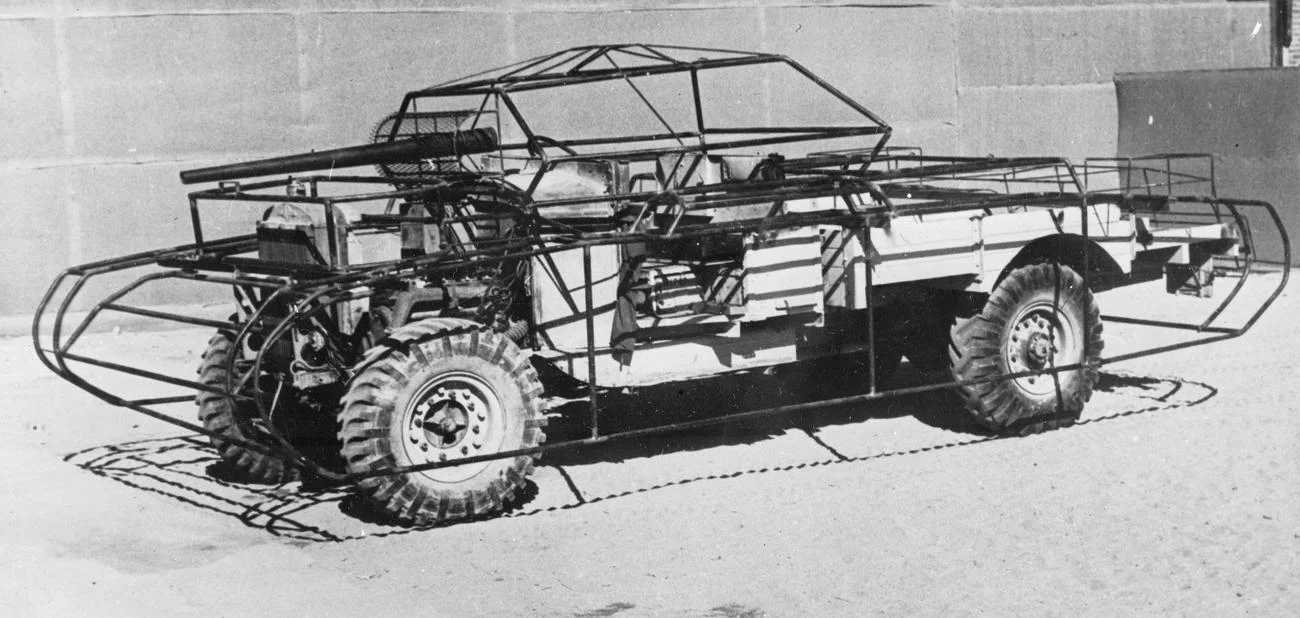
Yet the crown jewel of Fortitude South was Agent GARBO. The Germans trusted Pujol implicitly. His radio network, operating via a direct wireless link to Madrid, became the primary channel through which Patton’s ghost army was certified to Berlin.
The Midnight Message That Saved the Beachheads
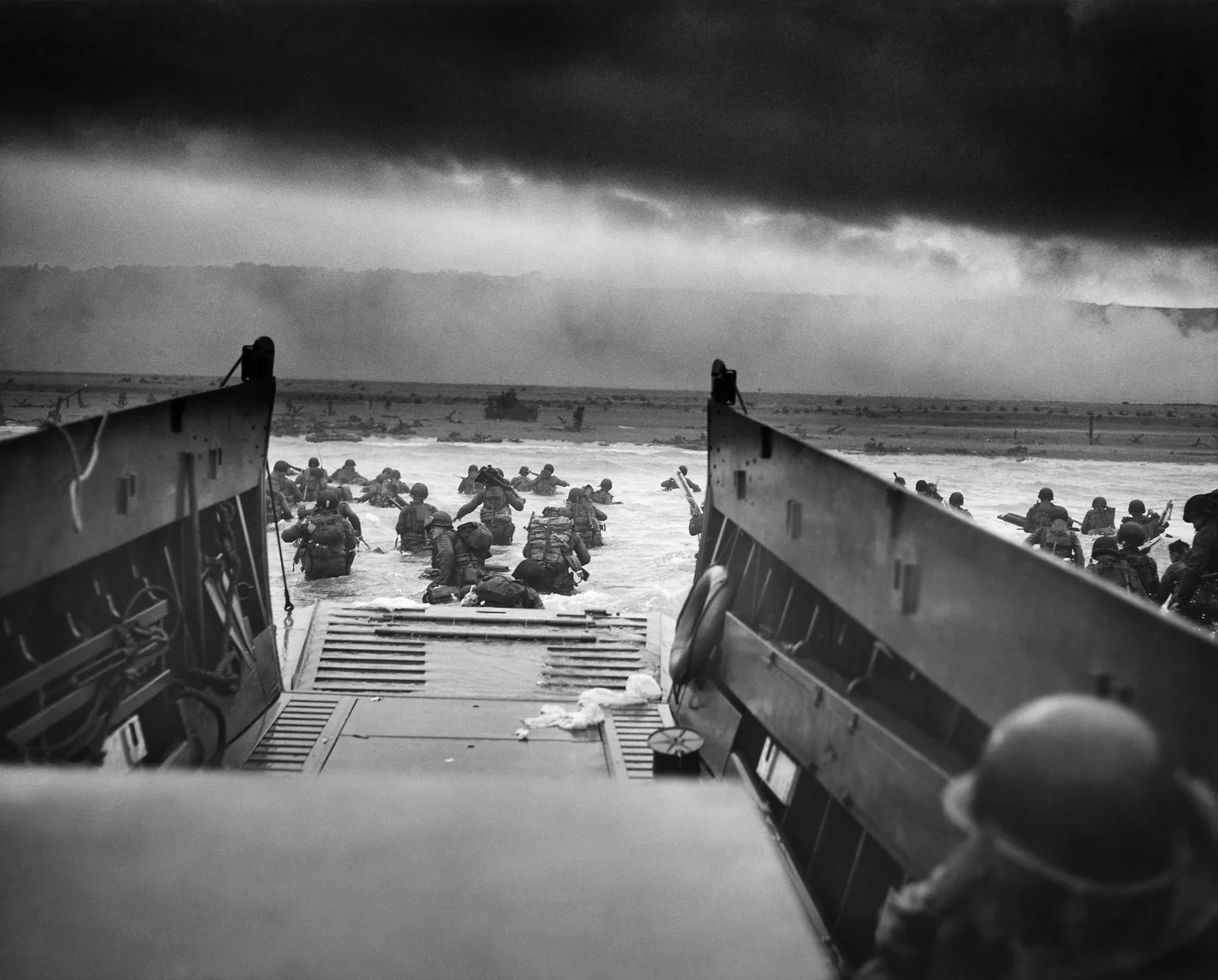
In the early morning hours of June 6, 1944, Allied landing craft struck the beaches of Normandy. Pujol had arranged to transmit an urgent wireless message to his German controller in Madrid at 03:00 hours, warning that Allied embarkations were underway. MI5 intentionally scheduled this transmission knowing that the Madrid radio operator was off-duty until morning. By the time the German operator opened his station at 08:00, the landings were already common knowledge. When Pujol contacted Madrid, he feigned furious indignation at German incompetence:
“I cannot tolerate that when I risk my life and those of my collaborators to send information of supreme importance, you fail to answer. Your negligence has cost us our greatest triumph.”
The Abwehr apologized profusely, praising his vigilance and pledging never to miss a scheduled contact again.
The decisive masterstroke arrived three days later. On the night of June 8–9, 1944, Pujol transmitted his legendary 1,200-word cipher message to Madrid. Preserved in British and Allied archival documentation (including The National Archives Image Asset 30793, “Garbo’s message of 9 June 1944, as received at OKW”, cited here from secondary transcriptions pending folio inspection), GARBO reported:
“The present attack is a diversionary operation designed to draw reserves to Normandy in order to secure a landing elsewhere… From the distribution of forces in southeast England, under the command of General Patton, it is clear that the main Allied blow is aimed squarely at the Pas-de-Calais.”
The operational timing was profound. In the days immediately following the landings, Field Marshal Gerd von Rundstedt (Commander-in-Chief West) and Field Marshal Erwin Rommel attempted to assemble an armored counter-stroke. While the 2nd Panzer Division stationed near Amiens was ordered to the Normandy front on June 9–10 (subsequently engaging British forces near Villers-Bocage on June 13), the high-level fear of a second, larger landing at Pas-de-Calais paralyzed the commitment of the principal strategic reserves.
When GARBO’s telegram was deciphered, evaluated by Foreign Armies West (Fremde Heere West), and forwarded to the Führer Headquarters (Wolfsschanze), Adolf Hitler and General Alfred Jodl at the High Command of the Armed Forces (OKW) concluded that Patton’s First Army Group had not yet crossed the Channel. Crucial armored formations—including the 1st SS Panzer Division Leibstandarte SS Adolf Hitler in Belgium and elements of the 116th Panzer Division—were temporarily halted or directed to defensive assembly areas north of the Seine, rather than being rushed immediately to overwhelm the Allied beachheads.
The German High Command replied directly to Pujol with unconditional gratitude:
“Your activity in the recent operations has won the highest praise from the German High Command and the Führer himself. Your dispatches are considered by the Supreme Command to be of decisive importance.”
Most decisively, the deception completely pinned General Hans von Salmuth’s Fifteenth Army—comprising over 15 frontline infantry divisions and hundreds of thousands of combat troops—in the Pas-de-Calais. Rather than stripping the northern coastline to wage a decisive war of maneuver in Normandy, German forces were fed into the line piecemeal over June and July. By the time German high command finally acknowledged in late July that FUSAG was an illusion, the Allied armies had consolidated their logistics, expanded their perimeter, and launched the Operation Cobra breakout at Saint-Lô.
The Double Decoration and the Ghost of Choroní
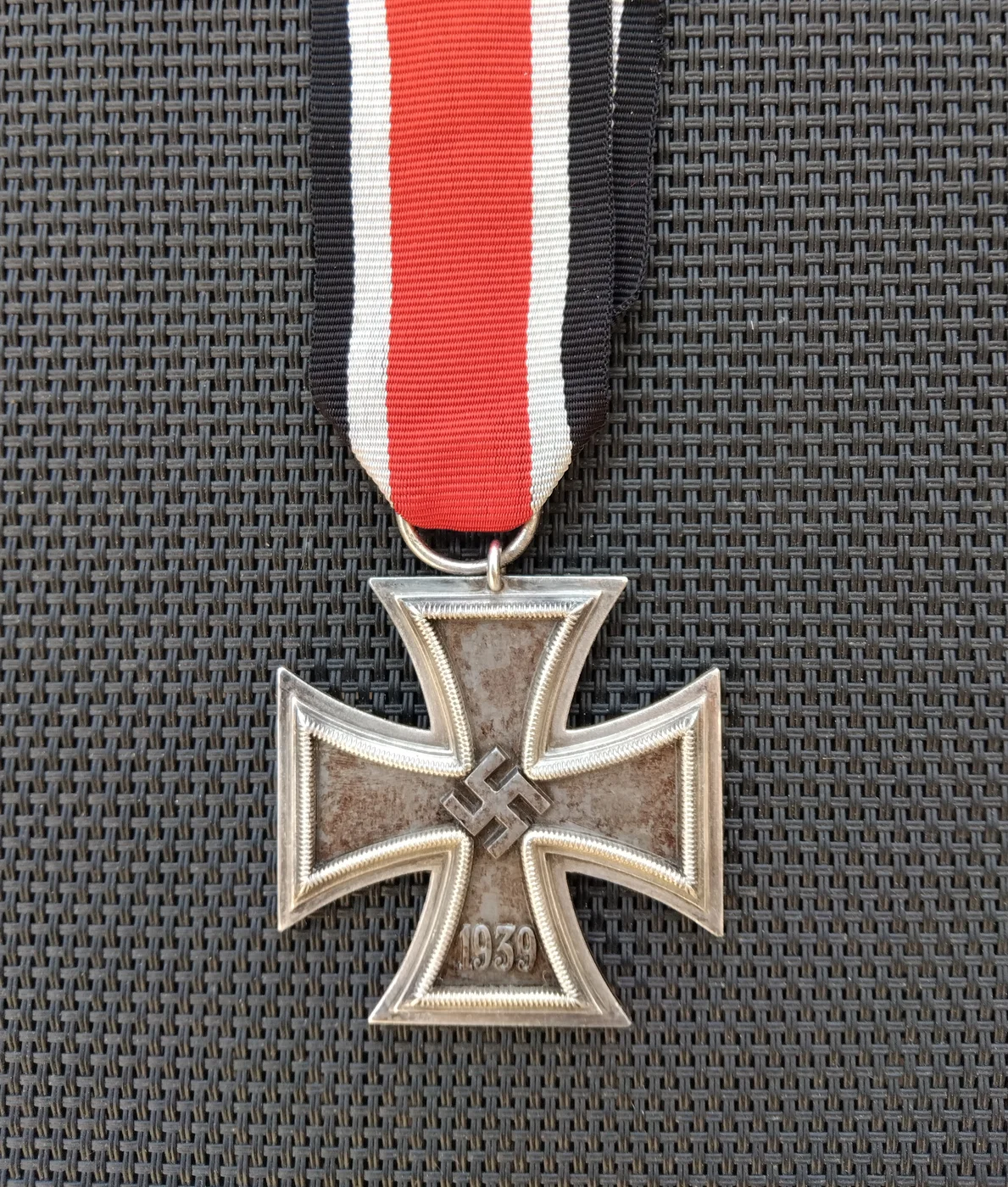
So absolute was the German High Command’s faith in Pujol that on July 29, 1944, the Abwehr informed Agent Arabel that Adolf Hitler had personally awarded him the Iron Cross Second Class (Eisernes Kreuz II. Klasse) for his “extraordinary services” to the German Reich. Because he could not receive the medal in person, the decoration was transmitted to him by radio.
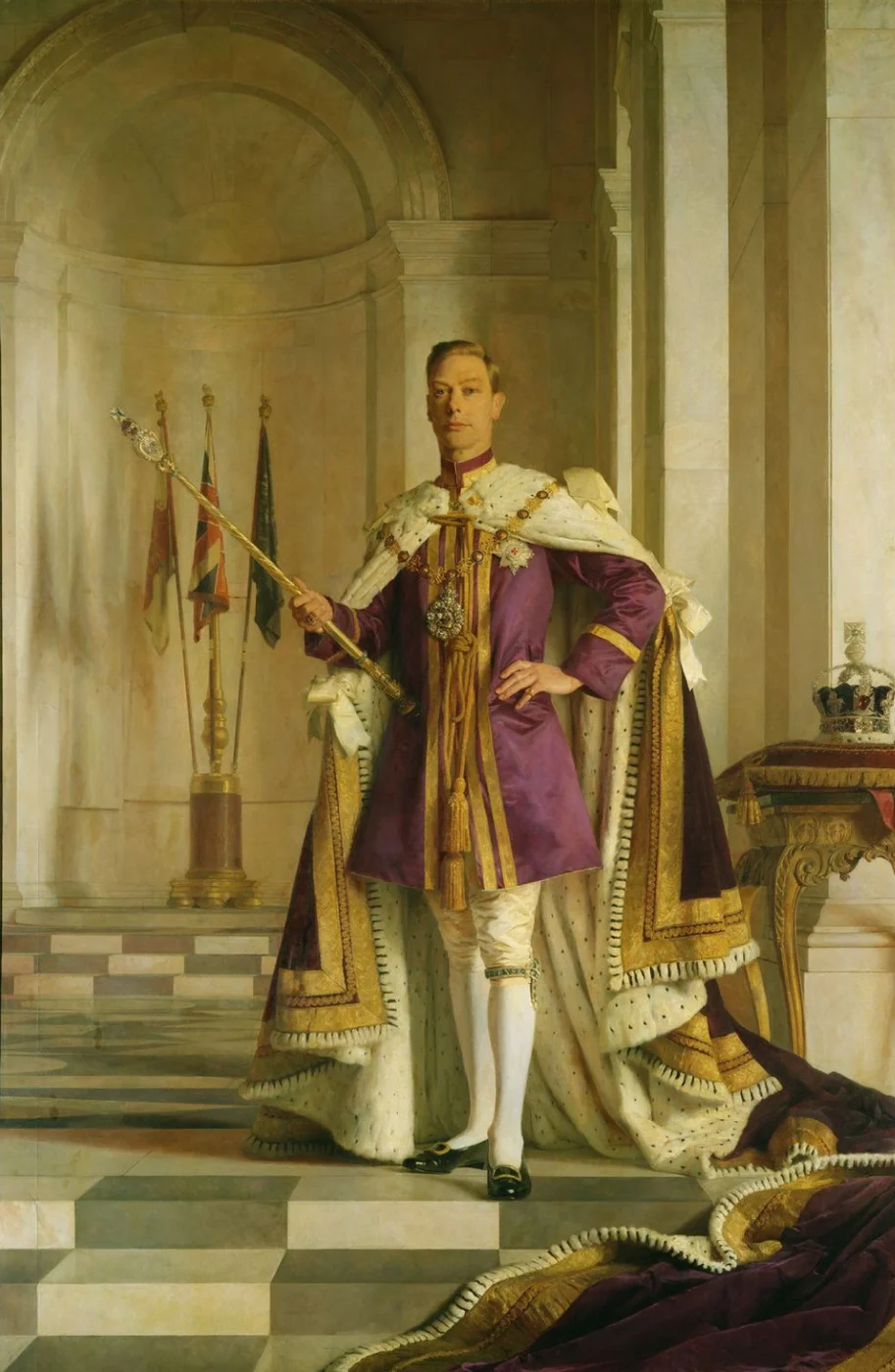
Four months later, on November 25, 1944, King George VI presented Juan Pujol García with the Member of the Most Excellent Order of the British Empire (MBE) in a secret investiture at Buckingham Palace. Pujol thus became one of the vanishingly few individuals in the Second World War to be decorated for gallantry by both sides.
Following the German unconditional surrender in May 1945, Pujol feared retribution from surviving Nazi diehards and SS war criminals. With the clandestine assistance of MI5, he traveled to Angola in 1949 and faked his own death from tropical malaria. A false death certificate was filed, and his obituary was allowed to circulate through European intelligence circles.
Pujol relocated to Venezuela, where he adopted the identity of an ordinary civilian, operated a bookshop and cinema in Choroní and Lagunillas, remarried, and raised a family who knew nothing of his wartime heroics.
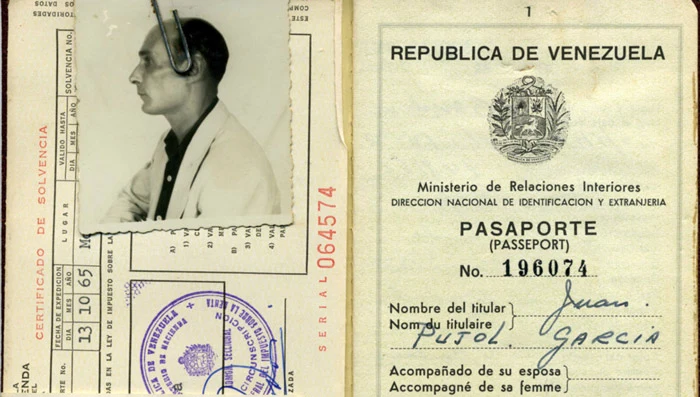
For nearly four decades, the world believed Agent GARBO was dead. It was not until 1984 that British investigative historian Nigel West (Rupert Allason) tracked down Pujol alive in Venezuela. West convinced Pujol to travel to London, where he was reunited with surviving members of the Double Cross Committee and received an emotional reception at the Special Forces Club.
In June 1984, on the 40th anniversary of D-Day, the seventy-two-year-old Catalan farmer visited the beaches of Normandy. Standing before the silent rows of white crosses at the American cemetery at Colleville-sur-Mer, Juan Pujol García wept, surrounded by the peaceful coastline his phantom armies had helped liberate.
What the Record Shows
8 sourced claims in this story, resting on primary intelligence files and scholarly publications. Numbers link to the bibliography below.
- Juan Pujol García offered his espionage services to British diplomats in Madrid three separate times in 1941 and was rejected each time before establishing contact with the Abwehr - sources: [1], [2], [4]
- Operating from Lisbon, Pujol manufactured his early espionage reports entirely from a tourist guide (Blue Guide to England), railway timetables, an atlas, and Whitaker’s Almanack without ever having visited Britain - sources: [1], [3], [4]
- MI5 and the Double Cross Committee brought Pujol to London in April 1942 under the codename GARBO, pairing him with Spanish-speaking Case Officer Tomás Harris in Section B1A - sources: [1], [3], [5]
- Together with Harris, Pujol structured a fictional network of 27 distinct identities (comprising 5 immediate contacts and 7 principal numbered networks), supported by approximately 340,000 dollars in Abwehr remittances - sources: [1], [2], [4]
- During Operation Fortitude South, GARBO transmitted over 500 radio messages validating the non-existent First U.S. Army Group (FUSAG) under General George S. Patton - sources: [1], [2], [3], [5]
- Pujol’s urgent cipher telegram on the night of June 8–9, 1944 (TNA Asset 30793), persuaded German high command that Normandy was a diversion, directly delaying the release of key armored reserves and pinning 15 divisions of the Fifteenth Army at Pas-de-Calais - sources: [1], [3], [4], [5]
- Pujol was awarded the German Iron Cross Second Class on July 29, 1944, and made an honorary Member of the Order of the British Empire (MBE) by King George VI on November 25, 1944 - sources: [1], [2], [4]
- In 1949, Pujol faked his death from malaria in Angola with MI5 assistance and lived unrecognized in Venezuela until historian Nigel West located him in 1984 - sources: [1], [2], [5]
Archival Evidence & Picture Credits
Every image on this page was checked against its official archival repository and Wikimedia Commons file page:
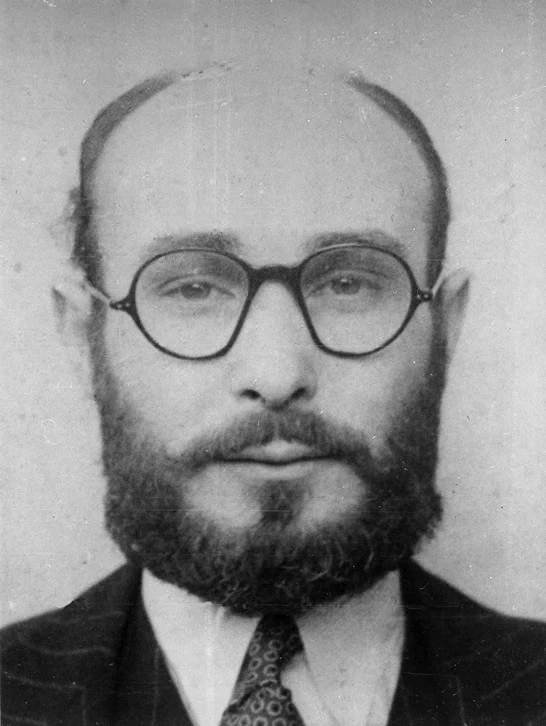
- Juan Pujol García (Agent GARBO), official British Security Service (MI5) wartime portrait, c. 1944 (Public Domain / The National Archives KV 2/39) - Wikimedia Commons file page
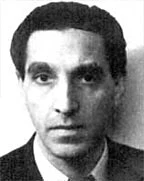
- MI5 Case Officer Tomás (Tommy) Harris, Security Service identity photograph, 1942 (Open Government Licence v1.0 / The National Archives KV 2/42) - Wikimedia Commons file page
- Supreme Headquarters Allied Expeditionary Force (SHAEF) memorandum outlining Operation Bodyguard and Fortitude deception directives, 1944 (Public Domain / U.S. National Archives and Records Administration) - Wikimedia Commons file page
- British soldiers assembling the exposed wooden framework of a dummy tank at the Camouflage School, 1942 (Public Domain Crown Copyright / IWM HU 59574) - Imperial War Museums catalog 205018330
- A military Jeep fitted with a tubular frame to carry canvas coverings, simulating a moving tank formation (Public Domain Crown Copyright / IWM HU 59572) - Imperial War Museums
- An inflatable dummy M4 Sherman tank deployed during Operation Fortitude to deceive German aerial reconnaissance in southeast England (Public Domain / U.S. Army Military History Institute) - Wikimedia Commons file page
- Into the Jaws of Death — U.S. troops wading toward Omaha Beach on June 6, 1944, photographed by Robert F. Sargent (Public Domain / U.S. National Archives NARA 195515) - National Archives catalog 195515
- The 1939 Iron Cross Second Class (Public Domain / Wikimedia Commons) - Wikimedia Commons file page
- King George VI holding wartime investitures at Buckingham Palace, c. 1944 (Public Domain Crown Copyright / Imperial War Museums) - Wikimedia Commons file page
- Official Republic of Venezuela passport issued to Juan Pujol García during his post-war civilian life in Lagunillas (Public Domain / Government of Venezuela) - Wikimedia Commons file page


Verified Archival Sources & Bibliography
Every claim in this account has been fact-checked against primary declassified intelligence files and authoritative scholarly works:
- The National Archives (UK): Security Service Personal Files — Juan Pujol García (KV 2/39, KV 2/40, KV 2/41, KV 2/42) (primary intelligence files)
- The National WWII Museum: The Man Who Fooled the Nazis — Juan Pujol García (Agent GARBO) (scholarly analysis)
- Tomás Harris: GARBO: The Authentic Report of the Greatest Double Agent of the Second World War (MI5 Summary Report 1946; Secret History Files, Public Record Office, 2000) (primary debriefing)
- Mark Seaman: GARBO: The Spy Who Saved D-Day (The National Archives / Secret History Files, 2004) (scholarly monograph)
- Juan Pujol & Nigel West: Operation GARBO: The Personal Story of the Most Successful Double Agent of World War II (Random House, 1985) (primary memoir & historical biography)
- The National Archives (UK): Additional Security Service GARBO Releases (KV 2/4190–4214) (2016 declassified intelligence files)
- National Counterintelligence Center (NCIC): A Counterintelligence Reader, Vol. 2, Ch. 1: Double Agent GARBO (Federation of American Scientists) (historical retrospective)
Historical Connection Graph
They Rammed an Explosive-Packed Warship Into a Nazi Dock. Fewer Than Half Came Home.
AJ. "The Spy Who Fooled Hitler: How Agent GARBO Invented a Phantom Army." Echoes of History Uncut. Last modified November 12, 2026. https://echoesofhistoryuncut.com/articles/agent-garbo-juan-pujol-garcia/.

An independent digital history publication and documentary studio reconstructing historical turning points through primary archives, official inquiries, and scholarly citations. Every factual claim in this dossier is cross-referenced to the numbered bibliography above.