
Three Men Flew a Balloon to the North Pole. They Vanished for 33 Years.
In July 1897, Swedish engineer Salomon August Andrée and two companions lifted off in the hydrogen balloon Örnen, attempting to become the first humans to fly across the North Pole. Within days, freezing rain weighed down the balloon, forcing a crash landing onto pack ice three hundred miles from civilization. After months battling freezing temperatures and polar bears, the expedition vanished without a trace. Thirty-three years later in 1930, Norwegian seal hunters stumbled upon their frozen camp—discovering their diaries and ninety-three preserved photograph negatives that revealed their incredible final journey.

In this dossier (15 chapters) ▾
- 01 A Balloon to the Pole
- 02 Liftoff
- 03 The Walk
- 04 Found
- 05 How Did They Die?
- 06 The 1896 Attempt and a Balloon That Leaked
- 07 The Örnen
- 08 A Launch That Went Wrong
- 09 Choosing the Wrong Depot
- 10 What the Records Say
- 11 The Discovery of 1930
- 12 What the Expedition Shows
- 13 What the Record Shows
- 14 Archival Evidence & Picture Credits
- 15 Verified Archival Sources & Bibliography
Historical Dossier: Andrée’s Arctic Balloon Expedition Location: Danskøya (Svalbard), the Arctic pack ice and Kvitøya (White Island) | Year: 1897–1930 | Key Figures: S. A. Andrée, Nils Strindberg, Knut Frænkel, Gunnar Horn
A Balloon to the Pole
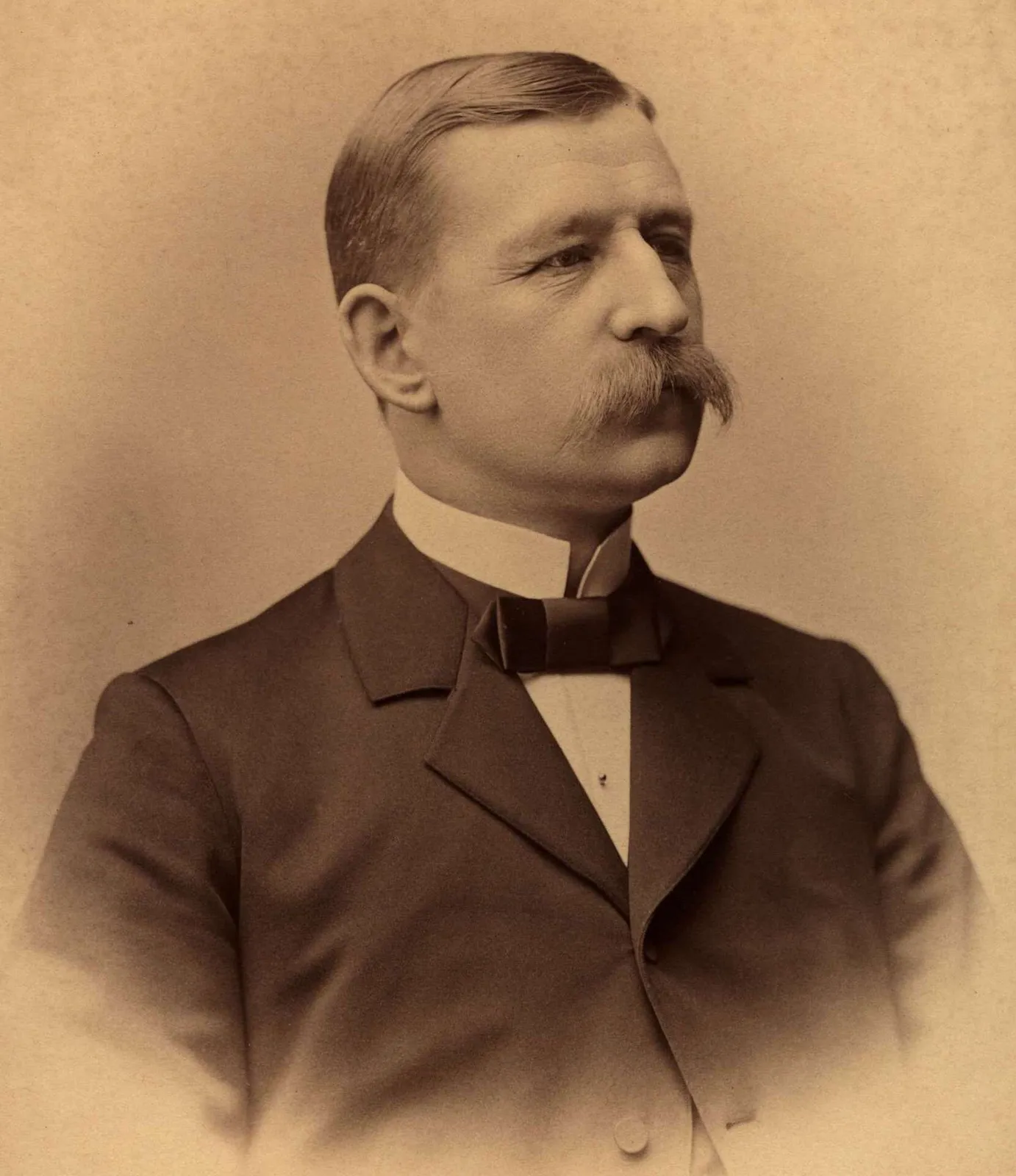
In the summer of 1897 three Swedes set out to fly to the North Pole in a hydrogen balloon. Salomon August Andrée, an engineer, led the expedition. With him went Nils Strindberg, a young physicist and photographer, and Knut Frænkel, an engineer. Their balloon was named Örnen, the Eagle.
Liftoff
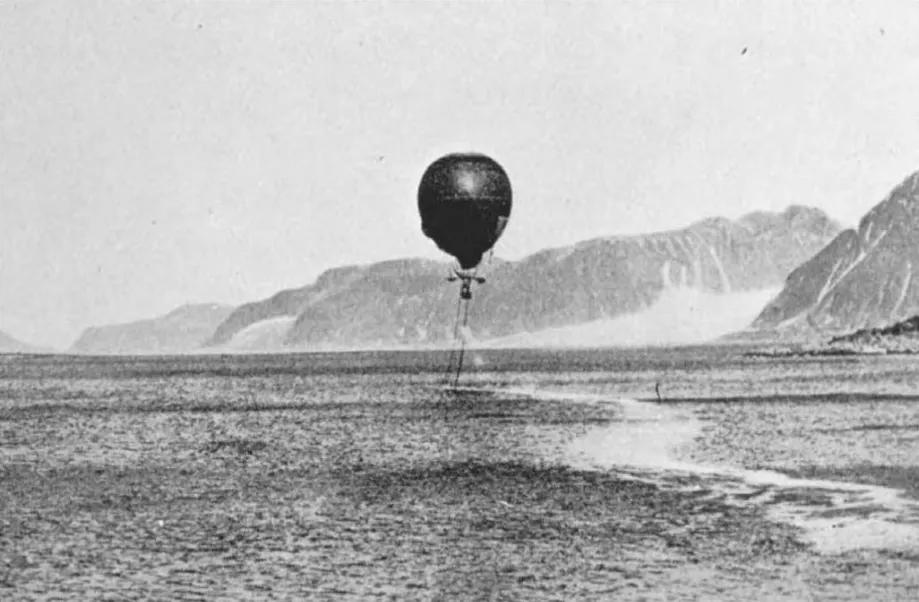
They took off from Svalbard on 11 July 1897. A message dropped from the balloon hours after takeoff was cheerful: “Our journey goes well so far. We sail at an altitude of about 250 m.” But the main diary tells a different story. The balloon was “dripping wet” and losing hydrogen faster than expected.
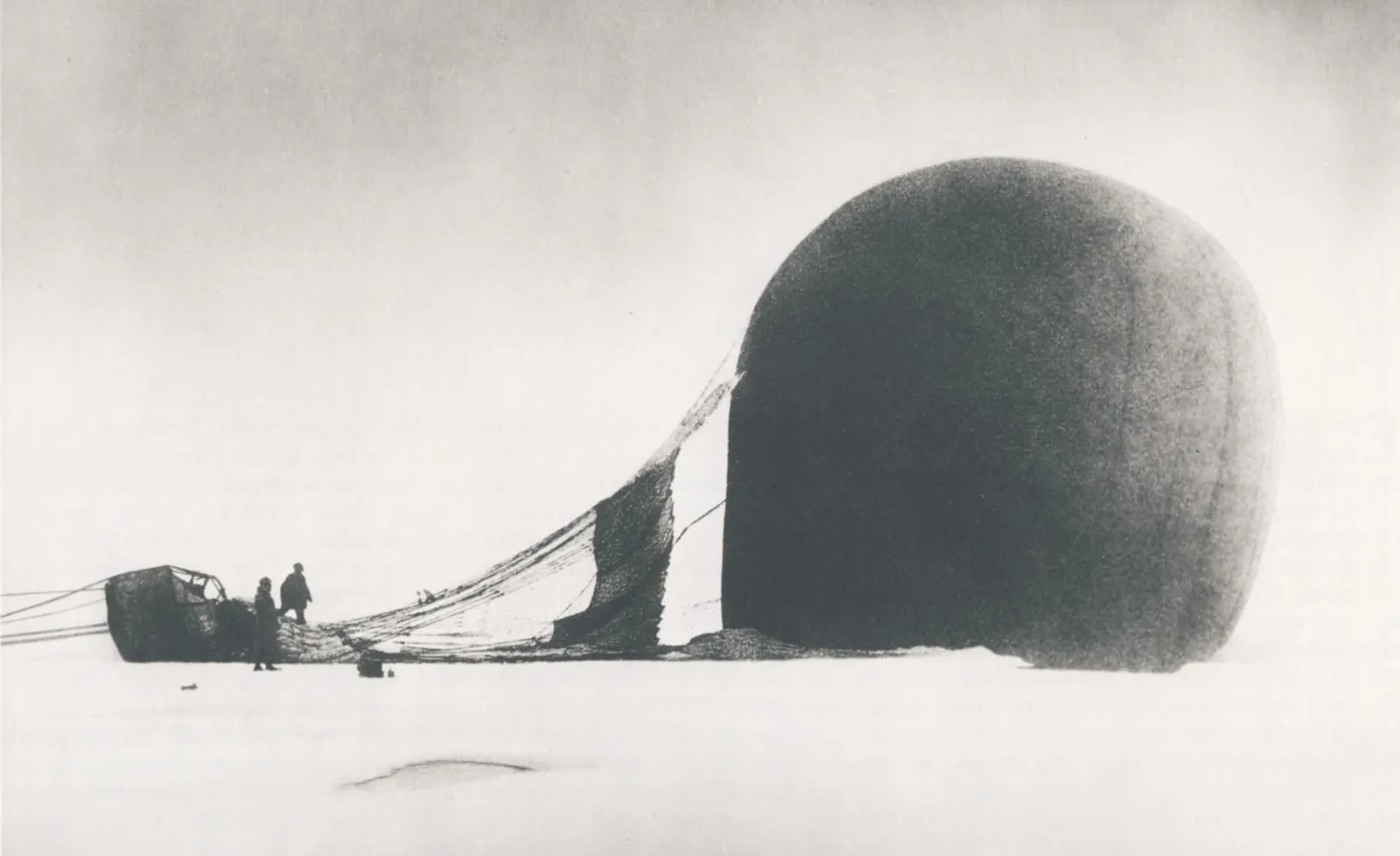
After about 65 hours the balloon came down on the pack ice, on 14 July. They were far from the Pole and far from help.
The Walk
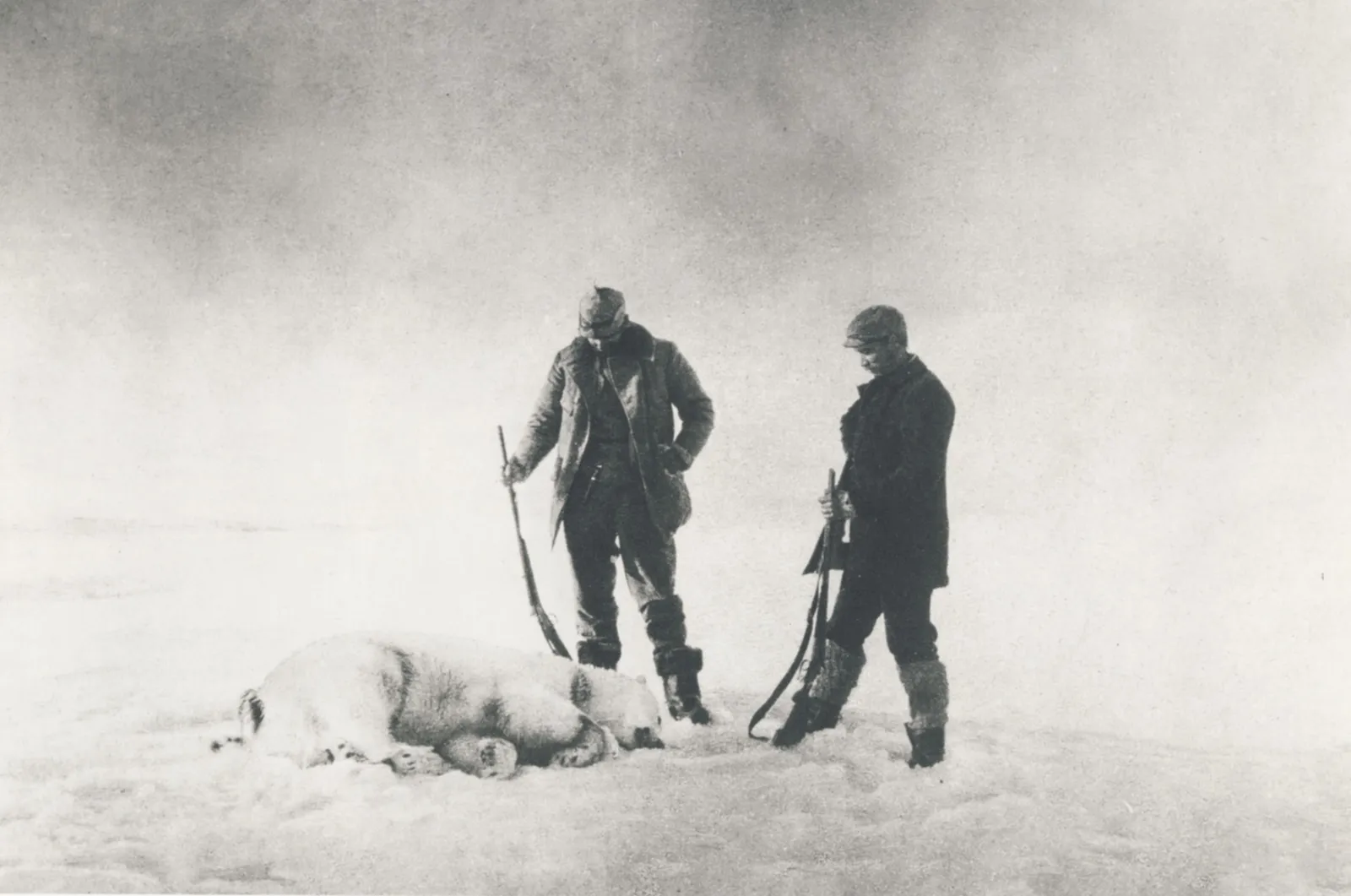
The three men now began to walk south over the drifting ice, hauling heavy sledges. They kept going for about three months. Their route was the work of the drifting floes, which carried them where they did not want to go, and polar bears were a constant risk and a source of food.
In early October they reached Kvitøya, White Island, a small and barren island, and made a winter camp on it. Andrée’s last diary entry is dated 8 October: “It feels fine to be able to sleep here on fast land as a contrast with the drifting ice.”
The three died shortly afterwards. For 33 years nobody knew what had happened to them.
Found
On 5 August 1930 a Norwegian sealing vessel, the Bratvaag, found the remains on Kvitøya. With them were the three diaries and Strindberg’s photographic film, which was salvaged. The film was later developed, and pictures were produced after thirty-three years in the ice.
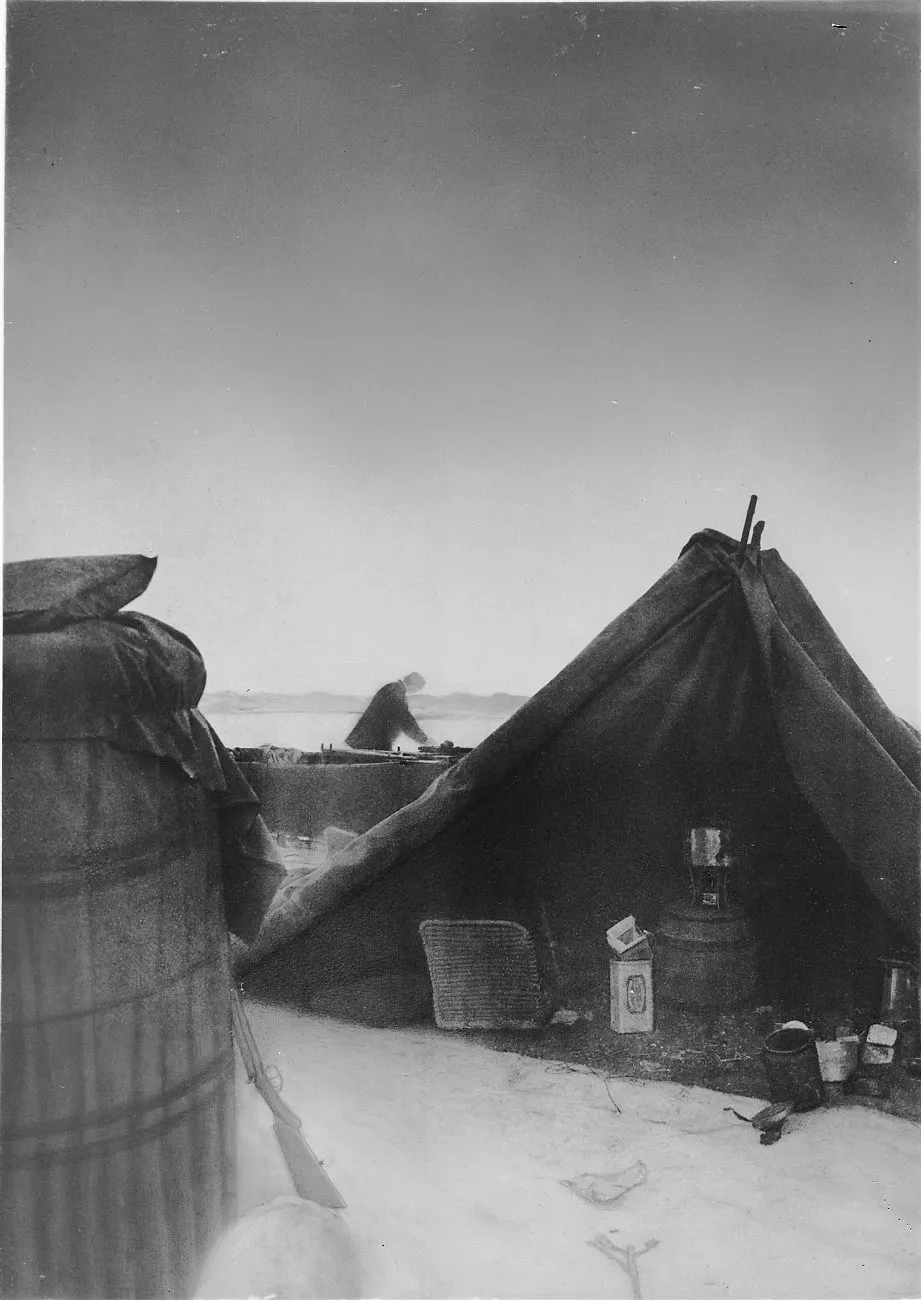
The bodies were cremated without a postmortem, which is why the cause of death has been debated ever since.
How Did They Die?
The leading theories differ. Ernst Tryde proposed in 1952 that the men were infected with trichinosis from undercooked polar bear meat. In 2010 the writer Bea Uusma suggested that Strindberg was killed by polar bears, and that Andrée may have died afterwards from an overdose of morphine. No explanation has been proved.
The 1896 Attempt and a Balloon That Leaked
Andrée’s first try, in the summer of 1896, was at Danes Island in Svalbard. The wind blew steadily from the north, straight at the balloon hangar, and the expedition could not launch. The balloon was deflated and the team went home.
The delay had a lasting consequence. The meteorologist Nils Gustaf Ekholm took measurements of the balloon’s buoyancy and found a serious problem: it was losing about 68 kilograms of lift a day through roughly eight million stitching holes along the seams. He calculated that it could stay up for about 17 days, not the 30 that had been planned, and he said that he would not take part in 1897 unless a better balloon was provided. Andrée, according to the account, then ordered extra hydrogen top-ups without telling Ekholm the true performance of the balloon.
The Örnen
The balloon, renamed Örnen (the Eagle) from its original name Le Pôle Nord, was 20.5 metres across. It was a varnished three-layer silk balloon made by Henri Lachambre’s workshop in Paris.
Andrée’s key idea was a steering system based on drag ropes: ropes hanging from the basket, which would slow the balloon by friction so that sails could give some control of direction. He claimed to have steered 27 degrees away from the wind in earlier trials. Modern balloonists reject this. The Swedish Ballooning Association says that Andrée’s beliefs were “mistaken, being misled by inexpertise and a surfeit of enthusiasm.”
The basket held three men, with sleeping berths at floor level. A modified primus stove hung eight metres below it, so that cooking would not set the hydrogen alight. The plan was to cross the Arctic Sea from Svalbard towards the Bering Strait, “to fetch up in Alaska, Canada, or Russia, and passing near or even right over the North Pole on the way.”
The expedition carried homing pigeons, bred in northern Norway “with the optimistic hope that they would manage to return there,” and steel buoys encased in cork, to be dropped from the balloon with messages. Only one pigeon was recovered, from a Norwegian steamer, where it was shot as it landed. Only two buoy messages were ever found. Nils Strindberg’s fiancée was Anna Charlier, and he addressed several messages in his diary to her.
A Launch That Went Wrong
On 11 July 1897, in a steady wind from the south-west, the balloon rose, and dipped so low that the basket touched the water. The drag ropes, several hundred metres long, twisted and came away from their newly fitted screw-holds. About 530 kilograms of rope were lost, and the crew threw out 210 kilograms of sand to keep from sinking, a total of 740 kilograms in the first few minutes.
The loss turned the Örnen from a steerable craft into “an ordinary hydrogen balloon with a few ropes hanging from it, at the mercy of the wind.” At altitudes higher than planned, the hydrogen escaped faster.
None of the early messages mentioned it. The first buoy message, dropped a few hours after takeoff, read: “Our journey goes well so far. We sail at an altitude of about 250 m (820 ft), at first N 10° east, but later N 45° east.” A pigeon message of 13 July gave a position of 82 degrees north, 15 degrees 5 minutes east. Andrée’s private diary told the truth about the lost ropes.
The balloon was in the air for 10 hours and 29 minutes in its first stretch, followed by another 41 hours of bumpy riding with frequent contact with the ground, before it came to rest on the pack ice on 14 July.
Choosing the Wrong Depot
The men spent a week in a tent at the crash site, packing and deciding. They could aim for one of two depots of supplies, Sjuøyane in Svalbard, or Cape Flora in Franz Josef Land. Their maps gave the two distances as about equal, and they chose the further one, Cape Flora.
The sledges were loaded with more than 200 kilograms each, which broke the sledges and wore out the men. After a week they left a large pile of food and equipment behind and brought the loads down to 130 kilograms a sledge. Their supplies came to 767 kilograms, including 200 litres of water and a few crates of champagne, port and beer, and they lived on canned and dry goods from the balloon stores and on large amounts of half-cooked polar bear and the occasional seal.
The ice drifted against them. On 4 August they found that they were being carried backwards, and turned for Sjuøyane, hoping to reach the depot after a march of six or seven weeks. The winds defeated them again. By 12 September they resigned themselves to wintering on the ice, and camped on a large floe, letting it take them where it would. They built a winter “home” with walls of snow reinforced with water, to Strindberg’s design. On 2 October the floe began to break up directly under the hut, and they moved their supplies to the island of Kvitøya.
What the Records Say
Three records survive. Andrée’s main diary gives geographical and observational notes. Frænkel’s meteorological journal allowed researchers to reconstruct the movements of the three men in their last months with considerable precision. Strindberg’s stenographic diary was more personal, with his reflections and several messages to his fiancée.
Strindberg took about 200 photographs on the trek with a seven-kilogram camera, among them his well-known picture of Andrée and Frænkel contemplating the fallen Eagle. After 10 September, Andrée’s diary entries, which had been daily, became sporadic and his handwriting got worse. The last is dated 8 October. Strindberg’s diary ends on 7 October. It is inferred that the three died soon afterwards.
The Discovery of 1930
The summer of 1930 was unusually warm and the sea around Kvitøya was almost free of ice. The Bratvaag, studying Svalbard glaciers, reached the island on 5 August. Two of her crew, Olav Salen and Karl Tusvick, found Andrée’s boat near a stream, frozen under a mound of snow and full of equipment, including a boathook engraved “Andrée’s Polar Expedition, 1896.” They also found a journal and two skeletons, identified as Andrée and Strindberg from monograms on their clothing.
On 5 September the Isbjørn, a sealing sloop chartered by news reporters, landed in better weather, with even less ice. Her crew found Frænkel’s body and a tin box holding Strindberg’s photographic film, his logbook and maps.
Of the 240 exposed frames found in waterlogged containers, 93 were saved by John Hertzberg at the Royal Institute of Technology in Stockholm, where Strindberg had worked.
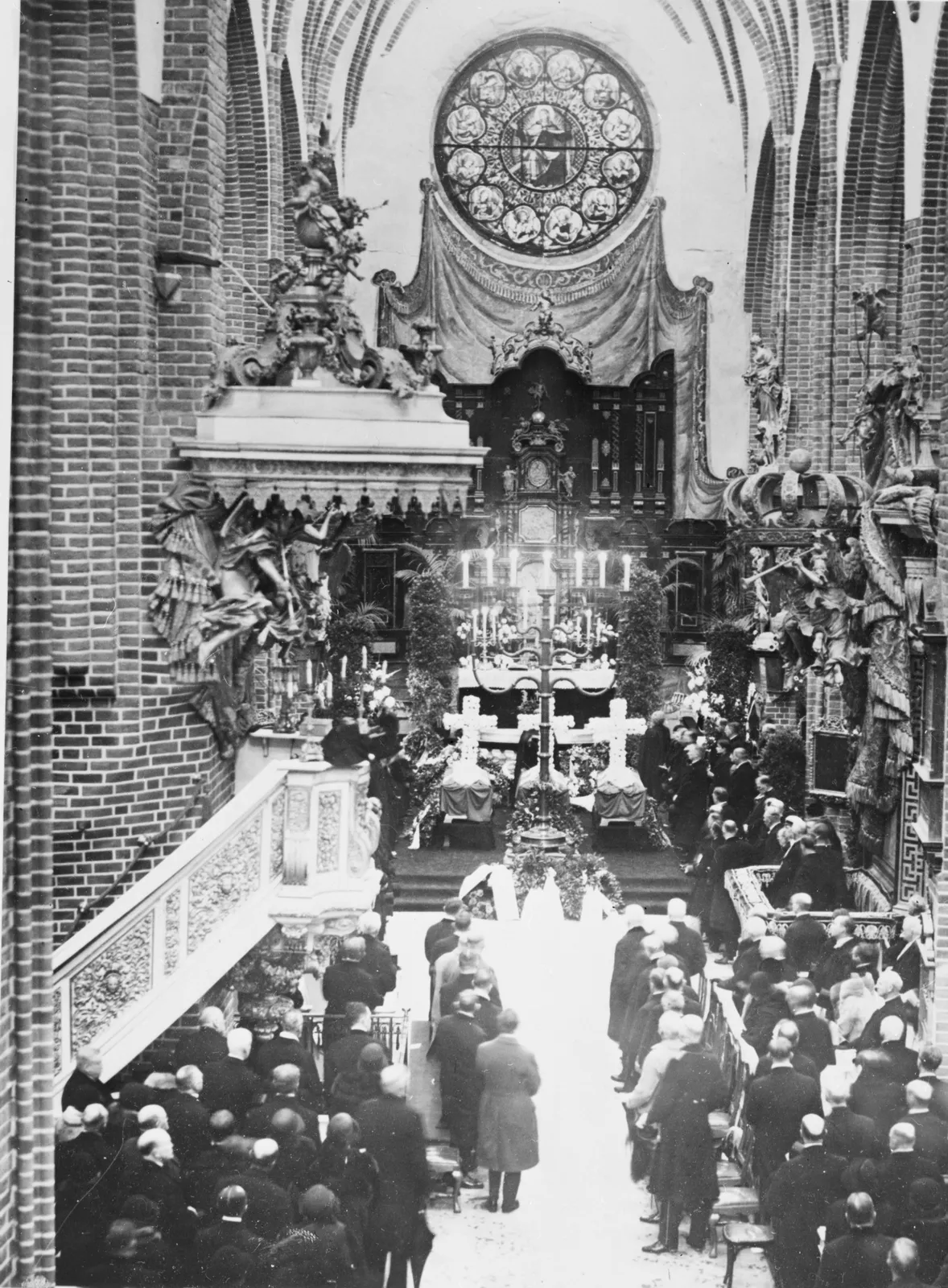
The remains reached Stockholm on 5 October 1930. The historian Sverker Sörlin describes the funeral procession as “one of the most solemn and grandiose manifestations of national mourning that has ever occurred in Sweden.” The bodies were cremated without further examination.
What the Expedition Shows
Andrée’s expedition is one of the best-known failures of the age of polar exploration. The balloon could not be steered, the hydrogen was leaking, and the men had little chance. But the diaries and the film brought their story back, and the pictures that Strindberg took on the ice are among the most affecting records of any expedition.
What the Record Shows
8 sourced claims in this story, resting on 5 primary and historical records. Numbers link to the bibliography below.
- Salomon August Andrée, Nils Strindberg, and Knut Frænkel launched the balloon Örnen from Danes Island on July 11, 1897 - sources: 1, 2
- The balloon lost its critical guide-ropes within minutes of takeoff, negating its steering capability - sources: 2, 5
- Freezing rain and ice loading forced the balloon to crash-land onto the sea ice after 65 hours in the air - sources: 1
- The three aeronauts survived the impact uninjured and hauled sledges across the drifting Arctic pack ice - sources: 2, 4
- The southward drift of the ice counteracted their march toward food caches, forcing them onto Kvitøya - sources: 1, 2
- All three men perished in October 1897, with modern medical analysis pointing to trichinosis or hypothermia - sources: 4
- The frozen campsite, diaries, and bodies were discovered 33 years later in August 1930 by Norwegian sealers aboard the Bratvaag - sources: 1, 5
- Ninety-three photographic negatives were miraculously developed from copper canisters by John Hertzberg in Stockholm - sources: 2, 5
Archival Evidence & Picture Credits
Every image on this page was checked against its Wikimedia Commons file page.
- Salomon August Andrée, the engineer who led the 1897 balloon expedition (Nordiska Museet / Wikimedia Commons) - Wikimedia Commons file page
- The launch of the balloon Örnen from Danes Island, Svalbard, on 11 July 1897 (Wikimedia Commons) - Wikimedia Commons file page
- The balloon Örnen on the Arctic pack ice after its landing in July 1897 (Wikimedia Commons) - Wikimedia Commons file page
- Knut Frænkel and Nils Strindberg standing with a dead polar bear on the ice (Wikimedia Commons) - Wikimedia Commons file page
- A photograph from Nils Strindberg’s film, developed after its recovery in 1930 (Wikimedia Commons) - Wikimedia Commons file page
- The funeral procession for the remains of the Andrée expedition in Stockholm in 1930 (Wikimedia Commons) - Wikimedia Commons file page


Verified Archival Sources & Bibliography
Every claim in this account has been fact-checked against primary archives and scholarly repositories:
- Wikipedia: Andrée’s Arctic Balloon Expedition (reference)
- Internet Archive: Andrée’s Story: The Complete Record of His Polar Flight, 1897 (primary)
- Smithsonian Magazine: The Doomed Balloon Voyage to the North Pole (historical account)
- Grenna Museum: Andréemuseet Archival Collection and Negative Registries (primary)
- Swedish National Archives (Riksarkivet): Salomon August Andrée Papers (primary)
Echoes of History Uncut. "Three Men Flew a Balloon to the North Pole. They Vanished for 33 Years.." Echoes of History Uncut. Last modified September 20, 2026. https://echoesofhistoryuncut.com/articles/andree-arctic-balloon-1897/.

An independent history publication using AI-assisted research, drafting and production. Consult each article’s citations and limitations; source inclusion does not establish independent verification of every claim.
▶
Watch the Complete Archival Documentary on YouTube
Subscribe to Echoes of History Uncut on YouTube for full widescreen 16:9 documentaries, primary archival footage, and declassified deep dives.