
The King Who Refused Heaven for a Stray Dog: The True History of Nepal's Kukur Tihar
Every autumn during Tihar, the Himalayan nation of Nepal halts normal life to crown homeless street dogs and police hounds with marigold garlands, sacred red tika, and gourmet feasts. Behind this celebration lies an ancient philosophical test from the Mahabharata: a king who rejected heaven itself rather than abandon a faithful stray dog.

In this dossier (9 chapters) ▾
- 01 The Day the Streets Belong to Kings
- 02 The Ascent of Mount Meru and the Dog That Followed
- 03 The Ultimatum: “Leave the Dog Behind”
- 04 The Divine Revelation
- 05 Guardians of the Underworld: The Vedic Lore
- 06 Modern Living Heritage: The Police Canine Parade
- 07 What the Record Shows
- 08 Archival Evidence & Picture Credits
- 09 Verified Archival Sources & Bibliography
Cultural & Historical Dossier: Kukur Tihar (Khicha Puja) & The Sacred Bond of Canines Festival: Tihar (Yamapanchak, Day 2) | Geographic Focus: Nepal and the Himalayan Diaspora | Foundational Texts: Mahabharata (Mahaprasthanika Parva) & Rigveda (Mandala 10, Hymn 14)
The Day the Streets Belong to Kings
Every autumn across the Kathmandu Valley and the high mountain ridges of Nepal, the normal hierarchy of the streets dissolves. Stray hounds that ordinarily dodge motorbikes and forage near market stalls wake up to find themselves approached by human families bearing brass plates piled with orange flowers, crimson powders, and bowls of warm milk.
This is Kukur Tihar (known in the indigenous Newar language as Khicha Puja), the second morning of Nepal’s five-day autumn festival of Tihar (or Yamapanchak).
While Diwali across broader South Asia centers primarily on fireworks and welcoming Lakshmi, the goddess of fortune, Nepal’s ancient calendar dedicates each day of the festival to cosmic debts, nature, and the animal kingdom: crows on day one, dogs on day two, cows on day three, oxen and the sacred self on day four, and the bond between sisters and brothers on day five.
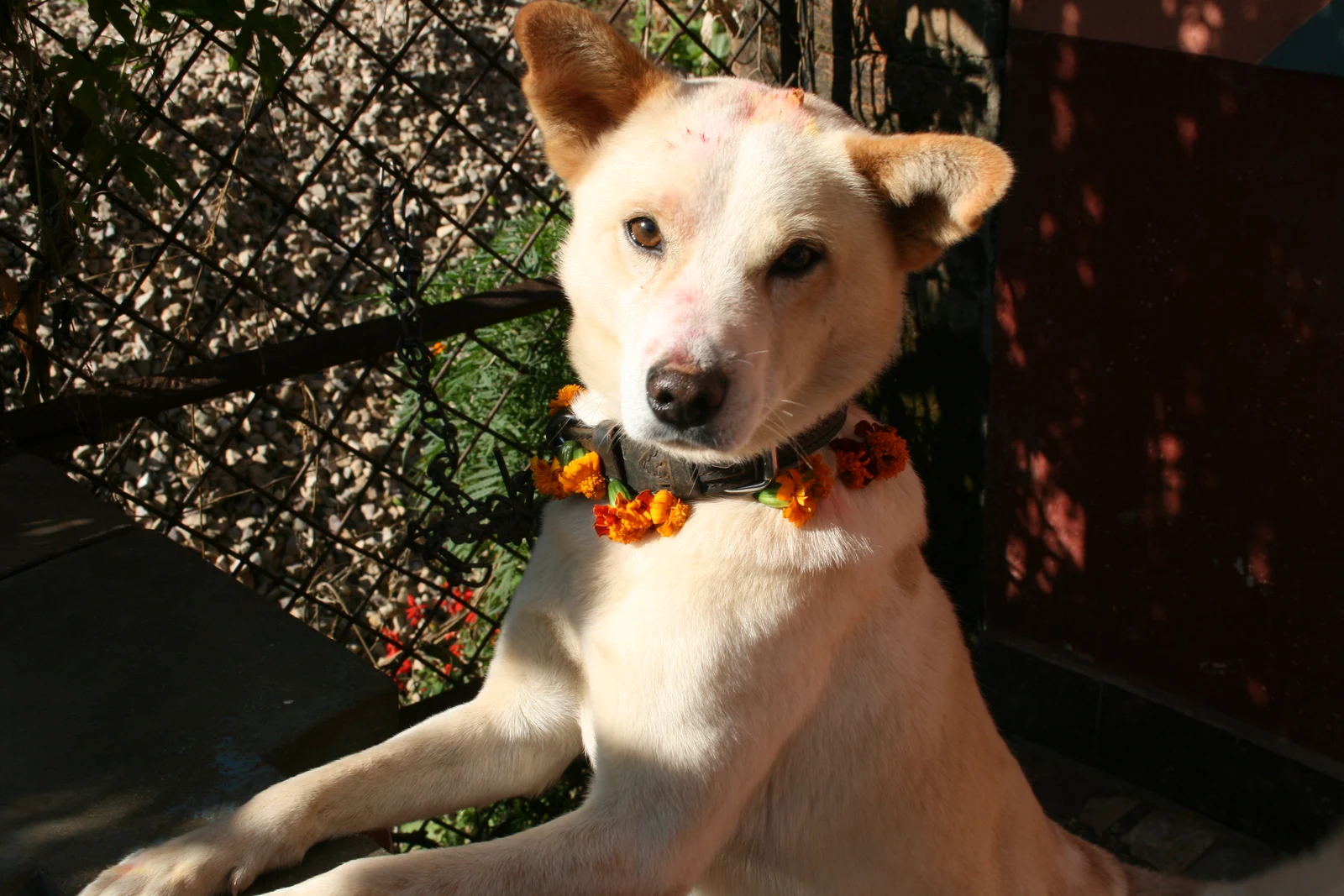
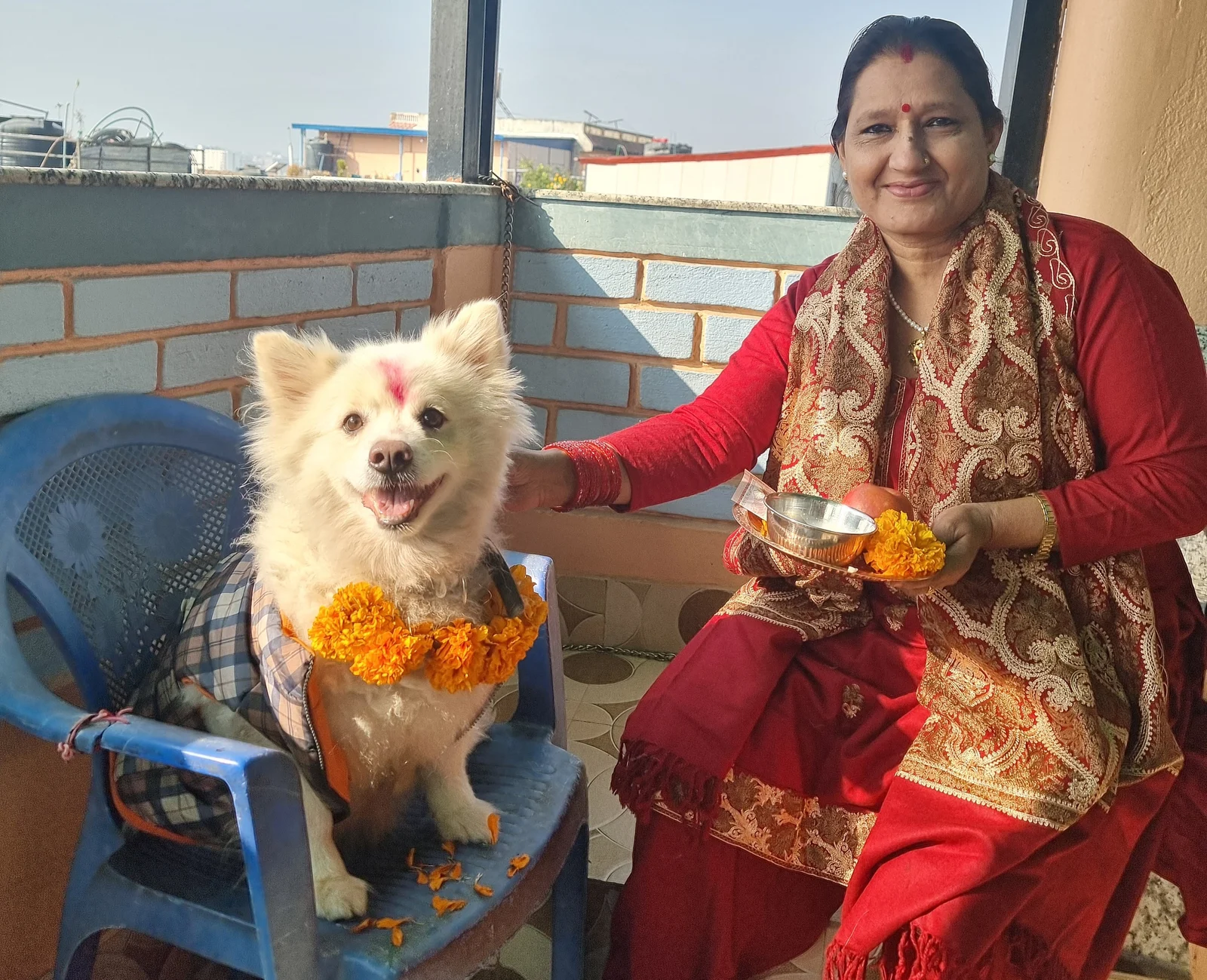
On Kukur Tihar, no dog is treated as an outcast. Every hound receives three distinct honors:
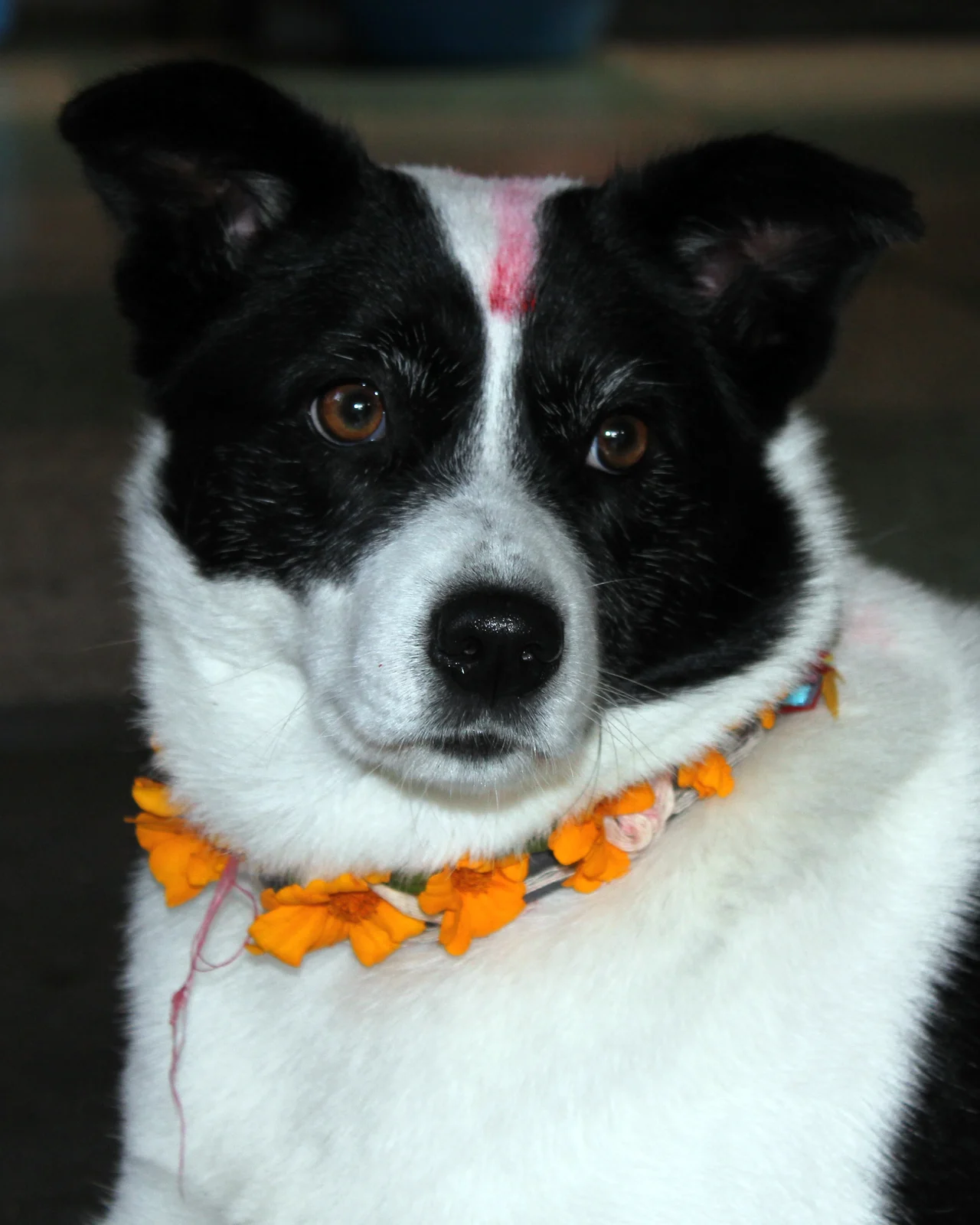
- The Marigold Garland (Sayapatri Mālā): Fresh, aromatic orange and yellow flowers placed around the dog’s neck, symbolizing dignity, affection, and cosmic respect.
- The Crimson Mark (Tika): A vivid paste of vermilion powder, unbroken rice, and yogurt pressed between the dog’s eyes upon the Ajna Chakra, consecrating the animal as a sacred guest.
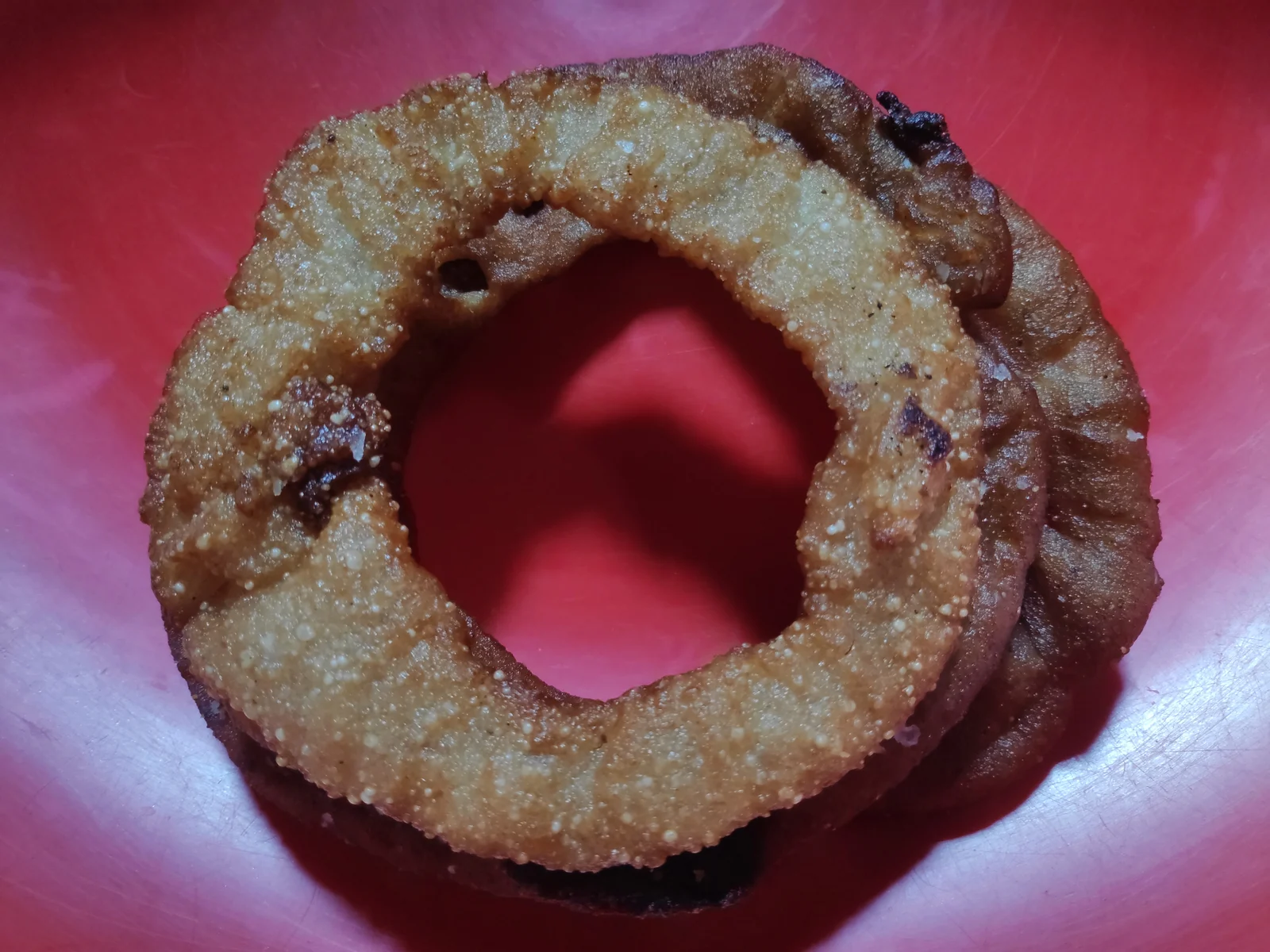
- The Feast Offering: Gourmet home-cooked meals including deep-fried circular rice bread (sel roti), fresh buffalo meat, eggs, and dairy treats.
Yet behind the cheerful spectacle of garlanded pets and street hounds lies one of the most demanding moral questions in world literature.
The Ascent of Mount Meru and the Dog That Followed
The mythological heartbeat of Kukur Tihar is rooted in the concluding book of the Sanskrit epic Mahabharata, the Mahaprasthanika Parva (“The Book of the Great Journey”) [1].
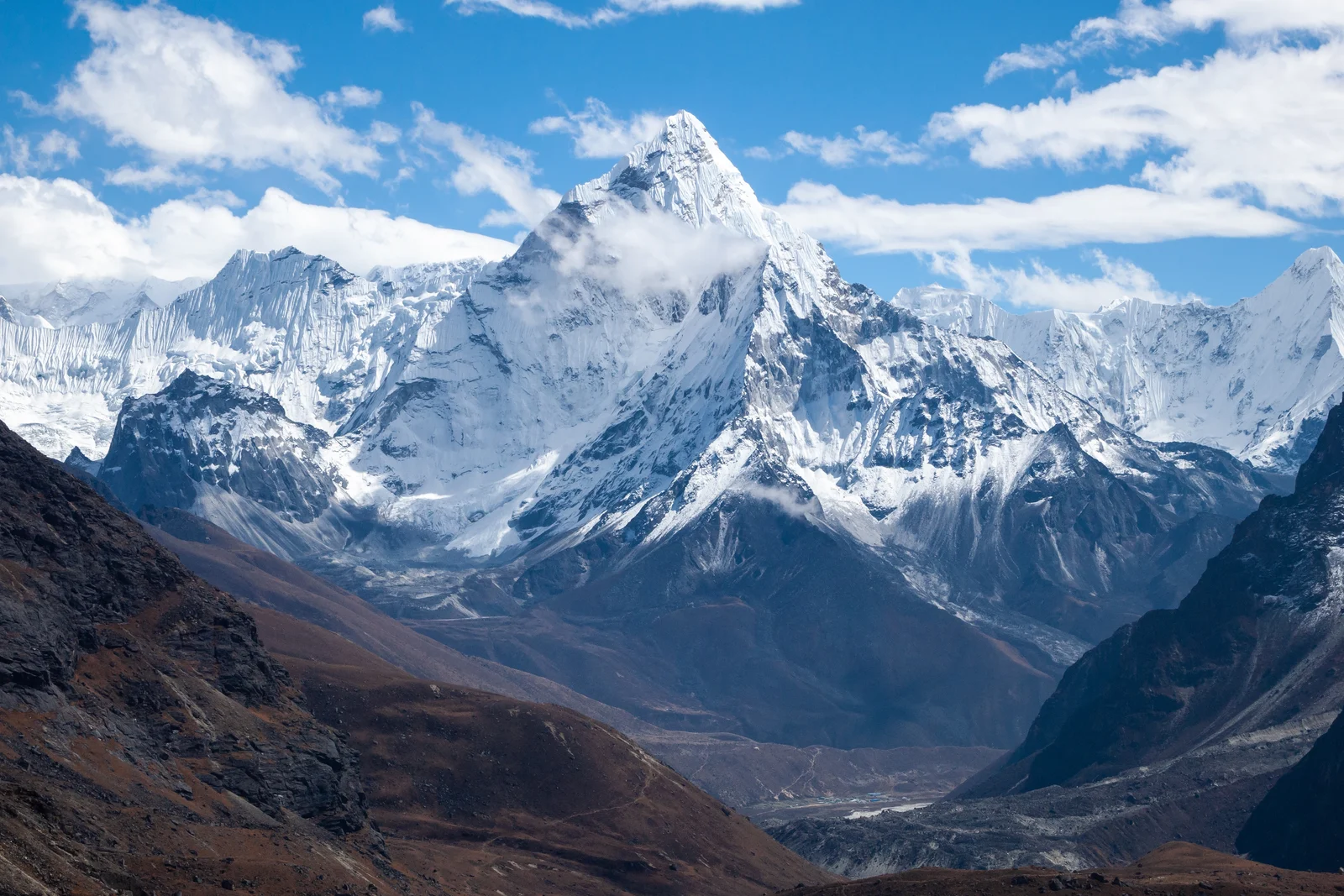
Following the catastrophic Kurukshetra war and decades of rule, King Yudhishthira, the eldest of the Pandava brothers, renounced his royal throne. Accompanied by his four brothers (Bhima, Arjuna, Nakula, and Sahadeva) and their queen Draupadi, Yudhishthira began a final pilgrimage on foot across the frozen spine of the Himalayas, intending to walk until their mortal bodies gave out on the road to Svarga (Heaven) [1].
As they left civilization behind, a scruffy, nameless stray dog fell into step behind them.
The climb was brutal. One by one, weakened by human flaws and the biting alpine frost, the pilgrims fell:
- Draupadi collapsed first, undone by her secret partiality for Arjuna.
- Sahadeva fell for pride in his intellect.
- Nakula fell for vanity in his physical beauty.
- Arjuna fell for boasting that he could slay all enemies in a single day.
- Bhima collapsed last, undone by gluttony and immense wrath.
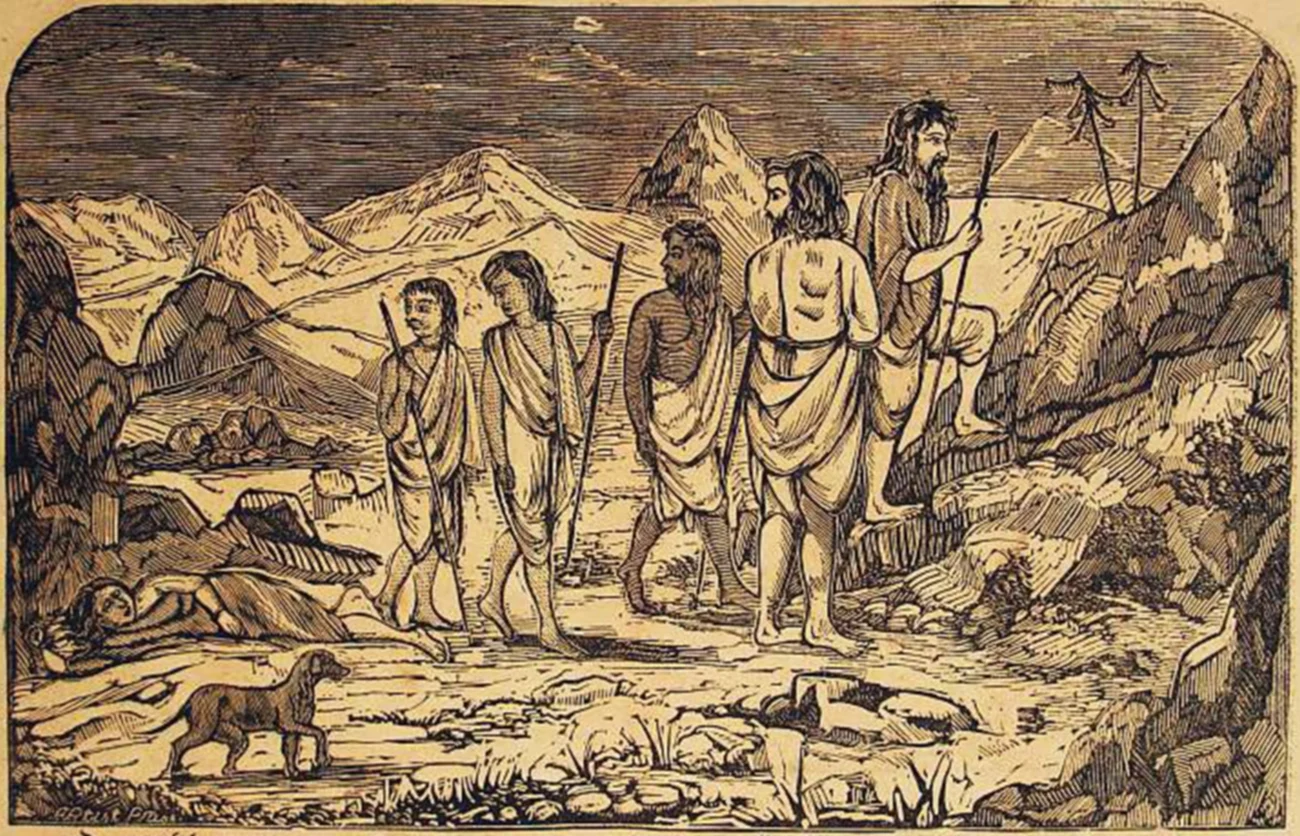
Yudhishthira did not stop. Grieving but resolute, he climbed onward into the thin mountain air. When he finally reached the highest plateau where mortal earth meets the heavens, only two living beings remained: a broken, solitary king, and the faithful dog trotting quietly at his heels [1].
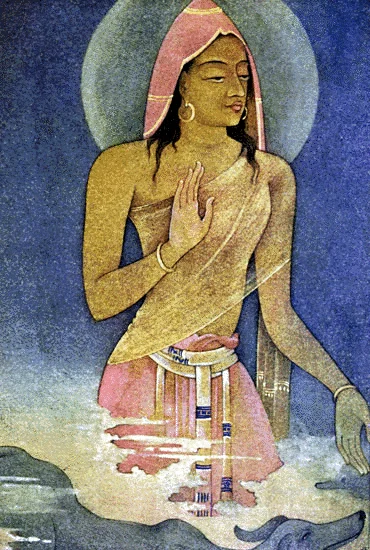
The Ultimatum: “Leave the Dog Behind”
Suddenly, the sky ignited with divine radiance. Lord Indra, king of the gods, descended upon a golden chariot to receive the virtuous monarch into paradise alive [1].
“Ascend into this car, O king of kings,” Indra declared. “Thy brothers and Draupadi have already cast off their mortal forms and reside in heaven. Thou alone hast earned the right to enter paradise in this living body.” [1]
Yudhishthira looked down at his companion. “This dog, O Lord of the Past and the Present, is exceedingly devoted to me. He must go with me. My heart is full of compassion for him.” [1]
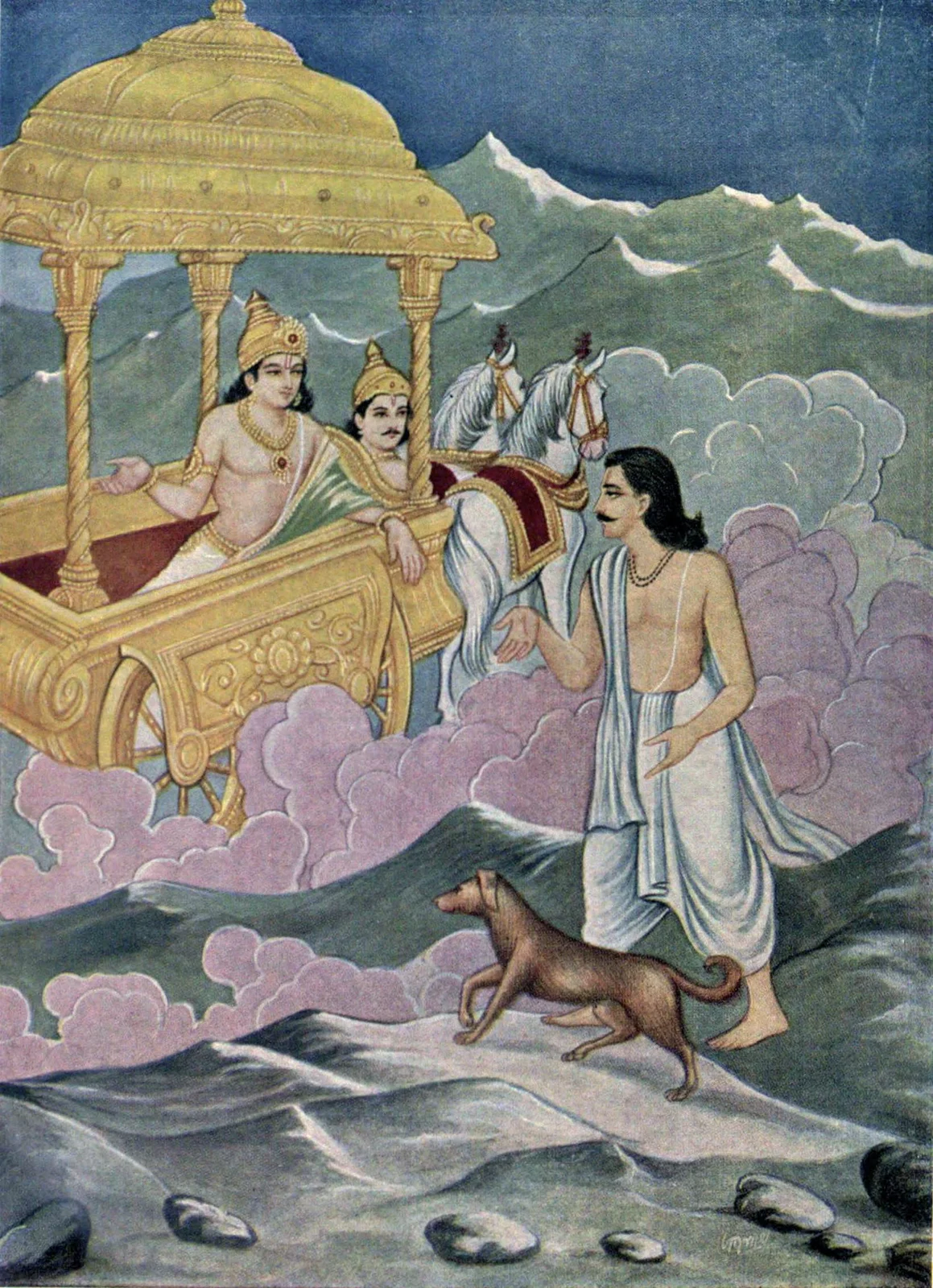
Indra laughed and waved his hand dismissively:
“Immortality, prosperity, and divine joy are yours today. But dogs have no place in heaven. They are unclean; their very gaze defiles the sacrificial butter. Abandon this hound. There is no cruelty in renouncing an animal.” [1]
Yudhishthira refused to move. His reply remains one of the foundational statements of ethical philosophy:
“It has been declared that the abandonment of one that is devoted is infinitely sinful—equal in gravity to the slaying of a Brahmana. Never, from desire of my own happiness, shall I abandon an animal that has taken refuge with me, that has neither power to protect itself nor another master to seek.” [1]
Indra pressed him again, reminding the king that he had already left his wife and brothers behind on the mountain. Yudhishthira countered that he could not revive those who were dead; but this dog was alive, trusting, and breathing. To step into heaven over the abandoned body of a loyal companion would corrupt paradise itself.
The Divine Revelation
At that instant, the physical form of the stray dog vanished.
In its place stood Lord Dharma—the deity of righteousness, cosmic order, and truth (and the spiritual father of Yudhishthira himself) [1].
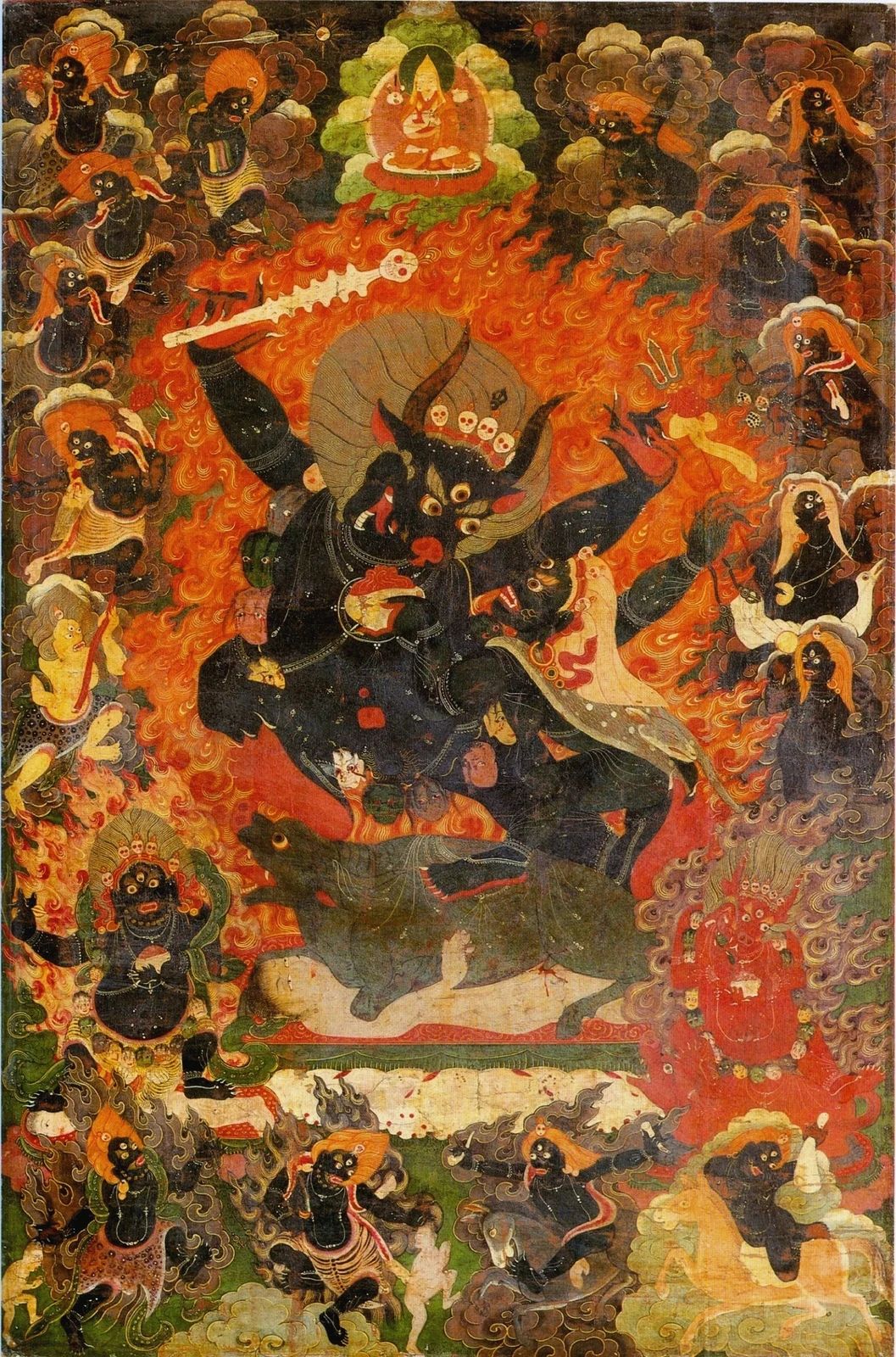
Dharma addressed his son with pride:
“O king of kings, thou hast shown compassion that knows no equal. In the past, thou didst choose Nakula at the enchanted lake; but today, thou hast rejected heaven itself for the sake of a nameless dog that loved thee. There is no one in the three worlds thy equal in righteousness.” [1]
Guardians of the Underworld: The Vedic Lore
The veneration of dogs in Nepal also extends to the earliest hymns of the Rigveda (Mandala 10, Hymn 14) [2].
In Vedic cosmology, Yama, the first mortal to conquer death and become ruler of the ancestral afterlife (Yamaloka), is served by two four-eyed brindle hounds: Shyama (the Dark) and Sabala (the Spotted) [2]. Born of Sarama, the celestial hound of Indra, these dogs patrol the narrow threshold separating the mortal realm from eternity. They protect the souls of the deceased on their final voyage and bar demonic entities from dragging departed souls into darkness.
By garlanding and feeding dogs on Kukur Tihar, devotees symbolically appease Yama, praying for protection against premature or violent death (Apamrityu) for their households [3].
In the Kathmandu Valley’s Tantric Newar tradition, the dog is also the sacred vehicle (vahana) of Bhairava, the ferocious guardian incarnation of Shiva. To harm a canine in Nepal is believed to invite direct spiritual calamity.

Modern Living Heritage: The Police Canine Parade
Today, the ancient ritual is practiced with equal reverence in both intimate homes and state institutions.
Each year on Kukur Tihar morning, the Nepal Police Canine Division in Maharajgunj, Kathmandu, conducts an official ceremonial parade. Working search-and-rescue dogs, bomb-detection hounds, and tracking animals stand in formation alongside their handlers. High-ranking military and police officers formally place marigold wreaths around each dog’s neck, mark their foreheads with red tika, and award ceremonial medals for valor and exceptional service to the country [4].
In an era where urban stray animals often face neglect, Kukur Tihar stands as a radical, living philosophical statement: that our civilization is not judged by the grandeur of our temples, but by how we treat the most vulnerable creatures that walk alongside us.
What the Record Shows
- The Mahabharata’s Supreme Moral Test: In the Mahaprasthanika Parva (Book 17, Section 3), King Yudhishthira refuses to enter Indra’s celestial chariot when told to abandon the stray dog, whereupon the animal reveals itself as Lord Dharma [1].
- Vedic Guardians of the Netherworld: In the Rigveda (Mandala 10, Hymn 14), Yama is attended by two four-eyed hounds (Shyama and Sabala), who guard the gates of the afterlife and guide departing souls [2].
- Second Day of Yamapanchak: Kukur Tihar occurs annually on the second day of the five-day Tihar festival in Nepal, wherein all dogs—both street strays and domestic pets—are garlanded with marigolds (Sayapatri), marked with crimson vermilion tika, and given special food offerings [3].
- State Police Canine Honors: The Armed Police Force and Nepal Police Canine Division hold a formal annual ceremony honoring military and police working dogs with flower garlands, red tika, and service medals [4].
Archival Evidence & Picture Credits
- Street Dog with Marigolds and Tika (Kathmandu): Documented during Kukur Tihar festivities in Nepal. Photograph by rubber bullets via Wikimedia Commons under CC BY 2.0.
- Traditional Sel Roti Feast: Freshly prepared celebratory circular rice bread offered to dogs during Tihar. Photograph by Saroj Pandey via Wikimedia Commons under CC BY-SA 4.0.
- Community Dog in Kathmandu Temple Square: Captured during neighborhood worship rites in Bhaktapur/Kathmandu. Photograph by Alish Bhandarii via Wikimedia Commons under CC BY-SA 4.0.
- Himalayas (Ama Dablam, Nepal): Photographic documentation of the high alpine path toward the snow peaks. Photograph by chensiyuan via Wikimedia Commons under CC BY-SA 4.0.
- The Fall of Draupadi and the Pandavas: 19th-century Barddhaman edition Mahabharata archival illustration. Public Domain via Wikimedia Commons.
- Yudhisthira and His Dog, Ascending (1913): Iconic watercolor painting by master Indian artist Nandalal Bose (1882–1966). Public Domain via Wikimedia Commons.
- Indra in Golden Chariot and Yudhishthira: Archival illustration depicting Indra descending on his chariot commanding Yudhishthira to leave the dog. Public Domain via Wikimedia Commons.
- Yama Dharmaraja Thangka (17th Century): Classical Tibetan/Himalayan painting of Dharmaraja from the Central Region. Public Domain via Wikimedia Commons.
- Household Dog Blessed with Tika: Domestic observance of Kukur Tihar in Nepal. Photograph by Slyronit via Wikimedia Commons under CC BY-SA 4.0.
- Portrait of a Garlanded Dog: High-resolution documentary portrait of a dog on Kukur Tihar. Photograph by Ritesh Man Tamrakar via Wikimedia Commons under CC BY-SA 2.0.


Verified Archival Sources & Bibliography
- Ganguli, Kisari Mohan (trans.). The Mahabharata of Krishna-Dwaipayana Vyasa: Book 17: Mahaprasthanika Parva, Section 3. Calcutta: Bharata Press, 1896. Sacred Texts Archive.
- Griffith, Ralph T. H. (trans.). The Hymns of the Rigveda: Mandala 10, Hymn 14 (To Yama). Benares: E. J. Lazarus and Co., 1896. Vedic Literature Repository.
- Nepal Tourism Board (NTB). “Tihar: The Five-Day Festival of Lights and Brotherhood in Nepal.” Government of Nepal Cultural Registry, 2024. NTB Official Documentation.
- Associated Press (AP). “Nepal police dogs garlanded, treated to feasts on Kukur Tihar festival.” AP News World, October 2022. AP News Archive.
Echoes of History Uncut. "The King Who Refused Heaven for a Stray Dog: The True History of Nepal's Kukur Tihar." Echoes of History Uncut. Last modified November 7, 2026. https://echoesofhistoryuncut.com/articles/kukur-tihar-nepal-dog-worship/.

An independent history publication using AI-assisted research, drafting and production. Consult each article’s citations and limitations; source inclusion does not establish independent verification of every claim.
▶
Watch the Complete Archival Documentary on YouTube
Subscribe to Echoes of History Uncut on YouTube for full widescreen 16:9 documentaries, primary archival footage, and declassified deep dives.