
How a Pinch of Free Sea Salt Challenged British Rule
In March 1930, Mahatma Gandhi walked roughly 240 miles to Dandi to defy British salt laws. The Salt March did not abolish the salt tax overnight—it reshaped the struggle that led to India's independence in 1947.
In this dossier (5 chapters) ▾
Why an Everyday Necessity Became a Constitutional Challenge
The 1930 Salt March did not topple the British Raj overnight, nor did it immediately abolish the salt tax. Independence arrived seventeen years later, after a world war, renewed mass resistance, constitutional deadlocks, and Partition. Yet the march remains one of the decisive turning points of twentieth-century history because it made imperial authority vulnerable over something every household needed: salt.
Salt taxation in India predated British consolidation, but colonial statutes—including the Indian Salt Act (Act XII of 1882) and its subsequent amendments—regulated manufacture, transport, and possession across British India. For millions of working families in a hot climate, taxing a basic dietary necessity turned an abstract constitutional dispute into a daily reminder of who governed the country.
On 2 March 1930, Mahatma Gandhi sent a formal letter to Viceroy Lord Irwin, delivered by an English supporter, Reginald Reynolds, announcing impending civil disobedience and naming the salt laws as his opening target.
“I regard this tax to be the most iniquitous of all from the poor man’s standpoint. As the independence movement is essentially for the poorest in the land the beginning will be made with this evil.” — Mahatma Gandhi to Viceroy Lord Irwin, 2 March 1930
Gandhi also anticipated that arresting him would not end the campaign, writing that he hoped “there will be tens of thousands ready, in a disciplined manner, to take up the work after me.” Early British reactions underestimated the threat; in private correspondence on 2 February 1930, Irwin observed that “the prospect of a salt campaign does not keep me awake at night.”
The 240-Mile Walk from Sabarmati to Dandi
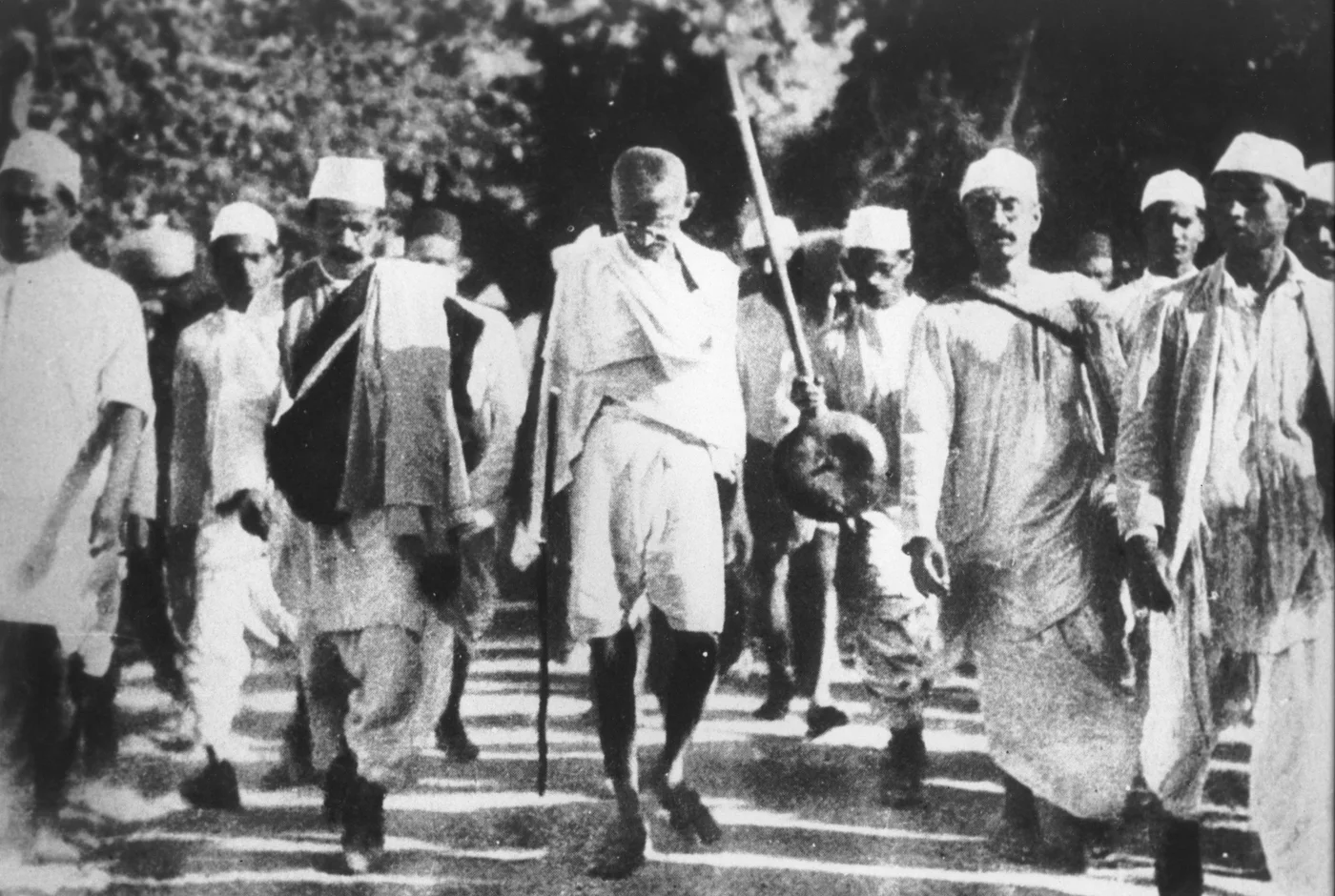
On 12 March 1930, Gandhi left Sabarmati Ashram in Ahmedabad with 78 selected companions—79 people including Gandhi himself—heading south toward the Arabian Sea coast of Gujarat. Over 24 days of walking, the group covered approximately 240 miles (roughly 386 kilometers), stopping in villages to hold public meetings, draw reporters, and turn a quiet legal protest into a sustained national event.
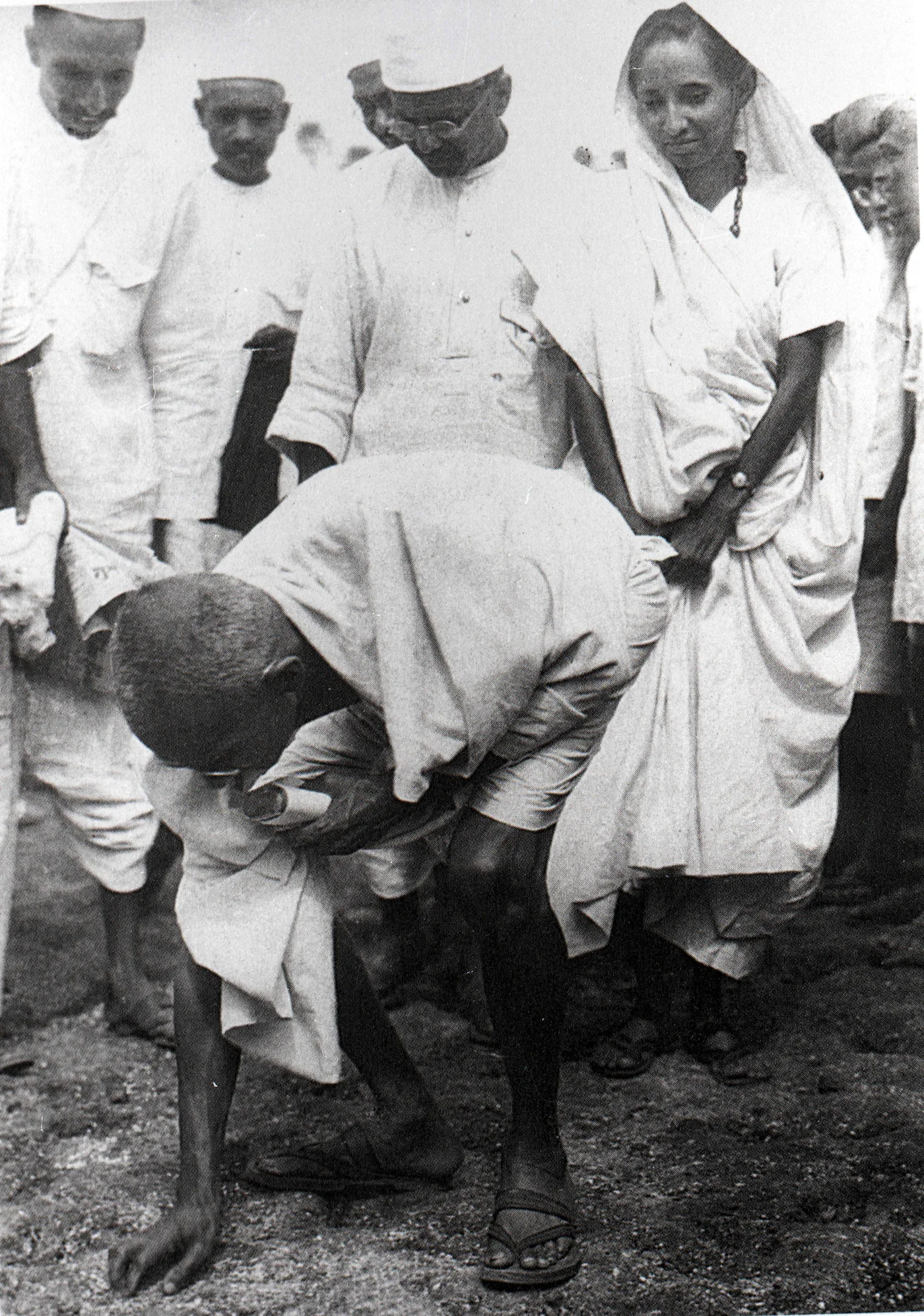
The marchers reached the coastal village of Dandi on 5 April 1930. The next morning, 6 April 1930, Gandhi walked to the shore, bent down, and picked up naturally occurring salt mud—openly violating the colonial salt laws. (Several widely circulated archival scans carry filenames dated “5 April,” reflecting arrival day rather than the established 6 April act of defiance.)
Breaking the salt law required no weapon and no special equipment. Across coastal and inland provinces, ordinary citizens began boiling seawater, selling contraband salt, and courting arrest. By the end of 1930, Encyclopaedia Britannica estimates approximately 60,000 people had been imprisoned across the civil disobedience campaign.
Arrest, Sarojini Naidu, and the Dharasana Dispatch
On 4 May 1930, Gandhi wrote again to Lord Irwin announcing his intention to challenge the government-controlled Dharasana Salt Works:
“Not a pinch of salt can be removed without the previous sanction of the authorities.” — Mahatma Gandhi to Viceroy Lord Irwin, 4 May 1930
Authorities arrested Gandhi during the night of 4–5 May 1930 before he could lead the action. His designated successor, retired senior judge Abbas Tyabji, was arrested on 12 May before reaching the works. Leadership then passed to poet and Indian National Congress leader Sarojini Naidu, demonstrating that imprisoning the movement’s most recognizable figure could not halt the campaign.
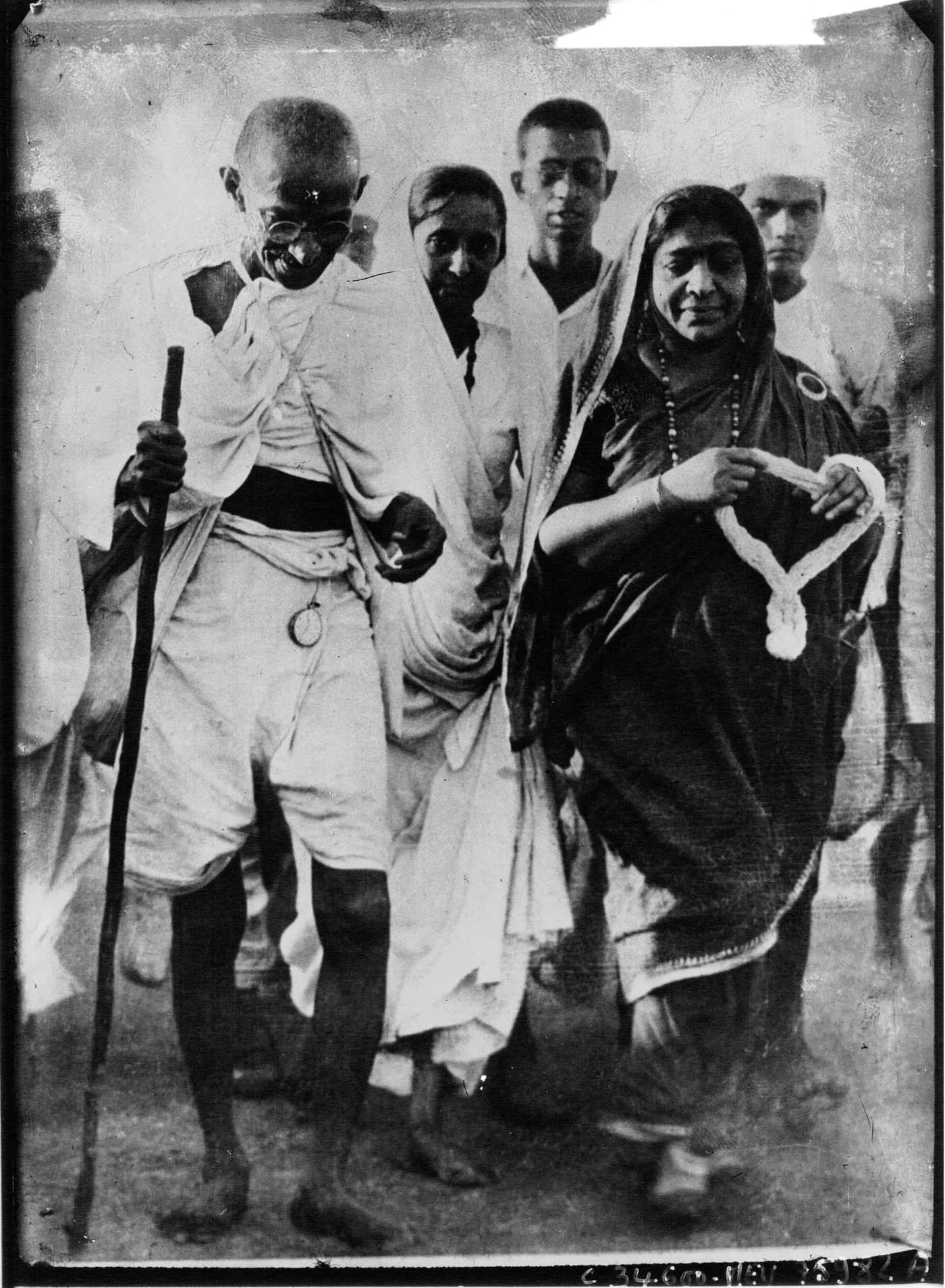
On 21 May 1930, Naidu led volunteers toward the Dharasana Salt Works, telling them: “Although Gandhi’s body is in prison, his soul goes with you.” United Press correspondent Webb Miller, who witnessed the confrontation and filed a dispatch delayed by colonial censorship, reported roughly 2,500 demonstrators facing 400 police, with 260 injured in his contemporary count:
“The volunteers made no resistance. Less than 100 yards away I could hear the dull impact of clubs against bodies.” — Webb Miller, United Press dispatch from Dharasana, 21 May 1930
The protesters did not capture the salt depot. Instead, the confrontation exposed the physical violence sustaining colonial rule to an international audience, circulating widely in newspapers across Europe and the United States and eroding British moral authority abroad.
The 1931 Pact’s Surprising Limit—and the Road to 1947
Gandhi was released in January 1931, and on 5 March 1931 he and Lord Irwin signed the Gandhi–Irwin Pact. Congress suspended civil disobedience and agreed to attend the Second Round Table Conference in London (September–December 1931), while the government released qualifying nonviolent prisoners.
Yet the official text read in the UK House of Commons reveals an often-overlooked reality: the salt laws survived. Clause 20 allowed residents of villages immediately adjoining salt-producing areas to collect or make salt for domestic use or local village sale, while explicitly stating that the government was not able, “in the present financial conditions of the country, to make substantial modifications in the Salt Acts.”
A decade later, amid the Second World War, Gandhi made clear that limited concessions would no longer suffice. Addressing the All India Congress Committee in Bombay on 8 August 1942 as it adopted the Quit India resolution, he pointed back to the salt issue to measure how far the demand had escalated:
“May be, he will propose the abolition of salt tax, the drink evil, etc. But I will say, ‘Nothing less than freedom.’” — Mahatma Gandhi, Quit India Speech, 8 August 1942
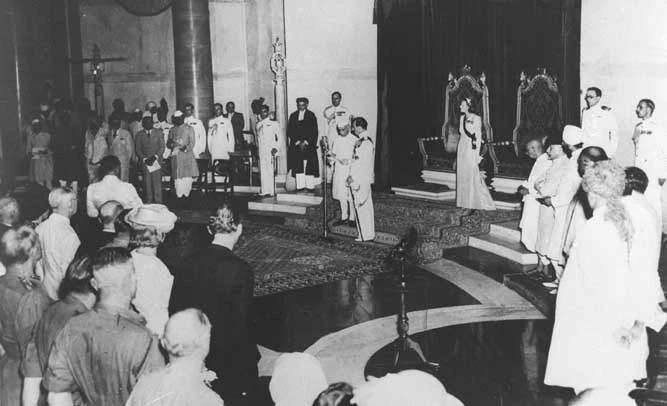
British authorities arrested Gandhi and senior Congress leaders the next morning, 9 August 1942. Postwar negotiations between 1945 and 1947—shaped by Britain’s weakened postwar position, a February 1947 withdrawal deadline, intense constitutional disagreement between Congress and the Muslim League, and escalating communal violence—culminated in the Indian Independence Act of 18 July 1947. On 15 August 1947, India became independent alongside Partition.
The 1930 Salt March did not single-handedly end imperial rule. What it achieved was more durable: it turned an ordinary household mineral into a disciplined, reproducible act of defiance that reshaped who held legitimacy to govern India.
Primary Sources & Archival Credits
Primary Documents & Scholarly References
- Mahatma Gandhi to Viceroy Lord Irwin (2 March 1930) — Living with Gandhi Archive, Bucknell University
- Mahatma Gandhi to Viceroy Lord Irwin (4 May 1930) — MKGandhi.org Selected Letters
- Webb Miller, United Press Dispatch from Dharasana (21 May 1930) — UPI Archives
- Gandhi–Irwin Settlement, Clause 20 (5 March 1931) — UK Parliament Historic Hansard
- Mahatma Gandhi, Quit India Speech (8 August 1942) — Press Information Bureau, Government of India
- Indian Salt Act Amendment (Act XX of 1884, referencing Act XII of 1882) — India Code
- Indian Independence, Part Two (1947 Cabinet & Foreign Office Records) — The National Archives (UK)
- Salt March — Encyclopaedia Britannica
Archival Photographs (Wikimedia Commons)
- Gandhi leading marchers during the Salt March (1930) — Public Domain (Wikimedia Commons)
- Gandhi collecting salt at Dandi (6 April 1930; file titled 5 April) — Public Domain (Wikimedia Commons)
- Mahatma Gandhi and Sarojini Naidu (1930) — Public Domain, Bibliothèque nationale de France (Wikimedia Commons)
- Lord Mountbatten swearing in Jawaharlal Nehru (15 August 1947) — Public Domain (Wikimedia Commons)


Historical Connection Graph
A Prison Built So No Two Inmates Could Meet
AJ. "How a Pinch of Free Sea Salt Challenged British Rule." Echoes of History Uncut. Last modified November 21, 2026. https://echoesofhistoryuncut.com/articles/gandhi-salt-march-1930-indian-independence/.

An independent digital history publication and documentary studio reconstructing historical turning points through primary archives, official inquiries, and scholarly citations. Every factual claim in this dossier is cross-referenced to the numbered bibliography above.