
5 Controversies That Defined Sonia Gandhi's Career
From her Italian heritage and citizenship challenges to the Bofors probe, her 2004 renunciation of the prime ministership, the 2012 coal allocation audit, and the National Herald trial, examine the five legal and constitutional controversies that shaped Sonia Gandhi's political career.
In this dossier (9 chapters) ▾
- 01 An Unlikely Ascent into the Epicenter of Indian Politics
- 02 5. The Foreign Origin Debate and the Naturalized Citizenship Challenge (1999)
- 03 4. The 1987 Bofors Artillery Scandal and the Quattrocchi Link
- 04 3. The 2004 General Election Victory and the “Inner Voice” Renunciation
- 05 2. The 2012 CAG Coal Allocation Report (Coalgate)
- 06 1. The National Herald Financial Inquiry and Criminal Summons (2012–Present)
- 07 What the Record Shows
- 08 Archival Evidence & Picture Credits
- 09 Verified Archival Sources & Bibliography
Historical Dossier: Sonia Gandhi’s Political Career and Legal Scrutiny Location: New Delhi, India | Period: 1983–2024 | Key Entities: Indian National Congress, United Progressive Alliance (UPA), Supreme Court of India, Delhi High Court
An Unlikely Ascent into the Epicenter of Indian Politics
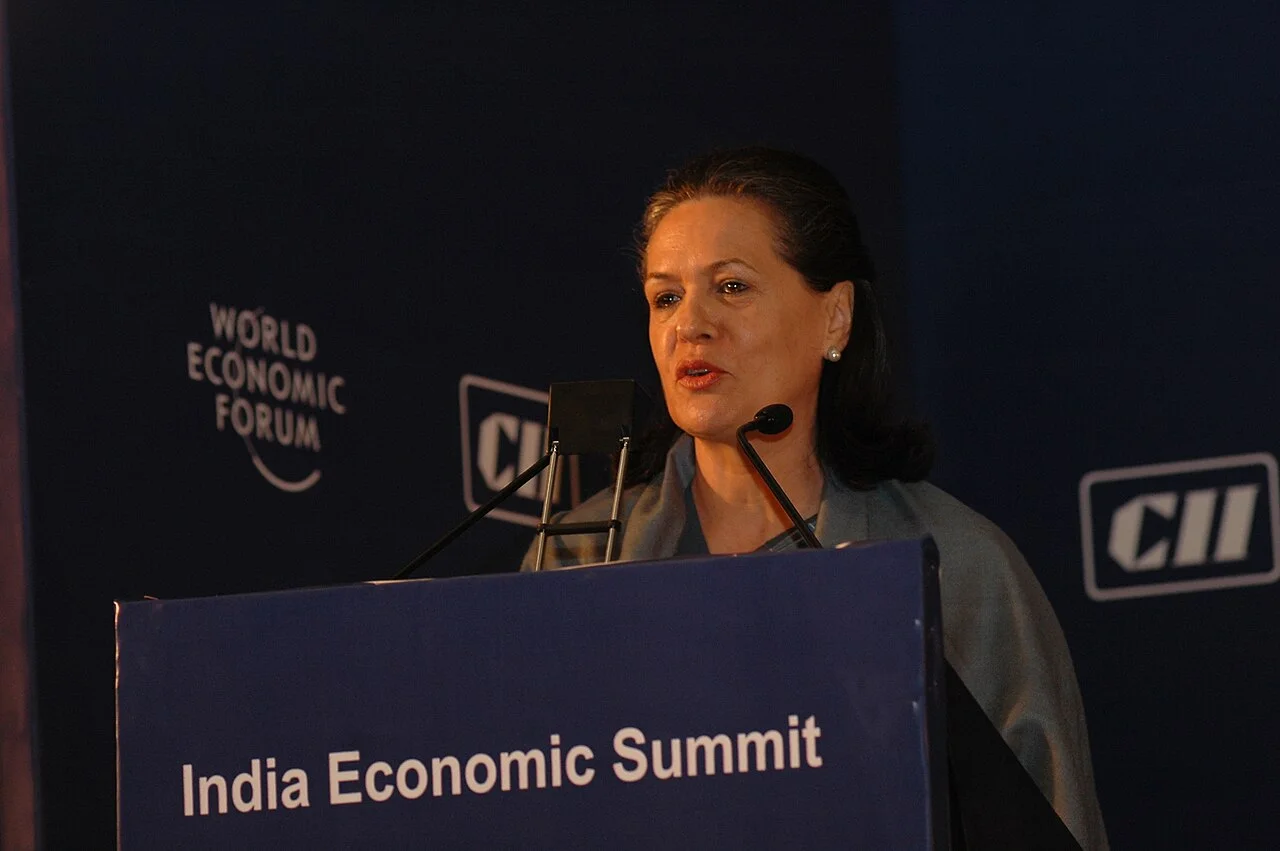
Few figures in modern democratic history have occupied a political position as scrutinized and contested as Sonia Gandhi. Born Edvige Antonia Albina Maino in 1946 in Lusiana, Italy, and raised in the Piedmontese town of Orbassano, she seemed destined for a private life far removed from South Asian dynastic politics. In 1965, while studying English at the Bell Educational Trust language school in Cambridge, England, she met Rajiv Gandhi, a mechanical engineering student at Trinity College and the elder son of Indian Prime Minister Indira Gandhi. Following their wedding in New Delhi in 1968, Sonia Gandhi lived for over a decade as a fiercely private citizen within the Prime Ministerial household, consciously avoiding party committees, rallies, and media interviews.
Her entry into the storm of public life was forced by tragedy. Following the assassination of Indira Gandhi by her bodyguards in October 1984, Rajiv Gandhi was thrust into the premiership. Seven years later, on 21 May 1991, Rajiv himself was assassinated by a Liberation Tigers of Tamil Eelam (LTTE) suicide bomber at Sriperumbudur. Though party stalwarts immediately begged her to take the helm, Sonia Gandhi firmly declined party leadership for seven years, retreating into seclusion at 10 Janpath.
It was only in 1997, with the Indian National Congress splintering and facing catastrophic electoral decline, that she formally joined the party, assuming the Congress presidency in 1998. Over the next two decades, as party president and chairperson of the ruling United Progressive Alliance (UPA) from 2004 to 2014, she wielded unprecedented authority. Yet across this tenure, her leadership was punctuated by fierce constitutional arguments, procurement scandals, and high-stakes courtroom proceedings.
5. The Foreign Origin Debate and the Naturalized Citizenship Challenge (1999)
When Sonia Gandhi assumed leadership of the Congress party in 1998 and campaigned in the 1999 general election, opposition parties led by the Bharatiya Janata Party (BJP) launched a ferocious constitutional attack centered on her birthplace. Although she had acquired Indian citizenship by registration under the Indian Citizenship Act in April 1983—surrendering her Italian passport in accordance with Indian dual-citizenship prohibitions—critics argued that executive posts carrying command of the armed forces and nuclear arsenal should be restricted to citizens by birth.
The controversy fractured her own party. In May 1999, three senior Congress Working Committee leaders—Sharad Pawar, P. A. Sangma, and Tariq Anwar—sent an official letter urging that the Indian Constitution be amended so that the offices of President, Vice President, and Prime Minister could be held solely by natural-born Indian citizens. When the party expelled the trio, they formed the Nationalist Congress Party (NCP).
Legal challenges mounted in the courts. Petitioners argued before the Allahabad High Court and subsequently the Supreme Court of India that naturalized citizens should not be eligible to contest parliamentary elections or hold the prime ministership. In landmark rulings, the Supreme Court of India dismissed these challenges, affirming that the Constitution of India recognizes no distinction between a citizen by birth and a citizen by registration or naturalization regarding political candidacy. Despite the judicial resolution, the “foreign origin” debate remained a potent political weapon throughout her political life.
4. The 1987 Bofors Artillery Scandal and the Quattrocchi Link
No procurement crisis altered modern Indian electoral history more decisively than the 1987 Bofors scandal. In March 1986, the Indian government signed an agreement worth 1,437 crore rupees ($285 million) with Swedish arms manufacturer AB Bofors to supply 410 field howitzers (the 155mm Haubits 77B). In April 1987, Swedish National Radio broadcast investigative reports alleging that Bofors had paid massive bribes to Indian politicians and middlemen to secure the contract.
While Rajiv Gandhi was the primary political target—leading to the defeat of his government in the 1989 general election—the investigation cast a persistent shadow over Sonia Gandhi because of her family’s friendship with Italian businessman Ottavio Quattrocchi. Quattrocchi, who represented the Italian engineering conglomerate Snamprogetti in New Delhi, had social ties to the Gandhi residence dating back to the late 1960s.
Subsequent investigations by the Central Bureau of Investigation (CBI) revealed that Bofors kickbacks had been transferred into Swiss and Guernsey bank accounts controlled by Quattrocchi and his wife Maria. Opposition leaders repeatedly alleged that Quattrocchi had used his proximity to Sonia Gandhi to facilitate high-level access. Although repeated official investigations and judicial reviews spanning three decades found no financial trail connecting Sonia Gandhi personally to the kickbacks, Quattrocchi fled India in 1993, and the scandal remained a permanent symbol of political patronage.

3. The 2004 General Election Victory and the “Inner Voice” Renunciation
In May 2004, the Congress-led coalition scored a stunning upset victory over Atal Bihari Vajpayee’s incumbent National Democratic Alliance (NDA) government. As party president, Sonia Gandhi was unanimously elected leader of the Congress Parliamentary Party, positioning her to become India’s first foreign-born Prime Minister.
What followed was one of the most intense political standoffs in modern Indian parliamentary history. Leaders of the opposition, including Sushma Swaraj and Uma Bharti, threatened mass protests, hunger strikes, and vows to shave their heads should a foreign-born citizen take the oath of office at Rashtrapati Bhavan.
On 18 May 2004, addressing stunned Congress members of Parliament in the Central Hall, Sonia Gandhi announced that she was declining the post:
“Power in itself has never attracted me, nor has position been my goal… My aim has always been to defend the secular foundation of our nation. Today, I must humbly listen to my inner voice.”
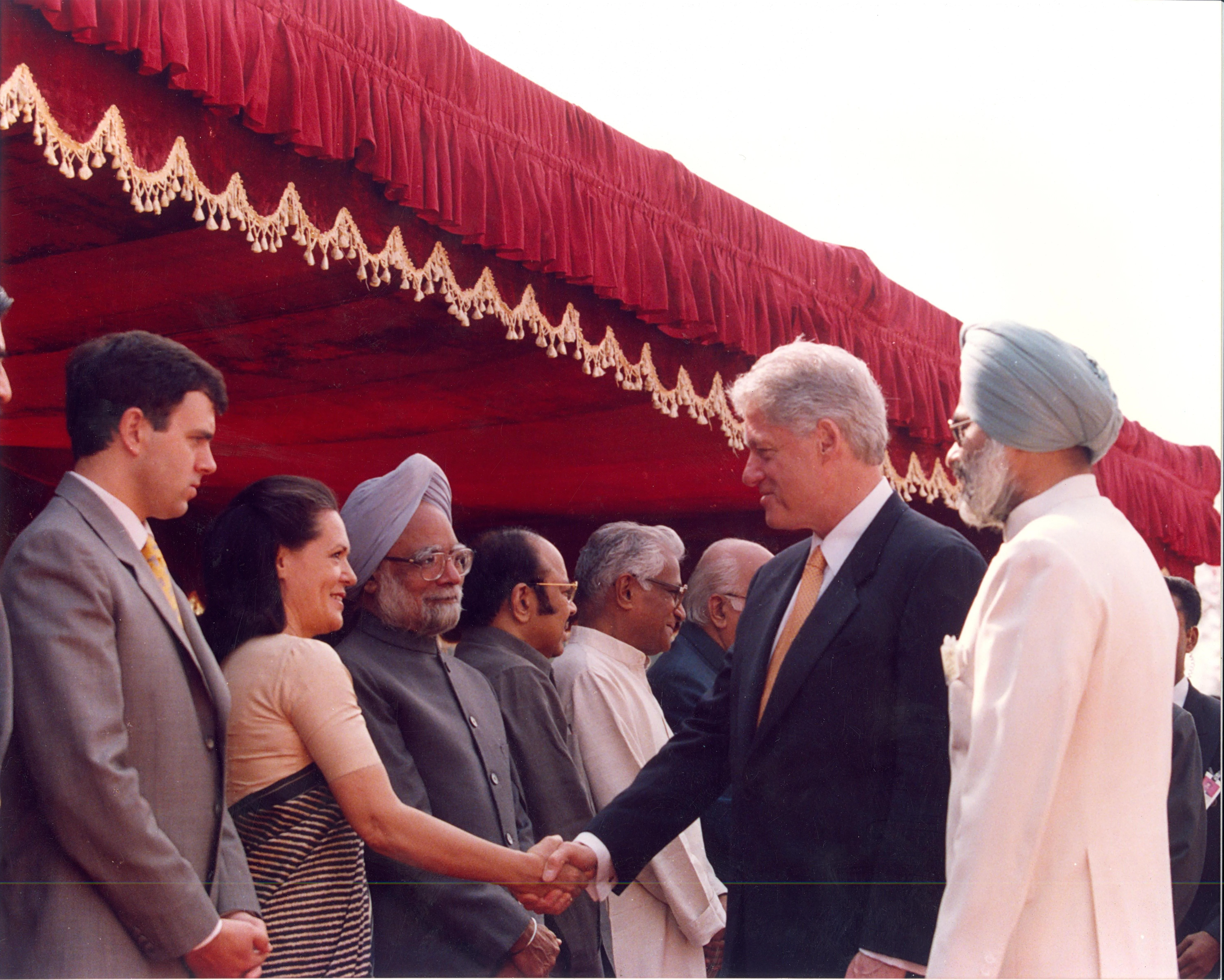
Her decision to nominate economist Dr. Manmohan Singh as Prime Minister while retaining the Congress presidency and the chairmanship of the newly formed National Advisory Council (NAC) transformed Indian governance. Supporters hailed the move as a supreme act of political sacrifice and statesmanship. Critics argued that the arrangement established a “dual power structure,” wherein Sonia Gandhi exercised de facto executive authority through the NAC without direct constitutional accountability to Parliament.
2. The 2012 CAG Coal Allocation Report (Coalgate)
During the second term of the United Progressive Alliance (UPA-II, 2009–2014), the central government faced a barrage of anti-corruption unrest and institutional audit reports. Foremost among these was the August 2012 report tabled in Parliament by the Comptroller and Auditor General of India (CAG), headed by Vinod Rai.
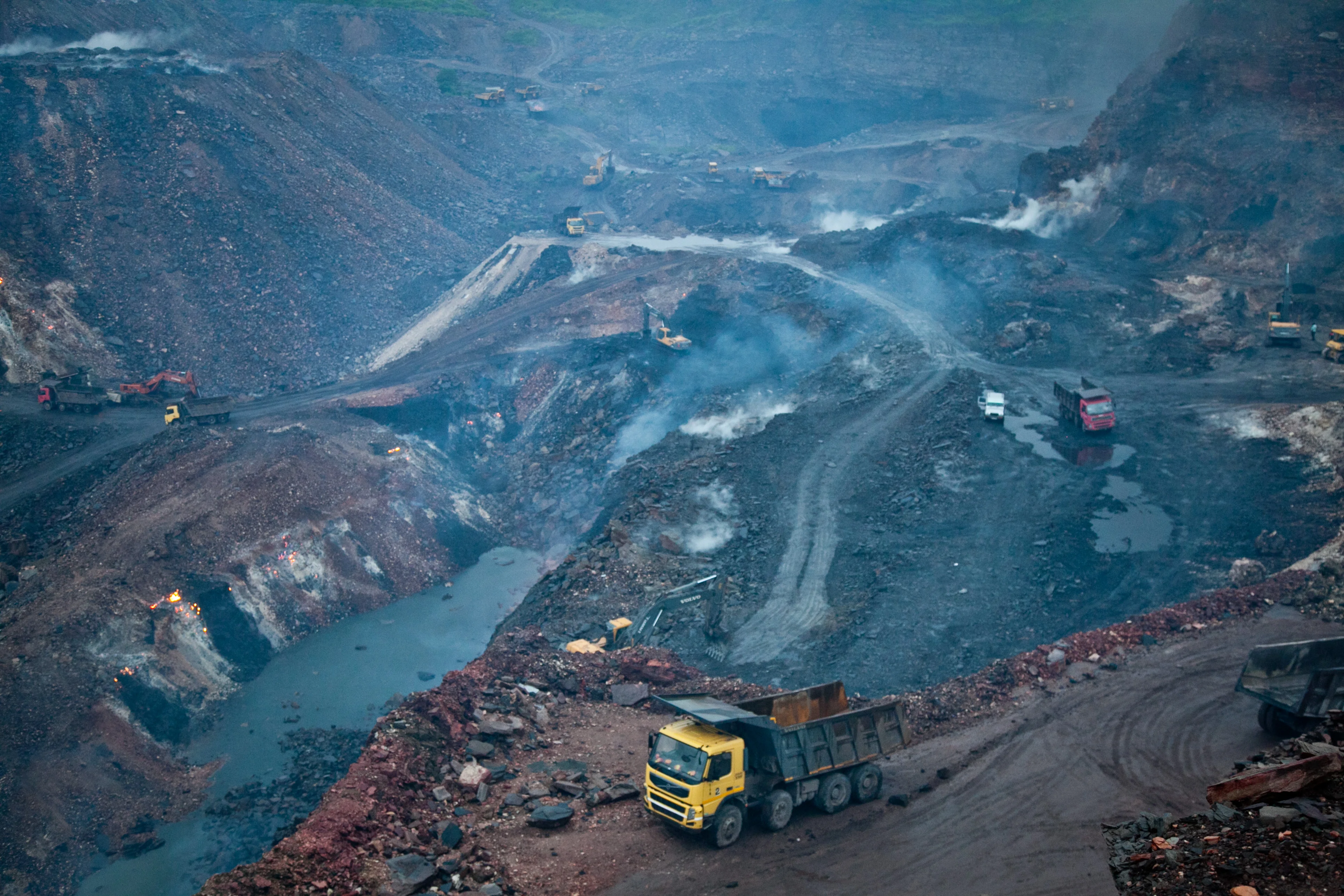
The audit examined the allocation of 194 captive coal blocks to private and state-owned power, steel, and cement companies between 2004 and 2009 without competitive bidding. The auditor calculated that the non-transparent screening committee process had generated “windfall gains” to private allottees estimated at 1.86 lakh crore rupees (approximately $33 billion).
Because Prime Minister Manmohan Singh had personally held the coal portfolio between 2006 and 2009, and because major corporate beneficiaries were alleged to have political connections to the ruling coalition, opposition parties brought Parliament to a standstill for weeks, demanding the resignation of the government. In September 2014, the Supreme Court of India struck down the allocation of 214 coal blocks made between 1993 and 2010, declaring the entire allocation procedure arbitrary, illegal, and non-transparent. The coal allocation controversy profoundly eroded the public standing of the UPA leadership and became a central factor in the Congress party’s 2014 electoral defeat.
1. The National Herald Financial Inquiry and Criminal Summons (2012–Present)
The most legally precarious controversy directly naming Sonia Gandhi and her son Rahul Gandhi centers on the National Herald case. Founded in 1938 by Jawaharlal Nehru and other freedom fighters, The National Herald was published by Associated Journals Limited (AJL), a public unlisted company with thousands of small freedom-fighter shareholders. Over decades, AJL acquired valuable commercial real estate in New Delhi (Herald House on Bahadur Shah Zafar Marg), Mumbai, Lucknow, and Patna.
By 2008, burdened by debts exceeding 90 crore rupees ($13 million), AJL ceased printing newspapers. The Congress party had advanced 90.25 crore rupees in interest-free loans to AJL to help pay staff salaries and liabilities. In November 2010, a new private, non-profit company called Young Indian was incorporated under Section 25 of the Companies Act, in which Sonia Gandhi and Rahul Gandhi together held a controlling 76 percent equity stake.
In December 2010, the All India Congress Committee (AICC) assigned AJL’s entire 90.25 crore rupee debt to Young Indian for a token payment of 50 lakh rupees ($75,000). AJL subsequently issued fresh shares to Young Indian to extinguish the debt, resulting in Young Indian owning 99.05 percent of AJL—thereby obtaining control over AJL’s real estate assets, estimated by investigators to be worth hundreds of millions of dollars.
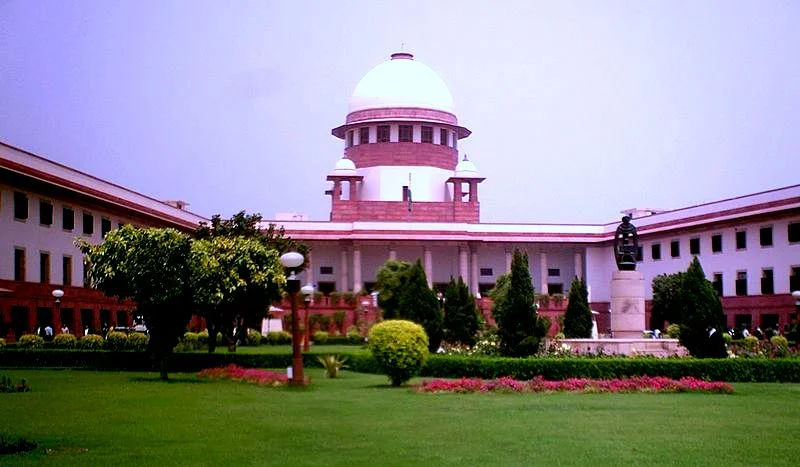
In November 2012, BJP leader and former Union Law Minister Subramanian Swamy filed a private criminal complaint in the Patiala House Courts in New Delhi, alleging criminal breach of trust, cheating, and misappropriation of public assets. In June 2014, the Metropolitan Magistrate issued criminal summons to Sonia Gandhi, Rahul Gandhi, Motilal Vora, Oscar Fernandes, and Sam Pitroda. On 19 December 2015, Sonia and Rahul Gandhi appeared in person before the Patiala House Court, securing bail under personal bonds of 50,000 rupees each.
The Congress party defended the restructuring as a legitimate financial rehabilitation of a historic freedom movement newspaper, emphasizing that Young Indian was a non-profit entity from which no director could draw dividends or financial payouts. In 2022, the federal Enforcement Directorate (ED) initiated a money-laundering probe, questioning Sonia Gandhi over multiple sessions and attaching assets worth over 750 crore rupees. The matter remains before the courts.
What the Record Shows
Key claims in this documentary dossier, cross-referenced to judicial records, parliamentary reports, and historical archives:
- Sonia Gandhi acquired Indian citizenship by registration in April 1983, relinquishing Italian citizenship pursuant to Indian nationality laws - sources: 1, 5
- The Supreme Court of India dismissed legal petitions seeking to disqualify naturalized citizens from holding parliamentary seats or executive office - sources: 1, 5
- The 1987 Bofors scandal probed kickbacks paid by AB Bofors; CBI investigations tracked kickback funds to accounts held by Ottavio Quattrocchi, an Italian businessman with social ties to the Gandhi family - sources: 2
- In May 2004, following the UPA coalition’s parliamentary majority, Sonia Gandhi declined the office of Prime Minister, nominating Dr. Manmohan Singh - sources: 1, 6
- The August 2012 Comptroller and Auditor General (CAG) audit reported massive irregularities in captive coal block allocations, leading to the Supreme Court’s 2014 cancellation of 214 coal blocks - sources: 3, 7
- The National Herald complaint alleges that Young Indian (76% owned by Sonia and Rahul Gandhi) acquired control over Associated Journals Limited (AJL) and its real estate assets through debt transfer - sources: 4
- In December 2015, Sonia Gandhi and Rahul Gandhi appeared in person before the Patiala House Court in New Delhi and secured bail in the private criminal complaint - sources: 4, 8
Archival Evidence & Picture Credits
Every image in this dossier was cross-referenced against its original archival repository and Wikimedia Commons provenance:
- Rajiv and Sonia Gandhi with Ronald and Nancy Reagan (1985): White House Photographic Collection / Digital Public Library of America (DPLA) - Wikimedia Commons file page
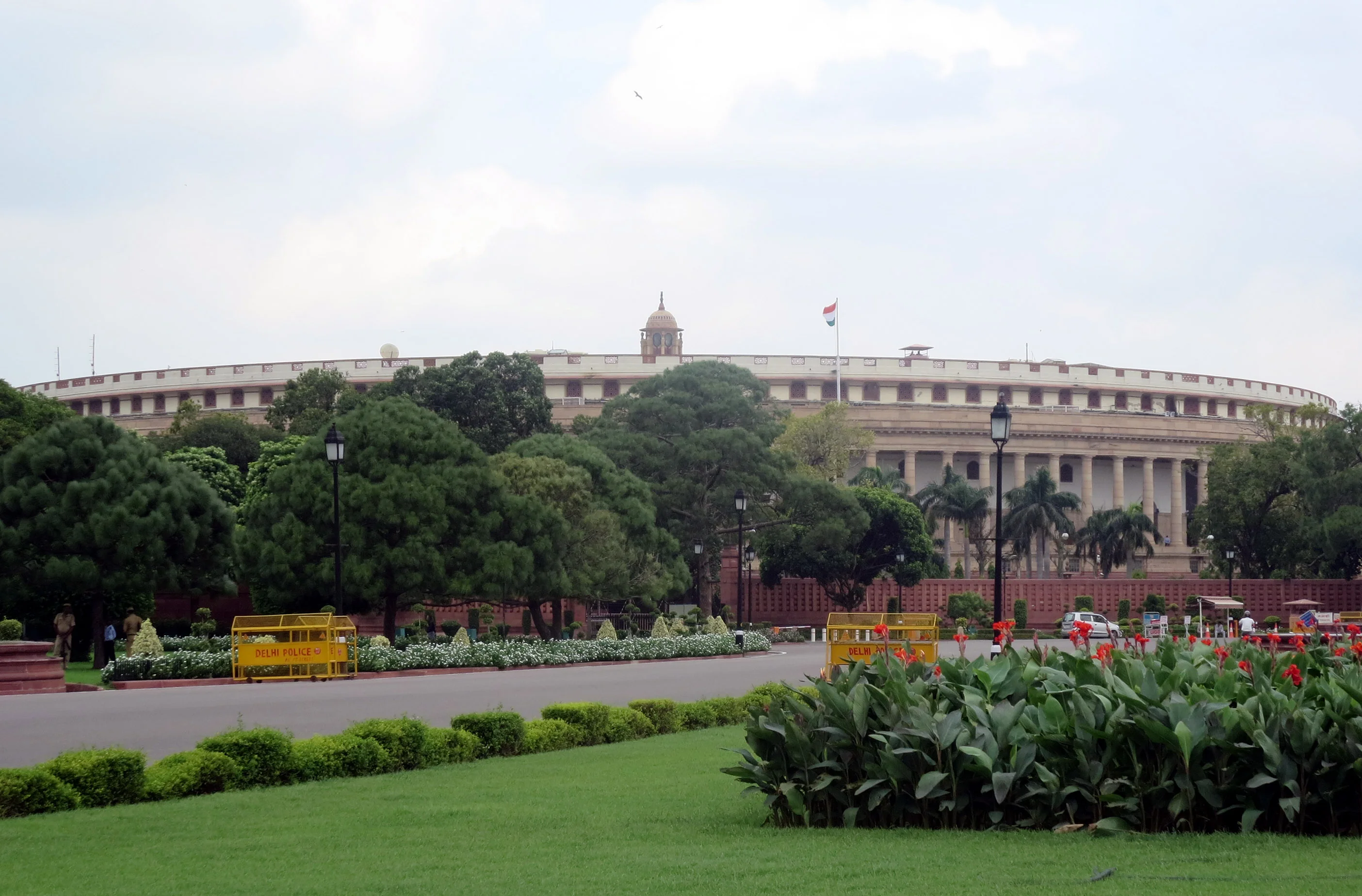
- Sansad Bhavan (Parliament House, New Delhi): Photograph by Bernard Gagnon (CC BY-SA 3.0) - Wikimedia Commons file page
- Bofors Haubits 77 155mm Field Howitzer: Swedish Army / Småland Artillery Regiment Archives (CC BY-SA 4.0) - Wikimedia Commons file page
- Sonia Gandhi, Manmohan Singh, and Bill Clinton: White House Official Photo / National Archives and Records Administration - Wikimedia Commons file page
- Open-pit Coal Mine in Jharia, India: Photograph by TripodStories (CC BY-SA 4.0) - Wikimedia Commons file page
- Supreme Court of India, New Delhi: Official architectural photographic record (CC BY-SA 3.0) - Wikimedia Commons file page


Verified Archival Sources & Bibliography
Every claim in this account has been verified against official court rulings, parliamentary audit publications, and contemporary investigative journalism:
- Wikipedia: Sonia Gandhi (biographical overview and election data)
- Wikipedia: Bofors Scandal (defense procurement audit and court records)
- Wikipedia: Indian Coal Allocation Scam (CAG findings and Supreme Court 2014 judgment)
- Wikipedia: National Herald Case (Patiala House Court records and corporate restructuring filings)
- Supreme Court of India Judgment: Hari Shanker Jain vs. Sonia Gandhi (2001) (ruling on naturalized citizenship eligibility)
- The New York Times: Sonia Gandhi Declines to Be India’s Premier (19 May 2004) (contemporary international press report)
- Comptroller and Auditor General of India (CAG): Report on Allocation of Coal Blocks and Augmentation of Coal Production (2012) (official parliamentary report)
- The Hindu: Sonia, Rahul Gandhi Appear in Court, Get Bail in National Herald Case (19 December 2015) (contemporary court report)
Historical Connection Graph
Rumors Said Foreigners Were Eating Babies. Seoul Panicked.
AJ. "5 Controversies That Defined Sonia Gandhi's Career." Echoes of History Uncut. Last modified November 11, 2026. https://echoesofhistoryuncut.com/articles/sonia-gandhi-political-controversies/.

An independent digital history publication and documentary studio reconstructing historical turning points through primary archives, official inquiries, and scholarly citations. Every factual claim in this dossier is cross-referenced to the numbered bibliography above.