
How Do You Build a Whole New Capital City in 41 Months?
Brazil's capital had been Rio de Janeiro. President Juscelino Kubitschek's motto was "fifty years in five", and a brand-new capital was the cornerstone of his plan. Lúcio Costa won the contest for the master plan, Oscar Niemeyer designed most of the public buildings, and the city was built in 41 months. Brasília became the capital in 1960.
In this dossier (13 chapters) ▾
- 01 A Promise Written Into the Constitution
- 02 The Contest and the Plan
- 03 Forty-One Months
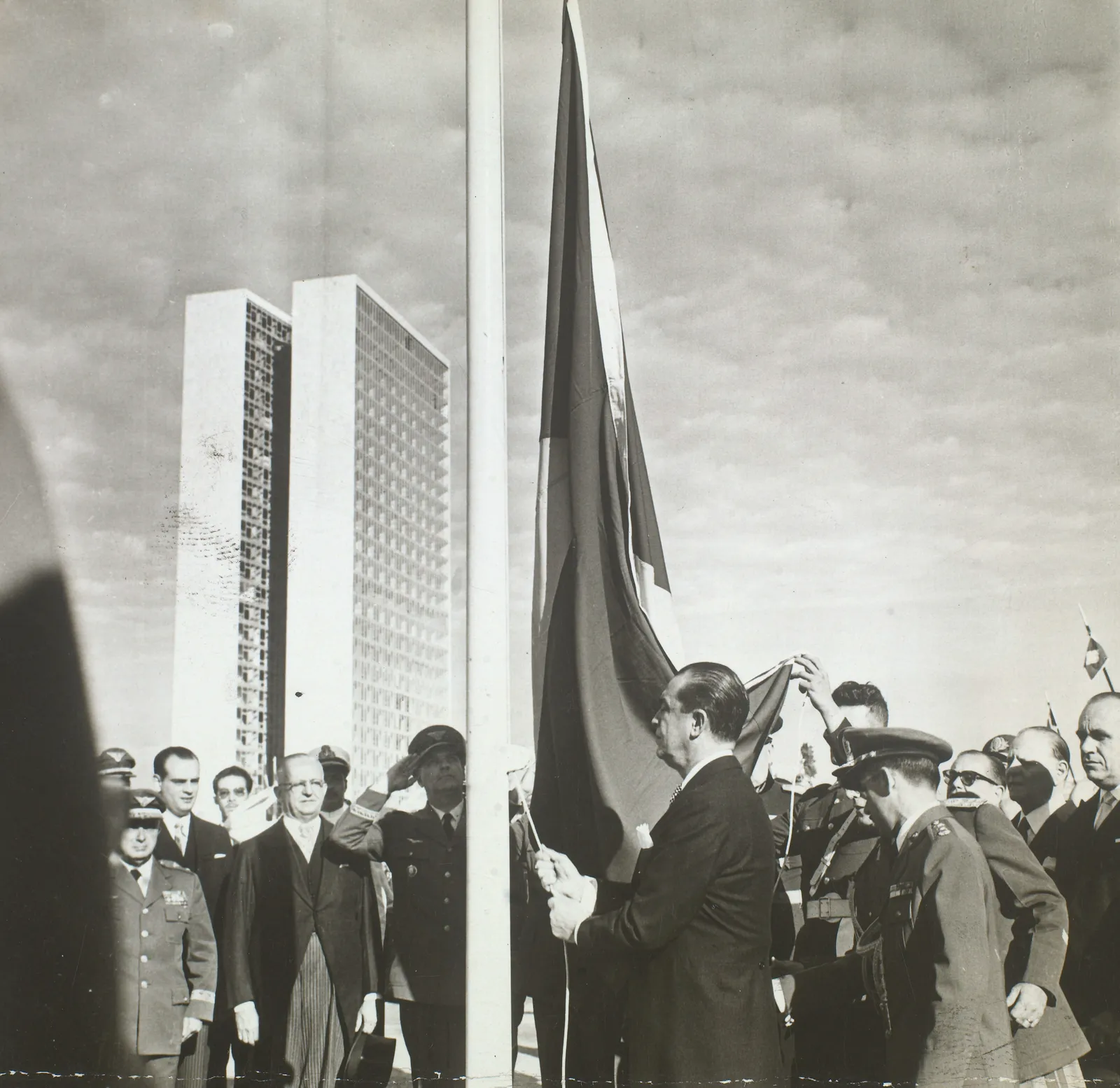
- 04 The Inauguration
- 05 The Shape of the City
- 06 A City That Grew Beyond Its Plan
- 07 Politics
- 08 World Heritage
- 09 Praise and Criticism
- 10 Why It Matters
- 11 What the Record Shows
- 12 Archival Evidence & Picture Credits
- 13 Verified Archival Sources & Bibliography
Historical Dossier: The Building of Brasília Location: Central Plateau, Goiás (now the Federal District), Brazil | Year: 1956–1960 | Key Figures: Juscelino Kubitschek, Lúcio Costa, Oscar Niemeyer, Roberto Burle Marx, Joaquim Cardozo
A Promise Written Into the Constitution
Brazil’s first republican constitution, in 1891, contained an odd instruction. Article Three stated: “The Union shall own, in the central plateau of the Republic, an area of 14,400 square kilometers” for the future seat of the federal government. A capital in the interior had been Brazilian policy on paper for almost seventy years. Governments of the Old Republic found the idea too costly and too ambitious, and Rio de Janeiro, a crowded coastal city, stayed the capital.
That changed with Juscelino Kubitschek, who served as president from 1956 to 1961. He ran on a slogan of “fifty years of prosperity in five”, a programme of rapid development, and he made the new capital its centrepiece. He took office in January 1956 and began planning almost at once, so that he could claim to be fulfilling both the constitution and his own campaign promise.
The Contest and the Plan
In 1957 an international jury chose the plan of Lúcio Costa, an urban planner who had trained under the modernist Le Corbusier. Costa’s design was built around a cross: a Monumental Axis running east to west for government and administration, and a Residential Axis running north to south. Along the second axis he placed 96 “superblocks” of standardised six-storey apartments, designed to mix upper and middle classes under one roof. Costa described the cross-axial layout as a gesture of possession and conquest of the interior.
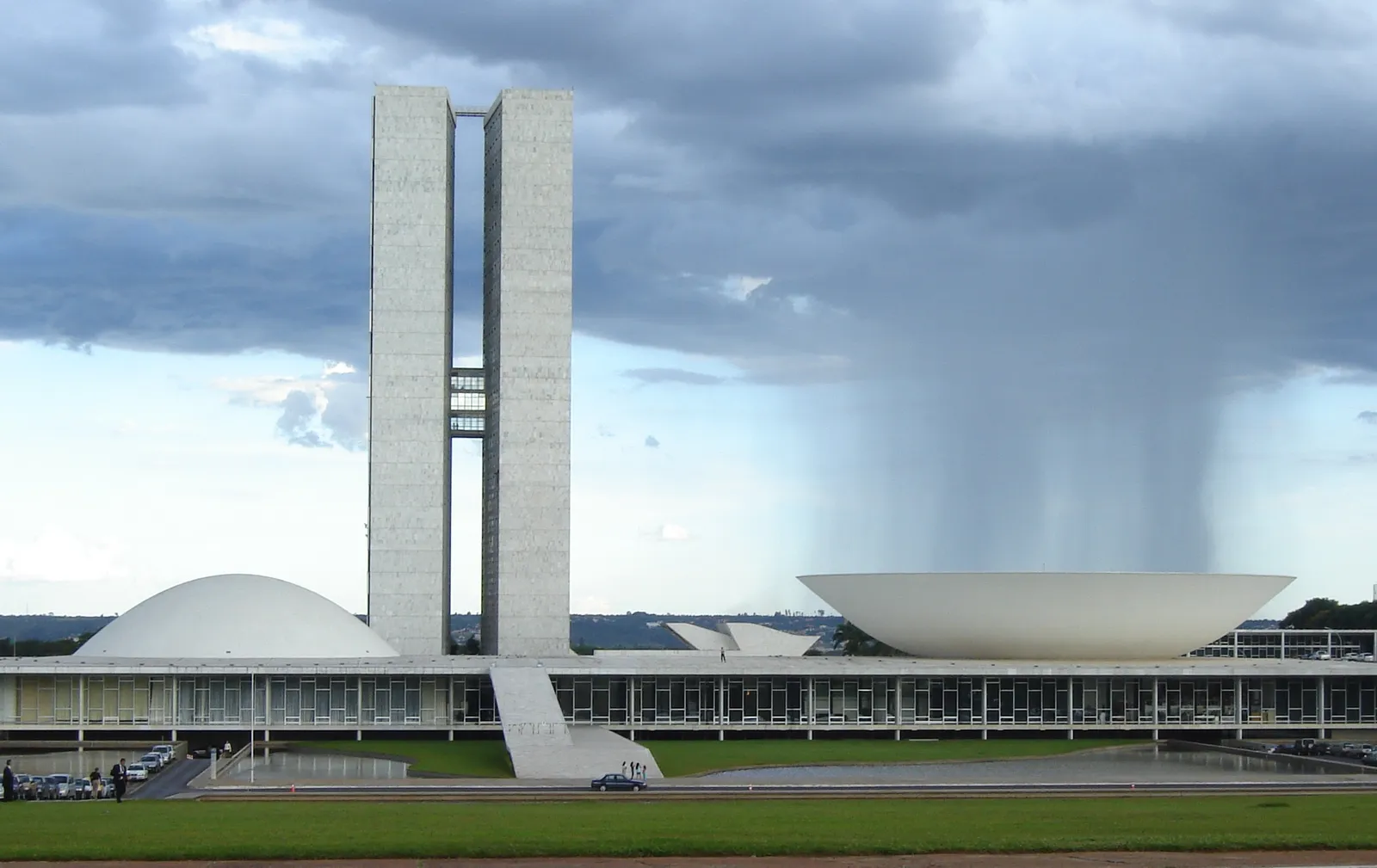
Oscar Niemeyer, Brazil’s best-known modern architect, designed the major public buildings, including the National Congress and the presidential palace, in the white, curving, concrete style that became his signature. The structural engineer Joaquim Cardozo and the landscape architect Roberto Burle Marx completed the creative team, giving the city its daring structures and its planned landscape.
Forty-One Months
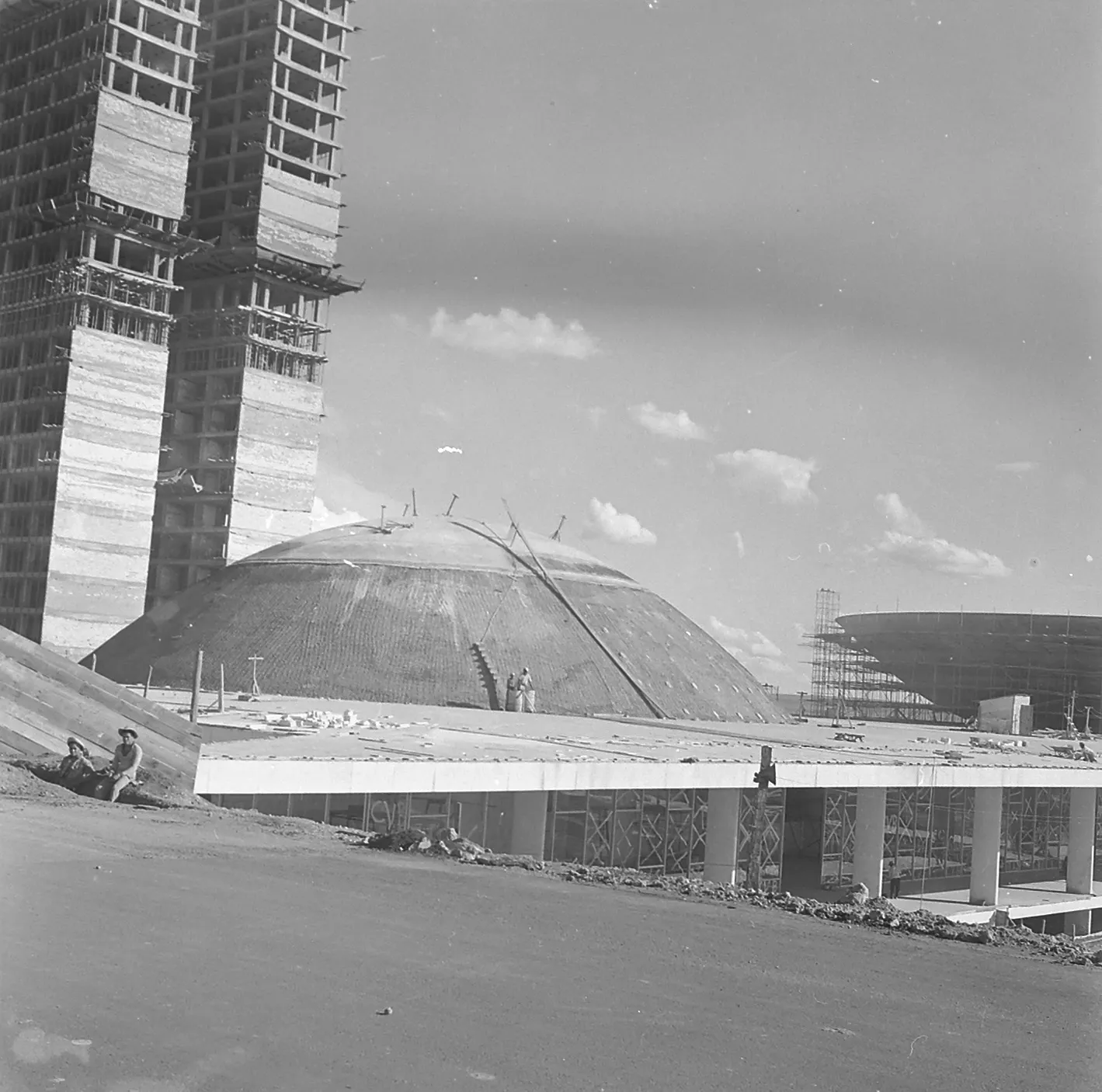
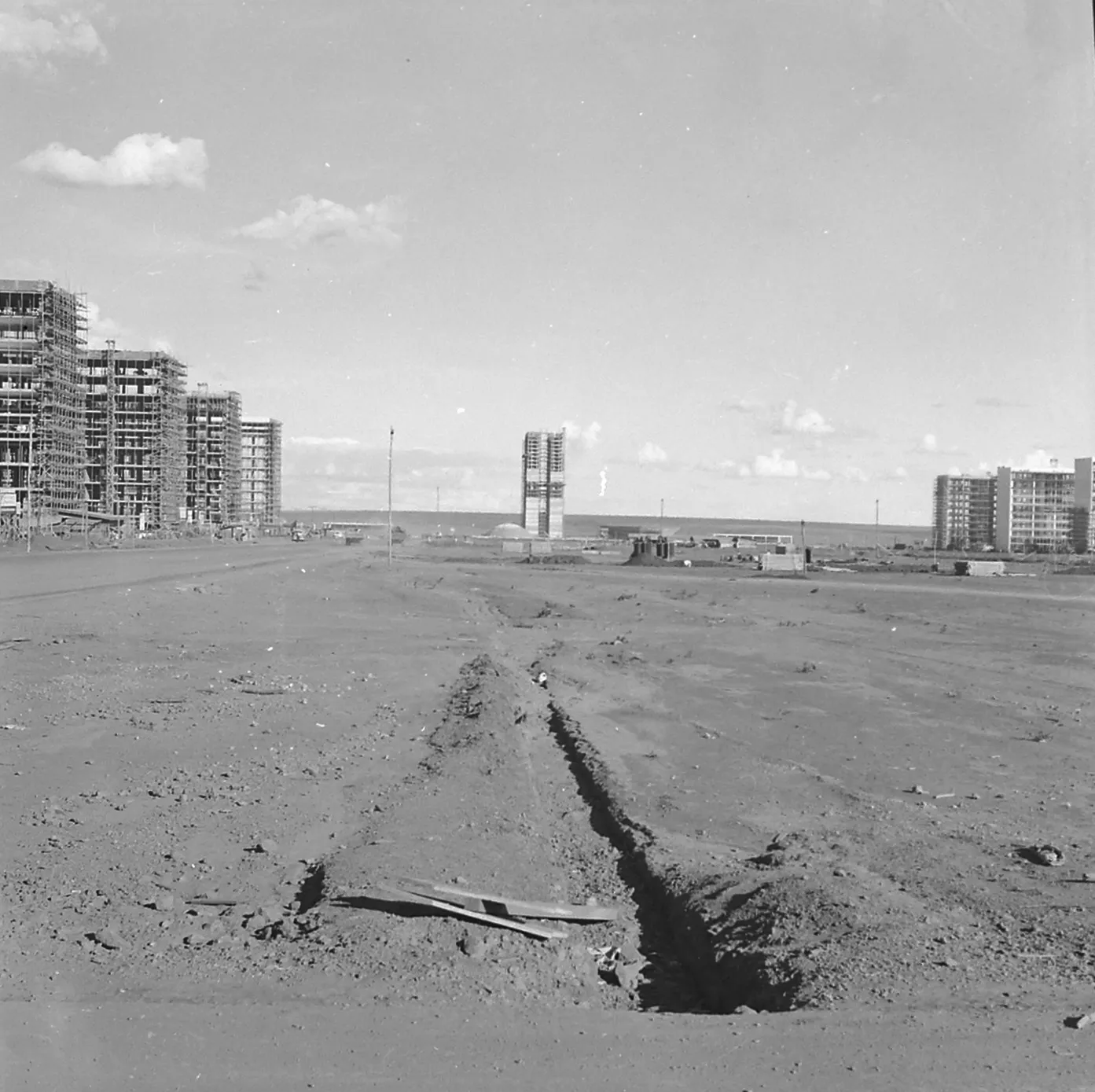
The construction timetable was brutal. The city was built in 41 months and inaugurated on 21 April 1960. The labour came from across Brazil. The construction workers, known as candangos, came from the poorest parts of the country in search of work, and they built a modern capital in a sparsely populated stretch of the interior with few roads or existing services.
The city also needed water, and an artificial lake, Lake Paranoá, was created to supply it and to help moderate the dry climate of the plateau. Costa’s sector-by-sector planning put the banks, the hotels, the embassies and the government buildings each in their own designated zone.
The Inauguration
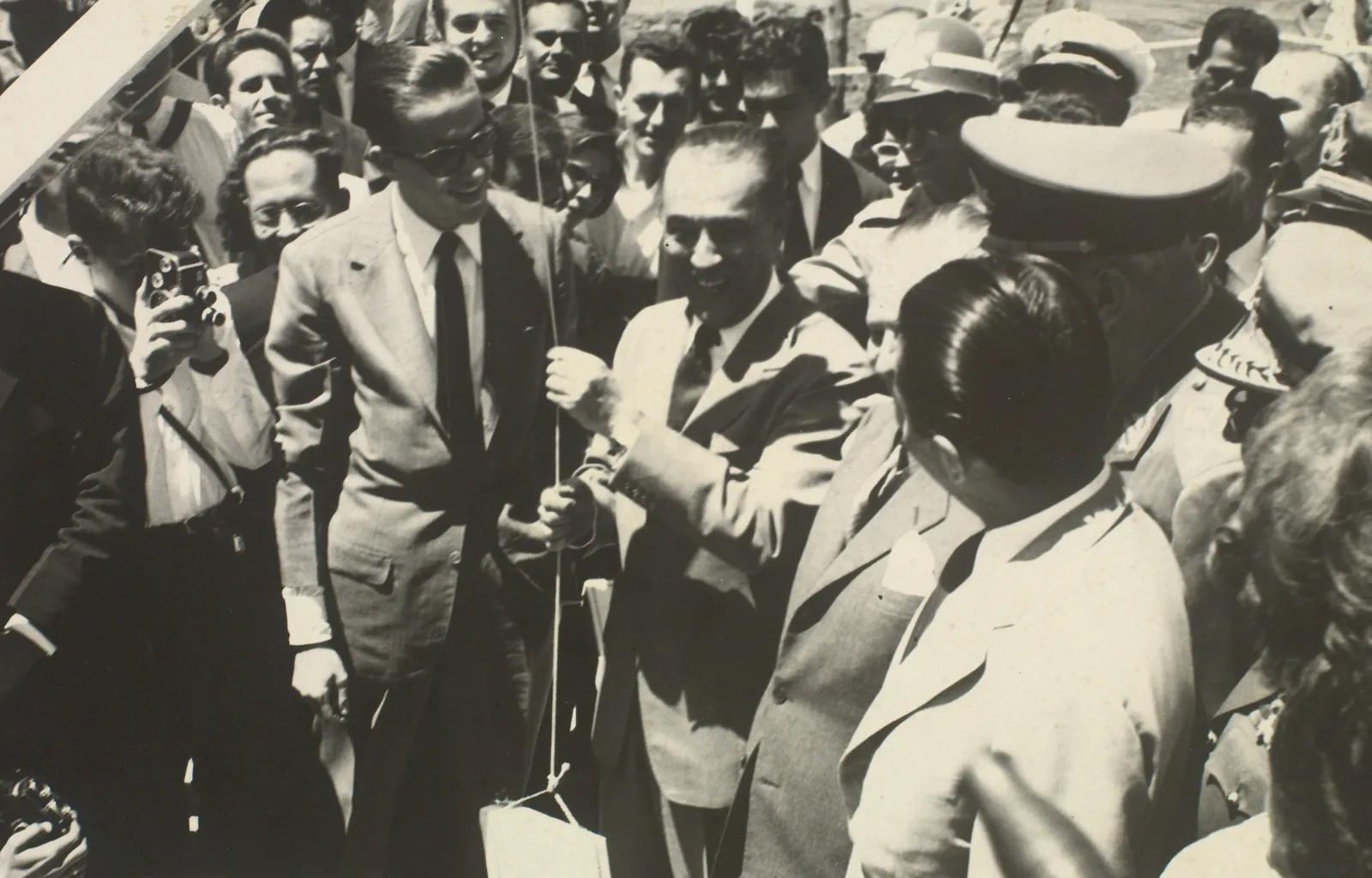
On 21 April 1960 the capital formally moved from Rio to Brasília. Kubitschek had delivered a city in less than a single presidential term.
The Shape of the City
Brasília was planned in the shape of an aeroplane. The Monumental Axis, the “fuselage,” runs east to west, flanked by wide avenues and a central park, and holds the buildings of the government. Where the two main axes cross is the Praça dos Três Poderes, the Plaza of the Three Powers, where the executive, legislative and judicial branches meet, a deliberate statement about the structure of the state.
Niemeyer’s white modernist buildings set the look of the capital. His Cathedral was finished in 1960. The Palácio da Alvorada is the presidential residence, the Palácio do Planalto houses the executive offices, and the Supremo Tribunal Federal completes the group. Niemeyer said, “I don’t build in order to cover the earth with buildings, but to organize space and serve man.” Costa described his intention as “a new city with its future shape evident from the beginning.”
A City That Grew Beyond Its Plan
The planners had expected about 500,000 people in the Plano Piloto. The central planned area in fact holds only about 214,529. But the metropolitan region grew from about 140,000 in 1960 to nearly 3 million by 2025, making it Brazil’s third-largest city.
The growth came largely from migration. The candangos who built the city first lived in the Cidade Livre, the Free City, an unplanned settlement that provided temporary housing. As Brasília’s economy drew more workers, satellite cities such as Taguatinga grew up for those who could not afford homes in the planned centre. They developed organically, and they contrast sharply with Costa’s tidy superblocks.
Politics
Kubitschek’s term, from 1956 to 1961, was bound up with the project, and the constitutional requirement of 1891 gave him cover. In 1964 the armed forces took power in a coup, and the new capital became the headquarters of an authoritarian government that lasted until 1985. Civil servants were sent to Brasília by compulsory transfers, often unwillingly, and filled the planned sectors.
World Heritage
UNESCO inscribed Brasília as a World Heritage Site in 1987 under criteria (i) and (iv), describing it as “an outstanding example of town planning and architecture of the modernist movement.” Lake Paranoá, the artificial lake, became part of the environment of the city and a place for sport and recreation.
Praise and Criticism
In 1987 UNESCO declared Brasília a World Heritage site, for its modernist architecture and its pioneering urban design. The criticisms came early, though. The city was planned around the car, so the distances between its centres were large and those who did not own a vehicle found it hard to move around. Some architectural historians have argued that its grand, axial layout owed more to nineteenth-century city planning than to anything new. The rigid separation of functions, and the way workers’ settlements grew up outside the plan as satellite cities, have raised questions about how well the design served those who built it.
Why It Matters
Brasília achieved what it was built to do. It moved the federal government to the country’s geographic centre and gave Brazil a symbol of modern ambition at the height of the Cold War. Whatever one thinks of the design, a country had decided to build its capital from nothing, and it finished in 41 months.
What the Record Shows
11 sourced claims in this story, resting on 11 sources. Numbers link to the bibliography below.
- Brasília was built as the new capital of Brazil - sources: 6, 11
- Construction of Brasilia began in February 1957 and was completed 41 months later - sources: 4
- Brasilia replaced Rio de Janeiro as the national capital of Brazil - sources: 6, 10
- Brasilia was created as the Brazilian capital in the central western part of the country - sources: 5
- President Juscelino Kubitschek’s slogan was Fifty Years in Five, meaning 50 years of progress in five - sources: 4
- Brasilia was the cornerstone of President Kubitschek’s agenda, part of his national modernization project - sources: 4, 5
- Lúcio Costa won the competition to design the master plan of Brasilia - sources: 7, 8
- Oscar Niemeyer was the chief architect of most of the public buildings of Brasilia - sources: 9, 10
- Oscar Niemeyer designed the National Congress building in Brasilia - sources: 9, 10
- Brasília was created as the capital of Brazil from 1956 to 1960 - sources: 5
- Brasília was built in 41 months - sources: 4
Archival Evidence & Picture Credits
Every image on this page was checked against its Wikimedia Commons file page.
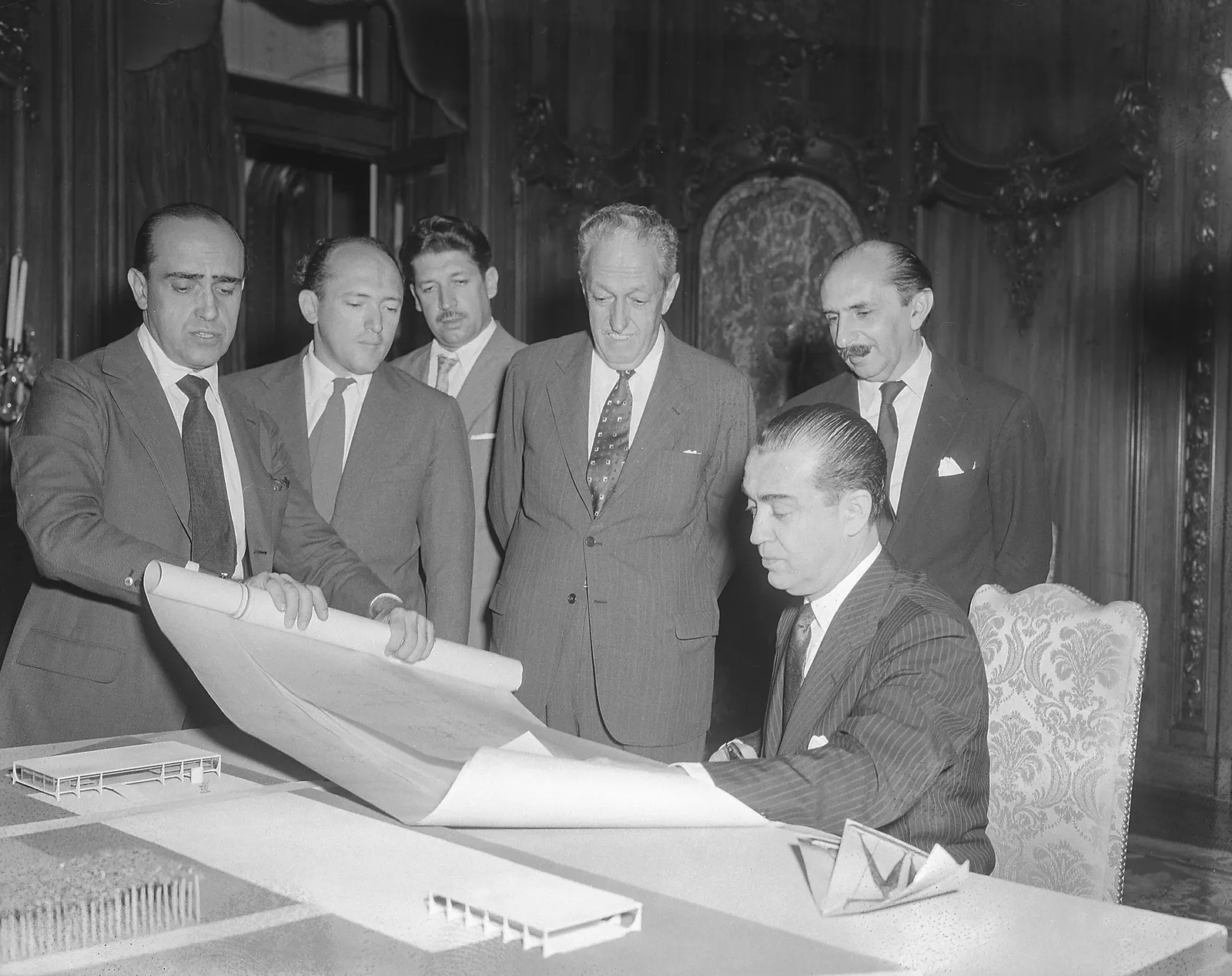
- President Juscelino Kubitschek examining a model of the Praça dos Três Poderes at the Palácio do Catete (Arquivo Nacional / Wikimedia Commons) - Wikimedia Commons file page
- The National Congress in Brasília, designed by Oscar Niemeyer (Wikimedia Commons) - Wikimedia Commons file page
- Construction work in Brasília in 1959 (Arquivo Nacional / Wikimedia Commons) - Wikimedia Commons file page
- A later view of the construction of Brasília in 1959 (Arquivo Nacional / Wikimedia Commons) - Wikimedia Commons file page
- Kubitschek raising the flag at the inauguration of Brasília (Arquivo Nacional / Wikimedia Commons) - Wikimedia Commons file page
- Juscelino Kubitschek at the inauguration of Brasília, April 1960 (Arquivo Nacional / Wikimedia Commons) - Wikimedia Commons file page


Verified Archival Sources & Bibliography
Every claim in this account has been fact-checked against primary archives and scholarly repositories:
- Brown University Library, Brazil: Five Centuries of Change - Juscelino Kubitschek (primary)
- UNESCO World Heritage Centre: Brasilia (primary)
- Evening Star (Washington, D.C.), February 14, 1960: Brazil’s Controversial New Capital - Chronicling America (primary)
- The New York Times: Lucio Costa Is Dead at 96; Planned Futuristic Brasilia (1998) (news)
- The Washington Post: Lucio Costa Dies at 96 (1998) (news)
- The New York Times: Oscar Niemeyer, Modernist Architect of Brasília, Dies at 104 (2012) (news)
- BBC News: Niemeyer’s Brasilia - Does it work as a city? (2012) (news)
- Journal of Urban History: Modernist Civic Space and the Case of Brasília (book)
Historical Connection Graph
An Earthquake Trapped a Lake Above a City. They Drained It With Shovels.
AJ. "How Do You Build a Whole New Capital City in 41 Months?." Echoes of History Uncut. Last modified September 29, 2026. https://echoesofhistoryuncut.com/articles/brasilia-capital-41-months-1960/.

An independent digital history publication and documentary studio reconstructing historical turning points through primary archives, official inquiries, and scholarly citations. Every factual claim in this dossier is cross-referenced to the numbered bibliography above.